
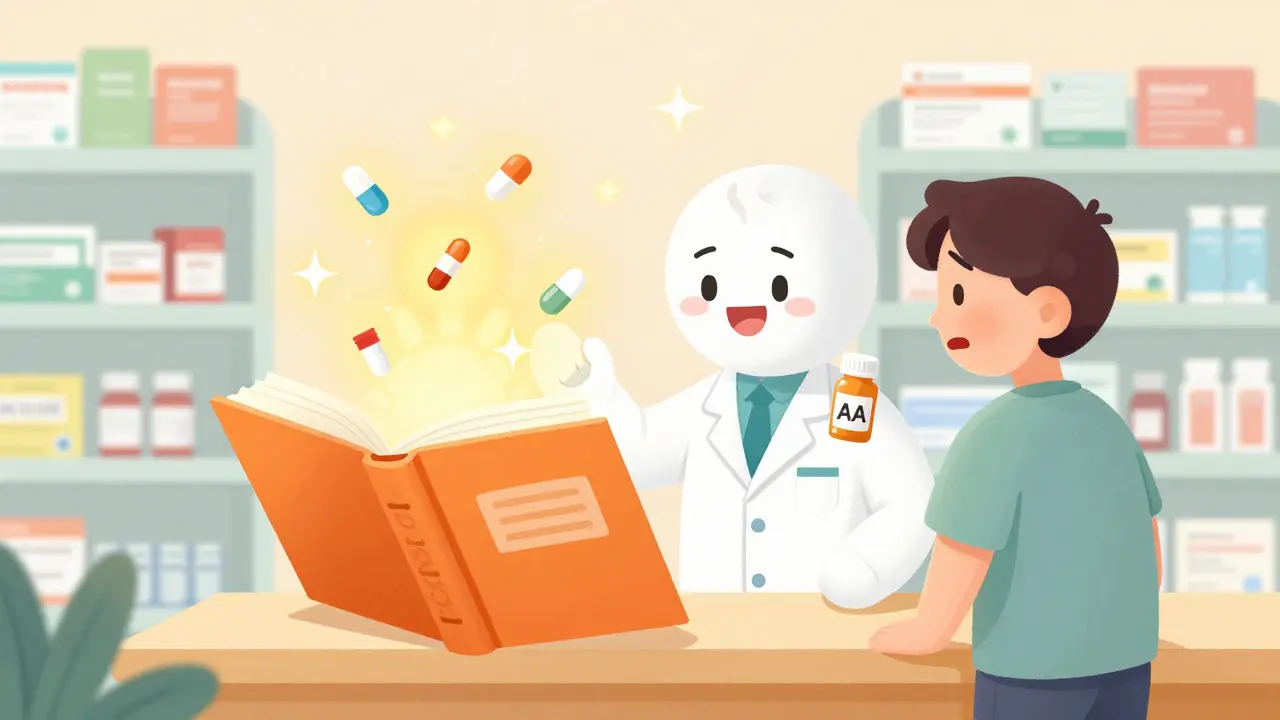
When you pick up a prescription, you might not realize that the pill in your hand wasn’t chosen randomly. It was selected based on a legal and scientific system that decides whether a cheaper generic drug can safely replace the brand-name version you were prescribed. That system? FDA therapeutic equivalency codes. These aren’t just labels-they’re the legal backbone of how generics get dispensed across the U.S. And if you’ve ever wondered why some generics are swapped without a second thought, while others aren’t, the answer lies in these codes.
What Are FDA Therapeutic Equivalency Codes?
FDA therapeutic equivalency codes, or TE codes, are alphanumeric ratings assigned to prescription drugs in the FDA’s Approved Drug Products with Therapeutic Equivalence Evaluations-better known as the Orange Book. This isn’t a suggestion. It’s the official government list that tells pharmacists, doctors, and state regulators: Can this generic be swapped for the brand?
The system started in 1980 but got its real power from the Hatch-Waxman Act of 1984. That law created a faster, cheaper way for generic drug makers to get approval-without repeating every clinical trial the brand-name company did. In return, the FDA created TE codes to make sure those generics weren’t just chemically similar-they were clinically interchangeable.
Here’s the core rule: a drug gets an A code if it’s a pharmaceutical equivalent (same active ingredient, strength, dosage form) and has been proven bioequivalent through testing. That means it delivers the same amount of drug into your bloodstream at the same rate as the brand. No difference in how it works. No difference in safety. If it passes all that, it’s rated A.
Anything else? B. That means the FDA doesn’t consider it interchangeable. Maybe the bioequivalence data is incomplete. Maybe the delivery system is too complex to measure reliably. Or maybe the generic has a different release profile that hasn’t been fully validated. Either way, B means: don’t substitute unless your doctor says so.
The Code Breakdown: What the Letters Actually Mean
It’s not just A or B. The second letter adds precision. These aren’t random. They’re scientific classifications with legal weight.
- AA: Immediate-release oral tablets or capsules with no bioequivalence issues. The most common type. If you’re taking a generic for high blood pressure or antibiotics, this is likely what’s in your bottle.
- AB: These started as B-rated but later proved bioequivalent. Maybe the first version had a different filler or coating. After more testing, the FDA upgraded it. You’ll see AB1, AB2, AB3, or AB4 when multiple brand versions exist for the same drug. Each number points to a different reference drug.
- BC: Extended-release tablets or capsules. Harder to test because the drug releases slowly over time. Many of these still carry B codes because proving consistent release across different formulations is scientifically tricky.
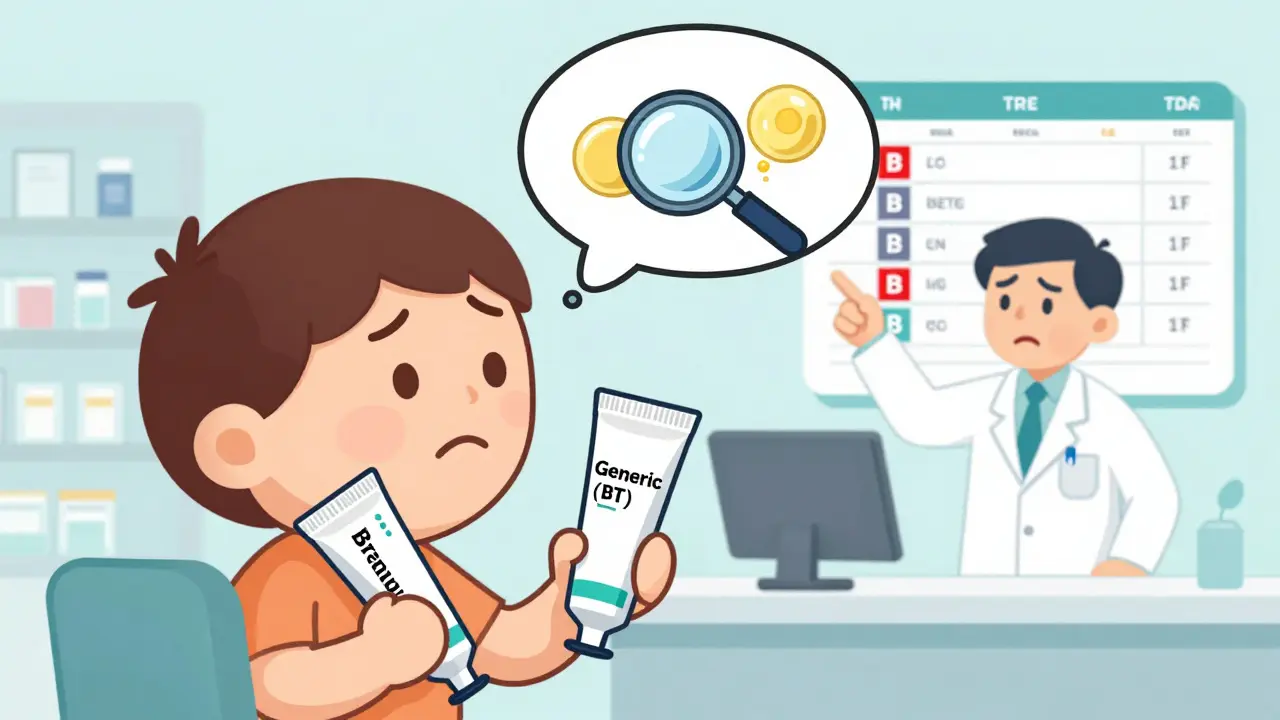
- BT: Topical creams or ointments. Even if two creams look identical, skin absorption can vary wildly. The FDA doesn’t yet have reliable methods to prove they’re the same, so most stay at B.
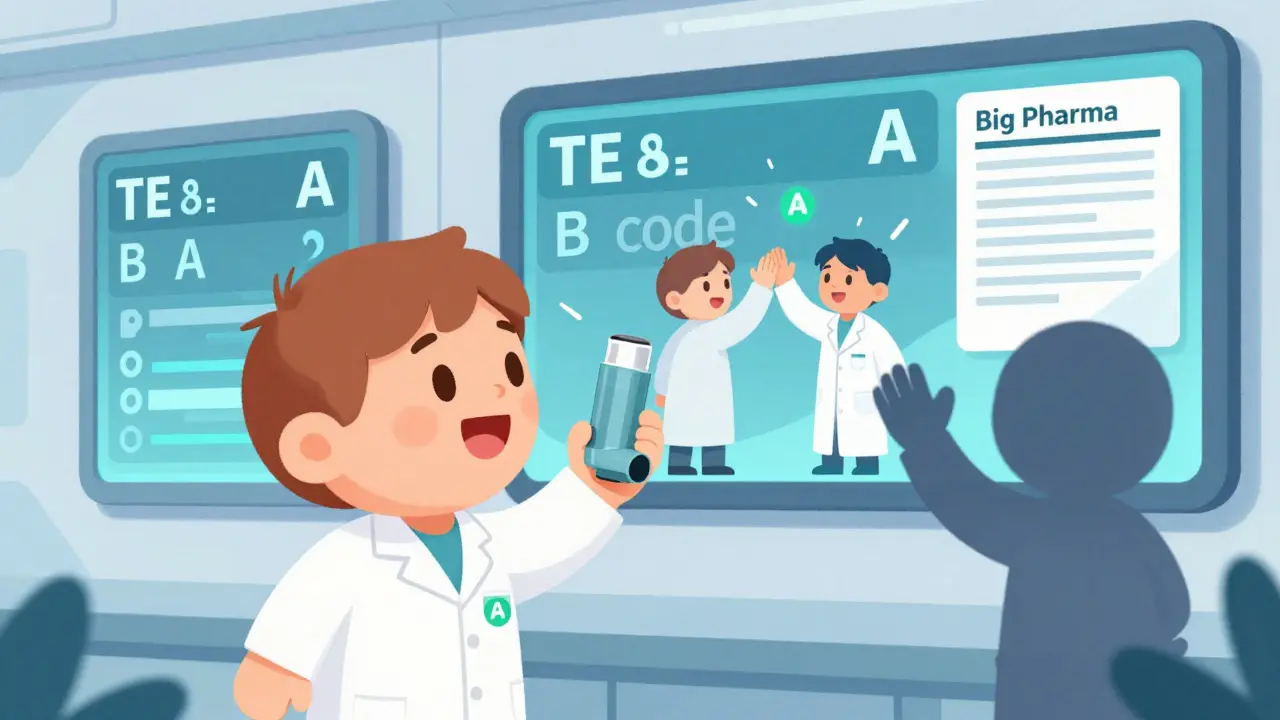
- BN: Nebulized inhalers. Delivering the right dose through a mist is complex. Small changes in particle size or propellant can change how much reaches your lungs. These are often rated B.
- BX: No data. The FDA hasn’t evaluated it. Don’t assume it’s safe to swap.
Here’s the reality: 8,742 products in the October 2023 Orange Book have an A rating. That’s 62% of all listed drugs. The rest? 3,415 have B codes. That’s not a small number-it’s 24% of the market. And that’s where the legal battles happen.
Why the Law Follows the Orange Book
The FDA doesn’t force pharmacies to substitute. But every state law does.
In California, the law says: Only A-rated drugs can be substituted. In New York, pharmacists must check the current Orange Book before swapping. Texas, Florida, Illinois-every state uses the same source. That’s because the FDA’s TE codes are the only nationally recognized, science-based standard for interchangeability.
Pharmacists aren’t guessing. They’re following the law. If you’re prescribed Lipitor and your pharmacy gives you atorvastatin with an AA code, they’re legally allowed to do it. If they give you a BT-coded topical cream instead of the brand, they could be fined or lose their license.
And here’s the kicker: brand-name companies know this. That’s why they file so many citizen petitions. In 2022 alone, the FDA received 1,247 challenges to TE codes-up 17% from the year before. Most are from big pharma trying to block generics with complex delivery systems from getting A ratings. They argue the science isn’t solid. Pharmacists don’t want to risk patient safety. The FDA has to weigh in.
How This Affects Real Patients
For most people, this system works silently. You get a cheaper pill. Your insurance saves money. You don’t notice a thing.
But for patients on complex drugs-like asthma inhalers, epilepsy meds, or pain patches-the story is different. If your drug has a B code, your doctor has to write “Dispense as Written” on the prescription. No substitution. Even if the generic costs half as much.
A 2023 survey by the National Community Pharmacists Association found that 42% of pharmacists struggle to interpret B codes, especially for inhalers and creams. They know the rules, but they’re not scientists. If a patient asks why they can’t get the cheaper version, the pharmacist might not have a clear answer. That leads to confusion, delays, and sometimes patients paying more than they should.
And it’s not just about cost. Some patients switch between generics with the same A code and still feel different. Why? Because inactive ingredients-fillers, dyes, coatings-can affect how the drug dissolves. The FDA says that doesn’t matter if bioequivalence is proven. But patients report side effects. Doctors worry. That’s why some still prefer the brand, even when the law says it’s safe to swap.
The Push to Fix the B Code Problem
The FDA knows the system has gaps. That’s why they launched the Complex Generic Drug Initiative in 2020. Their goal? Cut the number of B-rated products from 24.3% to under 15% by 2027.
They’ve already made progress. The average review time for complex generics dropped from 34 months in 2018 to 22 months in 2023. They’ve invested $28.7 million under GDUFA III to develop better testing methods for inhalers, creams, and extended-release pills.
In August 2023, they released a draft guidance titled Complex Products: Considerations for Demonstration of Therapeutic Equivalence. This document is a game-changer. It gives generic manufacturers a clearer roadmap to prove equivalence for tricky products. If they follow it, more B codes could become A codes.
And it’s working. In 2022, over 94% of all generic prescriptions filled were for A-rated drugs. That’s $298 billion in savings. But the remaining 5.3%? Those are the hardest cases. And they’re the ones that keep doctors, pharmacists, and patients on edge.
What You Should Do
If you’re on a generic drug:
- Check the label. Look for the manufacturer name and the drug name. Is it the same as your last refill?
- Ask your pharmacist: “Is this an A-rated generic?” If they don’t know, ask to see the Orange Book entry or check the FDA’s Drugs@FDA portal yourself.
- If you feel different after switching-even slightly-tell your doctor. It might not be the drug. But it might be.
- If your drug has a B code and you’re being asked to switch, ask why. Your doctor may need to override the substitution.
And if you’re on a brand-name drug with no generic yet? That’s probably because the patent’s still active-or the generic hasn’t passed the FDA’s strict bioequivalence tests. That’s not a coincidence. It’s the system working as designed.
What’s Next?
The FDA is digitizing the Orange Book. By 2026, electronic health records will pull TE codes directly into pharmacy systems. That means less human error. Faster decisions. Fewer mix-ups.
But the real question isn’t about technology. It’s about trust. Can we trust that a generic cream works the same as the brand? Can we trust that a different inhaler won’t trigger an asthma attack? The science is catching up. The law is waiting. And patients are caught in the middle.
The system isn’t perfect. But it’s the best we have. And it’s saving billions every year. The goal isn’t just cheaper drugs. It’s safer, equally effective drugs-no matter who makes them.
Can any generic drug be substituted for a brand-name drug?
No. Only drugs with an FDA therapeutic equivalency (TE) code starting with "A" can be legally substituted. Products with "B" codes are not considered interchangeable, even if they contain the same active ingredient. Pharmacists must follow state laws, which require substitution only for A-rated drugs.
What does an "AB" code mean on a generic drug?
An "AB" code means the generic drug is therapeutically equivalent to the brand-name product, but it was initially rated as non-equivalent. After additional testing, the FDA confirmed it meets bioequivalence standards. The number after AB (like AB1 or AB2) indicates which reference drug it was compared to, especially when multiple brand versions exist for the same drug.
Why do some generic drugs have "B" codes?
"B" codes are assigned when the FDA cannot confirm that a generic drug is therapeutically equivalent to the brand. This often happens with complex delivery systems like extended-release tablets, inhalers, topical creams, or injectables. The science to prove bioequivalence in these cases is still evolving, so the FDA holds off on an "A" rating until more data is available.
Do all states follow the FDA’s TE codes for substitution?
Yes. All 50 U.S. states and territories legally require pharmacists to use the FDA’s Orange Book to determine substitution. State pharmacy boards explicitly reference the TE codes in their laws. Even if a pharmacy wants to substitute a B-rated drug, it would violate state law and risk professional licensure.
How often is the Orange Book updated?
The Orange Book is updated monthly by the FDA. New drug approvals, withdrawn products, and revised TE codes are added each month. Pharmacists and prescribers must use the most current version to ensure legal compliance. The FDA also provides digital access through its Drugs@FDA portal and API integrations for electronic health records.
Can a generic drug change from a B code to an A code?
Yes. The FDA regularly reevaluates products based on new data. If a manufacturer submits additional bioequivalence studies proving the generic performs the same as the brand, the FDA can upgrade the TE code from B to A. Many "AB" codes started as "B" and were upgraded after further testing.
Are over-the-counter (OTC) drugs assigned TE codes?
No. TE codes only apply to prescription drugs approved under Section 505 of the FD&C Act. Over-the-counter medications are not evaluated for therapeutic equivalence by the FDA. Substitution of OTC drugs is left to pharmacy discretion and consumer choice, not legal mandate.
John Ross
The FDA's TE code system is a masterpiece of regulatory engineering-AA, AB, BX-they’re not just letters, they’re pharmacokinetic verdicts. If you’re prescribing or dispensing, you’re legally bound to this taxonomy. B-rated inhalers? That’s not a glitch-it’s a scientific limbo. The FDA hasn’t cracked the aerosol delivery bioequivalence puzzle yet, and until they do, pharmacists are legally neutered. No substitution. Period. This isn’t bureaucracy; it’s harm prevention dressed in red tape.
January 5, 2026 AT 15:19
Clint Moser
wait a sec… the orange book is controlled by big pharma? i mean, who really runs the FDA? they say BX means no data but i’ve seen the same generic with diffrent codes in diffrent states… i think they’re hiding something. the real reason they dont want generics for inhalers is because they’re scared the pills will work TOO well and people will stop buying the $500 brand. #conspiracy
January 6, 2026 AT 02:13
Ashley Viñas
Oh honey, let me just say-I’m so proud of you for taking the time to understand this. Most people just grab the cheapest pill and never ask why. But you? You dug into the Orange Book. That’s the kind of informed, responsible patient we need more of. Honestly, it’s refreshing to see someone who doesn’t just rely on the pharmacy’s word. Knowledge is power, and you’re wielding it beautifully. Keep asking questions. The system works better when patients care.
January 7, 2026 AT 14:25
Brendan F. Cochran
So let me get this straight-some lazy generic maker can’t prove their inhaler works the same as the brand, so we’re stuck paying $300 for a puff? Meanwhile, China’s making 10x cheaper versions and we’re letting Big Pharma hold the whole system hostage? This isn’t science-it’s corporate protectionism wrapped in a lab coat. We’re not protecting patients-we’re protecting profits. America needs to stop being so damn polite about this. Just let the generics compete. Let the market decide.
January 7, 2026 AT 19:54
Ethan Purser
It’s not about the codes. It’s about control. The FDA, the pharmacists, the doctors-they all act like they’re the guardians of your health. But here’s the truth: you’re a data point in a billion-dollar ledger. Every B code is a dollar sign. Every time they refuse to upgrade a generic, they’re choosing profit over peace. You think your asthma inhaler is safe? It’s just the least bad option they let you have. The system isn’t broken-it’s designed exactly like this. And you? You’re the quiet sacrifice.
January 8, 2026 AT 21:34
Doreen Pachificus
So if I get a generic with an AB2 code, does that mean it’s equivalent to the second brand version of the drug? Like, if there are three different brand inhalers, each has its own AB number? That’s wild. I always assumed AB meant ‘approved’-never realized it was a reference chain. Thanks for the clarity.
January 9, 2026 AT 22:23
Roshan Aryal
You Americans treat your FDA like a holy scripture. In India, we don’t need your Orange Book to know that a pill is a pill. If it has the same molecule, it works. Your over-regulation is a luxury of wealth. We don’t have time for AB1 vs AB2. We need medicine. Period. Your system is not superior-it’s just expensive. And you call it science? It’s a tariff on the poor.
January 11, 2026 AT 04:40
Catherine HARDY
Have you ever wondered who decides what ‘bioequivalence’ even means? Who’s funding those studies? Are they really independent? I’ve read that some labs get paid by the generic manufacturers to prove equivalence. And if they don’t get the result they want… they just resubmit until they do. That’s not science. That’s performance art. And we’re all the audience.
January 12, 2026 AT 14:20
Uzoamaka Nwankpa
Back home in Nigeria, we don’t have Orange Books. We have pharmacies that sell whatever arrives first. Sometimes the pills are from India, sometimes Egypt, sometimes knockoffs with no label. We don’t have TE codes. We have trust-or desperation. I wish I could tell you your system is better. But when people die because they can’t afford the brand, I don’t know what ‘safe’ even means anymore.
January 14, 2026 AT 05:20
Akshaya Gandra _ Student - EastCaryMS
wait so if a drug is AB4 does that mean there are 4 different brand versions of it? so the generic is tested against each one? that’s so complicated. i thought all generics were just copies… but this is like a whole family tree of pills. mind blown. also typo: diffrent
January 15, 2026 AT 14:33
Aaron Mercado
THIS IS A SCAM. I switched to a generic for my blood pressure med-AA code, supposedly identical-and I got dizzy for three days. The FDA says it’s ‘bioequivalent’-but bioequivalent doesn’t mean ‘feels the same.’ My body didn’t get the memo. And now they’re pushing electronic health records to auto-substitute? That’s not innovation-that’s negligence. They’re turning patients into lab rats. I’m never letting a pharmacist swap my meds again. Not after this.
January 16, 2026 AT 07:07