
Probiotic Timing Calculator
Calculate Your Probiotic Schedule
Probiotics work best when taken at the right time relative to antibiotics. Find the optimal schedule based on your antibiotic timing and probiotic strain.
How Timing Works
Antibiotics kill bacteria—including probiotics. Taking probiotics 2-3 hours after antibiotics gives them time to establish in your gut without being destroyed by the antibiotic. Strains like Saccharomyces boulardii (yeast) are less affected by antibiotics and can be taken closer together.
Your Recommended Schedule
Probiotic Notes
When taking Lactobacillus rhamnosus GG, aim for 2-3 hours after your antibiotic dose. This strain is most effective when taken on an empty stomach.
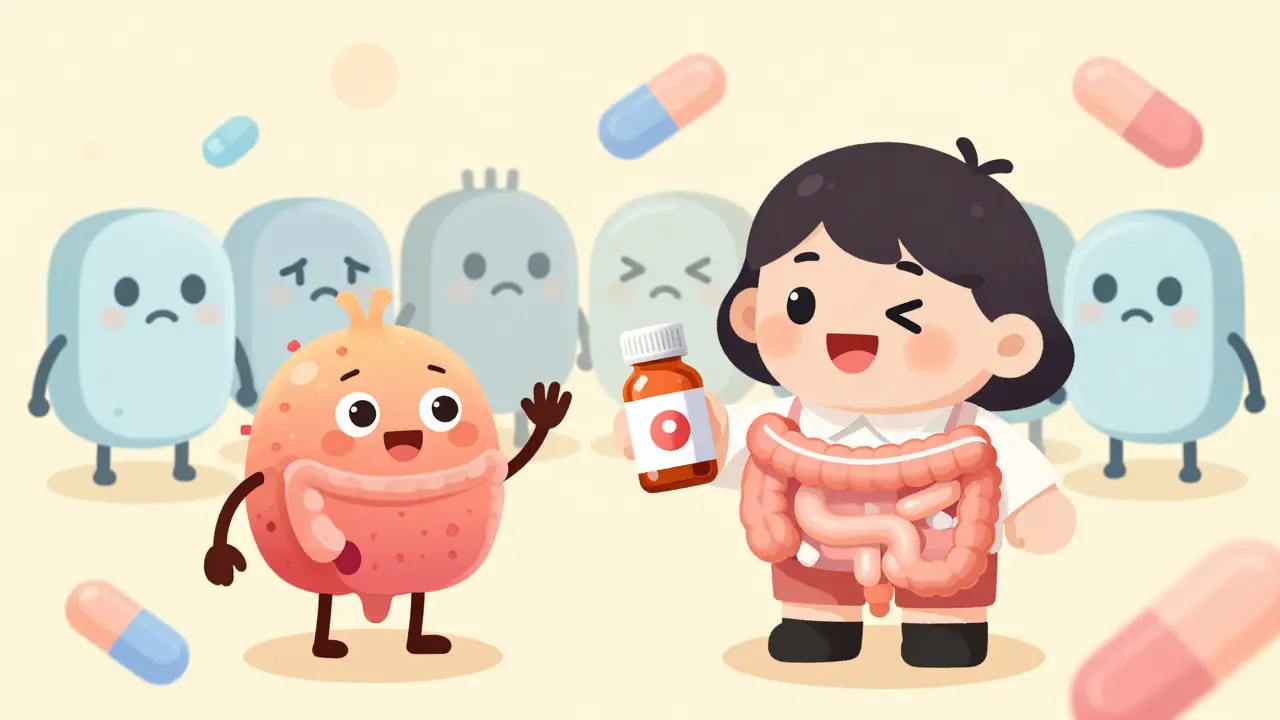
When you’re on antibiotics, you know the drill: take your pills, finish the course, and hope you don’t end up stuck on the toilet for days. Antibiotic-associated diarrhea affects 5 to 30% of people who take these drugs. For some, it’s just a nuisance. For others, it’s a full-blown crisis-especially if it turns into Clostridioides difficile (C. diff) infection, which can land you in the hospital. That’s where probiotics come in. Not as a magic cure, but as a practical tool many people use to keep their gut from falling apart while antibiotics do their job.
Why Antibiotics Mess With Your Gut
Antibiotics don’t pick and choose. They hit the bad bacteria causing your infection-and they also wipe out the good ones living in your gut. Your intestines are home to over 100 trillion bacteria, working together to digest food, train your immune system, and keep harmful microbes in check. When antibiotics disrupt this balance, it’s like pulling out half the bricks from a wall. The structure doesn’t collapse right away, but things start to wobble. Diarrhea is the most common sign. Bloating, cramps, and gas follow. And in severe cases, C. diff takes over, causing explosive diarrhea, fever, and dangerous inflammation.What Probiotics Actually Do
Probiotics are live microorganisms-mostly bacteria or yeast-that help restore balance. The most studied strains for antibiotic use are Lactobacillus rhamnosus GG, Saccharomyces boulardii, and certain Bifidobacterium species. These don’t just float around doing nothing. They produce short-chain fatty acids that feed your gut lining, crowd out bad bacteria, and help your immune system stay calm. A Cochrane review of 2,454 people found that those taking probiotics during antibiotics had just 3.1% chance of getting C. diff diarrhea, compared to 11.6% in those who didn’t. That’s a 70% drop in risk.Which Probiotics Work Best
Not all probiotics are created equal. If you’re looking to prevent antibiotic diarrhea, stick with strains backed by solid research:- Saccharomyces boulardii (a yeast): Reduces diarrhea risk by about 50% in multiple studies. Works even if taken with antibiotics.
- Lactobacillus rhamnosus GG (L. GG): One of the most tested strains. Proven to cut diarrhea rates in adults and kids.
- Multi-strain blends: Often include L. GG, B. lactis, and others. May offer broader support, but results vary.
Other strains like L. acidophilus or B. longum show mixed results. Don’t waste your money on products with vague labels like “probiotic blend” unless they list exact strains and CFUs.
Dosing and Timing: How to Take Them Right
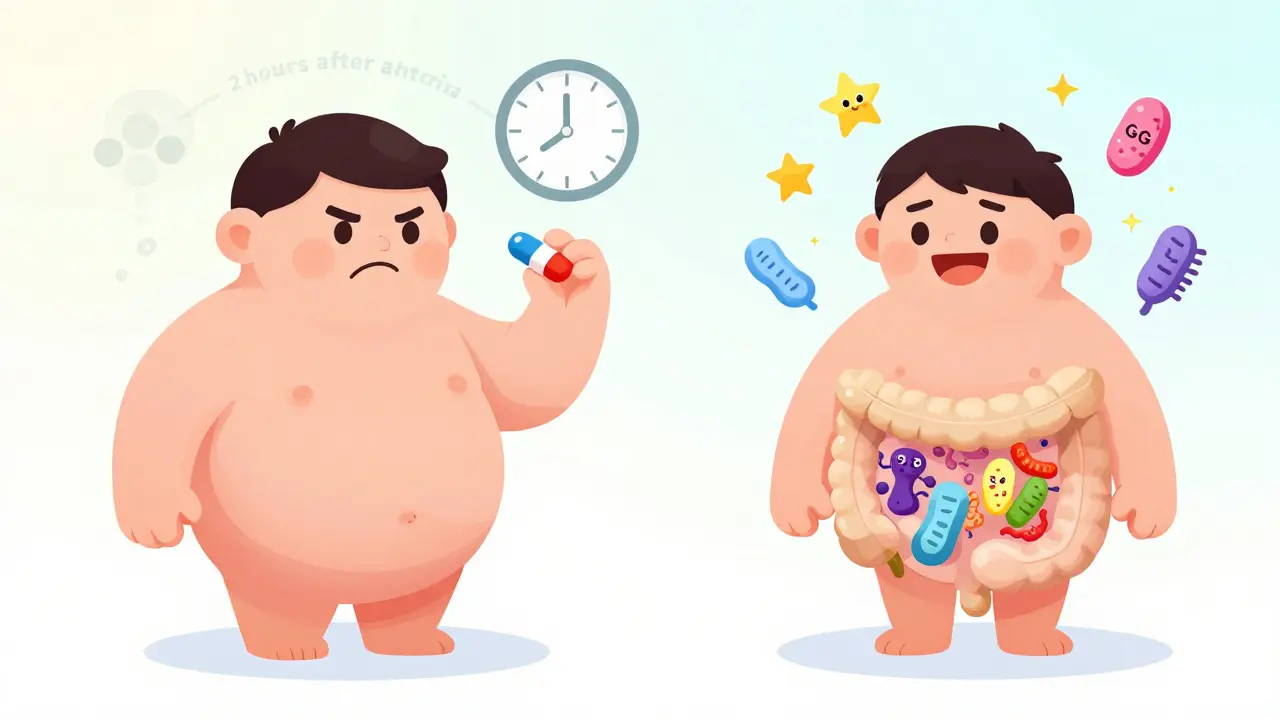
Taking probiotics at the wrong time can make them useless. Antibiotics kill bacteria-including the good ones you’re trying to replace. So timing matters.Most experts recommend taking your probiotic 2 to 3 hours after your antibiotic dose. This gives the antibiotic time to do its job without wiping out the probiotic right away. Some strains, like S. boulardii, are yeast and aren’t affected by antibiotics, so they can be taken closer together.
As for dosage: aim for 5 to 10 billion CFUs per day during antibiotic treatment. Keep taking them for at least 1 to 2 weeks after you finish the antibiotics. Your gut doesn’t bounce back overnight.
Should you take them with food or on an empty stomach? It depends on the product. Acid-resistant strains (like L. GG) often work better on an empty stomach. Others are more stable with food. Check the label-or ask your pharmacist.
What You Might Experience at First
When you start taking probiotics, your gut might throw a small tantrum. Bloating, gas, or mild cramping are common in the first few days. This isn’t a sign they’re not working-it’s your microbiome rearranging itself. Most people find these symptoms fade within a week.But if you’re already prone to IBS or have a sensitive gut, you might feel worse before you feel better. Some Reddit users report that switching to a lower-dose product or switching strains helped them tolerate probiotics better. If symptoms persist beyond 10 days or get worse, stop and talk to your doctor.
The Dark Side: When Probiotics Can Hurt You
Probiotics are generally safe-for most people. But they’re not risk-free. There have been documented cases of:- Lactobacillus bacteria entering the bloodstream (bacteremia) in people with weakened immune systems
- Saccharomyces boulardii causing fungal infections in critically ill patients
- Endocarditis linked to probiotic strains in patients with heart valve issues
These are rare-but they happen. If you’re immunocompromised, on chemotherapy, have a central line, or recently had surgery, don’t take probiotics without talking to your doctor. The same goes for people with short bowel syndrome or severe pancreatitis.
Market Chaos: What’s on the Shelf Isn’t Always What’s Listed
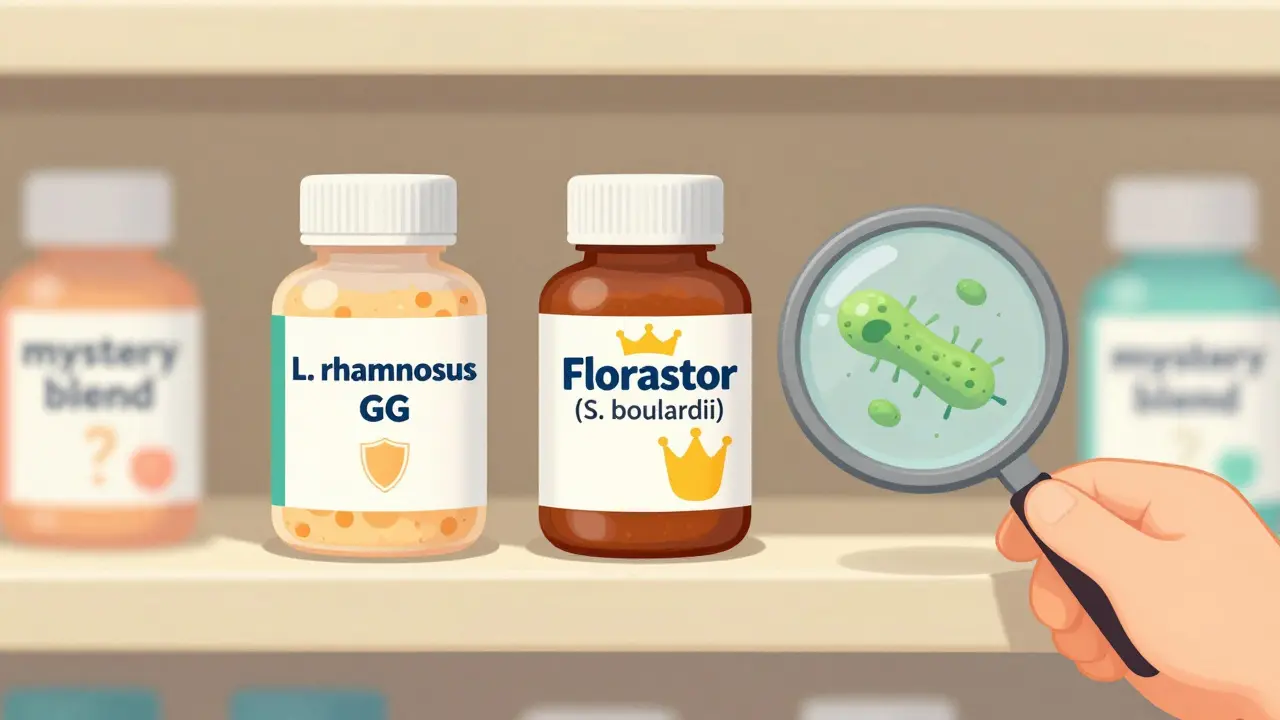
Here’s the ugly truth: most probiotics in the U.S. are sold as dietary supplements. That means the FDA doesn’t require manufacturers to prove they work-or even that they contain what’s on the label. A 2022 ConsumerLab test found that 30% of probiotic supplements didn’t contain the number of live organisms claimed. Another 15% had extra, unlisted microbes.Brands like Culturelle (L. GG) and Florastor (S. boulardii) consistently rank high in independent testing. Look for products that:
- List the exact strain (e.g., L. rhamnosus GG)
- State the CFU count at expiration (not just at manufacturing)
- Have third-party verification (USP, NSF, or ConsumerLab seal)
Avoid products with vague terms like “proprietary blend” or “natural probiotic mix.” You’re paying for a guess, not science.
Real People, Real Results
Amazon reviews for L. GG supplements show a 4.2-star average from over 12,500 reviews. Many users write: “No diarrhea this time,” or “I finally finished my antibiotics without being stuck in the bathroom.” But there’s also a chunk of negative reviews-about 15%-saying “nothing changed.” Others report worsened bloating, especially if they had IBS before.One user on a health forum shared: “I took probiotics with amoxicillin and didn’t get diarrhea, but I felt like I had a balloon in my stomach for two weeks. I dropped the dose and it got better.” That’s the reality. It works for some. It doesn’t for others. And it can be uncomfortable at first.
What the Experts Really Think
There’s no universal agreement. Harvard Health says probiotics “may help reduce common side effects.” The Cleveland Clinic says they “can be helpful.” But Henry Ford Health System warns the evidence is “slim.” The International Scientific Association for Probiotics and Prebiotics (ISAPP) says probiotics “may increase antibiotic efficacy” and help with bloating and cramping-but stresses that strain matters.The truth? The data is strongest for preventing C. diff in high-risk groups. For general antibiotic diarrhea, the benefit is real but not guaranteed. It’s not a guarantee, but it’s one of the few interventions with solid evidence and low risk-for healthy people.
What to Do Next
If you’re about to start antibiotics:- Ask your doctor if probiotics are right for you-especially if you have a chronic illness or weakened immune system.
- Choose a product with L. rhamnosus GG or S. boulardii, 10 billion CFUs, and third-party testing.
- Take it 2-3 hours after your antibiotic, daily, and keep going for 1-2 weeks after.
- Watch for side effects. If bloating or gas lasts more than 10 days, stop and check in.
- Don’t assume all probiotics are equal. Read labels. Look for strain names and CFUs.
There’s no need to panic. But don’t treat probiotics like candy either. They’re powerful tools-when used correctly.
Can I get probiotics from yogurt instead of supplements?
Yogurt with live cultures can help maintain gut health, but it’s not enough to prevent antibiotic diarrhea. Most yogurts contain only 1-5 billion CFUs per serving, and the strains aren’t always the ones proven to work (like L. GG or S. boulardii). For targeted protection during antibiotics, supplements with specific strains and higher doses are more reliable.
Do probiotics interfere with antibiotics?
They can, if taken too close together. Antibiotics kill bacteria-including the live ones in probiotics. That’s why spacing them 2-3 hours apart is important. Some strains, like Saccharomyces boulardii, are yeast and aren’t affected by antibiotics, so timing matters less for those.
Are probiotics safe for kids?
Yes, for healthy children. L. rhamnosus GG is widely studied in kids and shown to reduce antibiotic-associated diarrhea. Dosing is usually lower-around 5-10 billion CFUs daily, depending on age. Always check with your pediatrician, especially if your child has a compromised immune system or chronic illness.
Can probiotics cause constipation?
Yes, but it’s uncommon. Some people report constipation, especially when starting probiotics or using certain strains like Bifidobacterium infantis. If this happens, try switching strains or lowering the dose. It often resolves on its own within a few days.
How long should I take probiotics after antibiotics?
Continue for at least 1 to 2 weeks after finishing your antibiotic course. Your gut microbiome takes time to recover, and stopping too soon can leave you vulnerable to diarrhea or C. diff. Some experts recommend continuing for up to 4 weeks, especially if you had severe side effects.
What if I forget to take my probiotic at the right time?
Don’t panic. If you take it within the same day-even if it’s not 2-3 hours after your antibiotic-it’s still better than skipping it. Just get back on schedule the next day. Consistency matters more than perfect timing.

Gary Mitts
Antibiotics wipe out your gut like a nuke to a termite hill
Probiotics are the guy showing up with seeds and a shovel
Not magic, but better than nothing
February 2, 2026 AT 16:04
Bridget Molokomme
Yup. Took L. GG with amoxicillin last year
Still got bloated like a balloon but at least I didn’t turn into a toilet
Worth it
February 2, 2026 AT 22:53
jay patel
Guys i dont know why u make it so complicated
just take any probiotic u find in the store
i took one from walmart with no label and i feel fine
my grandpa in india used curd since 1960 and he never saw a doctor for gut issues
western medicine overthinks everything
also why do u need 10 billion cfu? my dog gets less than that and hes fine
just eat yogurt and chill
February 4, 2026 AT 05:31
Hannah Gliane
LOL so you’re telling me I should spend $30 on a supplement that might not even have what’s on the label?
Meanwhile, my grandma used to give me buttermilk and a slap on the butt and I was fine
Also, why are we treating our guts like fragile glass sculptures?
💩
PS: I’m not taking anything unless it’s in a glass jar with a handwritten label from my neighbor who farms goats
February 5, 2026 AT 05:10
Murarikar Satishwar
There’s solid science here and it’s being drowned out by memes and grandmas’ remedies
Strain-specific probiotics like L. rhamnosus GG and S. boulardii have been studied in RCTs across continents
Yes, the supplement market is a mess - but that doesn’t mean the science is invalid
Just buy from reputable brands with USP or NSF certification
It’s not about being ‘Western’ or ‘Eastern’ - it’s about evidence
And yes, yogurt won’t cut it for antibiotic protection - the CFUs are too low and strains are uncontrolled
Stop romanticizing anecdotal evidence. It’s not helping anyone
February 5, 2026 AT 13:19
Dan Pearson
USA invented antibiotics and now we’re paying Indians to sell us yogurt pills?
My cousin in Texas takes kefir and says it’s ‘better than the FDA’
Meanwhile, in China they’re injecting bacteria into their blood for ‘immunity’
Why are we letting Big Probiotic control our guts?
Just eat a damn pickle and stop overcomplicating it
Also, if you’re taking probiotics, you’re probably not exercising enough
And if you’re worried about C. diff, maybe you shouldn’t have taken antibiotics in the first place
Just saying. America is weak
February 6, 2026 AT 22:35
Bob Hynes
Man I lived in Mumbai for a year and everyone just ate dahi with meals
Never heard of CFUs, never saw a probiotic bottle
But no one was on the toilet for days after antibiotics
Maybe the answer isn’t in a lab
Maybe it’s in a clay pot with a wooden spoon
Also, I once took a probiotic and felt like a robot with gas
Now I just eat mangoes and call it a day
Canada’s not perfect but we at least know when to chill
February 8, 2026 AT 10:34
Brett MacDonald
What is a gut anyway?
Is it a place or a feeling?
If I take a probiotic and no one hears me fart, did I really balance my microbiome?
Or is the whole thing just a capitalist illusion sold in shiny bottles?
Maybe the real antibiotic is not the drug - it’s the belief that we need to fix ourselves with pills
And maybe the gut is just a metaphor for how lost we are
Also, I once ate moldy bread and felt fine
So… what do I know?
February 8, 2026 AT 10:45
Sandeep Kumar
Probiotics are for weak people who can’t handle their own biology
Indians don’t need supplements
We survived on roti and chutney while the West was still in diapers
Stop buying American junk
Just eat curd
Done
February 9, 2026 AT 13:26
clarissa sulio
I took probiotics with doxycycline and still got diarrhea
So I stopped
Now I just drink water and eat bananas
It’s not rocket science
And no, I don’t care about CFUs
My body knows what it needs
February 10, 2026 AT 05:03
Monica Slypig
Oh great, another article telling us to buy more stuff
Meanwhile, the FDA lets companies lie about what’s in their bottles
And you’re telling me to trust a label that says ‘10 billion CFU’?
That’s like trusting a TikTok influencer to fix your car
Also, why are we treating gut health like a luxury product?
It’s 2025 and we still don’t know how to feed ourselves properly
Pathetic
February 11, 2026 AT 14:56
Becky M.
I’m a nurse and I’ve seen people go from ‘I’m fine’ to ‘I need a hospital bed’ because they skipped probiotics
But I’ve also seen people take them and still get C. diff
It’s not a guarantee - but it’s one of the few things that *might* help
And if you’re worried about cost - some pharmacies sell generic L. GG for under $10
Just don’t buy the one that says ‘natural blend’ - that’s marketing, not medicine
And if you’re immunocompromised? Talk to your doctor. Don’t Reddit your way into sepsis
February 13, 2026 AT 12:48
Ansley Mayson
Probiotics are a scam
Study says 30% don’t have what they claim
So why are we still talking about this?
Just stop. Eat less sugar. Drink water. Sleep.
That’s the real fix.
And if you still get diarrhea? Maybe your antibiotics were unnecessary to begin with.
End of story.
February 14, 2026 AT 17:26
Eli Kiseop
so if i take probiotics 2 hours after my antibiotic but forget one day does it ruin everything
or is it like brushing your teeth you can miss one and still be fine
also why do they say to keep taking it after the antibiotics
is my gut still mad at me
February 16, 2026 AT 06:07