
Beers Criteria: What Older Adults Should Avoid in Medications
When you’re over 65, your body handles medicine differently. What worked fine at 40 might cause falls, confusion, or kidney trouble at 70. That’s where the Beers Criteria, a widely used list of potentially inappropriate medications for older adults, updated regularly by the American Geriatrics Society comes in. It’s not a rulebook—it’s a warning system. Every year, doctors and pharmacists use it to cut out drugs that do more harm than good in seniors, especially when taken with other pills. This list helps avoid polypharmacy, the dangerous practice of taking multiple medications that can interact or overload the body, a problem affecting nearly half of older adults.
The Beers Criteria doesn’t just say "don’t take this." It explains why. For example, benzodiazepines like diazepam can make seniors dizzy and prone to falls, leading to broken hips. Anticholinergics—common in some sleep aids, bladder pills, and even allergy meds—can blur vision, cause constipation, and trigger memory loss that looks like dementia. Even common painkillers like ibuprofen or naproxen, while fine for younger people, can wreck kidneys or spike blood pressure in older bodies. The list also flags drugs that interact badly with conditions like heart failure, prostate issues, or Parkinson’s. It’s not about banning meds—it’s about replacing them with safer ones. For every risky drug on the list, there’s usually a better alternative, like non-drug options, lower doses, or different classes of medication.
Many seniors don’t even know they’re on something flagged by the Beers Criteria. They take a pill prescribed years ago, add a new one from the pharmacy, and never ask if it’s still safe. That’s why talking to your pharmacist matters more than ever. They can scan your full list—prescriptions, OTCs, supplements—and spot red flags you might miss. The posts below cover real cases: how antacids mess with antibiotics, why iron ruins thyroid meds, and how sleep apnea drugs can worsen other conditions. These aren’t random stories. They’re all connected to the same idea: older adults need smarter, simpler medication plans. What you’ll find here are clear, practical guides that help you ask the right questions, spot hidden risks, and work with your care team to cut the clutter and keep you safe.
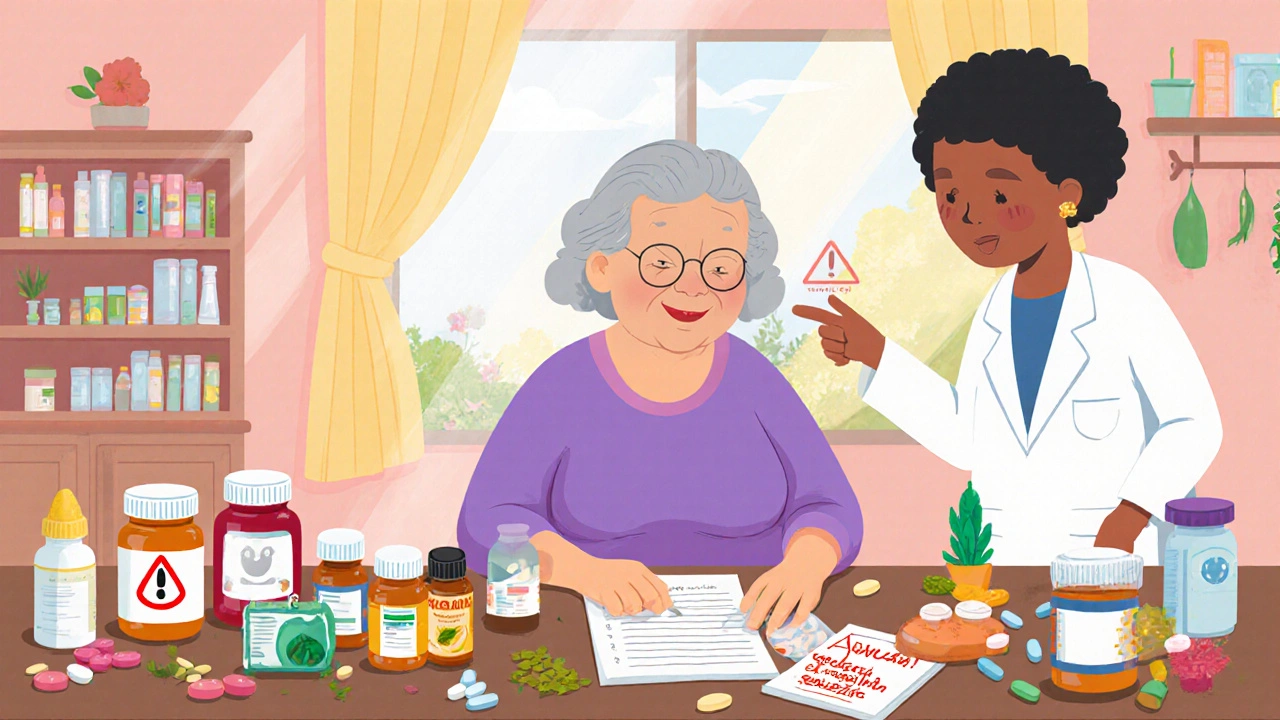
How to Prevent Drug-Drug Interactions in Elderly Patients
Drug-drug interactions are a leading cause of hospitalizations in seniors. Learn how to prevent them using proven tools like the Beers Criteria, STOPP, and NO TEARS framework - and what you can do today to keep elderly loved ones safe.