
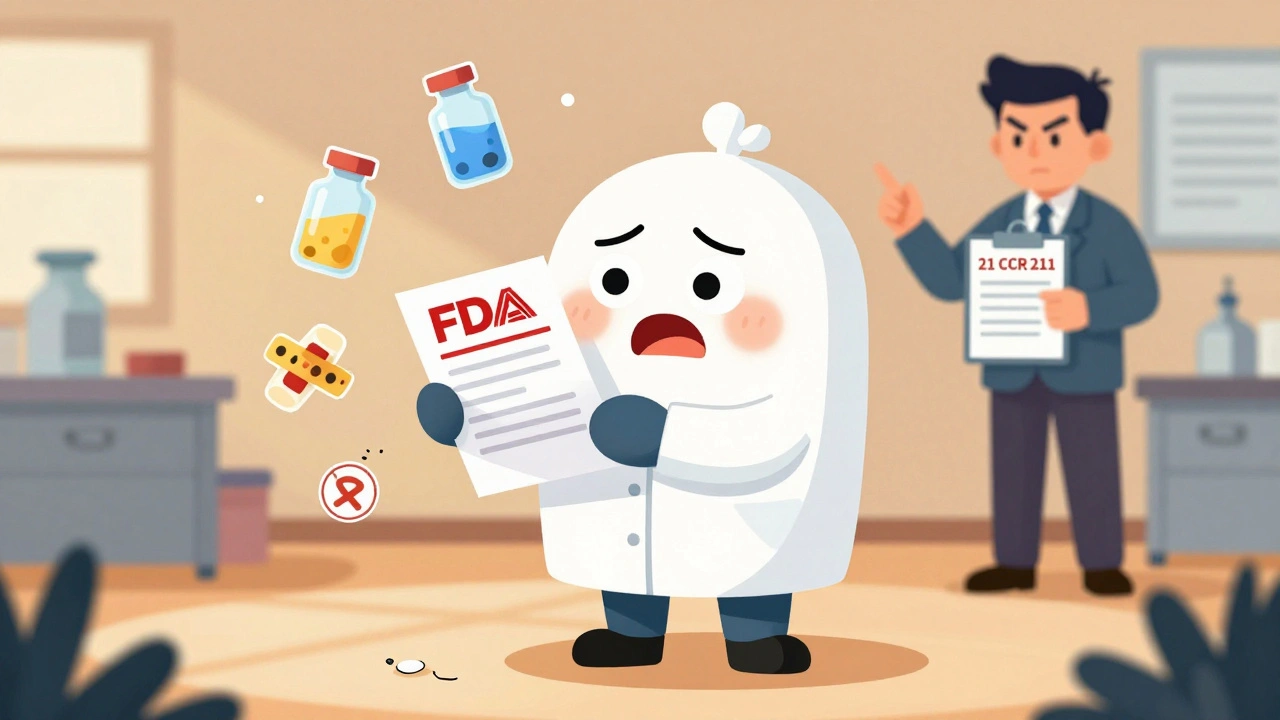
When a pharmaceutical company gets a warning letter from the FDA, it’s not just a paperwork hiccup-it’s a full-blown crisis. These letters don’t come lightly. They’re the FDA’s way of saying, "You’re violating the rules, and if you don’t fix this now, we’ll shut you down." In 2023 alone, the FDA issued 327 warning letters to drug manufacturers worldwide, up from 289 the year before. That’s not noise. That’s a clear signal: the bar for quality is rising, and the consequences for falling short are real.
What Exactly Is an FDA Warning Letter?
An FDA warning letter is a formal, public notice issued when inspectors find serious violations of Current Good Manufacturing Practices (CGMP) during a facility audit. It’s not a suggestion. It’s not a gentle reminder. It’s a legal trigger. The letter cites exact sections of the Code of Federal Regulations-usually 21 CFR Parts 210 and 211-and lists specific, observable failures. For example, a July 2025 letter to Daewoo Pharmaceutical pointed to an employee’s forehead being exposed in an ISO 5 cleanroom. Another cited non-sterile tape being used on a filling line. These aren’t hypotheticals. They’re documented facts from inspection photos, logs, and interviews. The letter doesn’t just list problems. It demands solutions. Every warning letter includes three parts: what was found, which regulation was broken, and what the company must do to fix it. Responses are due in 15 working days. But fixing the problem? That often takes months-or years.Most Common Violations: What the FDA Is Seeing
Not all violations are created equal. Some are rare. Others show up again and again. According to analysis of over 500 warning letters from 2018 to 2022, the top three issues are:- Inadequate investigation of out-of-specification (OOS) results-63.4% of letters. Companies find a batch fails testing, but don’t dig deep enough to find why. They just retest until it passes.
- Weak quality unit oversight-57.8%. The quality team isn’t empowered to stop production, investigate, or enforce standards. They’re treated as a paperwork department, not a safety guard.
- Faulty aseptic processing controls-78.3%. This is especially dangerous for injectables. Sterility failures can kill patients. Letters cite failed media fills, improper gowning, unvalidated air flow, and uncleaned equipment.
Who Gets Warning Letters-and Why
You might think foreign manufacturers get hit hardest. And you’d be right. In 2022, Indian facilities received 38.7% of all warning letters. U.S. facilities came second at 31.5%. But here’s the catch: the same violations happen everywhere. The difference? Foreign facilities are inspected less often, so when they’re caught, it’s usually for long-standing, systemic issues. The FDA also targets repeat offenders. A July 2025 letter to Glenmark Pharmaceuticals didn’t just cite new problems. It pointed back to a 2019 warning letter to their same company’s facility in Himachal Pradesh. The message? “You’ve been here before. You knew better. This isn’t an accident. It’s negligence.” Small companies feel this most. One 15-person manufacturer on Reddit said hiring three consultants at $250/hour just to write their response nearly bankrupted them. Meanwhile, big firms have entire compliance departments dedicated to handling these letters. The system isn’t broken-it’s uneven.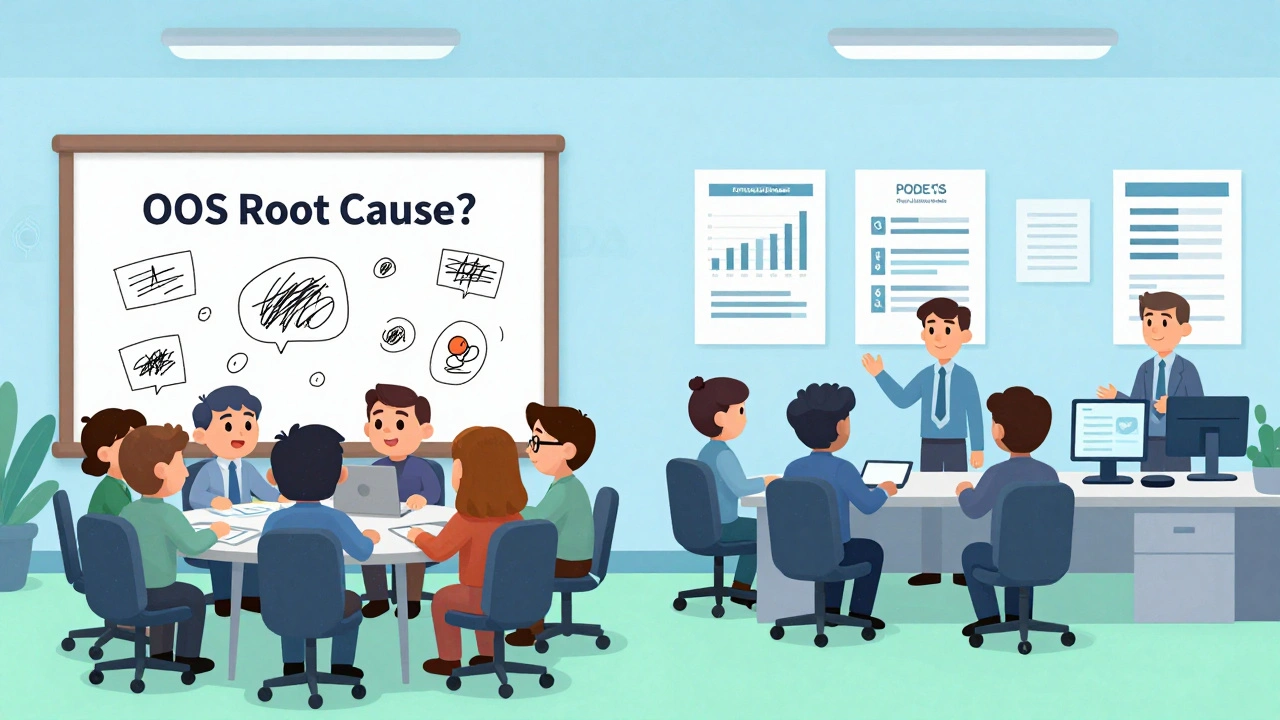
What Happens After the Letter Is Sent
Receiving a warning letter doesn’t mean the end. But it does mean the beginning of a long, expensive fight. Companies that respond well can recover. Those that don’t? They get slapped with import alerts, product seizures, or even consent decrees that put the entire operation under court supervision. The FDA expects a response that includes:- A full root cause analysis-no vague statements like “human error.” Show data.
- Corrective actions taken-what you changed, when, and how you tested it.
- Preventive actions-how you’ll stop this from happening again.
- Documentation proving it all worked-validation reports, training records, updated SOPs.
Why This Matters Beyond Compliance
Warning letters aren’t just regulatory headaches. They hit the bottom line hard.- 68% of companies stop submitting new products while fixing the issue.
- Stock prices drop an average of 18.4% over 12 months after a letter is issued.
- Customers, especially big hospitals and insurers, start asking questions. Some drop the supplier entirely.
- Regulatory agencies in Europe, Canada, and Australia see the FDA letter and often launch their own investigations.
How to Avoid a Warning Letter
The best way to get a warning letter? Don’t wait for one. Build quality into your system from day one.- Train your quality team to say “no.” If they’re not empowered to stop production, you’re one audit away from disaster.
- Validate your aseptic processes. Media fills aren’t optional. They’re your last line of defense.
- Don’t ignore OOS results. Dig into every one. If you can’t explain why a batch failed, you’re playing Russian roulette with patient safety.
- Protect your data. Audit trails must be locked, readable, and traceable. No manual edits. No deletions.
- Review past inspections. If you’ve had a Form 483 before, fix those issues before the next audit.
What’s Changing in 2025 and Beyond
The FDA is getting smarter-and more aggressive. Their 2023-2027 Strategic Plan says they’ll focus on facilities with past violations. That means if you’ve had a warning letter before, you’re now on a watchlist. Inspections will be more frequent, more detailed, and more likely to include unannounced visits. They’re also cracking down on data integrity. New tools let them trace electronic records back to individual users, timestamps, and device IDs. If you’re still using shared logins or paper backups, you’re already behind. The FDA’s new Risk-Based Certificate of Pharmaceutical Product Pilot Program, launched in October 2023, will make it harder for companies with warning letters to export products. Countries like Canada and the EU will start rejecting applications from flagged manufacturers. The message is clear: quality isn’t a cost center. It’s your license to operate.What happens if I ignore an FDA warning letter?
If you ignore an FDA warning letter, the agency will escalate. This could mean an import alert blocking your products from entering the U.S., a product seizure, a consent decree forcing you to operate under court supervision, or even criminal charges. The FDA publishes warning letters publicly, so customers, partners, and investors will see them. Ignoring it is not an option-it’s a business suicide.
How long do I have to respond to a warning letter?
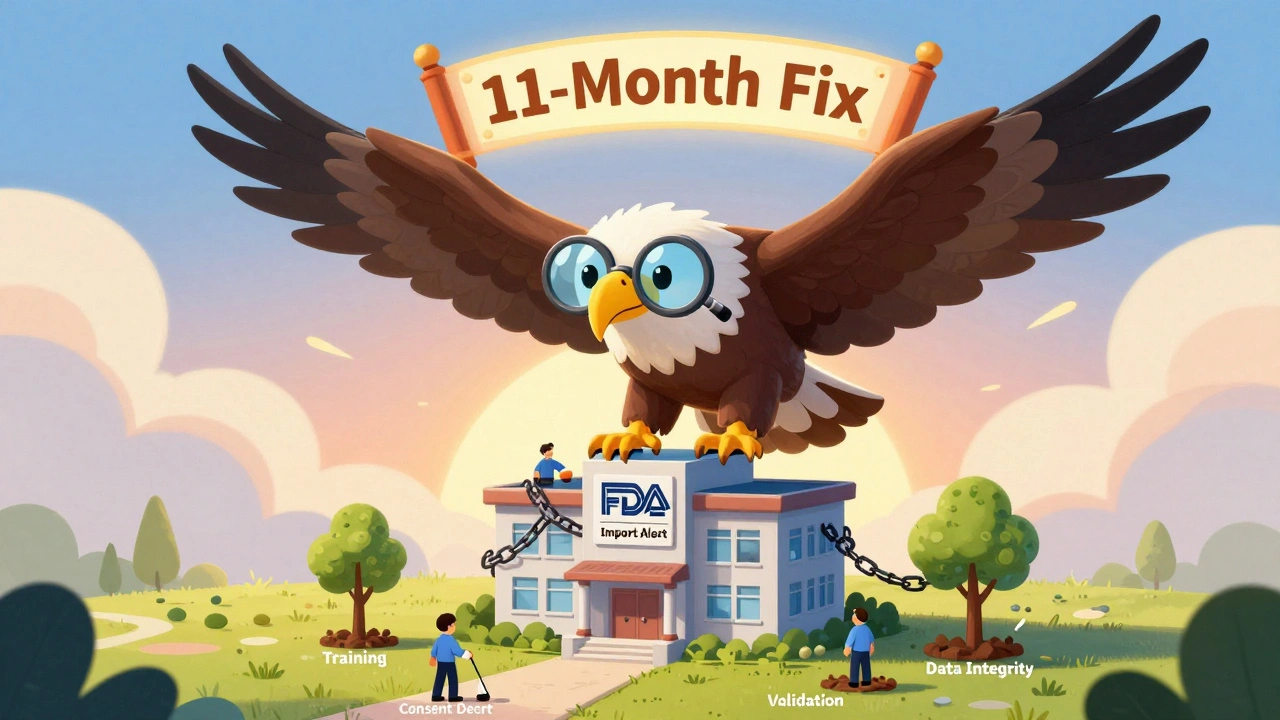
The FDA expects an initial written response within 15 working days. This is not a deadline for full remediation-it’s just to acknowledge receipt and outline your plan. Full corrective actions typically take 6 to 12 months. The FDA will review your response and may request additional information or schedule a follow-up inspection. Delays in response can trigger immediate enforcement actions.
Can a warning letter be removed from the FDA website?
No. Once issued, a warning letter stays on the FDA’s public website permanently. Even if your company fully resolves the issues and passes a follow-up inspection, the letter remains as a public record. However, the FDA may issue a letter of closure confirming the violations have been addressed. This doesn’t remove the original letter, but it signals to the market that you’ve corrected the problems.
Do warning letters only apply to drug manufacturers?
No. While most warning letters target pharmaceutical manufacturers, they also apply to medical device makers, biologics producers, and even some food and cosmetic companies. Any facility regulated under the FD&C Act can receive one. The rules for CGMP apply broadly across products meant for human use. The same principles-cleanliness, documentation, control, and accountability-are required regardless of the product type.
What’s the difference between a Form 483 and a warning letter?
A Form 483 is a list of inspectional observations given at the end of an FDA audit. It’s an internal notice to the company. A warning letter is a formal enforcement action sent after the company fails to adequately address those observations. Form 483s are common-issued in over 60% of inspections with issues. Warning letters are serious-they’re sent only when violations are significant, repeated, or pose a direct risk to public health.
Kathy Haverly
Yeah right, the FDA is just out to get small pharma. Meanwhile, big companies like Pfizer and Merck have been dodging inspections for years with their private consultants and backdoor meetings. This whole 'quality culture' nonsense is just PR fluff to make investors feel better. They don't care about patients-they care about stock prices.
December 10, 2025 AT 03:24
Graham Abbas
There's something deeply human in how we treat quality control like a moral failing rather than a systemic design flaw. We punish the worker who forgot to wipe the surface, but never ask why the system lets them forget. Is it the lack of training? The pressure to ship? The fear of speaking up? The FDA's letters are symptoms, not causes. We're diagnosing the fever but ignoring the infection.
December 11, 2025 AT 02:29
Haley P Law
OMG I just read this and I’m CRYING 😭 like who even CARES if someone’s forehead was exposed?? That’s not a life-or-death issue, that’s a photo op for the FDA to look like they’re doing something. Meanwhile, real problems like opioid overprescribing? No warning letters for THAT. 😤
December 11, 2025 AT 08:42
Andrea DeWinter
Let me tell you what actually works-empower the quality team. Not just give them a title, give them authority. I worked at a midsize generic plant where the QA lead could halt production with a single call. We had zero warning letters for 5 years. No magic. Just respect. Train people. Listen to them. Pay them. And stop treating compliance like a box to check.
Also-audit trails. If your system lets someone delete data, you’re not saving money. You’re gambling with lives. Period.
December 11, 2025 AT 15:04
Chris Marel
I come from a country where many factories struggle with basic electricity, let alone sterile environments. But I’ve seen workers there risk their jobs to report issues because they know someone might die if they don’t. Maybe the real problem isn’t the violations-it’s that we’ve made compliance feel like a punishment, not a shared duty.
December 11, 2025 AT 20:32
precious amzy
The entire regulatory apparatus is predicated upon a neo-liberal fallacy-that market forces, when appropriately constrained by bureaucratic oversight, will yield optimal outcomes. The FDA’s warning letters are merely performative acts of symbolic capital, designed to assuage the public’s epistemic anxiety regarding pharmaceutical safety, while systematically ignoring the structural precarity of global supply chains and the commodification of human health. One cannot remediate systemic corruption through procedural compliance.
December 13, 2025 AT 06:31
William Umstattd
Let’s be crystal clear: if you’re deleting audit trails, backdating records, or retesting OOS results until you get a pass-you’re not just violating regulations. You’re committing fraud. And fraud on this scale isn’t negligence-it’s malice. The FDA should be pursuing criminal charges, not waiting for companies to ‘respond in 15 days.’ This isn’t a compliance issue. It’s a criminal justice issue.
December 15, 2025 AT 00:55
Tejas Bubane
Indian companies get hit hardest? Lmao. We’re the ones who make 40% of the generic drugs in the US. You think your $4 aspirin is safe? Good luck. The real story is that the FDA is too lazy to inspect US plants but loves to bully overseas factories. Meanwhile, US firms outsource the dirty work and take the profit. Hypocrites.
December 15, 2025 AT 19:24
Lisa Whitesel
Stop pretending this is about safety. It’s about control. The FDA doesn’t want you to fix things-they want you to beg. They want you to hire their favorite consultants. They want you to pay $3 million and then kiss their ring. This isn’t regulation. It’s extortion dressed in a lab coat.
December 16, 2025 AT 07:12
Larry Lieberman
Just had a QA engineer tell me today they found a vial with a hair in it. No big deal right? 🤔 But then they checked the audit trail and found the same batch was flagged 3 times before... and each time someone just clicked 'approve'. 🤯 This isn't about cleanrooms. It's about culture. And culture is broken.
December 16, 2025 AT 15:15