
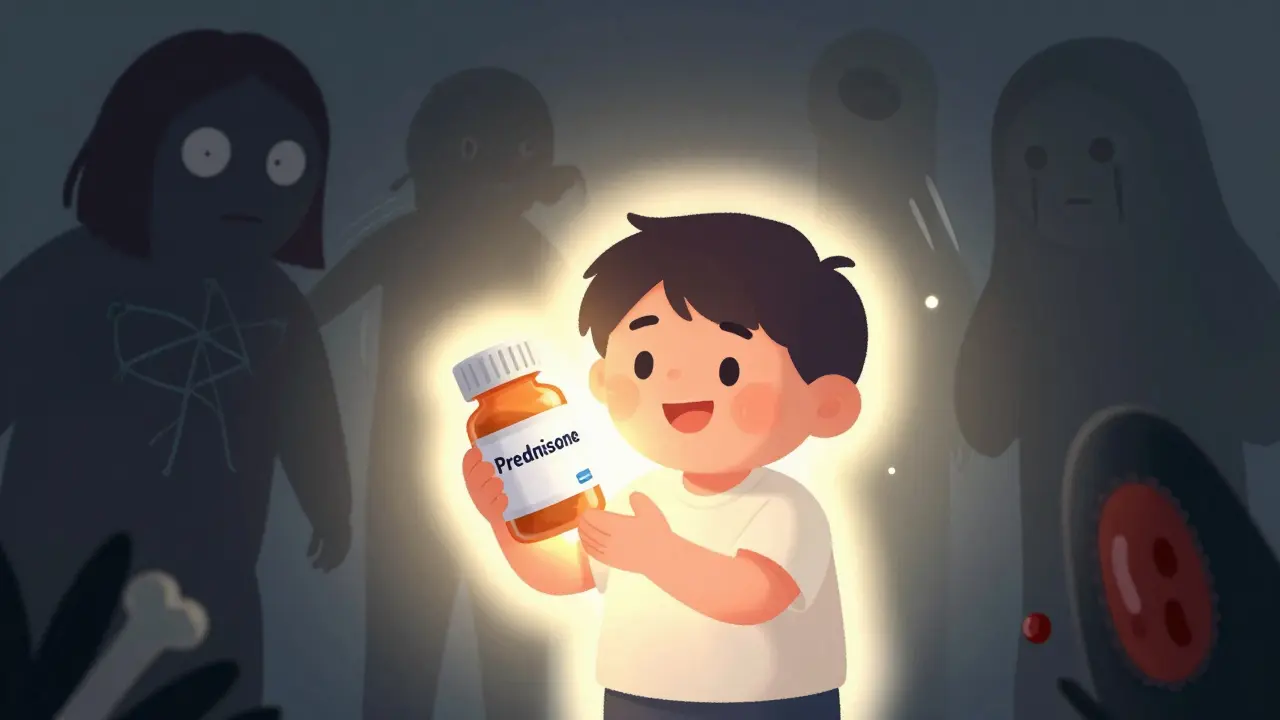
Most people think of corticosteroids as a quick fix-something that turns a bad flare-up into a manageable day. And for many, that’s exactly what they do. Within 48 hours of taking prednisone, someone with a lupus flare might feel like they’ve got their life back. Joint swelling drops. Fever breaks. Breathing clears. But what happens after the relief fades? That’s where the real story begins.
How Corticosteroids Work (And Why They’re So Fast)
Corticosteroids like prednisone, hydrocortisone, and dexamethasone are synthetic versions of cortisol, the hormone your body naturally makes to handle stress and inflammation. They don’t cure anything. They don’t fix the root cause of rheumatoid arthritis, asthma, or lupus. What they do is shut down inflammation like a fire alarm being turned off-fast.
That speed is why doctors reach for them. While disease-modifying drugs like methotrexate can take weeks to work, corticosteroids kick in within hours. A 2021 study in Arthritis & Rheumatology showed corticosteroids cut disease activity scores by 2.1 points in just one week. NSAIDs? Only 0.7. Placebo? Barely 0.3.
They’re also used in injections-knee, shoulder, spine. A cortisone shot might not help until day 5 or 6, but once it does, relief can last weeks or even months. For someone with severe bursitis or a pinched nerve, that’s life-changing. But it’s not a cure. It’s a pause button.
The Hidden Cost of Quick Relief
There’s a reason doctors call corticosteroids the "fire extinguisher" of rheumatology. You use them in an emergency. You don’t leave them running.
Even a short course-less than 30 days-comes with serious risks. A 2020 analysis of 1.5 million patient records by the American Academy of Family Physicians found that within just 5 to 30 days of starting steroids:
- The risk of sepsis jumped by 430%
- Clots in the legs or lungs (venous thromboembolism) rose by 230%
- The chance of breaking a bone increased by 90%
And that’s just the short-term stuff. Long-term use? It gets worse. Bone loss starts as early as the first month-up to 5% per year. That’s faster than menopause. By six months, 8% of users develop osteoporosis. Some never recover.
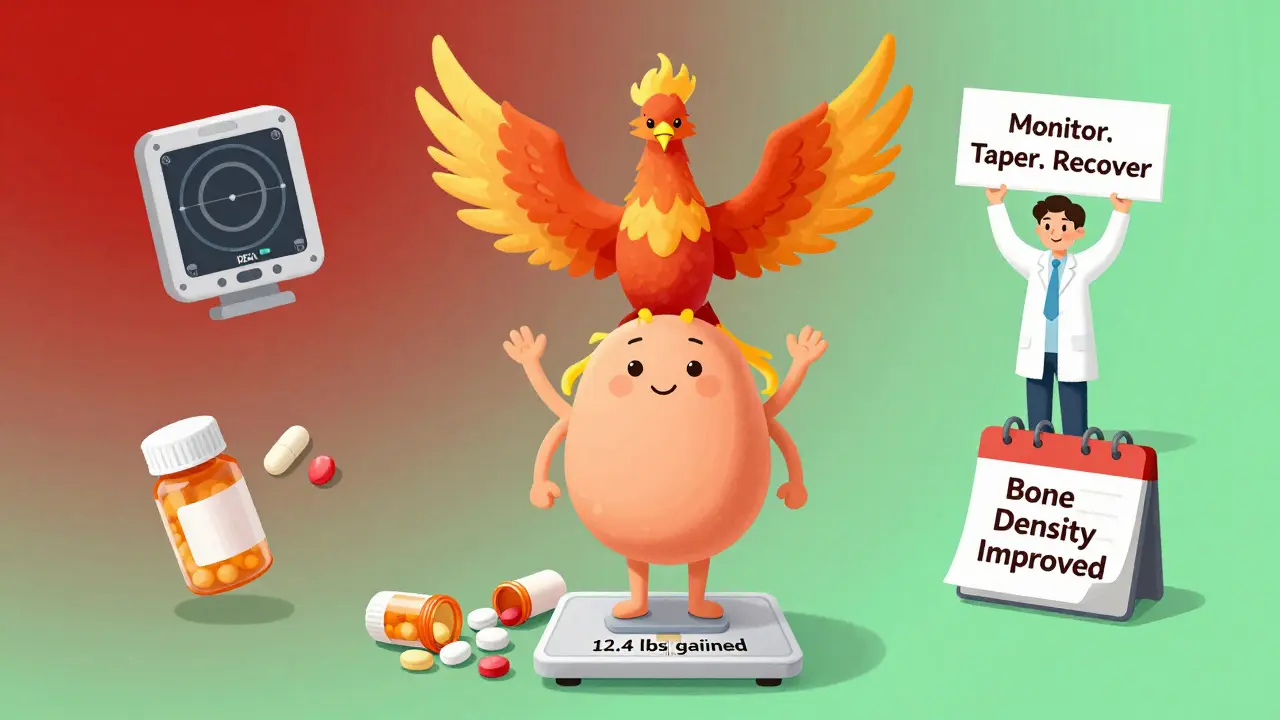
Weight gain isn’t just "eating too much." It’s fluid retention and fat redistribution. People report moon face, buffalo humps, and belly fat that won’t go away-even after stopping. One patient survey from the Steroid Recovery Project found 87% gained an average of 12.4 pounds in just eight weeks.
Then there’s blood sugar. Steroids make your liver pump out glucose. For someone with prediabetes, a 10-day course can trigger full-blown type 2 diabetes. And for those already diabetic? Doses often need to be tripled. A 2023 meta-analysis found each extra month of steroid use beyond three months raised 10-year mortality risk by 4.7%.
When Are They Actually Needed?
Not every cough, backache, or rash needs steroids. Yet, a shocking 47% of all corticosteroid prescriptions in the U.S. are for conditions with no proven benefit-like common colds, bronchitis, or nonspecific back pain.
According to IQVIA data, 21% of U.S. adults got at least one short-term steroid prescription between 2012 and 2015. Over half of those were for things that shouldn’t have been treated with steroids at all. That’s not just wasteful-it’s dangerous. The U.S. spends $1.2 billion a year treating side effects from these unnecessary prescriptions.
Real, evidence-based uses are limited:
- Acute asthma or COPD flare-ups (5-day max)
- Flares of lupus, rheumatoid arthritis, or vasculitis
- Severe allergic reactions or anaphylaxis
- Peritonsillar abscess (reduces need for surgery by 27%)
- Severe eczema or psoriasis unresponsive to topical treatments
For most chronic conditions, steroids are a bridge-not a destination. They buy time while slower, safer drugs like methotrexate, biologics, or JAK inhibitors take effect.
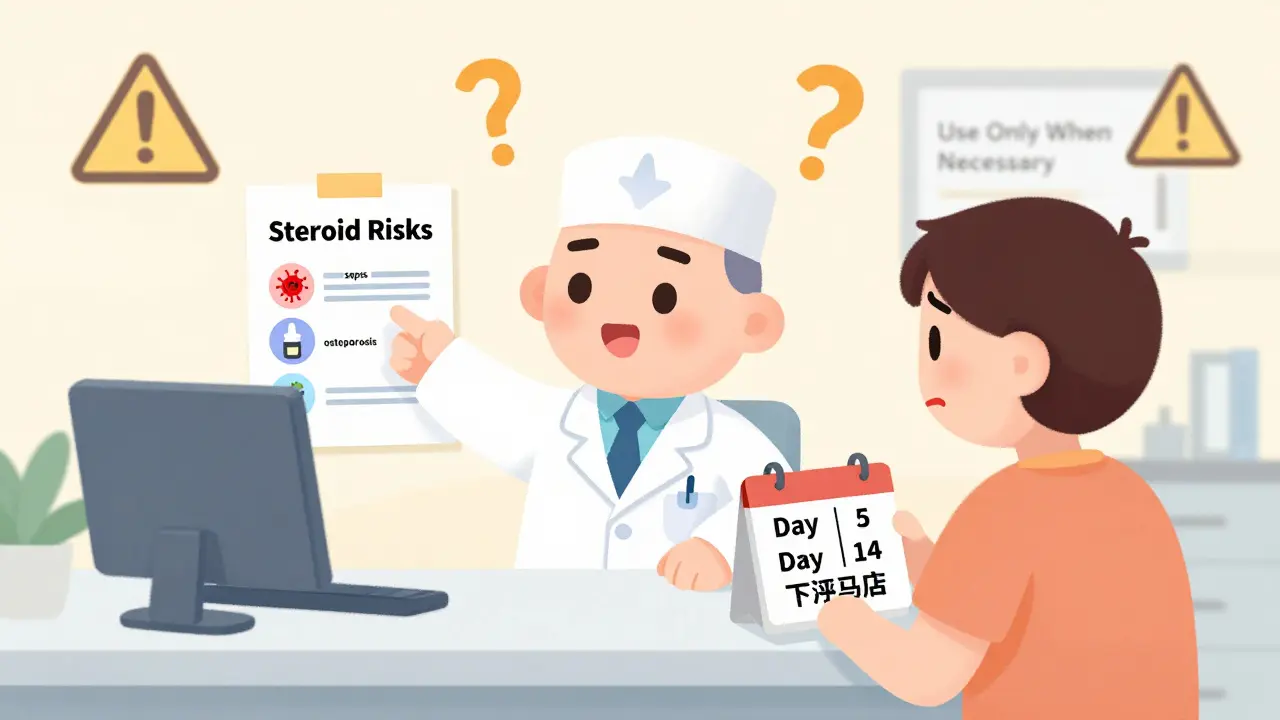
The Tapering Trap
Many people don’t realize stopping steroids isn’t as simple as skipping a pill. Your adrenal glands, used to being told to shut down by the drug, forget how to make cortisol on their own.
If you take steroids for more than two weeks, you must taper off slowly. Abruptly stopping can cause adrenal crisis-low blood pressure, vomiting, confusion, even death. The American College of Physicians says any course over 14 days needs a taper of at least 7 days. For longer use? Sometimes it takes months.
And here’s the kicker: even after you stop, your body can stay vulnerable for up to a year. If you have surgery, get seriously ill, or suffer trauma during that time, you need emergency hydrocortisone shots to avoid collapse.
What’s Being Done to Fix This?
Doctors are waking up. In January 2024, the American College of Physicians launched "Steroids Smart," a program requiring pre-authorization for any steroid course longer than 10 days in Medicare Advantage plans. That’s 12 million people.
Hospitals now have EHR alerts that pop up when a doctor tries to prescribe steroids for bronchitis or back pain. Early adopters saw inappropriate prescribing drop by 31%.
And new drugs are coming. Fosdagrocorat, approved by the FDA in December 2023, is the first selective glucocorticoid receptor modulator. It fights inflammation like prednisone-but with 63% less blood sugar spike. It’s not a magic bullet, but it’s a step toward safer options.
What You Can Do
If you’re prescribed corticosteroids, ask these questions:
- Is this the right condition for steroids? (Not every infection or pain is)
- What’s the shortest possible dose and duration?
- Will I need a taper? How long will it take?
- Am I getting monitored? (Blood sugar, bone density, eye exams)
- Are there alternatives? (Like NSAIDs, physical therapy, or biologics)
If you’re on steroids for more than three months, you should be getting:
- A DEXA scan to check bone density
- Monthly blood sugar tests
- Calcium (1200 mg) and vitamin D (800 IU) daily
- Annual bone-strengthening injections like zoledronic acid if on high doses
- Eye checks every 3-6 months for cataracts or glaucoma
Yet, only 42% of primary care providers follow all these steps, according to a 2022 JAMA audit. Don’t assume your doctor knows. Bring it up.
The Bottom Line
Corticosteroids are powerful. They save lives. They stop flares. They let people walk again after months of pain. But they’re not harmless. Every pill carries a trade-off: immediate comfort now, or long-term damage later.
The goal isn’t to avoid them entirely. It’s to use them like a scalpel-not a sledgehammer. Short course. Low dose. Clear plan. Constant monitoring. And never, ever as a first-line fix for something that doesn’t need it.
If you’ve used steroids and are now dealing with weight gain, brittle bones, or high blood sugar, you’re not alone. But you’re not powerless. Recovery is possible. Bone can rebuild. Blood sugar can normalize. The damage isn’t always permanent-but only if you act.
Can corticosteroids cause permanent damage?
Yes, in some cases. Long-term use-especially beyond 3 months-can lead to permanent changes like cataracts, osteoporosis, and steroid-induced diabetes. Bone loss can be irreversible if not treated early with calcium, vitamin D, and bone-strengthening drugs. Weight gain and facial changes often improve after stopping, but not always completely. The key is catching problems early through regular monitoring.
How long do steroid side effects last after stopping?
It varies. Fluid retention and mood swings usually fade within weeks. Weight gain may take months to reverse with diet and exercise. Bone density can improve over 1-2 years with proper treatment. But adrenal suppression can last up to a year-meaning you still need emergency steroid coverage during major illness or surgery. Blood sugar levels often return to normal, but some people develop lasting diabetes.
Are steroid injections safer than pills?
Local injections (like into a joint) expose your body to far less of the drug than oral or IV steroids, so systemic side effects are much lower. But they’re not risk-free. Repeated joint injections can damage cartilage. Skin thinning and fat loss at the injection site are common. And if you get too many over time-even injections-your body can still absorb enough to affect blood sugar or bone health. Limit them to 3-4 per joint per year.
Why are older adults prescribed steroids more often?
Older adults are more likely to have chronic inflammatory conditions like arthritis or COPD, which often trigger steroid use. But they’re also more vulnerable to side effects-bone loss, diabetes, infections. Studies show seniors get steroid prescriptions 2.3 times more often than people under 45. Many of these prescriptions are for conditions where safer alternatives exist. The risk-benefit ratio is much tighter in older patients, yet monitoring is often skipped.
Can I avoid steroids altogether?
For some conditions, yes. For others, no. Mild arthritis? Physical therapy and NSAIDs can help. Asthma? Inhaled corticosteroids are safer than pills. Lupus flares? Biologics are now first-line for many patients. But for sudden, life-altering inflammation-like a severe asthma attack or a vasculitis flare-steroids are still the fastest, most reliable option. The goal isn’t to avoid them entirely, but to use them wisely, briefly, and only when absolutely necessary.
Katie Schoen
Been on prednisone for a lupus flare last year. Felt like a superhero for two weeks. Then I looked in the mirror and didn’t recognize myself. Moon face? Check. Belly that looked like I was 7 months pregnant? Check. And don’t even get me started on the insomnia and mood swings. It’s not magic. It’s a loan with compound interest.
January 6, 2026 AT 06:18
Beth Templeton
Doctors prescribe these like they’re Advil. My uncle got a 10-day script for a sinus infection. He’s still on insulin two years later.
January 7, 2026 AT 16:12
Tiffany Adjei - Opong
Yeah but what if you’re the one who can’t walk? You think I’d rather be on steroids or stuck in a wheelchair? People don’t get it until it’s them. Stop judging the treatment and start judging the system that leaves us no other choice.
January 8, 2026 AT 22:35
Ryan Barr
It’s amusing how the average person conflates ‘effective’ with ‘safe.’ Corticosteroids are a blunt instrument. A neurosurgeon wouldn’t use a sledgehammer to remove a tumor. Yet we let GPs do this daily. The data is clear. The practice is lazy.
January 9, 2026 AT 05:35
Cam Jane
Hey if you’re on steroids long-term please please please talk to your doctor about bone density scans and vitamin D. I lost 8% of my hip density in 6 months and didn’t know until I fractured my wrist reaching for a coffee mug. It’s not dramatic-it’s silent. But it’s fixable if you catch it. Calcium 1200mg, D3 800IU, weight-bearing walks 3x a week. I’m 42 and my bones are holding. You can too. Don’t wait until you’re in a cast.
January 10, 2026 AT 17:30
Amy Le
🇺🇸 We need to stop letting Big Pharma write our prescriptions. Steroids are cheap. Profits aren’t. They push these because they make billions off the side effects. Diabetes meds. Bone drugs. Eye drops. It’s a loop. And we’re the cash register.
January 10, 2026 AT 18:29
Pavan Vora
in india, we have this problem too… but worse. people buy prednisone from local chemist without prescription. my aunt took it for back pain… now she has diabetes and cataracts. doctors here don’t even explain tapering. they just hand out the bottle. 😔
January 10, 2026 AT 23:25
Indra Triawan
I just want to feel normal again… but every time I try to stop, I collapse. My body doesn’t remember how to work without the drug. I’m scared to live without it. But I’m also scared to keep taking it. I don’t know what to do.
January 12, 2026 AT 08:24
Molly McLane
To the person who said they collapse when they stop - you’re not alone. I went through that. I cried in the ER because I couldn’t stand up. But I found a rheumatologist who did a 9-month taper with tiny drops. I got my energy back. My face returned. I’m not ‘cured’ - but I’m alive. And I’m not letting anyone tell me to just ‘tough it out.’ You deserve care. Ask for a taper plan. Demand monitoring. You’re not weak for needing help.
January 12, 2026 AT 20:53
Susan Arlene
steroids are the opioid of rheumatology and no one wants to admit it. we got addicted to quick fixes and now we’re paying the price. the real tragedy? most of these prescriptions could’ve been avoided with better access to PT, nutrition, and mental health support. but that costs more than a 10-day script
January 13, 2026 AT 08:38