
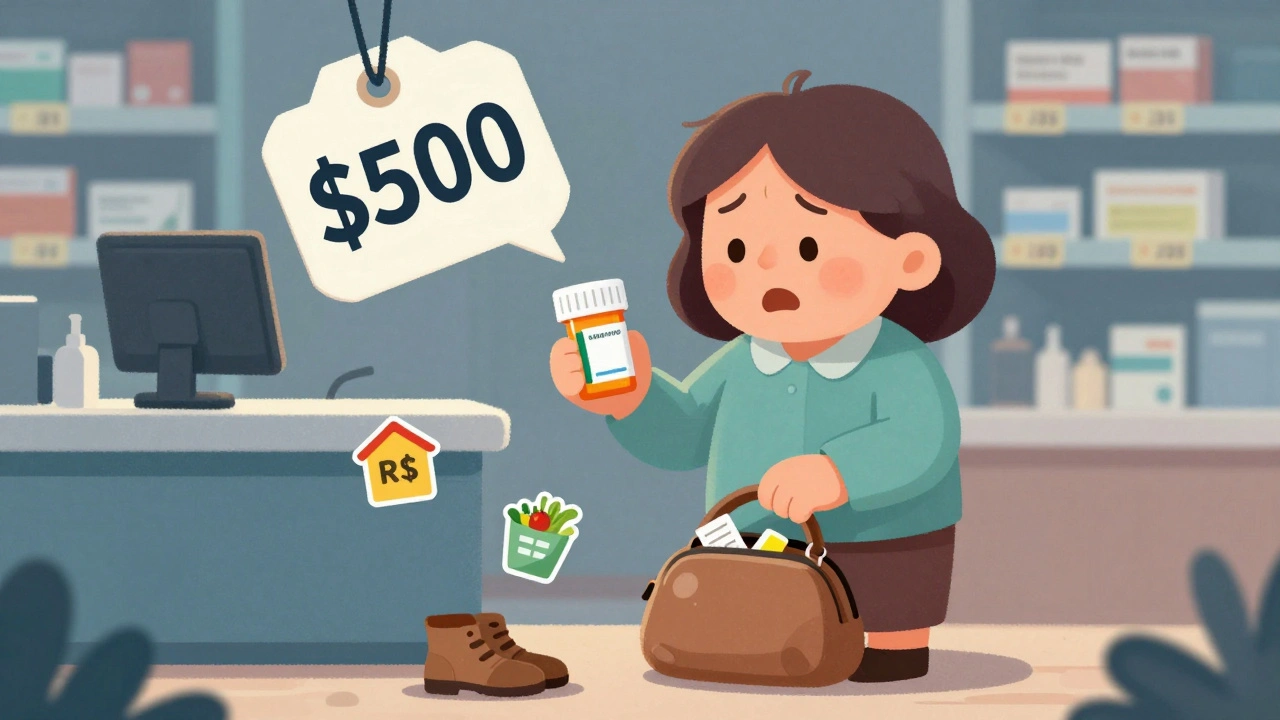
More than 1 in 5 Americans skip doses, split pills, or skip filling prescriptions because they can’t afford their medications. It’s not laziness. It’s not forgetfulness. It’s cost.
Imagine taking insulin every day. Your insurance says you pay $30 a month. But when you get to the pharmacy, the bill is $500. You’ve been working two jobs, your rent is due, and your kid needs new shoes. You choose food over your medicine. This isn’t rare. In 2022, 18% of U.S. adults didn’t fill a prescription because of the price. And it’s killing people - about 125,000 deaths a year are tied to people not taking their meds as prescribed.
Why Cost Stops People From Taking Their Medicine
It’s not just high list prices. It’s the whole system: copays, deductibles, coinsurance, tiered formularies. Even if you have insurance, you might still pay hundreds a month. A 2023 study found that when copays jumped from $10 to over $50, adherence dropped by 15-20%. That’s not a small dip. That’s people going without.
People with chronic conditions - like high blood pressure, diabetes, or heart disease - are hit hardest. One study showed cardiovascular patients are more likely to skip meds because of cost than people with cancer or diabetes. Why? Because these drugs are taken daily, for life. There’s no end date. No cure. Just a monthly bill that never goes away.
Low-income families, Black and Hispanic communities, and younger adults are disproportionately affected. A CDC report found that people making under $25,000 a year are over three times more likely to skip meds than those making over $75,000. Many say they choose between meds and groceries, heat, or rent. One 62-year-old Medicare beneficiary told Kaiser Health News she pays $350 a month after insurance. She picks which pills to take based on what she can afford that week.
How Much Does It Really Cost?
The U.S. spends more on prescription drugs per person than any other country. In 2021, Americans paid $63 billion out-of-pocket for retail prescriptions - up 4.8% from the year before. Insulin prices jumped 368% between 2007 and 2017, even though the cost to make it barely changed. Brand-name drugs like Ozempic or Xarelto can cost over $1,000 a month. Even generics aren’t always cheap - some cost $40-$80 for a 30-day supply.
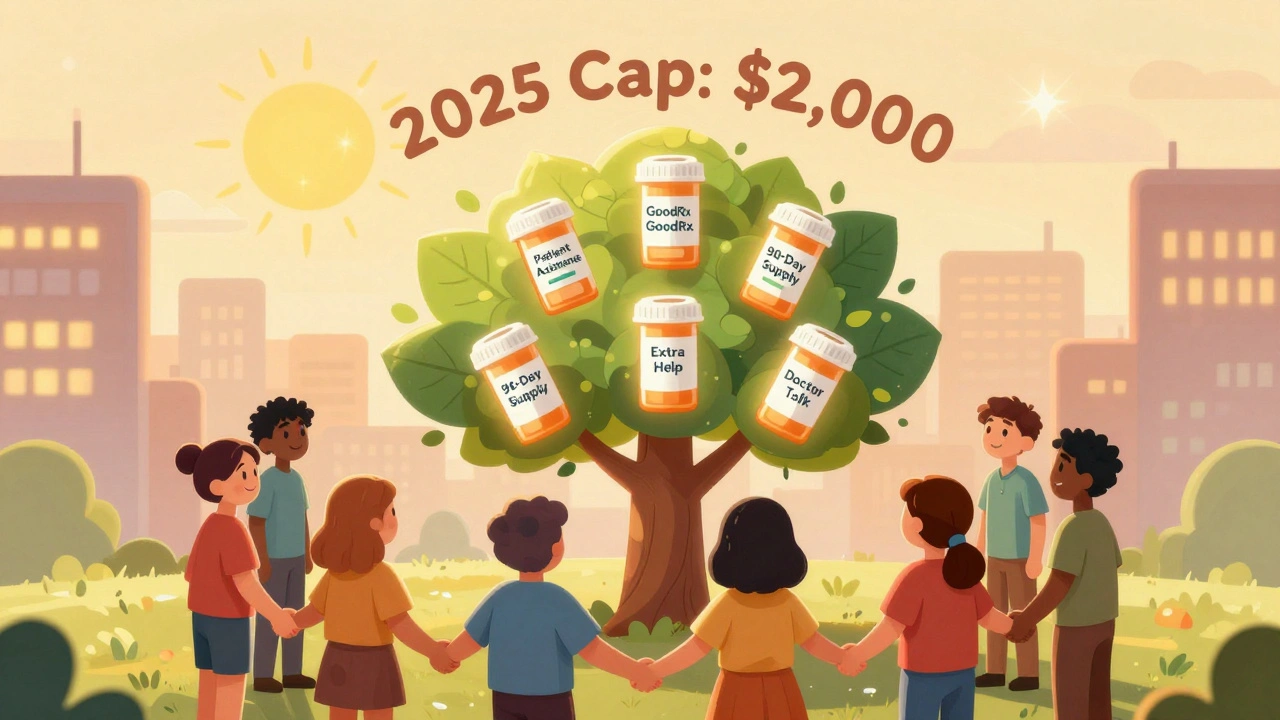
Medicare Part D doesn’t fix everything. In 2016, 14.4% of older adults still skipped doses because of cost. And while the Inflation Reduction Act is starting to help - capping out-of-pocket drug costs at $2,000 a year starting in 2025 - millions still face high bills right now.
Real Stories, Real Consequences
On Reddit, users share heartbreaking stories: one person pays $800 a month for insulin despite having insurance. Another splits 50mg pills in half to make them last. A woman with rheumatoid arthritis says she hasn’t filled her biologic shot in six months because she can’t afford it. She’s in pain every day.
These aren’t hypotheticals. They’re daily choices. And they lead to hospitalizations, emergency room visits, and early death. The American Heart Association says poor adherence causes 125,000 deaths annually. That’s more than car accidents or gun violence. And the financial toll? Between $100 billion and $300 billion in avoidable healthcare costs every year.
How to Get Help - Practical Steps Anyone Can Take
You don’t have to suffer in silence. There are real, working solutions - and you don’t need a degree in healthcare to use them.
- Ask your doctor about cheaper alternatives. Not all drugs are created equal. A generic version might cost $10 instead of $150. Or a different brand might be on your insurance’s preferred list. Doctors who check formularies before prescribing can save patients hundreds a month.
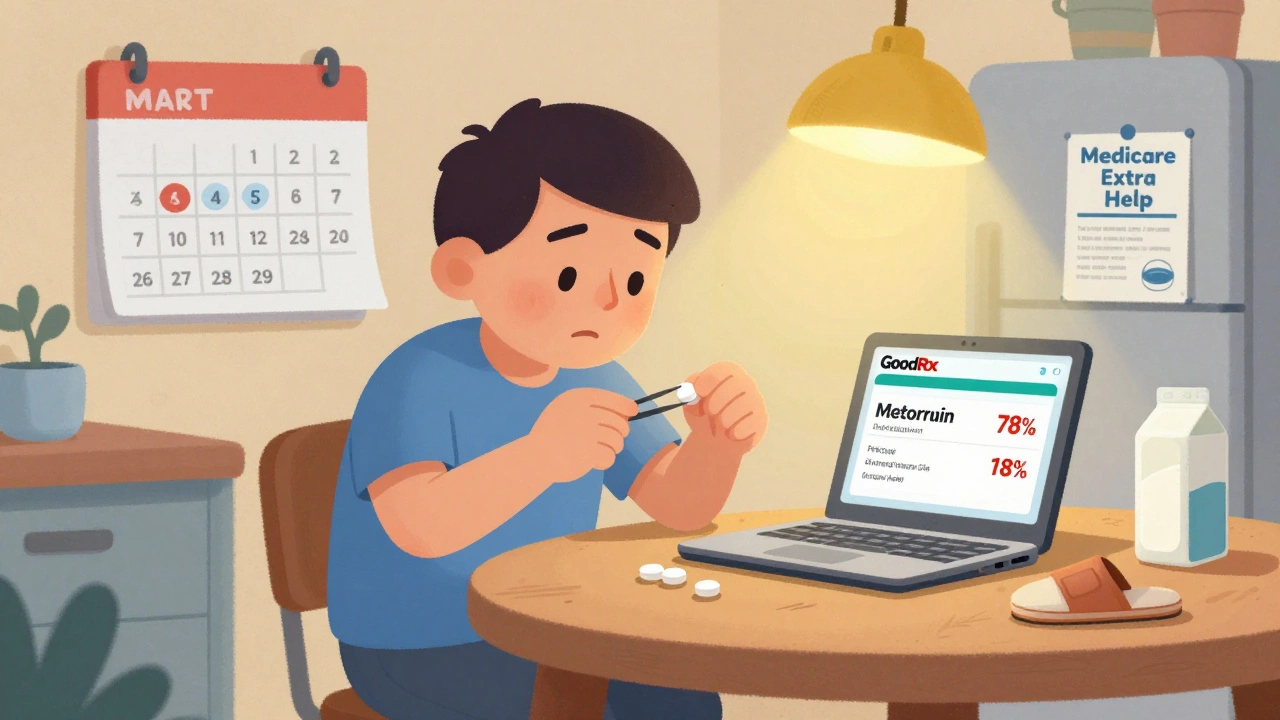
- Use GoodRx or SingleCare. These free apps compare prices at nearby pharmacies. In many cases, you’ll pay less without insurance. One user saved 78% on metformin - from $120 to $26. Over 35 million Americans use these tools every month.
- Ask for a 90-day supply. Many insurers charge the same copay for 90 days as they do for 30. That means you pay less per pill. Mail-order pharmacies often offer this too.
- Apply for patient assistance programs. Drug makers like Pfizer, Novo Nordisk, and Eli Lilly offer free or low-cost meds to people with low income. Eligibility is usually under 400% of the federal poverty level - about $55,520 for one person in 2023. One diabetic patient went from paying $500/month for insulin to $25 after enrolling.
- Check Extra Help (Medicare). If you’re on Medicare and have limited income, Extra Help can cover up to $5,000 in annual drug costs. You can apply through Social Security.
- Ask for samples. About 32% of patients who worry about cost get free samples from their doctor. It’s not a long-term fix, but it can buy time to find a better solution.
- Use the Partnership for Prescription Assistance. This free service connects you to over 475 patient programs. Just call or go online - they do the legwork.
What’s Changing in 2025?
The Inflation Reduction Act is the biggest shift in decades. Starting in 2025, Medicare Part D will cap out-of-pocket drug costs at $2,000 a year. The infamous "donut hole" - where patients paid 100% after hitting a spending threshold - is gone. And for the first time, Medicare will negotiate prices for some high-cost drugs.
Another new option: monthly payment plans for expensive meds. Starting in 2025, Medicare beneficiaries can pay for high-cost drugs in installments instead of one big bill. This helps people who can’t afford a $1,000 payment all at once.
More doctors are talking about cost now. A 2023 survey found 65% of physicians routinely ask patients if they can afford their meds - up from 42% in 2019. That’s progress. But it’s not enough. Many patients still feel embarrassed to bring it up.
What You Can Do Today
If you’re struggling to pay for meds:
- Don’t skip doses without talking to someone.
- Call your pharmacy and ask for the cash price - it’s often lower than your insurance rate.
- Search for your drug on GoodRx and compare prices at 3 nearby pharmacies.
- Ask your doctor: "Is there a cheaper version?" or "Can I get samples?"
- Visit NeedyMeds.org or PPA.org to find free or low-cost programs.
- If you’re on Medicare, apply for Extra Help - even if you think you don’t qualify.
It’s not your fault. You’re not lazy. You’re not failing. The system is broken. But you don’t have to navigate it alone. There are people and programs ready to help. Use them.
Why do people skip their medications because of cost?
People skip doses or don’t fill prescriptions because out-of-pocket costs are too high - even with insurance. Copays, deductibles, and tiered formularies can make life-saving drugs cost hundreds or thousands a month. Many choose between buying meds and paying for rent, food, or utilities. Studies show 18% of U.S. adults have skipped a prescription due to cost in the past year.
Does Medicare cover all prescription drug costs?
No. Medicare Part D helps, but beneficiaries still pay premiums, deductibles, and copays. Many pay hundreds monthly, especially for brand-name drugs. However, starting in 2025, out-of-pocket costs will be capped at $2,000 a year, and the coverage gap (donut hole) will be eliminated. Low-income beneficiaries can also apply for Extra Help, which can cover up to $5,000 in annual drug costs.
Can I get my medications for free?
Yes, through patient assistance programs run by drug manufacturers. Companies like Novo Nordisk, Eli Lilly, and Pfizer offer free or low-cost drugs to people with incomes under 400% of the federal poverty level. For example, insulin programs can reduce monthly costs from $500 to $25. You can apply directly through the manufacturer’s website or use the Partnership for Prescription Assistance to find the right program.
How much can GoodRx save me on prescriptions?
GoodRx can reduce costs by 50% to 80% at participating pharmacies. For example, a $120 prescription for metformin might drop to $26. The app shows cash prices - often cheaper than insurance copays - and lets you compare prices at nearby stores. Over 35 million Americans use it monthly.
What should I ask my doctor about medication costs?
Ask: "Is there a generic version?", "Is this on my insurance’s preferred list?", "Can I get samples?", and "Are there patient assistance programs for this drug?" Doctors who check formularies before prescribing can help avoid expensive surprises. In 2023, 65% of physicians now routinely discuss cost with patients - a big increase from just a few years ago.
Final Thought: You’re Not Alone
Medication adherence isn’t about willpower. It’s about access. The fact that so many people are forced to choose between health and survival says more about our system than it does about them. But change is coming - slowly, unevenly, but still coming. In the meantime, you have tools, resources, and options. Use them. Ask for help. Your life matters more than the price tag on a pill bottle.
Rupa DasGupta
I get it. I really do. But why do we keep pretending this is just about money? It’s the system. The whole damn system. 🤦♀️
December 5, 2025 AT 05:27
Marvin Gordon
This is one of the most important posts I’ve seen all year. Seriously. If you’re struggling, you’re not broken. The system is. Use GoodRx. Ask for samples. You’ve got this.
December 5, 2025 AT 21:38
ashlie perry
They say insulin costs $25 now but that’s just the tip of the iceberg the pharmaceutical companies are working with the government to keep you dependent on their drugs and you’re not even seeing the full picture because they control the media and your doctor gets kickbacks and you think you’re getting help but you’re just being fed lies
December 7, 2025 AT 06:35
Juliet Morgan
i just wanna say… you’re not alone. i’ve been there. splitin’ pills, skippin’ doses, cryin’ in the pharmacy aisle. but i found a program. it’s real. it helped me. you can too. just ask. no shame. 💛
December 7, 2025 AT 23:09
Norene Fulwiler
As a Black woman with type 2, I’ve seen this up close. My aunt died because she couldn’t afford her metformin. We’re not just talking numbers. We’re talking legacy. Our communities are being erased by corporate greed wrapped in insurance jargon. Don’t let them make you feel guilty for surviving.
December 9, 2025 AT 18:25
William Chin
It is imperative to underscore that the current pharmaceutical pricing paradigm constitutes a systemic violation of the fundamental human right to health. One must consult with one’s primary care physician regarding the implementation of evidence-based cost-containment protocols, which may include, but are not limited to, the utilization of formulary alternatives and the invocation of manufacturer-sponsored compassionate use provisions.
December 10, 2025 AT 04:57
Katie Allan
It’s heartbreaking, isn’t it? That in a country with so much wealth, people are forced to choose between breathing and eating. We talk about solutions, but we need to talk about justice. This isn’t a personal failure. It’s a moral failure.
December 10, 2025 AT 09:03
Deborah Jacobs
I used to think I was lazy for forgetting my meds. Turns out I was just broke. GoodRx saved my life. I went from paying $140 for my blood pressure pill to $18. I cried in the parking lot. No one should have to feel that way just to stay alive.
December 10, 2025 AT 21:27
James Moore
Let’s be clear: this isn’t about affordability-it’s about the erosion of American values. We used to make things here. We used to have pride. Now we import drugs from China and India while our own citizens starve for medicine because the elites have turned healthcare into a casino and the house always wins. And don’t even get me started on the woke corporations that pretend to care while they lobby for higher prices! We need a revolution. Not a program. A REVOLUTION.
December 11, 2025 AT 07:05
Laura Saye
The structural determinants of medication non-adherence are deeply embedded within the socio-economic stratification of the U.S. healthcare delivery system, particularly in relation to the commodification of pharmaceuticals and the absence of universal pharmacare. The implementation of patient assistance programs represents a necessary, albeit temporally contingent, mitigating intervention within a broader framework of health equity.
December 12, 2025 AT 02:26