
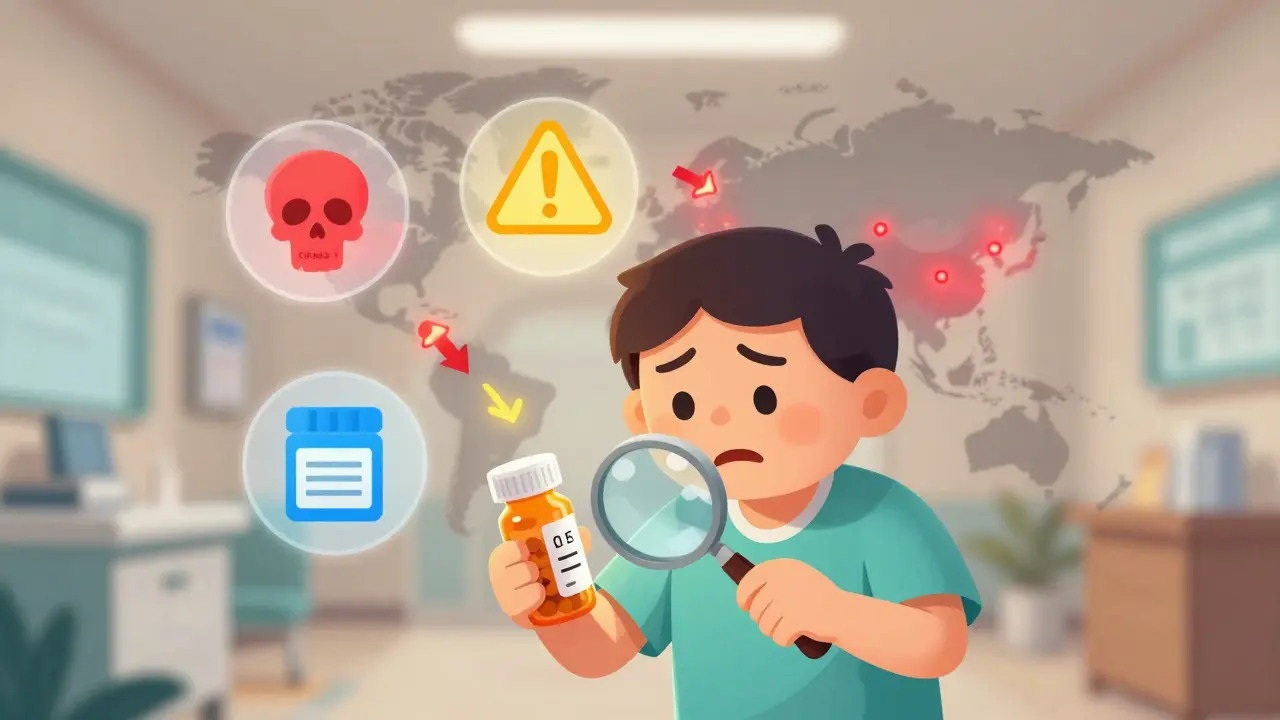
When you pick up a generic pill from the pharmacy, you expect it to work just like the brand-name version - safe, effective, and consistent. But what happens when that trust breaks down? In 2024, the FDA issued 347 drug recalls, and nearly 9 out of 10 of them involved generic medications. Most people never hear about these recalls until they see a notice on the news or their pharmacist calls. But behind every recall is a chain of failures - often hidden in overseas factories, overlooked by inspectors, and missed until someone gets hurt.
What Makes a Drug Recall Necessary?
A drug recall isn’t triggered by a single bad batch. It’s the result of a measurable failure in manufacturing, testing, or labeling. The FDA doesn’t force recalls - manufacturers do, voluntarily. But they’re pushed to act when specific, dangerous problems show up. The most serious recalls - Class I - happen when there’s a real chance of death or serious harm. One example from July 2024: ICU Medical recalled potassium chloride injections because the labels said 10 mEq when they actually contained 20 mEq. That’s a 100% overdose risk. Patients getting this in the ICU could have gone into cardiac arrest. That’s not a mistake. That’s a failure in quality control. Class II recalls are more common. They involve problems that could cause temporary or reversible harm. In April 2025, Glenmark Pharmaceuticals recalled nearly 40 generic drugs because their Indian facility failed to meet basic cleanliness standards. Bacteria in the air. Contaminated water. Dirty equipment. These aren’t rare. Sterility failures alone caused 37% of all FDA recalls between 2012 and 2023. Then there’s Class III - the least dangerous. These are labeling errors, like a missing expiration date or a typo in dosage instructions. They don’t hurt you, but they break the rules. The FDA still needs to act because trust matters.Where Do These Problems Come From?
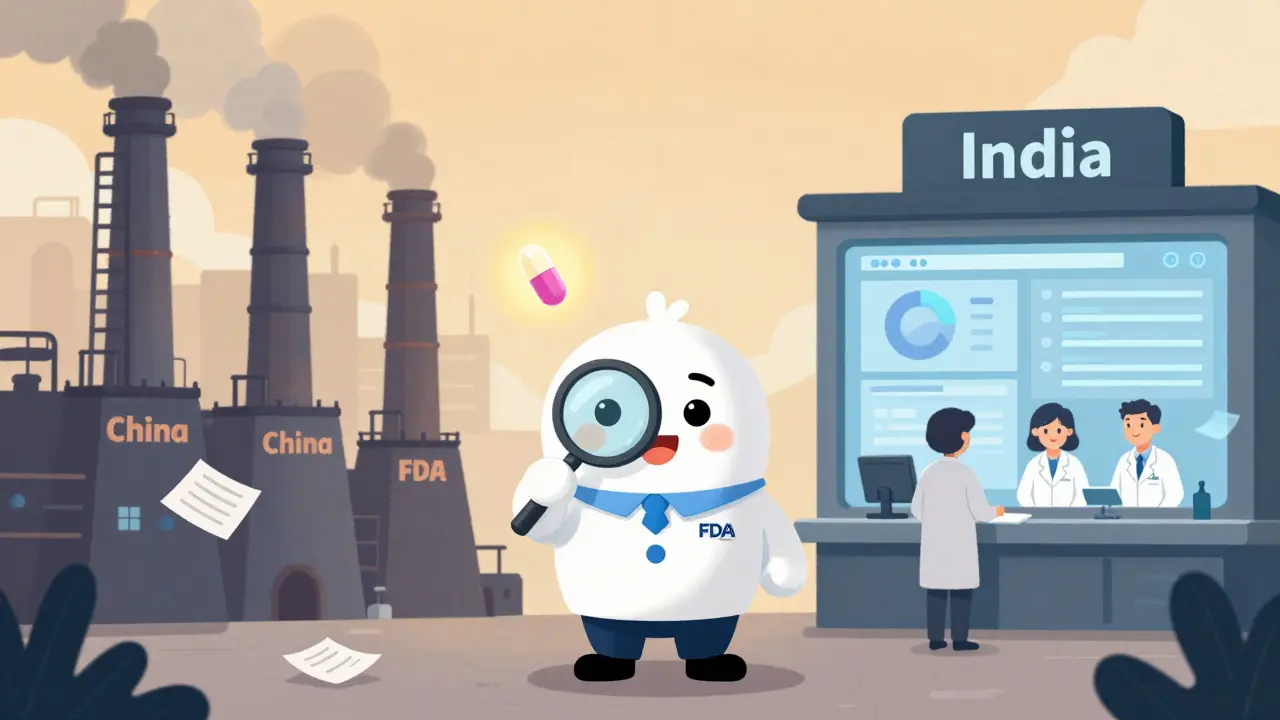
Eighty percent of the active ingredients in U.S. generic drugs come from just two countries: India and China. That’s not a coincidence. It’s economics. Manufacturing drugs cheaply means outsourcing. But cheap doesn’t always mean safe. Domestic drug factories in the U.S. get inspected, on average, every 1.8 years. Foreign facilities? Every 4.6 years. That’s more than four years between inspections. In the Glenmark case, the FDA hadn’t set foot in that Indian plant for over four years. Journalists found the problems before the agency did. The technical standards for clean rooms are strict. Air must be filtered to remove particles as small as 0.5 microns. Microbial levels in sterile areas can’t exceed 10 colony-forming units per cubic meter. Water used in production must have endotoxin levels below 0.25 EU/mL. If any of these numbers are off, the batch is compromised. And in many foreign facilities, those standards aren’t monitored consistently - or sometimes not at all.Why Are Recalls So Slow to Happen?
The U.S. system relies on manufacturers to report problems. That’s the biggest weakness. Companies don’t want recalls. They cost money. They damage reputation. So they delay. Sometimes for months. In the U.S., it takes an average of 42 days from the time a problem is found to when the public is told. In the European Union, where recalls are mandatory and regulators have more power, it takes just 18 days. That’s more than a month of people taking potentially dangerous pills. The delay isn’t always malicious. Sometimes, companies need time to trace which lots are affected. But in many cases, it’s a gamble: Will anyone notice? Will anyone get sick? The system is built on trust - and that trust is broken too often.
Who Notices These Problems First?
Surprisingly, it’s not always the FDA. Often, it’s pharmacists, nurses, or patients. One nurse on Reddit, who goes by ‘MedSafetyNurse,’ had to contact 127 patients after a hydroxyzine recall. Only 38 had side effects. But 100% were terrified. Why? Because no one told them directly. The FDA doesn’t notify patients. They post notices online. Pharmacies get alerts. But if you’re not checking the FDA’s Enforcement Reports every day, you won’t know. A 2025 FDA survey found that only 12% of patients received direct recall notices. Most found out by accident - maybe their pill looked different, or their pharmacist mentioned it. That’s not a system. That’s a gamble. Patients are also confused. A Consumer Reports survey showed 89% of people didn’t understand recall notices. They didn’t know if they should stop taking the drug, call their doctor, or just wait. And many did the wrong thing. An AARP survey found 78% of people stopped their medication immediately - even though the FDA says to consult a doctor first. Stopping blood pressure or seizure meds cold turkey can be deadly.What’s Being Done to Fix This?
The system is changing - slowly. In April 2025, the FDA announced the Enhanced Oversight Initiative. Starting in 2026, the worst-performing foreign manufacturers - the ones responsible for 67% of all recalls - will be inspected every year. That’s a big step. But it still leaves thousands of other facilities unmonitored. New laws are coming, too. The Pharmaceutical Supply Chain Security Act, introduced in May 2025, would require foreign manufacturers to share real-time quality data with the FDA. That means sensors on production lines, automated testing results, and digital logs. No more waiting for a surprise inspection. Technology is helping. Blockchain is being used by 18% of major drugmakers now - up from just 3% in 2023. That lets companies trace a pill from raw ingredient to pharmacy shelf in hours, not weeks. AI is being trained to predict failures before they happen. The FDA has budgeted $47 million for this in 2025. And manufacturers are being scored. The FDA’s Pharmaceutical Quality Assessment System (PQAS) rates companies on quality. If you score below 70, you get more inspections. That’s new. And it’s working. Companies are finally investing in better training and cleaner facilities - not just to avoid recalls, but to stay in business.
What Should You Do If You’re Worried About Your Medication?
You can’t control what happens in a factory in India. But you can control what you do with your pills. First, check the lot number. Every bottle has one. If you hear about a recall, look it up on the FDA’s website. You don’t need to be a pharmacist to do it. The Enforcement Reports database is free and easy to use. Second, talk to your pharmacist. They get recall alerts before you do. Ask: “Is my medication on any recall list?” Don’t wait for them to tell you. Third, don’t stop your medicine unless your doctor says so. If you’re on blood thinners, diabetes meds, or heart drugs, stopping suddenly can be more dangerous than a bad batch. Call your provider. They’ll tell you if you need a replacement or just to keep taking it. Fourth, report side effects. The FDA’s MedWatch program lets you report bad reactions. In 2024, they got over 142,000 reports - but that’s less than 3% of what’s possible. Every report helps. It’s how they find patterns before it’s too late.What’s Next for Generic Drugs?
The generic drug market is huge - $221 billion in 2024. And it’s growing. But so are recalls. Since 2020, they’ve jumped 27%. Indian manufacturers, who make only 20% of U.S. generics, are behind 34% of all recalls. That’s not proportional. That’s a red flag. The good news? Quality is improving. Companies using advanced manufacturing like continuous production have seen a 22% drop in sterility-related recalls. The FDA’s new rules under GDUFA III force manufacturers to upgrade their quality systems by 2026. That’s not optional. It’s required. The system isn’t broken. It’s underfunded and outdated. But it’s being rebuilt - with better inspections, better tech, and better accountability. The real test won’t be in 2025. It’ll be in 2027, when we see if these changes actually prevent the next Glenmark - or the next potassium chloride disaster. For now, stay informed. Check your pills. Ask questions. And don’t assume safety just because it’s cheap.What are the three classes of drug recalls?
The FDA classifies drug recalls into three categories based on risk. Class I is the most serious - there’s a reasonable chance the drug could cause serious harm or death, like a mislabeled overdose. Class II means the drug might cause temporary or reversible health problems, like contamination that could lead to infection. Class III is the least serious - it’s a violation, like a labeling error, but it’s unlikely to cause harm.
Why are most generic drug recalls linked to foreign manufacturers?
About 80% of the active ingredients in U.S. generic drugs come from India and China. These countries produce drugs at lower costs, but inspection rates are much lower - once every 4.6 years on average, compared to every 1.8 years for U.S. plants. That gap means quality issues go undetected longer. Many recalls stem from poor sanitation, faulty equipment, or lack of proper testing in these facilities.
Who is responsible for initiating a drug recall?
The manufacturer is responsible for initiating a recall. The FDA doesn’t order recalls - it can only request or recommend them. About 98% of recalls are voluntary. This system works well when companies act quickly, but it creates delays when manufacturers delay reporting problems to avoid costs or bad publicity.
How can I find out if my medication has been recalled?
Check the FDA’s Enforcement Reports database online - it’s updated daily and free to use. You can search by drug name, lot number, or manufacturer. You can also ask your pharmacist, who receives recall alerts directly from the FDA. Don’t rely on news reports or social media - those often come later.
Should I stop taking a recalled drug right away?
Not always. For Class I recalls involving life-threatening risks (like overdose or contamination), stop immediately and contact your doctor. But for Class II or III recalls, the FDA advises consulting your provider first. Stopping medications like blood pressure or seizure drugs suddenly can be dangerous. Your doctor will tell you whether to switch, adjust, or continue.
Why don’t I get a direct notice when my drug is recalled?
The FDA doesn’t notify individual patients. They issue public alerts, and pharmacies are expected to act. Only 12% of patients report receiving direct notices. This is a major flaw in the system. You have to be proactive - check your pill’s lot number, ask your pharmacist, and sign up for FDA recall alerts if available.
What’s the most common cause of drug recalls?
Sterility failures are the leading cause, accounting for 37% of all recalls between 2012 and 2023. That means bacteria or fungi got into sterile medications like injections or eye drops. Other common causes include particulate contamination (12%), labeling errors (9%), and incorrect active ingredient strength (7%).
Frank SSS
So let me get this straight - we’re trusting our lives to pills made in factories that haven’t been inspected in over four years? And the FDA just sits there waiting for someone to die before they do anything? I mean, I get the cost thing, but this isn’t a budget cut, it’s a death sentence waiting to happen. 😑
December 30, 2025 AT 16:59
Harriet Hollingsworth
Everyone needs to stop being so lazy. If you’re on medication, you check the FDA website. Every. Single. Month. It’s not hard. You don’t need a PhD. You just need to care enough to not die. That’s all. Stop blaming the system and start taking responsibility.
December 31, 2025 AT 03:03
Stewart Smith
Wow. So the system’s broken, but somehow we’re still alive? That’s either a miracle or a massive statistical fluke. I’m just glad I don’t need anything stronger than ibuprofen. Maybe I should start taking it as a daily vitamin - at least I know where that comes from. 🤷♂️
December 31, 2025 AT 09:37
Retha Dungga
life is a gamble anyway 🌍💊 why stress over pills when the whole world is falling apart? if god wants you to live you’ll live. if not… well at least you went out with a clean conscience. #zen #nocontrol #trusttheprocess
December 31, 2025 AT 20:25
Jenny Salmingo
I just want to say thank you to all the pharmacists who are doing the heavy lifting here. They’re the real heroes. I’ve had mine call me twice because my med was pulled - no one else would’ve known. Don’t take them for granted. They’re saving lives while we scroll.
January 1, 2026 AT 02:08
Brandon Boyd
Hey, if you’re worried about your meds, here’s your action plan: 1) Check the lot number. 2) Ask your pharmacist. 3) Call your doctor if unsure. 4) Report any weird side effects - even if you think it’s nothing. That’s how change happens. One report at a time. You’ve got this.
January 3, 2026 AT 00:15
Branden Temew
It’s funny how we trust our phones to track our sleep, our cars to drive themselves, but we hand over our health to a factory in India that hasn’t seen an inspector since 2020. We’re living in the future - but our medicine is stuck in the 1990s. Maybe we should start treating pills like software - with automatic updates and patch notes.
January 4, 2026 AT 21:24
anggit marga
USA always crying about foreign drugs but your own hospitals are full of people who dont even wash hands before touching IV bags. You think your system is better? Hah. We make medicine in Nigeria with bare hands and still no one dies. Your fear is manufactured. Your trust is broken. You built this
January 5, 2026 AT 23:27
Joy Nickles
Okay but like… why does no one talk about how the FDA is just… overwhelmed?? They have 1,200 inspectors for 10,000+ foreign plants?? That’s not negligence - that’s systemic collapse. And then they blame the companies?? I mean… duh??
January 6, 2026 AT 16:37
Emma Hooper
Let’s be real - if your drug came from a place where the air smells like wet socks and the water has more bacteria than your showerhead, you shouldn’t be taking it. Period. This isn’t conspiracy theory. It’s basic hygiene. And if your doctor doesn’t care, find a new one. Your life isn’t a cost-cutting experiment.
January 7, 2026 AT 15:30
Marilyn Ferrera
Check the FDA’s Enforcement Reports daily. It takes 30 seconds. You don’t need to understand GDUFA III or PQAS. Just search your drug name and lot number. If it’s there, call your pharmacist. That’s it. No drama. No panic. Just action.
January 7, 2026 AT 23:12