
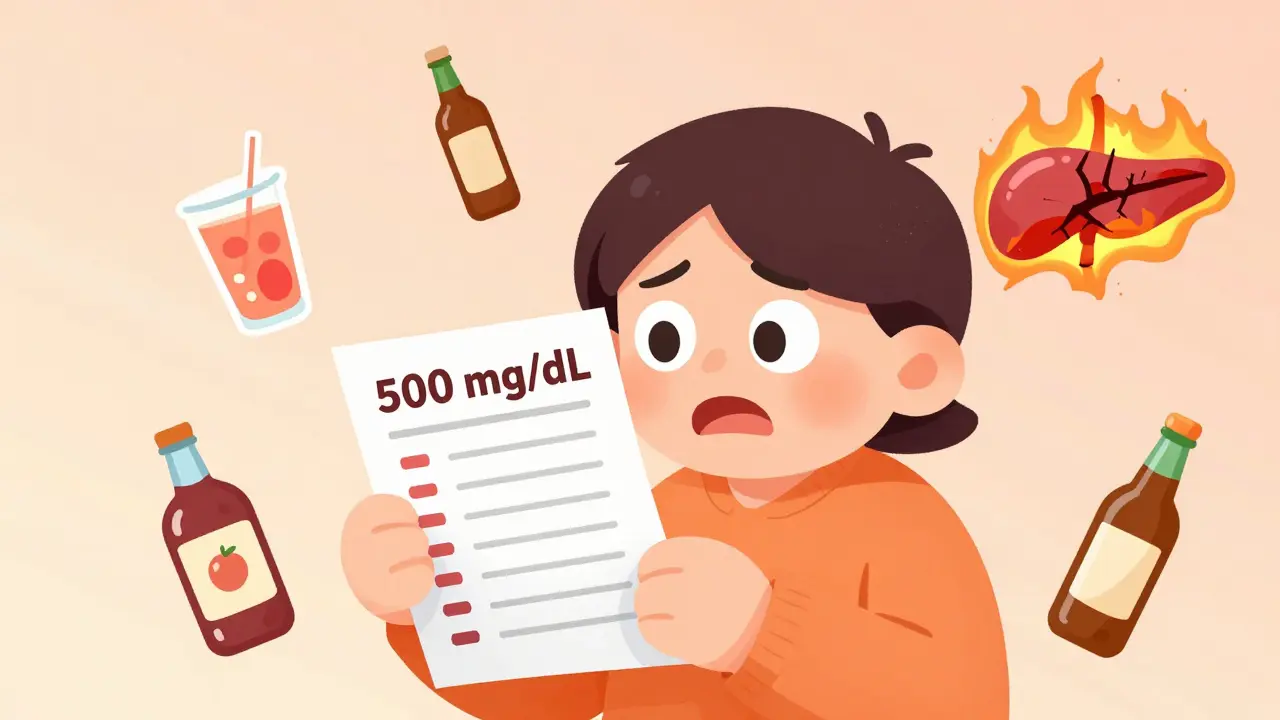
When your triglyceride levels climb above 500 mg/dL, you’re not just dealing with a numbers problem on a blood test-you’re putting your pancreas and heart at serious risk. For many people, high triglycerides fly under the radar until something goes wrong: a sudden, excruciating abdominal pain, a hospital trip, or worse-a heart attack years later. The truth is, high triglycerides are a silent threat with two very different faces: one that can trigger life-threatening pancreatitis, and another that quietly damages your arteries and increases your chance of heart disease.
Why High Triglycerides Can Trigger Pancreatitis
Triglycerides themselves aren’t toxic. But when they pile up in your blood-especially above 1,000 mg/dL-your body’s own digestive system turns against you. The pancreas releases an enzyme called lipase to break down fats. When there’s too much fat in the blood, lipase goes into overdrive, chopping triglycerides into free fatty acids and other compounds that literally burn the pancreas from the inside.
This isn’t theoretical. Studies show that when triglycerides hit 1,000-1,999 mg/dL, about 1 in 10 people will develop acute pancreatitis. At levels over 2,000 mg/dL, that risk jumps to 1 in 5. And it doesn’t take decades for this to happen. Some patients with triglycerides above 5,000 mg/dL have had their first pancreatitis episode within weeks of their levels spiking.
What makes it worse is that this isn’t always predictable. Some people with triglycerides over 10,000 mg/dL never get pancreatitis. Others have attacks at levels as low as 400 mg/dL. Why? It comes down to individual biology-how fast your body clears fats, whether you have a genetic condition like familial chylomicronemia syndrome, or if you’re also dealing with uncontrolled diabetes or heavy alcohol use. These factors can turn a borderline level into a medical emergency.
The Heart Connection: More Than Just a Number
While pancreatitis is the immediate danger, the long-term threat from high triglycerides is to your heart. Elevated triglycerides don’t cause heart attacks directly. But they’re a red flag for a cluster of problems: low HDL (good cholesterol), small dense LDL particles, insulin resistance, and inflammation-all of which accelerate plaque buildup in your arteries.
Here’s the kicker: people with severe hypertriglyceridemia are 70% more likely to die from heart disease than from pancreatitis, according to the European Atherosclerosis Society. That’s why treating high triglycerides isn’t just about avoiding the ER-it’s about living longer.
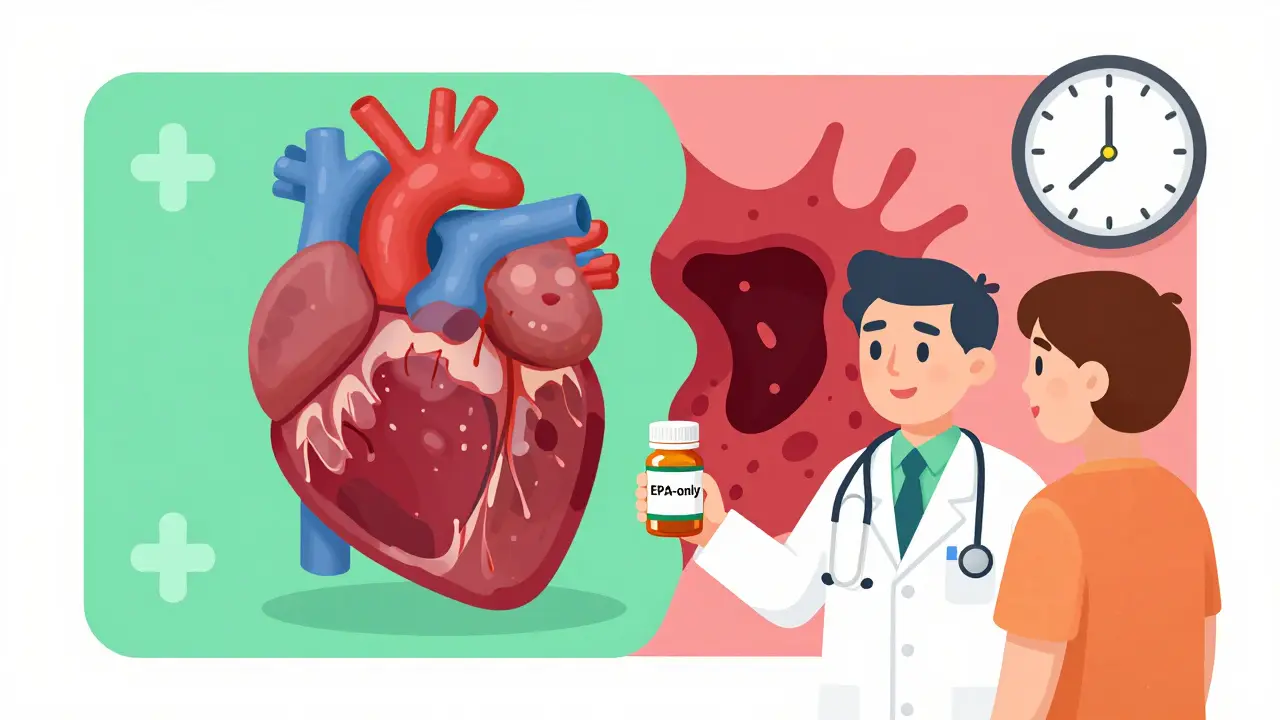
Recent studies show that lowering triglycerides reduces cardiovascular events. The REDUCE-IT trial found that taking 4 grams of pure EPA (eicosapentaenoic acid) daily cut heart attacks, strokes, and heart-related deaths by 25% in high-risk patients. But not all omega-3 supplements work the same. The STRENGTH trial, which used a mix of EPA and DHA, showed no benefit. That’s why doctors now recommend specific, prescription-grade formulations-not over-the-counter fish oil pills.
What Levels Are Dangerous? The Confusing Numbers
You’ll hear different numbers from different doctors, and that’s because the science has evolved. Here’s the breakdown:
- Normal: Below 150 mg/dL
- Borderline high: 150-199 mg/dL
- High: 200-499 mg/dL
- Very high: 500-999 mg/dL
- Severe: 1,000 mg/dL and above
For pancreatitis risk, the critical threshold is 500 mg/dL. That’s when guidelines say you need to act. But here’s where it gets tricky: a major 2016 study in JAMA Internal Medicine found that even levels as low as 177 mg/dL (2 mmol/L) were linked to a higher risk of pancreatitis over time in the general population. So while 500 mg/dL is the emergency line, 200 mg/dL is the warning sign.
That’s why experts now recommend checking nonfasting triglycerides. If your nonfasting level is above 177 mg/dL, it’s a strong indicator of long-term cardiovascular risk-even if your fasting number looks okay.
What Makes Triglycerides Spike? The Hidden Triggers
It’s not just diet. While eating too much sugar, refined carbs, and alcohol is a big part of the problem, other factors can cause sudden, dangerous spikes:
- Uncontrolled diabetes: HbA1c above 9% can double or triple triglyceride levels within days.
- Alcohol: Just 3 drinks a day can raise triglycerides by 200-400%.
- Estrogen therapy: Birth control pills or hormone replacement therapy can trigger spikes, especially in women with genetic risk.
- Medications: Certain steroids, beta-blockers, and even propofol (used in ICU sedation) can cause rapid increases.
- Obesity and inactivity: Fat tissue releases enzymes that boost triglyceride production.
Many patients don’t realize their triglycerides are high because they feel fine. They only find out after a pancreatitis attack-or after a heart screening. That’s why regular blood tests are non-negotiable if you have any risk factors: overweight, family history of heart disease, diabetes, or metabolic syndrome.
How to Lower Triglycerides Fast and Safely
Lowering triglycerides isn’t about a quick fix. It’s about a strategy that works on two fronts: immediate risk reduction and long-term protection.
For Levels Above 500 mg/dL: Act Now
If your triglycerides are over 500 mg/dL, you need medication and lifestyle changes. Waiting for diet to work alone is dangerous-it can take 6-8 weeks to see results, and during that time, your pancreas is at risk.
The standard first-line treatment is:
- Fibrate: Fenofibrate 145 mg daily-lowers triglycerides by 30-50%
- Prescription omega-3 (EPA-only): 2 grams twice daily-reduces levels by another 20-30%
Combined, this approach can cut triglycerides by nearly half in just 4 weeks. It’s not optional if your level is above 500 mg/dL.
For Levels Between 200-500 mg/dL: Prevent Progression
Here, the goal is to avoid the jump into dangerous territory. The best approach:
- High-intensity statin: Atorvastatin 40-80 mg daily
- Lifestyle: Cut sugar, stop alcohol, lose 5-10% of body weight, get 150 minutes of walking per week
Statins aren’t just for cholesterol. They also reduce triglycerides by 20-30% and lower inflammation in blood vessels.
The Diet That Actually Works
Forget low-fat diets. The real enemy is sugar and refined carbs-not fat. A 2023 study showed that people who cut out sugary drinks, white bread, pasta, and desserts dropped triglycerides by 40% in 12 weeks-even without losing weight.
Focus on:
- Whole vegetables and legumes
- Lean proteins (chicken, fish, tofu)
- Healthy fats (avocado, nuts, olive oil)
- Fiber-rich foods (oats, chia seeds, lentils)
And avoid anything with “high-fructose corn syrup” on the label. That’s the #1 dietary trigger.
New Treatments on the Horizon
For the small group of people with extreme, genetic triglyceride disorders, new drugs are changing lives. Volanesorsen, an injectable that blocks a protein involved in fat production, can slash triglycerides from over 2,800 mg/dL to under 500 mg/dL in six months. It’s approved in Europe and under review in the U.S.-but it costs over $450,000 a year, and insurance rarely covers it.
Even more promising is pemafibrate, a newer drug approved in 2023 that reduces triglycerides by 63%-better than older fibrates. And in the pipeline: RNA-based therapies like olezarsen and AZD2812, which target the root cause of fat production in the liver. These could become game-changers in the next 2-3 years.

What to Avoid: Common Mistakes
Many patients make these mistakes-and they’re dangerous:
- Taking over-the-counter fish oil: Most contain DHA and EPA in low doses. They won’t help and may even raise LDL cholesterol.
- Believing “I feel fine, so it’s not a problem”: High triglycerides cause no symptoms until it’s too late.
- Stopping medication when levels drop: Triglycerides rebound fast. This isn’t a short-term fix.
- Ignoring alcohol: Even moderate drinking can undo months of progress.
And don’t get misled by “natural” supplements claiming to lower triglycerides. There’s no evidence that garlic, flaxseed, or berberine come close to the effectiveness of proven medications.
When to See a Specialist
Most primary care doctors aren’t trained to handle severe hypertriglyceridemia. Only 32% feel confident managing it, according to the National Lipid Association. If your triglycerides are above 500 mg/dL, or if you’ve had pancreatitis, you need a lipid specialist or endocrinologist.
They’ll check for:
- Genetic causes (like familial chylomicronemia)
- Secondary triggers (diabetes, thyroid issues, kidney disease)
- Drug interactions
- Long-term cardiovascular risk
They’ll also order tests you won’t get in a regular checkup: apolipoprotein B, lipoprotein(a), and nonfasting triglycerides.
Final Thought: It’s Not About the Number-It’s About Your Life
High triglycerides are a wake-up call. Not because they’re scary numbers, but because they’re a signal that your body is out of balance. Left unchecked, they can steal your health in two ways: through sudden, brutal pancreatitis or through a slow, silent heart attack.
The good news? You can change this. Medication works. Diet works. Exercise works. But only if you act before the damage is done. Don’t wait for pain. Don’t wait for a hospital stay. If your triglycerides are high, start today-because your pancreas and your heart can’t afford to wait.
Neela Sharma
Triglycerides are the silent assassin in our bloodstreams. One day you're eating your avocado toast, next day you're in the ER wondering why your pancreas feels like it's been set on fire. I've seen it happen. No warning. No symptoms. Just... boom. Your body doesn't ask for permission before it starts eating itself.
January 3, 2026 AT 03:47
Shruti Badhwar
The data presented here is statistically significant and clinically actionable. The 70% increased cardiovascular mortality risk associated with severe hypertriglyceridemia is not merely correlational-it reflects a direct pathophysiological cascade involving endothelial dysfunction, oxidized LDL accumulation, and systemic inflammation. Clinical guidelines must be updated to reflect nonfasting thresholds as primary screening metrics.
January 3, 2026 AT 09:49
Brittany Wallace
I used to think high triglycerides were just a 'fat person problem'... until my yoga teacher, who ran marathons and ate kale smoothies, had a pancreatitis attack at 1,200 mg/dL. 🤯 Turns out, your body doesn't care how zen you are. It just cares what's in your bloodstream. Grateful for this post-sheds light on something so invisible yet so deadly.
January 5, 2026 AT 07:10
Liam Tanner
For anyone reading this and thinking 'I don't have time for this'-you’re already behind. The clock starts ticking the moment your triglycerides hit 200. Not 500. Not 1,000. 200. That’s the line between prevention and crisis. I’ve helped over 200 patients lower theirs. It’s not magic. It’s just consistency. Cut the sugar. Move daily. Sleep well. Repeat.
January 7, 2026 AT 01:33
Palesa Makuru
Honestly? Most people don’t even know what triglycerides are. They think if they don’t eat butter, they’re fine. Meanwhile, they’re chugging kombucha with added cane sugar and wondering why their liver looks like a greasy pan. And don’t even get me started on those 'natural supplements'-it’s all snake oil wrapped in a yoga mat.
January 8, 2026 AT 09:28
Hank Pannell
The REDUCE-IT vs. STRENGTH dichotomy is a masterclass in pharmacological nuance. EPA monotherapy reduces hepatic VLDL synthesis via PPAR-alpha agonism and inhibits ACAT2-mediated cholesteryl ester transfer, whereas DHA-enriched formulations may upregulate LDL receptor expression paradoxically elevating LDL-C. This isn’t just 'fish oil'-it’s precision lipid modulation. We need to stop treating this like a dietary supplement issue and start treating it like a metabolic disorder.
January 8, 2026 AT 13:07
Lori Jackson
People who say 'I feel fine' are the same ones who ignore their blood pressure until they collapse at the grocery store. And then they blame the system. No one forced them to drink three sodas a day. No one made them take birth control without monitoring lipids. This isn't medical negligence-it's personal negligence wrapped in victimhood.
January 9, 2026 AT 15:49
Wren Hamley
I had triglycerides at 8,000. Not a typo. I was 29. No diabetes. No alcohol. Turned out-I had familial chylomicronemia. My doc laughed. Said 'that’s a textbook case.' Then he handed me a $450,000/year drug. I cried in the parking lot. This isn’t a lifestyle issue. For some of us, it’s a genetic bomb. And the system isn’t built to save us.
January 11, 2026 AT 05:19
veronica guillen giles
Oh wow. So the solution is to take expensive prescription fish oil and stop eating bread? Groundbreaking. Next you’ll tell me water is hydrating and oxygen is breathable. I’m sure my 17-year-old niece who eats nothing but pizza and Mountain Dew will be thrilled to hear her 'heart health' is now on the line.
January 11, 2026 AT 11:48
Ian Ring
I’ve been managing my triglycerides for 12 years now-started at 1,100, now down to 140. Medication + diet + walking 8k steps daily. I used to think it was just 'bad luck.' Now I know: it’s about paying attention. Not everything in medicine is a miracle. Sometimes, it’s just showing up. And doing the boring stuff. 😊
January 13, 2026 AT 10:27
erica yabut
It’s not that hard. Stop eating carbs. Stop drinking. Stop pretending you’re healthy because you ‘do yoga.’ Your body isn’t fooled. And neither am I. If your triglycerides are high, you’re not 'busy'-you’re careless. And that’s not a medical issue. That’s a moral one.
January 15, 2026 AT 02:52