

For many women going through menopause, the sudden wave of hot flashes, sleepless nights, and brain fog isn’t just annoying-it’s life-changing. Hormone Replacement Therapy (HRT) isn’t a one-size-fits-all fix, but for the right person, it can be the difference between struggling and thriving. The truth? HRT isn’t the dangerous treatment it was made out to be after 2002. But it’s also not a magic pill. Knowing hormone replacement therapy’s real benefits, actual risks, and how to monitor it properly is what separates safe, effective use from unnecessary harm.
What HRT Actually Does
HRT replaces the estrogen and sometimes progesterone your body stops making after menopause. It’s not about slowing aging. It’s about managing symptoms that interfere with daily life: night sweats that wake you up three times a night, vaginal dryness that makes sex painful, or mood swings that leave you feeling like you’re losing your mind. The most effective treatment for these symptoms? HRT. Studies show it reduces hot flashes and night sweats by 80-90%. That’s far better than SSRIs or herbal supplements, which might help a little but rarely deliver relief this strong.
There are two main types: estrogen-only therapy (ET) for women who’ve had a hysterectomy, and estrogen-progestogen therapy (EPT) for those with a uterus. Why the progesterone? Without it, estrogen can cause the lining of the uterus to thicken, raising the risk of endometrial cancer. Adding progesterone-usually micronized progesterone-cuts that risk back to normal.
The Real Benefits: More Than Just Hot Flashes
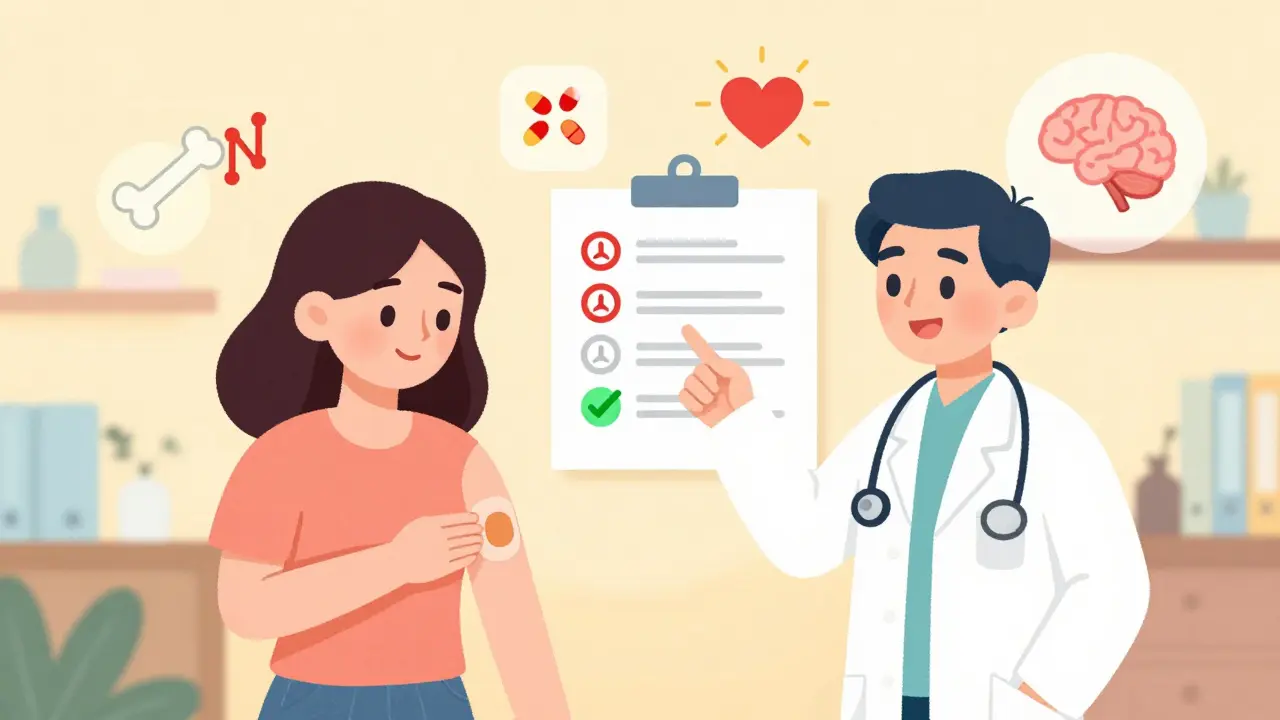
Beyond symptom relief, HRT has proven, measurable health benefits-if started at the right time. The biggest one? Bone protection. HRT reduces fracture risk by 34% compared to no treatment. That’s more than many osteoporosis drugs offer in the first few years. For women in their 50s, it’s one of the best tools to prevent broken hips and spine fractures later on.
There’s also heart health. If you start HRT before age 60 or within 10 years of your last period, you lower your risk of coronary heart disease by about 32%. This is called the “timing hypothesis.” Start later, and that benefit disappears. The reason? Estrogen helps keep arteries flexible and reduces inflammation early in menopause. By the time you’re 65, those arteries may already be too damaged for estrogen to help.
And yes-HRT helps with brain fog. Many women report clearer thinking and better memory after starting treatment. While it’s not proven to prevent dementia, keeping hormone levels stable during the critical transition years may support long-term brain health.
The Risks: What You Need to Know
Let’s be clear: HRT isn’t risk-free. But the risks are often misunderstood and exaggerated.
The biggest concern? Breast cancer. The Women’s Health Initiative (WHI) study in 2002 found a 26% higher risk with combined HRT after 5.6 years. That sounds scary-until you look at the numbers. For every 10,000 women using EPT for a year, there are about 8 extra cases of breast cancer. That’s a small increase. For comparison, drinking one glass of wine daily increases breast cancer risk by about 10% per year. And here’s the twist: some newer research suggests that for certain women-especially those using transdermal estrogen-the risk may be even lower or nonexistent.
Another risk is blood clots. Oral estrogen increases the chance of deep vein thrombosis (DVT) and pulmonary embolism. The numbers? About 3.7 cases per 1,000 women per year. But if you switch to a patch or gel, that drops to 1.3 per 1,000. That’s a 60% reduction. For women with a history of clots, obesity, or smoking, transdermal HRT is the only safe option.
Stroke risk is slightly higher with oral HRT, especially in women over 60. Transdermal estrogen doesn’t carry that same risk. That’s why many doctors now start with patches or gels-not pills.
And then there’s the fear of vaginal bleeding. It’s common in the first 3-6 months, especially with cyclical progesterone. But if bleeding continues past six months, you need an ultrasound or biopsy to rule out other causes. Don’t ignore it. Don’t panic either. Most of the time, it’s just your body adjusting.
Choosing the Right Type of HRT
Not all HRT is the same. There are synthetic versions, bioidentical hormones, compounded formulas, and delivery methods that change everything.
Bioidentical hormones (like 17β-estradiol and micronized progesterone) are chemically identical to what your body makes. They’re not “natural,” but they’re closer to your own hormones than the old horse-derived estrogen (Premarin). Most experts agree: stick with FDA-approved bioidenticals. Avoid compounded versions. They’re not tested for safety or consistency, and the FDA has warned against them.
Delivery matters more than you think:
- Oral pills: Easiest, but increase clot and stroke risk. Avoid if you’re over 50, overweight, or smoke.
- Patches and gels: Safer for blood clots and stroke. Preferred for most women. Gels like EstroGel deliver 1.5mg daily; patches like Climara deliver 0.025-0.1mg.
- Vaginal estrogen: Low-dose rings (Estring) or tablets (Vagifem). Only for vaginal dryness and urinary symptoms. Doesn’t help hot flashes or bones.
- Implants: Rarely used in the U.S., common in Europe. Lasts 6-12 months.
For women with a uterus, progesterone must be included. Micronized progesterone (Prometrium) is safer than synthetic progestins like medroxyprogesterone. It’s linked to lower breast cancer risk and better sleep.
Monitoring: What You Need to Do Every Year
HRT isn’t a “set it and forget it” treatment. You need regular check-ins.
Before starting:
- Baseline mammogram
- Breast exam
- Pelvic exam
- Blood pressure check
- BMI calculation
After starting:
- 3-month follow-up: Are symptoms improving? Any side effects? Nausea? Breast tenderness? Mood changes?
- Annual visit: Blood pressure, weight, breast exam, and discussion about continuing treatment.
- Annual mammogram: Same as for women not on HRT.
If you’re on cyclical progesterone and bleeding continues beyond 6 months, ask for an endometrial biopsy. Persistent bleeding can signal a problem. Don’t wait.
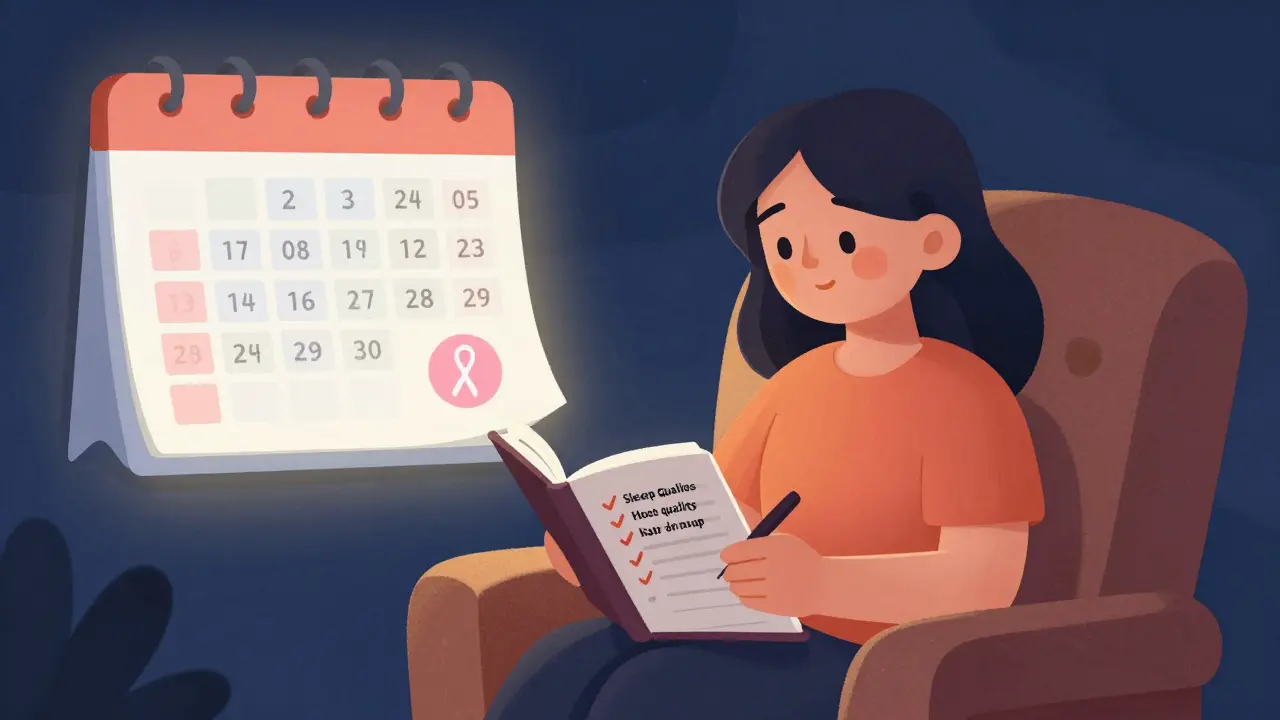
Also, track your symptoms. Use a simple app or notebook. Note hot flash frequency, sleep quality, mood, and energy. That helps your doctor adjust your dose.
Who Should Avoid HRT
HRT isn’t for everyone. Absolute contraindications include:
- History of breast cancer
- History of blood clots (DVT or pulmonary embolism)
- History of stroke or heart attack
- Unexplained vaginal bleeding
- Severe liver disease
If you have a strong family history of breast cancer, talk to your doctor. You might still be a candidate for transdermal estrogen with micronized progesterone-but you’ll need more frequent monitoring.
Women over 60 who’ve been off HRT for years shouldn’t restart it unless they have severe, debilitating symptoms and no other options. The risks outweigh the benefits at that point.
What Happens When You Stop
Many women stop HRT because they’re scared. Others stop because they feel fine. But stopping suddenly can bring symptoms back with a vengeance. Hot flashes, insomnia, joint pain-they can return worse than before.
If you want to stop, taper slowly. Drop the dose by 25% every 2-3 months. Switch from daily to every other day. Or go from oral to patch and lower the patch strength. This gives your body time to adjust.
Some women can stop completely after 3-5 years. Others need it longer. There’s no rule. It’s about your symptoms, your health, and your goals.
Where HRT Fits Today
The stigma around HRT is fading. After the FDA updated its labeling in 2022, doctors are more confident prescribing it to the right women. The market is growing-15.7 million prescriptions in the U.S. in 2022, up from a low of 9.4 million in 2003.
What’s changed? We now know that HRT isn’t dangerous for most women under 60. The real danger is leaving menopause symptoms untreated. Poor sleep, chronic stress, and lack of movement from unmanaged symptoms raise your risk of heart disease, diabetes, and depression. HRT isn’t just about comfort. It’s about protecting your long-term health.
Transdermal estrogen with micronized progesterone, started early, monitored closely, and adjusted as needed-it’s the gold standard. And for the right woman, it’s one of the most effective treatments in modern medicine.
Is HRT safe for women over 60?
HRT is generally not recommended for women over 60 who are starting it for the first time. The risks of blood clots, stroke, and possibly breast cancer increase with age. If you’re over 60 and still have severe symptoms, talk to your doctor about low-dose transdermal estrogen-but only if you’ve been through menopause within the last 10 years and have no other risk factors. For most women over 60, non-hormonal options are safer.
Can HRT cause weight gain?
HRT doesn’t directly cause weight gain. Weight gain during menopause is usually due to aging, slower metabolism, and reduced muscle mass. Some women report bloating or fluid retention when they first start HRT, especially with oral estrogen. Switching to a transdermal patch or gel often helps. If you’re gaining weight, focus on diet, strength training, and sleep-not on blaming HRT.
Are bioidentical hormones safer than synthetic ones?
FDA-approved bioidentical hormones-like 17β-estradiol and micronized progesterone-are safer and more predictable than synthetic progestins or compounded bioidenticals. Compounded versions aren’t regulated, so their strength and purity vary. The Endocrine Society says there’s no evidence they’re safer. Stick with FDA-approved products. They’re tested, consistent, and backed by decades of research.
How long should I stay on HRT?
There’s no fixed timeline. Most women use HRT for 3-5 years to get through the worst symptoms. But if you still have severe hot flashes, night sweats, or bone loss after that, continuing is reasonable. The key is using the lowest effective dose and reviewing your needs every year. For some women, especially those who started early, HRT can be safe for 10 years or more-with proper monitoring.
What are the alternatives to HRT?
For hot flashes, low-dose SSRIs like paroxetine or gabapentin can reduce symptoms by 50-60%, but they’re less effective than HRT. Lifestyle changes-cooling techniques, avoiding triggers like caffeine and alcohol, regular exercise-help too. For vaginal dryness, non-hormonal lubricants or ospemifene (a pill that acts like estrogen locally) are options. For bone health, calcium, vitamin D, and weight-bearing exercise are essential. But none match HRT’s effectiveness for multiple symptoms at once.
Jay Ara
I wish I knew this back when I was 48 and terrified of HRT. My doc just said no without explaining why. Now I'm 52 and still waking up soaked. Wish I'd tried the patch instead of suffering in silence.
December 26, 2025 AT 20:34
jesse chen
This is the most balanced, well-researched piece on HRT I've ever read. Seriously. The timing hypothesis, the transdermal vs. oral breakdown, the breast cancer numbers-everything is presented without fearmongering. Thank you for taking the time to write this. I'm sharing it with my sister.
December 27, 2025 AT 18:18
Joanne Smith
So let me get this straight-after 20 years of being told HRT is a death sentence, we're now supposed to believe it's the 'gold standard'? Funny how 'the science' changes when Big Pharma stops paying for fear-based studies. Also, 'micronized progesterone' sounds like a fancy word for 'not as bad as the other poison.'
December 28, 2025 AT 17:21
Prasanthi Kontemukkala
I'm from India and we rarely talk about this. My mom went through menopause in the 90s with no support. She just drank herbal teas and suffered. I started HRT last year-patch and micronized progesterone-and it’s like I got my life back. Sleep, mood, energy. I wish more women knew this wasn’t a betrayal of nature, just a smart adjustment.
December 29, 2025 AT 05:15
Bryan Woods
The data presented here is methodologically sound and aligns with current guidelines from the North American Menopause Society. The emphasis on transdermal delivery and timing is particularly well-founded. I would only add that individual risk profiles must be evaluated holistically, including genetic factors and lifestyle.
December 30, 2025 AT 16:51
Ryan Cheng
If you're over 50 and still getting hot flashes like you're stuck in a sauna, HRT isn't 'dangerous'-it's the difference between being functional and being a zombie. I used to nap at 3 p.m. Now I hike on weekends. Patch. Every day. No regrets. Also, stop blaming HRT for weight gain. That's just aging with a side of ice cream.
December 31, 2025 AT 03:56
Shreyash Gupta
You say 'bioidentical' like it's magic 🧙♂️. But guess what? Your body doesn't care if it's 'identical' or 'synthetic'-it just reacts to molecules. And who's testing those 'FDA-approved' ones for 30 years? Nobody. Just trust the system. 🤷♂️
January 1, 2026 AT 19:10
Ellie Stretshberry
I started hrt last year and my brain fog is gone. i didnt know how bad it was until it was gone. also the patch dont make me feel sick like the pill did. thank you for this post
January 3, 2026 AT 04:09
Angela Spagnolo
I’m so glad someone finally said this clearly. I was terrified to even ask my doctor about HRT. I thought I’d be labeled ‘needy’ or ‘hysterical.’ But after reading this, I made an appointment. I’m on a patch now. Three months in. I’m sleeping. I’m laughing again. Thank you.
January 3, 2026 AT 13:24
Sarah Holmes
It is, perhaps, a profound and deeply troubling epistemological paradox that we have, in the 21st century, normalized the pharmacological alteration of endogenous physiological processes under the auspices of 'quality of life'-while simultaneously ignoring the sociocultural structures that render menopause a medical crisis rather than a natural transition. One must ask: Who benefits? And at what ontological cost?
January 3, 2026 AT 19:32
Michael Bond
Patch over pill. Micronized progesterone. Start early. Monitor yearly. Done.
January 5, 2026 AT 00:21
Kuldipsinh Rathod
I'm a guy but my wife went through this. I had no clue how bad it was until she cried because she couldn't sleep. We found a doctor who actually listened. Now she's on a patch and we're both sleeping better. This post? Perfect. Should be mandatory reading.
January 6, 2026 AT 07:50