
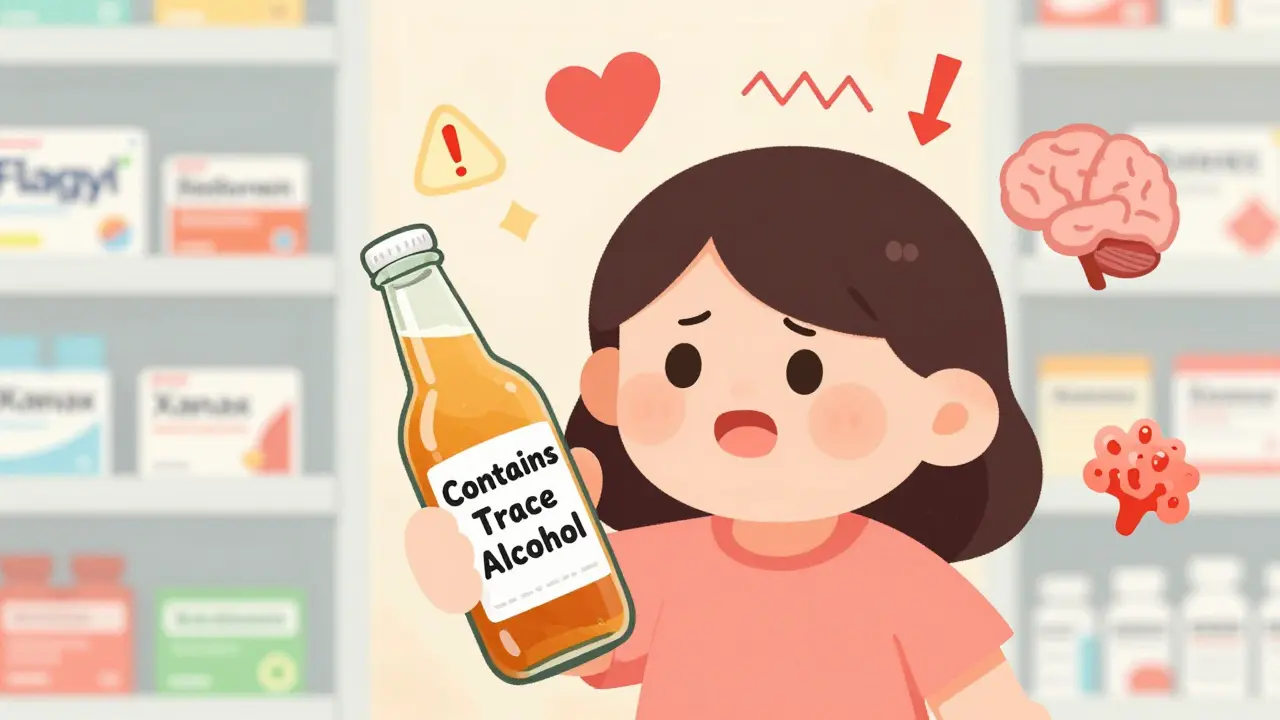
Drinking kombucha is popular for its tangy flavor and supposed health perks-probiotics, antioxidants, gut support. But if you're on certain medications, that little bottle might be riskier than you think. The problem isn't the tea. It's the alcohol-yes, alcohol-that forms naturally during fermentation. Even if you're sipping a brand that says "0.5% ABV or less," that’s still enough to cause serious reactions when mixed with some common prescriptions.
Why Kombucha Has Alcohol at All
Kombucha isn’t brewed like beer or wine. It’s fermented. A SCOBY-symbiotic culture of bacteria and yeast-eats sugar in sweetened tea and turns it into acids, gases, and a little bit of ethanol. That’s normal. It’s how the drink gets its fizz and sour kick. But here’s the catch: that alcohol doesn’t just disappear. It stays in the bottle. Commercial brands are required by U.S. law to keep alcohol below 0.5% ABV. That’s the legal limit for non-alcoholic beverages. But that doesn’t mean it’s zero. A 12-ounce bottle at 0.5% ABV contains about 0.15 fluid ounces of pure alcohol. That’s roughly the same as a sip of wine or a half-teaspoon of vanilla extract. Sounds tiny, right? But for people on certain meds, even that small amount can trigger dangerous reactions. Homemade kombucha is a whole different story. Without lab testing, homebrewers often see alcohol levels between 1% and 2.5% ABV. That’s more than a light beer. One batch can be 0.8%, the next 2.1%. No two bottles are the same. And most people have no idea what’s in theirs.Which Medications Are at Risk?
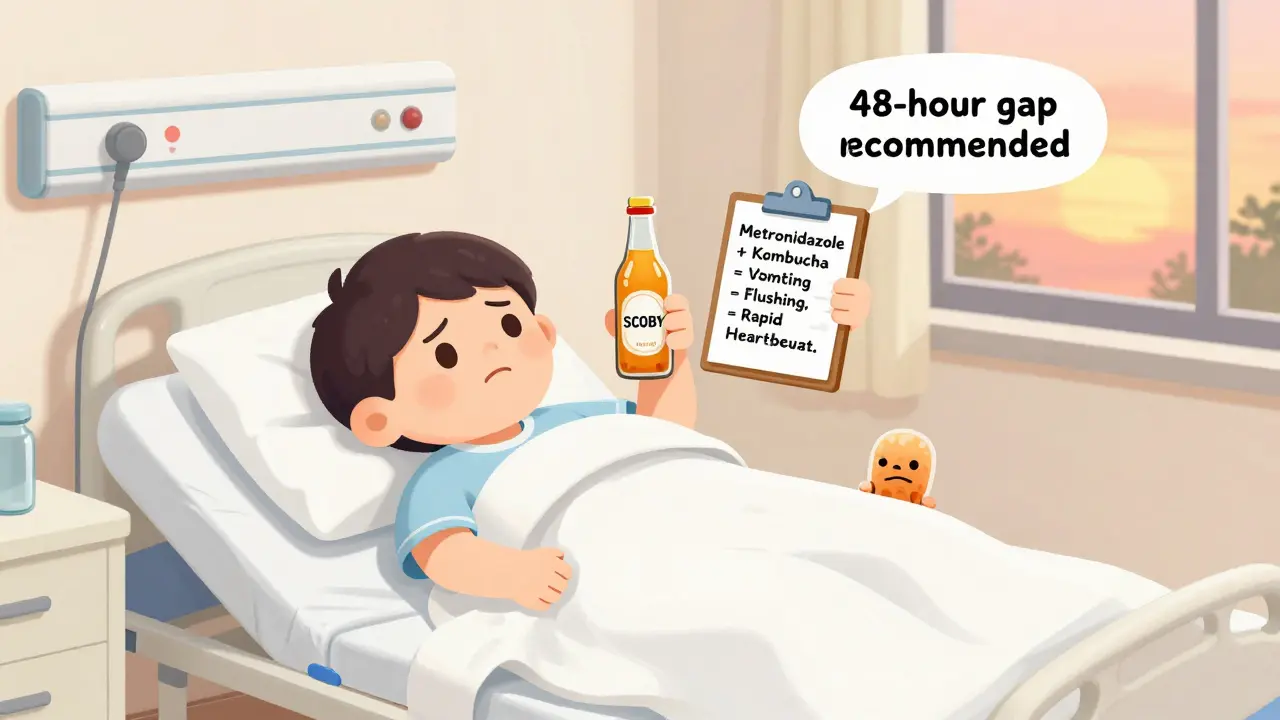
Not every medication reacts to alcohol. But there are 17 major classes that do-and kombucha can sneak under the radar because it’s marketed as a "health drink." Here are the big ones:- Metronidazole (Flagyl) and Tinidazole: These antibiotics are used for infections like bacterial vaginosis, UTIs, and parasites. Mixing them with even small amounts of alcohol can cause severe nausea, vomiting, flushing, rapid heartbeat, and headaches. A 2023 case report in the Journal of Clinical Pharmacy and Therapeutics described a patient hospitalized after drinking homemade kombucha (1.8% ABV) while on metronidazole.
- SSRIs and SNRIs: Antidepressants like sertraline, fluoxetine, and venlafaxine. Alcohol can worsen side effects like dizziness, drowsiness, and impaired judgment. Some users report feeling "zoned out" or unusually anxious after kombucha with these meds.
- Diabetes medications: Drugs like chlorpropamide and metformin. Alcohol can lower blood sugar too much, especially when combined with kombucha’s natural sugars and acids. One Reddit user reported a 15-point blood sugar drop after kombucha and metformin-leading to an ER visit.
- Benzodiazepines: Xanax, Valium, Ativan. These are CNS depressants. Alcohol amplifies their sedative effects. Stanford neuroscientist Dr. Andrew Huberman noted that even 0.5% ABV can boost GABA receptor activity, increasing drowsiness and risk of falls.
- Nitrates: Used for heart conditions like angina. Alcohol can cause dangerous drops in blood pressure. Kombucha adds another layer of risk.
Commercial vs. Homemade: The Real Difference
You might think all kombucha is the same. It’s not. Commercial brands like GT’s, Health-Ade, and Brew Dr. test every batch. They use HPLC machines or specialized alcohol analyzers like the Anton Paar Alcolyzer BEER. They pasteurize or filter to lock in alcohol levels below 0.5%. Since 2024, the FDA requires all commercial kombucha to say "Contains Trace Alcohol" on the label. That’s new. And it’s important. Homebrewed kombucha? No testing. No regulation. No warnings. A 2024 Harvard study found 43% of homebrewed batches exceeded 0.5% ABV. Twelve percent hit 3.2% ABV-equivalent to a light beer. If you’re brewing at home and taking metronidazole or an SSRI, you’re playing Russian roulette with your health. And here’s the kicker: 85% of homebrewers don’t test their kombucha’s alcohol content. They assume it’s "safe" because it’s "natural." But natural doesn’t mean harmless.
What the Data Says About Real-World Risks
ConsumerLab surveyed over 1,200 kombucha drinkers in 2023. Eighteen percent reported adverse reactions linked to medications. Of those:- 62% were taking antidepressants
- 29% were on antibiotics
- 11% were managing diabetes
What You Should Do
If you take any of the medications listed above, here’s what to do:- Check your prescription label. Look for warnings about alcohol. If it says "avoid alcohol," assume kombucha counts.
- Ask your pharmacist. Don’t assume they know. Bring the bottle. Say: "Does this contain alcohol? Is it safe with my meds?"
- Stop drinking homemade kombucha. If you’re on any alcohol-sensitive drug, skip it entirely. The risk isn’t worth it.
- If you drink commercial kombucha, wait 48 hours after taking your meds. The Cleveland Clinic recommends this gap to reduce interaction risk.
- Look for the label. Since January 2024, every commercial kombucha must say "Contains Trace Alcohol." If it doesn’t, it’s not compliant. Avoid it.
What’s Changing in 2025
The tide is turning. The FDA’s 2024 labeling rule is just the start. Health-Ade now uses blockchain to show batch-specific alcohol content via QR code. The NIH launched a $2.3 million study in March 2024 to map out exactly how kombucha interacts with meds-results expected in 2025. Kombucha producers are investing in better testing. Sales of alcohol-measuring tools like the HM Digital HA-520 have jumped 212% since 2023. More brands are testing. More labels are warning. But homebrewers? Still flying blind.Bottom Line
Kombucha isn’t the enemy. But it’s not harmless either. For people on alcohol-sensitive medications, it’s a hidden risk. That 0.5% ABV? It’s enough to trigger vomiting, low blood sugar, dizziness, or worse. Homemade versions? Even riskier. If you’re taking metronidazole, an antidepressant, or diabetes meds-skip kombucha. Or at least, wait 48 hours after your dose. Talk to your pharmacist. Read the label. Don’t trust marketing. Your body doesn’t care if it’s "organic" or "probiotic." It only cares about what’s in the bottle-and whether it reacts with what’s in your system.Can I drink kombucha if I’m on metronidazole?
No. Even small amounts of alcohol in kombucha can cause severe nausea, vomiting, flushing, and rapid heartbeat when mixed with metronidazole. This reaction can happen with as little as 0.5% ABV. Avoid kombucha entirely while taking this antibiotic and for at least 48 hours after your last dose.
Is 0.5% alcohol in kombucha really dangerous?
For most people, no. But for those on alcohol-sensitive medications, yes. That 0.5% is enough to interact with drugs like metronidazole, benzodiazepines, and some antidepressants. It’s not about getting drunk-it’s about chemical reactions in your body. Even a sip can trigger side effects.
Do all kombucha brands test for alcohol?
All commercial brands in the U.S. are required to test and keep alcohol under 0.5% ABV. Since January 2024, they must label their products with "Contains Trace Alcohol." But homemade kombucha is rarely tested. Over 85% of homebrewers don’t measure alcohol content at all.
Can I drink kombucha with antidepressants?
It’s risky. Kombucha can increase drowsiness, dizziness, and mood swings when combined with SSRIs or SNRIs. Some users report feeling "zoned out" or unusually anxious. If you’re on these meds, talk to your doctor or pharmacist before drinking kombucha-even if it’s labeled "0.5% ABV."
What should I do if I drank kombucha and took my medication?
Watch for symptoms: nausea, vomiting, dizziness, rapid heartbeat, low blood sugar, or extreme drowsiness. If you experience any of these, stop drinking kombucha immediately and contact your doctor or go to an urgent care center. Bring the kombucha bottle with you-it helps them identify the cause.
Is there a safe amount of kombucha I can drink with my meds?
There’s no guaranteed safe amount if you’re on alcohol-sensitive medications. The interaction depends on your metabolism, the drug, and the actual alcohol content in the kombucha-which can vary even within the same brand. The safest approach is to avoid it entirely or wait 48 hours after taking your dose.
Ian Long
Man, I had no idea kombucha had alcohol in it. I drink it like water because I think it’s ‘healthy.’ Guess I’m dumb. I’m on sertraline and just chugged a bottle this morning. Feels fine… but now I’m paranoid. 😅
January 8, 2026 AT 21:28
Angela Stanton
Let’s be real-0.5% ABV is statistically negligible. The real issue is confirmation bias + fearmongering. You’re telling me a sip of kombucha triggers the same reaction as a shot of vodka? That’s not pharmacology, that’s hysteria. Also, metronidazole warnings are for *ethanol*, not trace fermentation byproducts. The FDA’s 0.5% threshold exists for a reason. Stop panic-buying ‘alcohol-free’ labels.
Also, if you’re on SSRIs, your brain’s already fried. Kombucha isn’t the problem-your medication regimen is. 😏
January 10, 2026 AT 11:01
Jerian Lewis
People think ‘natural’ means ‘safe.’ It doesn’t. Your body doesn’t care if it’s organic, vegan, or sold in a fancy glass bottle. If it ferments, it makes alcohol. If you’re on meds, you’re playing Russian roulette with your liver. No one warned me. I thought kombucha was just fizzy tea. Now I’m on metformin and I feel like trash every time I drink it. Don’t be me.
January 11, 2026 AT 10:22
Kiruthiga Udayakumar
As someone from India where fermentation is part of our food culture for centuries, I’m shocked how Americans treat kombucha like a drug. We’ve had toddy, kanji, and curd-based drinks for generations-none of them come with warning labels. Maybe your meds are the problem, not the drink? 🤔
January 11, 2026 AT 12:37
Maggie Noe
There’s a deeper question here: why do we treat food as if it’s a chemical compound to be measured in microliters? Kombucha isn’t a drug. It’s a living, breathing, fermenting ecosystem. We’ve been drinking fermented things for 10,000 years. Now we’re terrified of 0.5% because some lab report says so? We’ve outsourced our intuition to regulators and corporations. Who benefits from this fear? Big Pharma? The alcohol industry? The supplement marketers who sell ‘alcohol-free’ versions for $5 a bottle? We’ve lost the ability to trust our bodies. And now we’re afraid of tea.
January 12, 2026 AT 18:29
Gregory Clayton
USA is turning into a nation of hypochondriacs. You’re telling me a guy on metronidazole can’t have a bottle of kombucha? That’s why we lost the war on drugs-because people are too scared to live. If you’re on meds, take your meds. Don’t blame the drink. Grow a spine. Also, homemade kombucha is the REAL American tradition. Not this corporate pasteurized nonsense.
January 13, 2026 AT 05:09
Alicia Hasö
Let me say this clearly: Your health is not a gamble. Kombucha isn’t evil. But it’s not harmless either. If you’re on metronidazole, benzodiazepines, or diabetes meds-this isn’t about ‘being cautious.’ It’s about survival. I’ve seen patients in the ER because they thought ‘natural’ meant ‘safe.’ Don’t be one of them. Ask your pharmacist. Bring the bottle. Write it down. This isn’t fear-it’s responsibility. You owe it to yourself.
January 14, 2026 AT 07:14
Ashley Kronenwetter
Thank you for this detailed and evidence-based post. The labeling requirement since January 2024 is a critical step forward. I will be sharing this with my patients. It’s not enough to assume kombucha is safe. We must treat it like any other potential interaction. Professional responsibility demands clarity.
January 15, 2026 AT 23:54
Heather Wilson
So… you’re saying 0.5% ABV is dangerous but 0.4% is fine? What’s the magic number? And why are you ignoring the fact that apple juice has trace ethanol too? Or ripe bananas? Or sourdough bread? This is selective outrage. You’re not protecting people-you’re creating a culture of paranoia. Also, 85% of homebrewers don’t test? So what? Most people don’t test their coffee for mold either. Should we ban coffee?
January 16, 2026 AT 14:05
Micheal Murdoch
Hey, I get it. You’re scared. I was too. I was on sertraline and drank kombucha every morning for months. Started feeling weird-dizzy, foggy, anxious. Didn’t connect the dots until my pharmacist asked, ‘Do you drink anything fermented?’ I said, ‘Yeah, kombucha.’ She said, ‘That’s your issue.’ I stopped. Felt better in 3 days. No drama. No panic. Just a simple swap. You don’t have to be perfect. Just curious. Ask. Listen. Change one thing. That’s enough.
January 17, 2026 AT 14:28
Jeffrey Hu
Actually, the 0.5% ABV limit is based on 1937 US tax code, not pharmacology. The FDA didn’t pick it because it’s ‘safe’-they picked it because it’s easy to enforce. The real science? A 2022 study in Clinical Pharmacokinetics showed that even 0.1% ethanol can inhibit CYP2E1 enzymes in sensitive individuals. So yes, 0.5% matters. And yes, homebrews are a minefield. Also, your ‘trace alcohol’ label? That’s not legally binding unless it’s on the front. Most brands bury it. Read the fine print.
January 18, 2026 AT 13:42
Lindsey Wellmann
OMG I JUST REALIZED I DRANK KOMBUCHA YESTERDAY WHILE ON XANAX 😱 I THOUGHT I WAS GOING TO DIE. I WAS SO DROWSY. I THOUGHT IT WAS JUST THE MEDS. NOW I KNOW. I’M NEVER DRINKING IT AGAIN. I’M TELLING EVERYONE. THIS IS A SCANDAL.
January 20, 2026 AT 08:31
Johanna Baxter
I’m on metronidazole and I drank kombucha anyway. Vomited for 12 hours. I didn’t care. I wanted the probiotics. I’m not sorry. My gut is happy. My liver? Maybe not. But I’m alive. And I’m not letting Big Pharma tell me what to drink. #KombuchaOverFear
January 21, 2026 AT 23:59
Patty Walters
Just wanted to say-my mom’s on metformin and she started drinking GT’s kombucha after reading this. She checks the label now. Says she feels better, more stable. She didn’t even know kombucha had alcohol. Thanks for the heads up. Small changes matter.
January 23, 2026 AT 00:40