
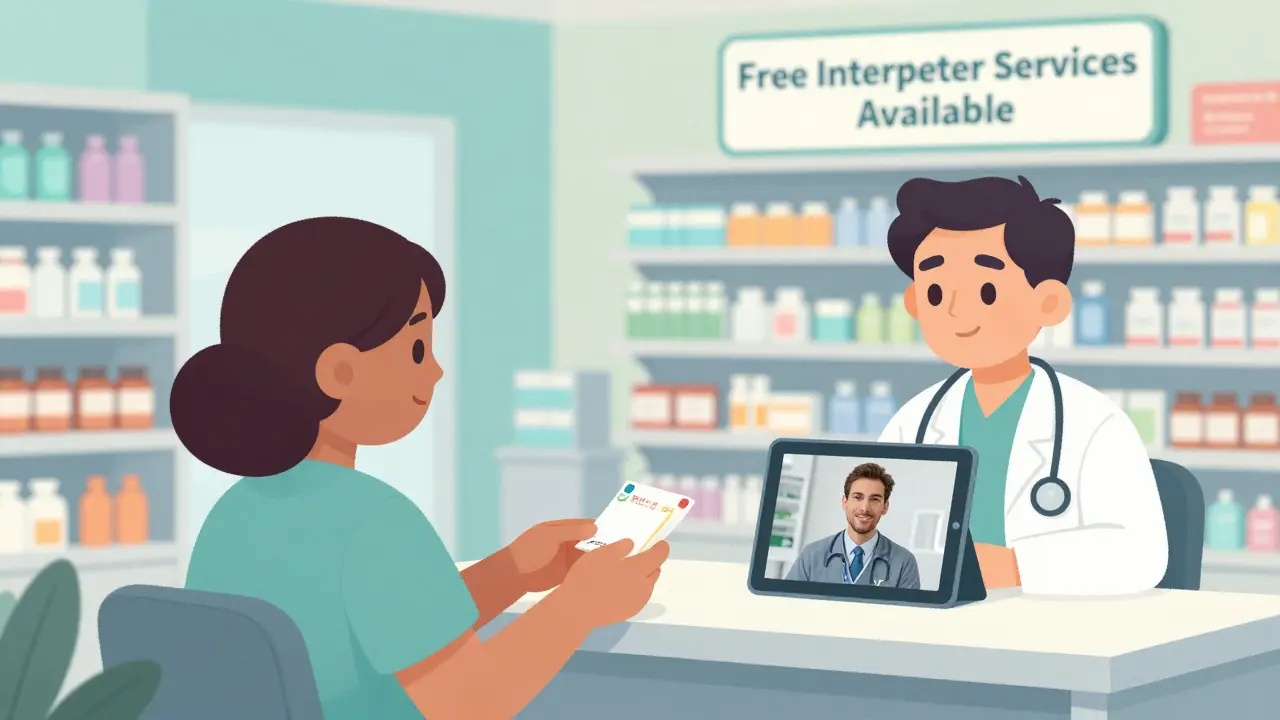
When you or a loved one is prescribed a new medication, understanding how to take it isn’t just helpful-it’s life-saving. But if English isn’t your first language, getting clear, accurate instructions can be a challenge. That’s where professional translator services for medication counseling come in. By law, pharmacies in the U.S. must provide these services at no cost to you. You don’t need to ask nicely. You don’t need to wait until you’re confused. You have a right to speak with a qualified interpreter before you leave the pharmacy with your prescription.
Why Language Services for Medication Counseling Matter
People who don’t speak English fluently are three times more likely to make dangerous mistakes with their medications. That’s not a guess. It’s from a 2012 study by the University of California San Francisco. These errors include taking too much, too little, at the wrong time, or mixing drugs that shouldn’t be combined. A misread label, a misunderstood warning, or an unclear instruction about food interactions can lead to hospital visits-or worse. Federal law, specifically Section 1557 of the Affordable Care Act, makes it clear: if a pharmacy gets federal funding (and nearly all do), they must offer free language assistance. This includes both spoken interpreters and written translations of prescription directions, warning labels, and patient guides. California’s SafeRx program sets the gold standard, requiring pharmacies to provide interpreters during every medication counseling session-whether in person, by phone, or video.What Counts as a Qualified Interpreter
Not every bilingual person is qualified to interpret medication instructions. A cousin who speaks Spanish, a pharmacy tech who took a year of French, or even a doctor who speaks your language aren’t enough. Professional medical interpreters must meet specific training standards. They need:- Fluency in both English and your language
- At least 40 hours of specialized medical interpreting training
- Certification in medical terminology, including drug names, dosages, and side effects
- Strict adherence to confidentiality rules
How to Request a Translator at the Pharmacy
You don’t have to wait for the pharmacist to ask. Don’t assume they’ll know you need help. Step up and say it clearly:- When you hand over your prescription, say: "I need a professional interpreter for my medication counseling."
- If they offer to use a family member, say: "No, thank you. I need a trained medical interpreter."
- If they say it’s not available, say: "This is required by federal law. Please connect me with your interpreter service."
- Phone interpreting - Quick, affordable, available 24/7. Services like RxTran connect in under 30 seconds most of the time.
- Video interpreting - Lets you see the interpreter’s face and gestures. Better for complex instructions. Used by 65% of healthcare facilities as of 2023.
- On-site interpreters - Best for detailed counseling, especially for elderly patients or those with hearing or cognitive issues. Only available in larger or urban pharmacies.
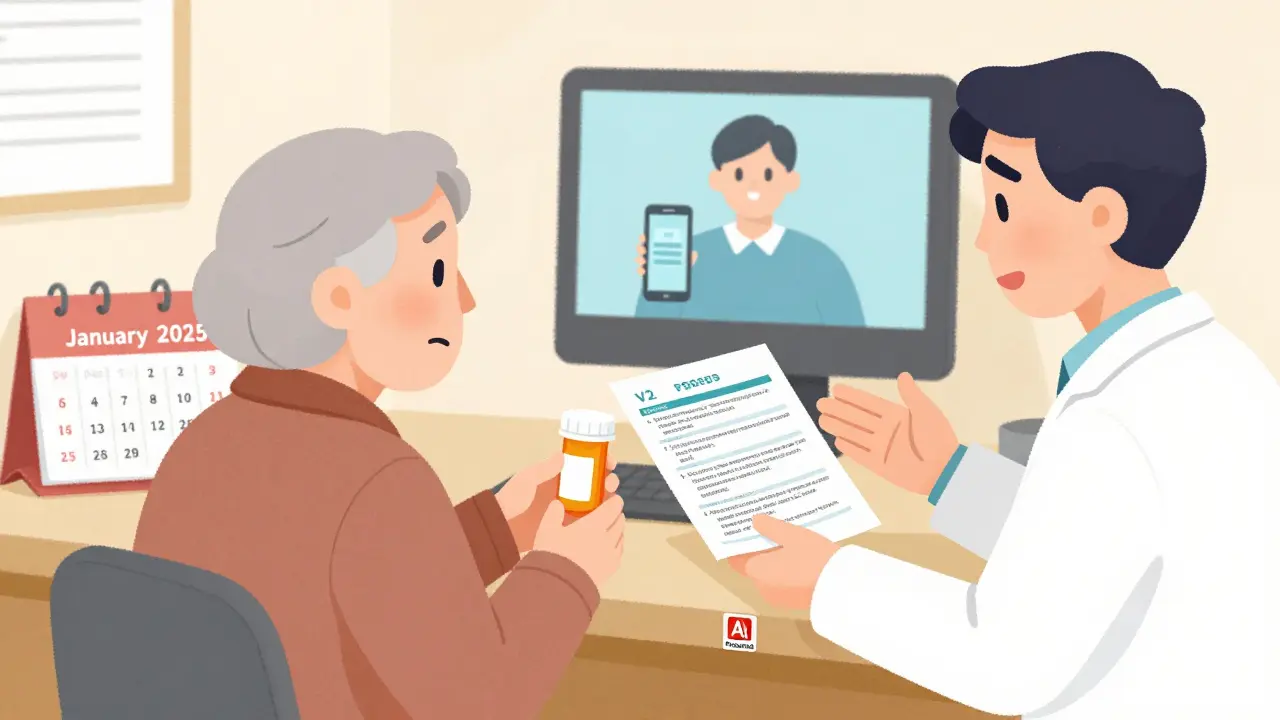
What to Expect During the Session
A good interpreter won’t just translate words. They’ll make sure you understand the meaning. The pharmacist should walk you through:- What the medicine is for
- How much to take and how often
- When to take it (before meals? at bedtime?)
- What to avoid (alcohol? other drugs? certain foods?)
- Possible side effects and what to do if they happen
- How to store the medication
Written Materials You Should Receive
You’re entitled to written instructions in your language too. In California, pharmacies must have pre-translated directions for common medications in Spanish, Chinese, Korean, Russian, and Vietnamese. These are called SIGs (Directions for Patients) and are printed directly on the prescription label. But not all languages are covered yet. If your language isn’t on the list, ask for a printed patient education sheet. Services like RxTran offer downloadable, printable guides in over 100 languages. If the pharmacy doesn’t have it, they’re still required to provide one-either by printing it on-site or emailing it to you.What to Do If They Refuse
If a pharmacy refuses to provide an interpreter, don’t leave without getting help. Here’s what to do:- Ask to speak with the pharmacist-in-charge or manager.
- Write down the date, time, pharmacy name, and what was said.
- Call the pharmacy’s corporate office (if it’s a chain) or file a complaint with your state’s Board of Pharmacy.
- Report it to the U.S. Department of Health and Human Services (HHS) Office for Civil Rights. Since 2016, they’ve settled 47 cases involving language access violations, including a $1.2 million fine against a national pharmacy chain in 2022.
What’s Changing in 2025
New rules took effect on January 1, 2025. AI translation tools (like Google Translate or chatbots) are now prohibited for use on prescription labels or medication counseling materials unless reviewed and approved by a human interpreter. This was added because automated translations often get dosages wrong, misinterpret warnings, or miss cultural context. Also, Medicaid now covers 75% of interpreter service costs for children in non-English-speaking households-up from 50%. That means more pharmacies are investing in better systems. California is expanding its translated SIGs to include Tagalog and Arabic, responding to the fact that 22% of LEP patients there speak languages beyond the original five. Other states are expected to follow.What Pharmacists Need to Know (For Staff Reading This)
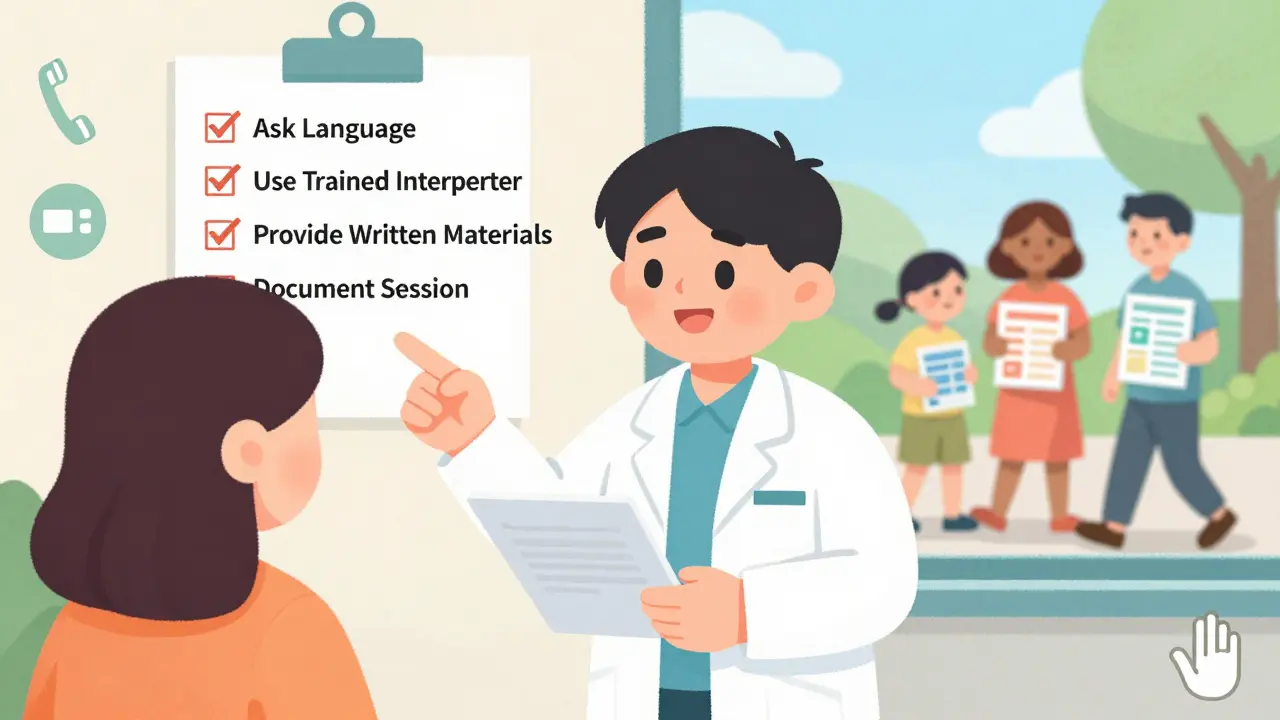
If you work in a pharmacy, here’s your checklist:- Ask every patient: "What language do you speak at home?" Use a standardized form.
- If they say anything other than English, immediately connect them to an interpreter-don’t wait for them to ask.
- Use only approved services: phone, video, or on-site. Never use family members, untrained staff, or AI.
- Document everything: language requested, service type, duration, interpreter ID.
- Use billing code T-1013 with the CPT code for the visit. You can get reimbursed.
Final Thoughts
Medication counseling isn’t about handing over a pill bottle. It’s about making sure someone understands how to use it safely. Language barriers aren’t an inconvenience-they’re a safety hazard. And the solution isn’t complicated: professional interpreters, clear written materials, and the courage to ask for help. You don’t need to be fluent in English to get proper care. You just need to know your rights-and how to ask for them.Can I be charged for a translator at the pharmacy?
No. Federal law prohibits pharmacies from charging patients for interpreter services. This includes phone, video, or in-person interpreters. If someone tries to charge you, ask to speak to a manager or file a complaint with the Office for Civil Rights at HHS.
What if my language isn’t supported by the pharmacy?
Even if your language isn’t on their list, the pharmacy is still required to provide an interpreter. Most use telephonic or video services that connect to interpreters in over 100 languages. Ask them to call their service provider. If they refuse, document the incident and report it.
Can I use my child as an interpreter?
While you can ask, the pharmacy must still offer a professional interpreter. Using children as interpreters increases the risk of errors and is discouraged by medical professionals. Children may not understand medical terms, may leave out important details, or may be put in an uncomfortable position. Always request a trained interpreter instead.
Do I need to request an interpreter every time I pick up a prescription?
Yes. Even if you’ve used an interpreter before, each new prescription requires a new counseling session. Medications change, dosages adjust, and warnings update. Never assume your previous interpreter session covers your new prescription.
What if the interpreter makes a mistake?
If something doesn’t sound right, ask the pharmacist to repeat it. You can also ask the interpreter to clarify. You have the right to understand your medication fully. If you feel the interpreter isn’t qualified, ask for a different one. The pharmacy must provide one.
Are translated labels available for all medications?
Not all, but many. Major pharmacies use services like RxTran that offer pre-translated labels for common drugs in over 100 languages. For new or less common medications, the pharmacy must print or email a translated patient guide. You’re entitled to it.
Can I request a written copy of the instructions in my language?
Yes. You’re entitled to a printed or digital copy of your medication instructions in your preferred language. Ask for it before you leave the pharmacy. If they don’t have it ready, they must email or mail it to you within 24 hours.
Is video interpreting as good as in-person?
For most medication counseling, yes. Video interpreting lets you see facial expressions and gestures, which helps with understanding. It’s slightly less ideal for elderly patients with poor vision or hearing, but it’s still better than phone-only or no service at all. Many pharmacies now use video as their primary method.
What if I’m deaf or hard of hearing?
Section 1557 also covers people with disabilities. You’re entitled to a qualified sign language interpreter, real-time captioning, or other accessible communication methods. Don’t accept written notes alone-ask for a trained ASL interpreter if needed.
How do I report a pharmacy that won’t provide an interpreter?
Call the HHS Office for Civil Rights at 1-800-368-1019 or file a complaint online at www.hhs.gov/ocr/civilrights/complaints. Include the pharmacy name, date, time, what was said, and who you spoke to. Complaints are taken seriously-enforcement actions have doubled since 2016.
Michelle M
Every time I pick up a script for my mom, I make sure to ask for the interpreter-no excuses. It’s not just about understanding the dosage. It’s about knowing if that pill will wreck her kidneys if she eats grapefruit. I’ve seen too many elders get confused by tiny print and vague warnings. Professional interpreters? They’re not a luxury. They’re the only thing standing between a prescription and a trip to the ER.
And honestly? If your pharmacy doesn’t have one on standby, you’re not just being inconvenient-you’re putting lives at risk.
December 16, 2025 AT 02:47
Nupur Vimal
why do we even need this its not that hard to learn english if you live here also why should the pharmacy pay for it i mean its not like they are getting paid extra for this service
December 17, 2025 AT 18:13
Sai Nguyen
India has 22 official languages and no one here demands translators at pharmacies. Why should America be different? You came here, learn the language. This is not a hotel. This is a country with rules.
December 19, 2025 AT 16:08
John Samuel
As someone who has trained over 300 pharmacy staff in cultural competency, I can tell you this: language access isn’t about convenience-it’s about clinical safety. The data is irrefutable. Miscommunication around anticoagulants, insulin, or beta-blockers leads to preventable deaths. And yet, we still treat this like a courtesy. It’s not. It’s a legal, ethical, and medical imperative. If your pharmacy uses a cousin, a Google Translate screenshot, or a bilingual tech who took Spanish in high school-you’re not saving money. You’re gambling with someone’s life.
And yes, the cost of training and telehealth services is negligible compared to the $1.5 million average cost of a preventable adverse drug event. ROI? 12:1. The math is clear. The morality? Non-negotiable.
December 21, 2025 AT 02:50
Cassie Henriques
Anyone else notice how the post mentions SIGs but doesn’t define them? Seriously, if you’re writing for a public audience, don’t assume everyone knows CPT codes or HHS compliance jargon. Also, why is there no mention of the 2023 CMS guidance on real-time translation tech? The new rule banning AI without human review is huge-but it’s only half the story. We need standards for interpreter competency audits too. Otherwise, we’re just replacing one form of bias with another.
December 22, 2025 AT 15:40
Melissa Taylor
My aunt couldn’t read the label on her blood pressure med. She thought q.i.d. meant four pills at once. She ended up in the hospital. We got her a professional interpreter the next time. She cried because she finally understood why her hands were shaking. That’s not a service. That’s dignity.
Don’t let anyone tell you this is too hard. It’s just the right thing to do.
December 24, 2025 AT 13:08
John Brown
My brother is a pharmacist in Chicago. He told me they now have a QR code on every label that links to a video in 100+ languages. You scan it, watch the med instructions in your native tongue with a real interpreter. No phone call. No waiting. Just pure clarity. And guess what? Patient compliance jumped 40%.
It’s not magic. It’s just smart. Why are we still arguing about this?
December 25, 2025 AT 20:37
Jocelyn Lachapelle
I used to think asking for an interpreter was awkward. Then I saw my neighbor’s 7-year-old trying to explain what a beta-blocker does to her grandmother. The kid got the dose wrong. The grandma had a seizure.
Now I say it loud and proud. I need an interpreter. No shame. No hesitation. Because if I can’t understand my medicine, I’m not being responsible-I’m being dangerous.
December 26, 2025 AT 08:40
Benjamin Glover
Pathetic. This country is becoming a multilingual zoo. Learn English or go back.
December 27, 2025 AT 09:36
Raj Kumar
in india we have 22 languages and still everyone manages even in hospital no one ask for translator also in usa why we need this its not hard to learn english
December 29, 2025 AT 08:57
Christina Bischof
I used to work at a pharmacy. We had a woman who spoke only Tigrinya. We got her a video interpreter. She smiled so hard she cried. She said, 'Now I know if the medicine will make me sleep or wake up.'
That’s it. That’s the whole point.
December 29, 2025 AT 23:30
Mike Nordby
Section 1557 of the ACA is clear. Federal funding triggers language access obligations. The OCR has enforced this in 47 cases since 2016, including a $1.2M penalty against CVS in 2022. Non-compliance is not a gray area. It’s a civil rights violation. Pharmacies that ignore this are not just negligent-they are exposing themselves to litigation, reputational damage, and loss of Medicare/Medicaid reimbursement. The legal risk far outweighs the operational cost of implementing interpreter services. This is not a debate. It’s compliance.
December 30, 2025 AT 22:03
Lisa Davies
My cousin’s kid was born in the US but speaks only Arabic at home. When they got his asthma inhaler, the pharmacist handed him a paper in English. The kid didn’t know what to do. We had to call his uncle who spoke some English. He misheard the dosage. The kid ended up in the ER.
After that, we made sure every new script came with a translated sheet. No more guessing.
It’s not a favor. It’s a safety net.
December 31, 2025 AT 00:37
Jake Sinatra
Let me be clear: the use of untrained interpreters-family members, staff, or AI-is not just a bad practice. It’s a breach of the standard of care. The JAMA Pediatrics study isn’t an outlier-it’s a pattern. And if your pharmacy is still using unqualified interpreters, they are not just violating the law-they are violating their Hippocratic oath. This isn’t about politics. It’s about ethics. And if you’re a provider, you have a duty to act. Don’t wait for a lawsuit. Don’t wait for a death. Do the right thing. Now.
January 1, 2026 AT 08:21
RONALD Randolph
NO. NO. NO. This is not America anymore. We are becoming a third-world nation where every immigrant demands special treatment. Learn English. Work hard. Stop expecting handouts. This is a FREE country-not a free translator service.
January 2, 2026 AT 11:38