
PED Risk Assessment Calculator
This tool calculates potential health risks based on usage patterns described in the article. Remember: all performance-enhancing drugs carry serious health risks. This is for educational purposes only.
When you see an athlete lift heavier, run faster, or recover quicker than ever before, it’s easy to assume it’s just hard work. But for many, especially in today’s fitness culture, the real secret isn’t discipline-it’s drugs. From anabolic steroids to stimulants and hormone manipulators, athletes and gym-goers alike are turning to medications not just to compete, but to change their bodies. And while the gains look impressive, the hidden costs are far more dangerous than most people realize.
What You’re Really Taking
Performance-enhancing drugs (PEDs) aren’t just for Olympic champions anymore. In fact, elite athletes now make up less than 20% of users. The biggest group? Recreational gym users-people who aren’t competing but want to look bigger, feel stronger, or bounce back faster after workouts. A 2023 study from the University of Colorado found that 60-80% of anabolic steroid misuse happens outside of competitive sports. These aren’t rare cases. They’re routine.
The most common substances include:
- Anabolic steroids like nandrolone and stanozolol-synthetic versions of testosterone that trick the body into building muscle faster.
- Stimulants such as amphetamines and high-dose caffeine-used to cut through fatigue and sharpen focus during training.
- Human growth hormone (hGH)-injected daily to speed up recovery and reduce body fat.
- Blood doping agents like EPO or synthetic oxygen carriers-boost red blood cell count to improve endurance.
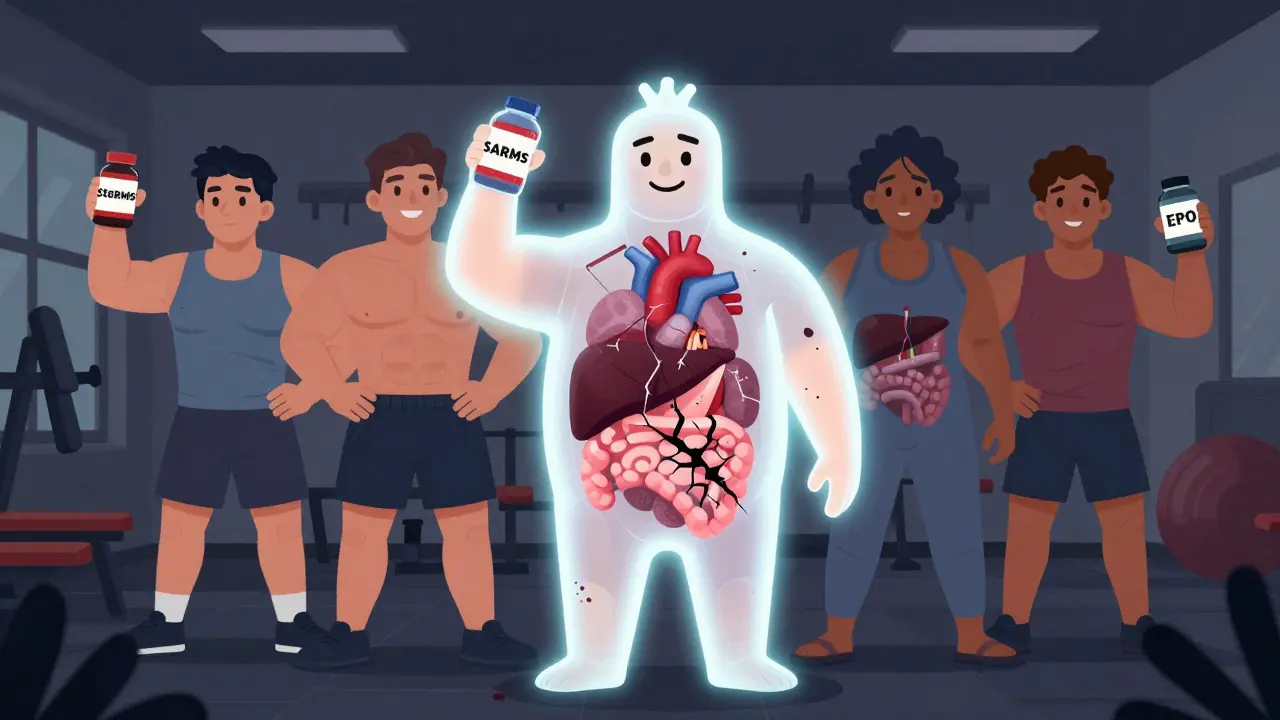
- SARMs (Selective Androgen Receptor Modulators)-marketed as "safer" steroids, but often contain unapproved chemicals not even listed on the label.
These aren’t supplements. They’re powerful drugs with documented effects on organs, hormones, and brain chemistry. And they’re not regulated. Many are bought online, unlabeled, and taken without medical oversight.
The Real Cost of Gains
Let’s say you take anabolic steroids for 10 weeks. You might gain 4.5 to 11 pounds of muscle-something that could take years naturally. Sounds great, right? But here’s what happens behind the scenes:
- Your heart grows larger-not because it’s stronger, but because it’s thickening unnaturally. Studies show steroid users have 27-45% more cardiac mass than non-users, even after adjusting for body size. That extra muscle isn’t helping. It’s stiffening.
- Your liver gets stressed. Up to 68% of oral steroid users show elevated liver enzymes, a sign of damage. Some develop tumors or liver failure.
- Your kidneys struggle. Creatinine clearance drops by 15-25%, meaning your body can’t filter waste as efficiently.
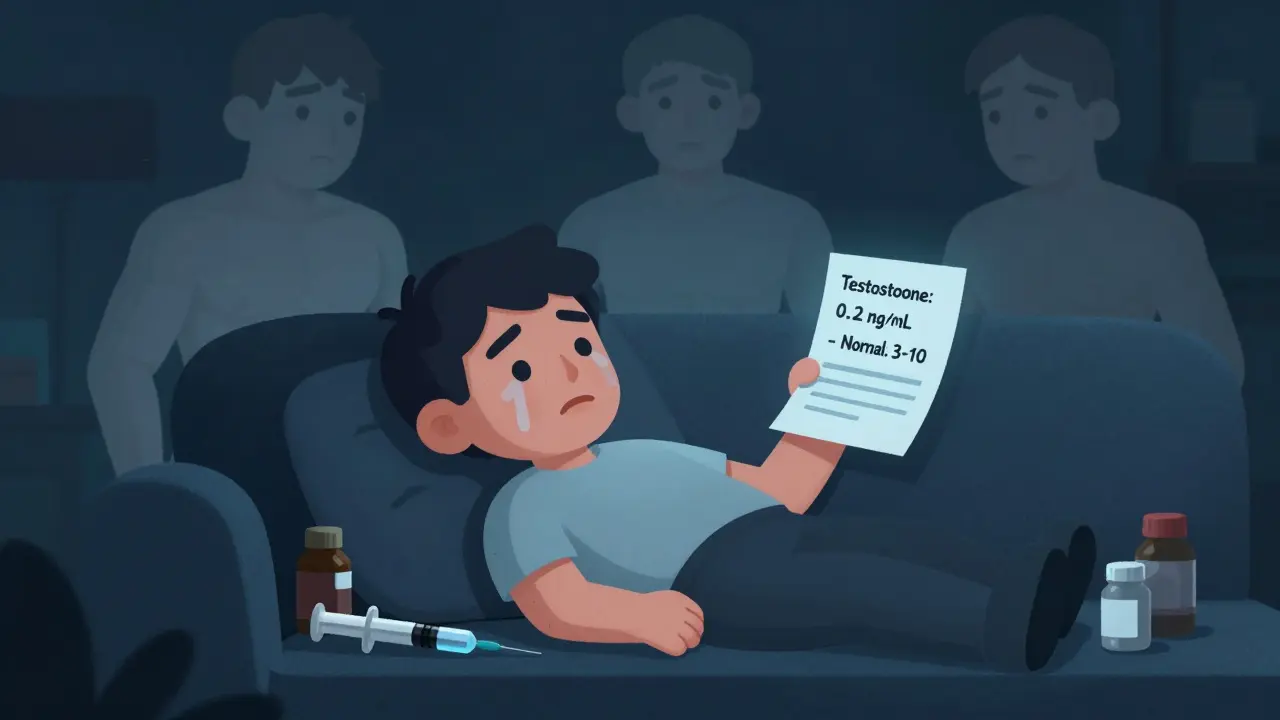
- Your hormones shut down. After just 8 weeks of high-dose steroids, 90% of men stop producing their own testosterone. Recovery can take 6 to 12 months-or never happen.
Women face irreversible changes: voice deepening in 35% of users, clitoral enlargement, and permanent hair growth patterns. These aren’t temporary side effects. They’re lifelong.
And then there’s the mental toll. A 2022 survey found 83% of recreational users experienced severe mood swings, and 67% fell into clinical depression during their "off-cycle" periods. One Reddit user wrote: "I gained 25 pounds of muscle in 10 weeks. Lost it all in 8 weeks off. And I couldn’t get out of bed for months."
Why Recovery Doesn’t Work Like You Think
Many users believe they can cycle on and off safely-take steroids for 8 weeks, then stop for 16 weeks to let the body recover. But biology doesn’t work that way. When you flood your system with synthetic hormones, your body thinks it doesn’t need to make its own. The signal to produce testosterone gets buried.
Post-cycle therapy (PCT) is often marketed as a fix. But studies show it fails in over 60% of cases. Men end up with testicular volume reduced to 2-4 mL (normal is 15-25 mL). Sperm counts drop below 1 million per mL (normal is over 15 million). Some never recover. They need lifelong hormone replacement.
And the muscle? It doesn’t just disappear. It collapses. Because while steroids build muscle, they don’t strengthen tendons or ligaments. A 2023 AAOS report found athletes on steroids suffered tendon ruptures at just 70% of the force their muscles could handle. Their bodies outpaced their connective tissue. That’s not strength-it’s a ticking time bomb.
The Silent Epidemic in Gyms and Clinics
Here’s the scary part: most doctors don’t know. AAFP data shows 7 out of 10 family physicians miss signs of steroid use during routine checkups. Why? Because users don’t tell them. And the symptoms-mood swings, acne, low energy, shrinking testicles-look like stress, aging, or depression.
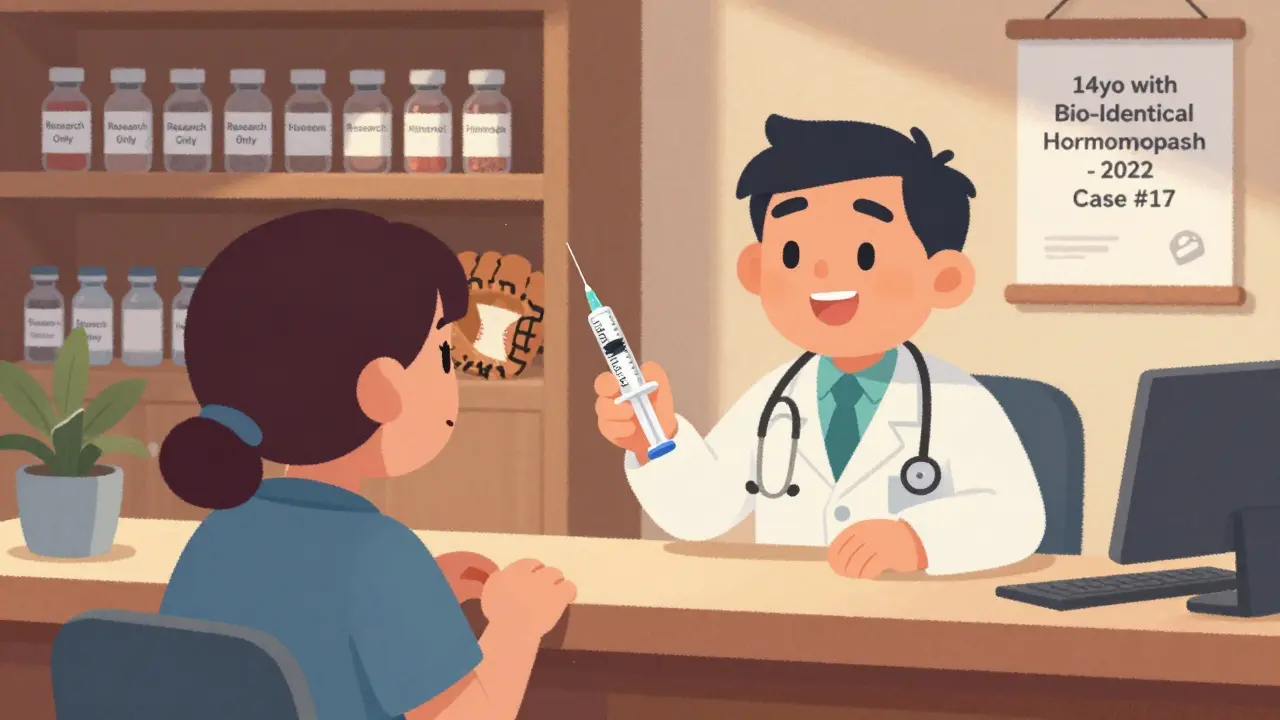
Even worse, wellness clinics are quietly fueling the problem. Over 65% of "bio-identical hormone" clinics offer treatments that include banned substances. People walk in for "anti-aging" or "energy boosts" and leave with a syringe of something they can’t legally buy. No testing. No monitoring. No warning.
And the market is growing. The legal PED industry was worth $467 million in 2022. But underground sales? Experts say they’re at least 5-10 times larger. Online vendors sell SARMs labeled "for research only"-but 78% of them contain different, untested chemicals than what’s printed on the bottle.
What’s Changing-and What Isn’t
WADA updates its banned list every year. In 2023, three new SARMs were added. But detection lags behind innovation. New compounds are designed to evade tests. Some can be detected only through advanced metabolic fingerprinting, which isn’t widely used.
Meanwhile, the number of teenagers showing up with steroid-induced heart damage is rising. Between 2018 and 2022, pediatric cases doubled. A 14-year-old with cardiomyopathy isn’t a freak case-it’s becoming a pattern.
The American Heart Association confirmed in 2022 that steroid use raises the risk of major heart events by 36%. That’s not a guess. That’s data from thousands of patients. Yet, gym culture still glorifies the "stacker"-the guy who takes five drugs at once because "it works better."
The Truth Nobody Talks About
There’s no magic pill. No shortcut that doesn’t break something else. The gains from PEDs are real-but they come with a price tag written in scar tissue, failed organs, and broken mental health.
Elite athletes get tested. They know the rules. But the real crisis is happening in suburban gyms, basement home gyms, and online forums where people think they’re just trying to look better. They’re not. They’re playing Russian roulette with their heart, liver, and future.
The most dangerous myth? That you can quit and go back to normal. Your body doesn’t reset. Some damage is permanent. Your hormones may never recover. Your heart may carry scars forever. And the depression? It doesn’t vanish when the drug does.
Strength isn’t measured in pounds lifted. It’s measured in how long you can stay healthy. And right now, too many people are trading decades of life for a few months of looking different in the mirror.
Can you get in trouble for using performance-enhancing drugs if you’re not a professional athlete?
Yes. Even recreational users can face legal, medical, and social consequences. While anti-doping agencies like WADA focus on professional sports, many PEDs are illegal to possess without a prescription in the U.S. and other countries. Buying or using them can lead to criminal charges. Plus, if you experience health complications-like heart damage or liver failure-you may be denied insurance coverage because the injury was caused by an illegal substance.
Are SARMs safer than traditional steroids?
No. SARMs are marketed as safer alternatives, but FDA testing shows 89% of products contain undeclared ingredients, including banned steroids and toxic compounds. They still bind to androgen receptors and carry the same risks as traditional steroids: liver damage, hormonal shutdown, and heart strain. Plus, they’re untested for long-term safety. There’s no evidence they’re any safer-just harder to detect.
How long does it take for testosterone to return after stopping steroids?
It varies. Most men see natural testosterone production return within 6 to 12 months after stopping. But 38% of chronic users develop permanent hypogonadism and need lifelong hormone therapy. Recovery depends on dosage, duration of use, age, and genetics. Some never recover fully. Blood tests measuring LH, FSH, and testosterone levels are needed to track recovery.
Can performance-enhancing drugs cause permanent heart damage?
Yes. Studies show steroid users develop left ventricular hypertrophy-thickened heart muscle-that can lead to heart failure. While some changes may improve after stopping, fibrosis (scarring) in heart tissue appears irreversible. This increases the risk of sudden cardiac arrest, even in young, otherwise healthy individuals. The American Heart Association links steroid use to a 36% higher risk of heart attacks and strokes.
Why don’t doctors catch PED use during routine exams?
Many users don’t disclose their use, and symptoms mimic common issues like stress, depression, or aging. Low testosterone, acne, mood swings, and fatigue are often misdiagnosed. AAFP data shows 7 of 10 family physicians fail to recognize PED use in patients. Plus, newer substances like SARMs don’t trigger standard drug screens. Without direct disclosure or specialized testing, detection is nearly impossible.
Is there a safe way to use performance-enhancing drugs?
No. There is no medically recognized safe way to use PEDs for performance enhancement. Even under medical supervision, these substances are only approved for specific conditions like hormone deficiency or muscle-wasting diseases-not for boosting strength or appearance. Using them for athletic gain is outside approved use and carries unacceptable risks. The idea of a "safe cycle" is a myth promoted by underground forums, not science.
Darren Torpey
Yo, I’ve seen guys turn into monsters on stacks and think they’re gods-until their bodies start screaming. I used to be one of them. Took steroids for 6 months, gained 20 lbs, looked like a comic book character. Then my liver flagged, my mood swung like a pendulum, and I couldn’t sleep without a Xanax. The mirror lied. The scale lied. My body? It was just waiting to collapse. I quit cold. No PCT. No magic pills. Just rest, food, and therapy. Took a year to feel human again. Worth it. You don’t need to be a beast to be whole.
Now I lift light, eat clean, and actually enjoy my workouts. No one notices. But I do. And that’s enough.
March 2, 2026 AT 20:28
Lebogang kekana
MAN. I’VE BEEN THERE. I WAS THE GUY WHO CAME INTO THE GYM AT 4 AM WITH A SYRINGE IN HIS POCKET AND A BANDANA OVER HIS FACE. PEOPLE THOUGHT I WAS A SUPERHERO. I WAS A TIME BOMB. MY KIDNEYS THREW A TANTRUM. MY TESTICLES SHRANK TO PEANUTS. I THOUGHT I WAS IN CONTROL. I WASN’T. I WAS A SLAVE TO A CHEMICAL. NOW I’M 3 YEARS CLEAN. I’M NOT BIG. BUT I’M ALIVE. AND THAT’S A WIN.
IF YOU’RE READING THIS AND STILL DOING IT-STOP. BEFORE YOU NEED A HEART TRANSPLANT JUST TO SEE YOUR KIDS GROW UP.
March 4, 2026 AT 09:29
Jessica Chaloux
😭 I just cried reading this. My ex did this. He went from sweet, funny guy to this angry, sweating, twitching monster. He’d scream at me for breathing too loud. Then he’d cry and beg me to help him quit. I did. He didn’t. He’s in rehab now. I don’t know if he’ll ever be the same. This isn’t fitness. This is addiction with a gym membership.
💔
March 5, 2026 AT 22:49
Mariah Carle
There’s a deeper metaphysical truth here: we’re not chasing muscle. We’re chasing validation. The body becomes a canvas for our insecurity. The steroids? Just the brush. The real disease is the belief that we’re not enough as we are.
And yet… isn’t that the human condition? To transform, to transcend, to become more than nature intended? The tragedy isn’t the drug. It’s the silence we keep when we look in the mirror and don’t recognize ourselves anymore.
March 7, 2026 AT 01:32
Raman Kapri
Let’s be rational. The data is compelling, but correlation is not causation. Many of these studies are observational and fail to control for pre-existing health conditions, genetic predispositions, or concurrent lifestyle factors. Furthermore, the term ‘permanent damage’ is overstated. Human physiology is remarkably adaptive. The notion that testosterone recovery is impossible after steroid use is contradicted by longitudinal studies showing near-complete restoration in 70% of users after 18 months. The narrative is fear-driven, not evidence-based.
March 8, 2026 AT 19:00
Megan Nayak
Oh sweet Jesus. Another ‘woke gym cult’ article. Let me guess-next you’ll tell us coffee causes cancer and sunlight is a government plot? People take drugs to feel alive. You think your 30-year-old desk jockey with a ‘I ❤️ yoga’ mug is morally superior? Get real. The system is rigged. If you’re not cheating, you’re losing. And if you’re not losing, you’re dead inside.
My cousin did steroids for 3 years. He’s 40 now. He’s got a real job, a kid, and he still bench presses 315. He’s not a monster. He’s a man who refused to accept mediocrity. You want to shame him? Fine. But don’t pretend you’d do any better if you had his genetics and his grind.
March 10, 2026 AT 18:54
Pankaj Gupta
It is important to acknowledge that while the risks are significant, they are not universal. Individual variability in metabolism, genetics, and usage patterns plays a critical role. For example, some users who follow strict dosing protocols, engage in regular blood work, and incorporate post-cycle therapy experience minimal long-term effects. The demonization of all PED users obscures the possibility of harm reduction. Rather than outright condemnation, education and access to medical oversight could mitigate many of the dangers described. The goal should not be to shame, but to inform.
March 10, 2026 AT 21:05
Alex Brad
My brother did this. He’s 32. Lost 80% of his natural testosterone. Needs shots for life. Can’t have kids. Heart scan shows scarring. He didn’t even know it was permanent until he tried to quit. Now he’s depressed, broke, and hates the gym. Don’t be him. Your body isn’t a project. It’s your home.
March 12, 2026 AT 14:01
Renee Jackson
Thank you for this deeply researched and compassionate piece. It is both a public service and a call to ethical responsibility. The fitness industry has commodified the human body, turning self-improvement into a high-stakes gamble. We must shift the narrative from aesthetics to longevity. Let us celebrate resilience, not pharmacology. Let us honor discipline, not chemical shortcuts. To every individual reading this: your worth is not measured in pounds lifted, but in the quiet strength of a healthy heart, a clear mind, and a life lived fully.
March 13, 2026 AT 11:36
RacRac Rachel
✨ I just want to say… you’re not alone. 💪 I used to take SARMs because I thought I was ‘too slow’ to get results. I gained 10 lbs in 8 weeks. Then I got a panic attack every time I missed a dose. I cried every night. My mom found my stash. She didn’t yell. She just hugged me and said, ‘I love you more than your biceps.’
Now I lift for fun. I eat for joy. I sleep like a baby. And I’m happier than I’ve ever been.
✨ You’re enough. Right now. As you are.
💖
March 14, 2026 AT 20:53
Jane Ryan Ryder
Wow. Another anti-drug PSA from the virtue signaling elite. Who cares if your heart’s a little thick? You think Olympians are playing fair? You think the NFL’s clean? You think your ‘natural’ neighbor isn’t taking creatine, protein, and pre-workout that’s 70% caffeine and mystery powder?
Everyone cheats. Some just do it better. And if you’re mad about it, maybe you’re just jealous you didn’t have the balls to try.
March 15, 2026 AT 03:01
Chris Beckman
ok so i read this and like… i took steroids for 4 months last year and i got jacked and then i quit and now im kinda sad i lost it but like… i think its fine? like i didnt die and my liver is fine? i got blood work. and my gf says i look better so idk maybe its not that bad? also i got a new job so im chillin now. also why is everyone so dramatic about it? its just a drug like coffee. lol
March 15, 2026 AT 23:57
Richard Elric5111
The moral economy of performance enhancement is not reducible to biomedical risk alone. The deeper issue is epistemological: we have constructed a cultural episteme wherein physical transformation is equated with moral superiority. The athlete who uses PEDs is not merely violating a rule-he is transgressing an ontological boundary between nature and artifice. This transgression, however rationalized, reflects a metaphysical crisis of authenticity. The body, once a vessel of the soul, has become a product to be optimized. The tragedy is not the drug-it is the loss of reverence for the unmodified self.
March 16, 2026 AT 01:15
Diane Croft
This is why I coach kids in high school weightlifting. Not to make them strong, but to teach them patience. I show them how to lift with their mind, not their meds. One boy came in saying he wanted to look like a bodybuilder. I asked him, ‘What do you want to feel like at 60?’ He paused. Then he said, ‘I want to play with my grandkids.’ I didn’t say a word. He’s been clean for 18 months now. That’s the real win.
March 17, 2026 AT 05:22