
When you pick up a prescription, you might see a different name on the bottle than what your doctor wrote. It’s not a mistake. It could be an authorized generic-a drug that’s chemically identical to the brand-name version, but sold without the brand logo. So, are they really the same? The short answer: yes. But understanding why matters-especially if you’re managing a chronic condition, watching your budget, or worried about side effects after a switch.
What Exactly Is an Authorized Generic?
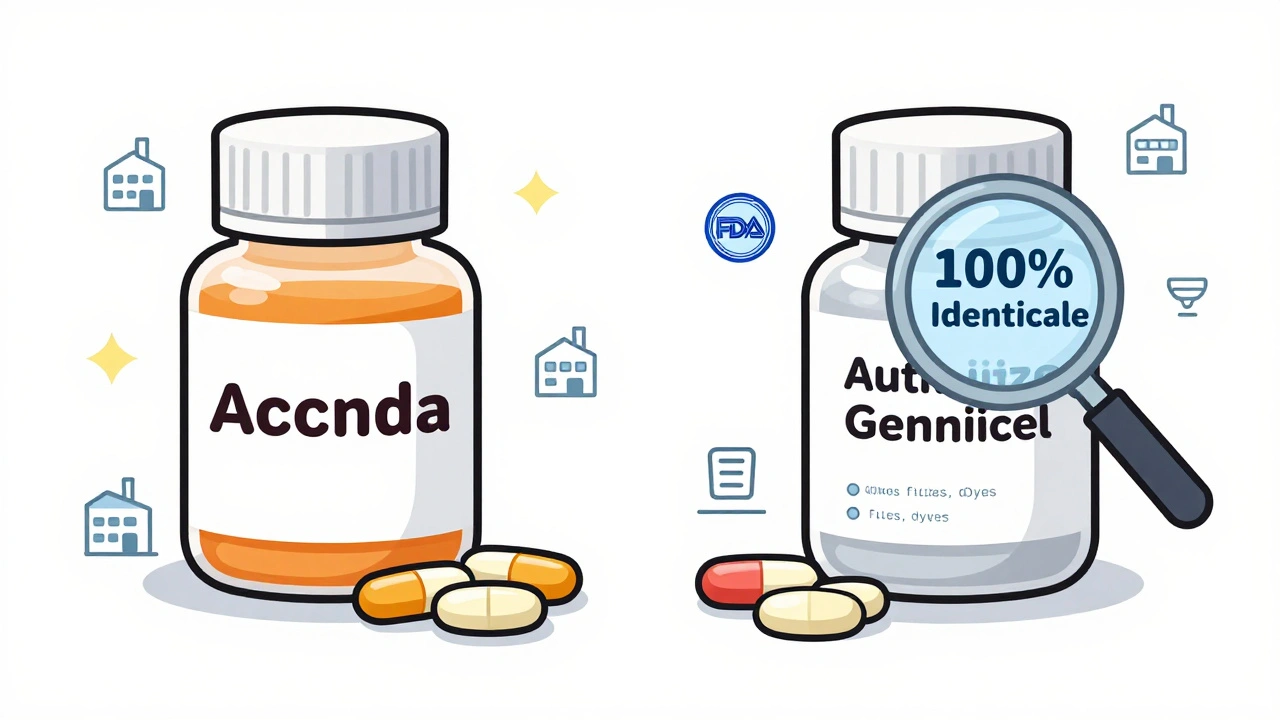
An authorized generic isn’t just another generic. It’s the exact same pill, capsule, or injection that comes out of the same factory as the brand-name drug. The only difference? No brand name on the label. The manufacturer is the same company that made the original. For example, if you’re taking Lipitor (atorvastatin), the authorized generic is made by Pfizer-the same plant, same batch process, same inactive ingredients like fillers and dyes. It’s not a copy. It’s the real thing, repackaged.
This isn’t a loophole. It’s built into U.S. drug law. The Hatch-Waxman Act of 1984 created a system where brand companies can launch their own generic version when patents start to expire. This lets them keep some market share while still allowing competition. Unlike typical generics, which go through a separate approval process called ANDA (Abbreviated New Drug Application), authorized generics are approved under the original brand’s NDA (New Drug Application). That means they skip the bioequivalence tests because they’re not a different product-they’re the same product with a different label.
How They’re Different From Regular Generics
Regular generics must prove they work the same way as the brand drug. They have to match the active ingredient, strength, and how fast the drug gets into your bloodstream. But they can-and often do-use different inactive ingredients. That’s why a generic version of a pill might look different: different color, shape, or even taste. Sometimes, those differences matter. A small number of patients report side effects or reduced effectiveness after switching, especially with drugs that have a narrow therapeutic index-like warfarin, levothyroxine, or certain seizure medications.
Authorized generics don’t have that issue. They use the exact same inactive ingredients. No surprises. No reformulation. If your body reacted well to the brand, it’ll react the same way to the authorized generic. The FDA confirms this: authorized generics are therapeutically equivalent because they’re identical in every way except the label.
Why They Don’t Show Up in the Orange Book
You might check the FDA’s Orange Book-a list of all approved generic drugs-and not find your authorized generic. That’s normal. The Orange Book only lists drugs approved through the ANDA process. Authorized generics are approved under the brand’s NDA, so they’re not listed there. That doesn’t mean they’re not approved. It just means they’re tracked differently.
Pharmacists know this. But patients often don’t. You might get confused when your prescription fills as a different-looking pill with no brand name. You might think you got the wrong drug. That’s why clear communication from your pharmacist matters. Ask: “Is this an authorized generic?” If yes, you can be confident it’s the same as your brand.
Do They Work the Same in Real Life?
A 2018 study published in PMC tracked over 5,000 patients who switched from brand-name drugs to generics. About half of those switches were to authorized generics. The results? No meaningful difference in hospital visits, emergency room trips, or whether people stopped taking their meds. The study concluded that generics-including authorized ones-were clinically no worse than the brand.
One small finding stood out: patients on authorized generics had a slightly higher rate of emergency visits than those on typical generics. But the difference was tiny-0.25 events per patient per year versus 0.22. Not enough to matter in real-world care. Experts believe this might reflect patient perception more than actual drug performance. People who choose authorized generics might be more anxious about switching, leading them to seek care more often-even if nothing’s wrong.
Another study by the FDA found that absorption differences between brand and generic drugs are typically under 3.5%. That’s within the acceptable range for bioequivalence. Authorized generics? They’re often closer to 0.5% because they’re the same product.
Cost: Are They Cheaper Than Brands?
Yes. Authorized generics usually cost less than the brand-name version-sometimes 30% to 50% less. But they’re often more expensive than typical generics. Why? Because the brand company still controls production. They’re not competing with independent generic manufacturers on price. Still, for patients who’ve had bad experiences with regular generics-maybe due to a change in filler or dye-an authorized generic offers a middle ground: lower cost, no formulation change.
Insurance plans sometimes prefer authorized generics over brand drugs, but not always over typical generics. That’s because typical generics are cheaper. But if your plan covers authorized generics at a lower copay than the brand, it’s worth asking your pharmacist if one’s available.
Who Should Consider Them?
Authorized generics are especially helpful for:
- Patients on narrow therapeutic index drugs (like thyroid meds, blood thinners, or epilepsy drugs), where even small changes in formulation can cause issues.
- People who’ve had side effects after switching to a regular generic.
- Those who want the same drug but can’t afford the brand price.
- Patients on birth control pills, where consistency in inactive ingredients matters for hormone stability.
If you’re on a long-term medication and your doctor or pharmacist suggests switching, ask: “Is there an authorized generic available?” If yes, it’s often the safest option if cost is a concern.
What About Quality and Safety?
The FDA holds authorized generics to the same strict standards as brand-name drugs. Every batch is tested for identity, strength, purity, and stability. Manufacturing sites are inspected regularly. If a problem arises-like a contamination or a spike in side effects-the FDA investigates it the same way, whether it’s a brand, authorized generic, or regular generic.
Some critics worry that brand companies use authorized generics to delay real competition. For example, a company might launch its own authorized generic right when a patent expires, making it harder for independent generics to enter the market. The Government Accountability Office has flagged this as a potential tactic to protect profits. But that doesn’t change the fact that the authorized generic itself is safe and effective.
What to Do If You’re Switching
If you’re switching from a brand to an authorized generic:
- Ask your pharmacist: “Is this an authorized generic?”
- Check the label. It won’t have the brand name, but it will list the same active ingredient.
- Monitor how you feel. If you notice new side effects, contact your doctor.
- Keep your old bottle as a reference. The pill might look different, but the active ingredient should match.
Most people won’t notice a difference. But if you do, speak up. Your feedback helps your provider make better choices for you.
Bottom Line
Authorized generics aren’t just “close enough.” They’re the same drug. Same factory. Same ingredients. Same quality. The only difference is the label and the price. For patients who need consistency, safety, and affordability, they’re often the best option available. You don’t have to choose between brand-name quality and generic cost. With authorized generics, you can have both.
The FDA, researchers, and pharmacists agree: if you’re considering a switch, an authorized generic is a smart, safe choice. It’s not a compromise. It’s the original-just without the brand name.

David Brooks
OMG I JUST SWITCHED TO AN AUTHORIZED GENERIC FOR MY CHOLESTEROL MED AND I DIDN’T EVEN NOTICE THE DIFFERENCE. LIKE, I THOUGHT I’D BE SOMEHOW WEAKER OR SLEEPIER OR SOMETHING, BUT NOPE. SAME ENERGY, SAME LIFE. MY WALLET THANKS YOU, PHARMA. 🙌
December 8, 2025 AT 11:43
Sadie Nastor
i just wanna say… i used to freak out every time my pill looked different 😅 but now i ask ‘is this authorized?’ and if yes, i’m chill. like… why are we scared of labels? the stuff inside is literally the same. also, my thyroid feels way more stable now. peace.
December 9, 2025 AT 11:59
Stacy here
Let me guess - this is just Big Pharma’s way to keep you hooked while pretending they’re being ‘generous.’ 🤡 They make the brand, then slap a ‘generic’ label on the exact same bottle and call it a ‘middle ground.’ Meanwhile, real generics from India or China? Totally banned. Coincidence? I think not. They’re not saving you money - they’re controlling your choices. Wake up. The FDA doesn’t own you.
December 9, 2025 AT 19:17
Kyle Flores
Just wanted to say - if you’ve ever had a bad reaction to a generic, please don’t give up. Authorized generics saved my life after I switched from my brand blood pressure med. I was getting dizzy, headaches, the whole deal. Switched to the authorized version - boom, normal again. No drama. Just science. And yeah, it’s cheaper. Win-win.
December 11, 2025 AT 07:07
Olivia Hand
Here’s the thing nobody talks about: the *inactive* ingredients are the silent assassins. I had a rash for three weeks after switching to a regular generic of my antidepressant. Turns out, it had a dye I was allergic to. The authorized version? Same as the brand - no dye, no drama. If you’re sensitive to anything, ask for the authorized one. It’s not paranoia. It’s pharmacology.
December 11, 2025 AT 16:42
Jane Quitain
guys i just found out my birth control is an authorized generic and i’m crying?? like… i’ve been scared to switch for years bc i heard they mess with your hormones. but if it’s the same exact pill?? why didn’t anyone tell me this sooner?? i’m saving $40 a month and my anxiety is gone. thank you, internet.
December 11, 2025 AT 18:57
Sam Mathew Cheriyan
lol america thinks generics are safe but china’s pills are poison? nah bro. my cousin in delhi gets the exact same atorvastatin as me, just in a different box. same factory, same batch code. they just don’t slap a ‘Pfizer’ sticker on it. the real conspiracy? Why do we pay 10x more for the same pill just because it has a logo?
December 13, 2025 AT 17:46
Ernie Blevins
authorized generics? more like authorized ripoff. they charge more than real generics but less than brand. that’s not saving you money, that’s price gouging with a smile. and don’t get me started on how they use this to block real competition. this isn’t healthcare - it’s a monopoly game.
December 15, 2025 AT 06:50
Helen Maples
If you’re on a narrow therapeutic index drug - levothyroxine, warfarin, lithium - don’t gamble. Ask for the authorized generic. It’s not about being ‘extra.’ It’s about precision medicine. Your body doesn’t care about branding. It cares about consistency. Your pharmacist can tell you if it’s available. Ask. Don’t assume.
December 17, 2025 AT 00:57
Ashley Farmer
Just wanted to add - if your pharmacist says ‘it’s the same thing’ but doesn’t mention ‘authorized,’ they might not know the difference. I had to educate mine. Now she keeps a list of authorized generics on her desk. Small change, huge impact. Knowledge is power, especially when your life depends on it.
December 18, 2025 AT 01:10
Jennifer Anderson
my mom switched to an authorized generic for her diabetes med and she’s been fine for 8 months. she didn’t even notice. but she’s the type to notice if her coffee tastes weird. so if she didn’t notice… it’s probably fine lol. also cheaper. win.
December 19, 2025 AT 00:31
Nicholas Heer
THEY’RE HIDING THE TRUTH. AUTHORIZED GENERICS AREN’T ‘THE SAME’ - THEY’RE A TACTICAL MOVE BY BIG PHARMA TO SQUEEZE PROFITS WHILE LOOKING LIKE THE GOOD GUY. THEY’RE NOT ALLOWING REAL COMPETITION. THEY’RE JUST REPACKAGING THEIR OWN STUFF AND CALLING IT A ‘SAVE.’ THIS ISN’T HEALTHCARE - IT’S CORPORATE SABOTAGE. THE FDA IS ASLEEP AT THE WHEEL. AMERICA NEEDS REAL GENERICS, NOT CORPORATE FAKEOUTS.
December 19, 2025 AT 02:54