
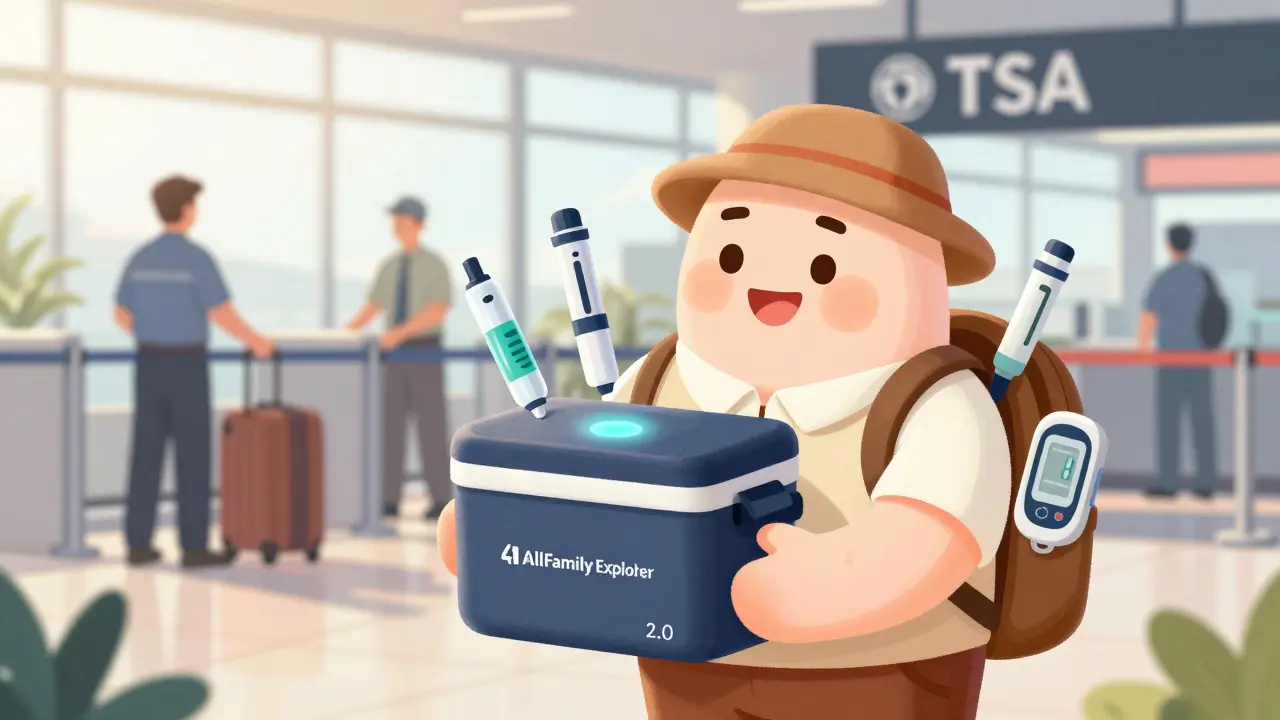
Traveling with refrigerated medications isn’t just about packing a cooler. It’s about keeping your life-saving drugs safe from heat, humidity, and careless handling - especially when you’re on a flight, in a rental car, or stuck in a hotel room with a mini-fridge that runs at 50°F. If you’re managing insulin, Mounjaro, vaccines, or other temperature-sensitive biologics, a regular ice pack won’t cut it. You need a system designed for precision, not guesswork.
Why Temperature Matters More Than You Think
Most refrigerated medications need to stay between 36°F and 46°F (2°C to 8°C). That’s not a suggestion - it’s a hard limit. Go outside that range, even by a few degrees, and your medication can lose effectiveness. Insulin degrades about 1.5% per hour above 46°F. At 77°F (25°C), it can lose 10% of its potency in just one day. Biologics like tirzepatide (Mounjaro) are more forgiving - they can handle room temperature for up to 21 days - but most others aren’t. And if you’re flying, your luggage could sit on a hot tarmac at 120°F. That’s not hypothetical. It’s daily reality.The FDA estimates that 25% of all prescription medications require refrigeration. That’s millions of people traveling every year who need more than a lunchbox and some frozen peas. And if your meds get too warm? You might not know until it’s too late - no symptoms, no warning. Just reduced effectiveness. That’s why the right cooling solution isn’t optional. It’s medical necessity.
What Works: Real Cooling Options Compared
Not all coolers are created equal. Here’s what’s actually out there in 2026, ranked by reliability, not price.- Pre-frozen gel packs (standard): These come with your medication from pharmacies like CVS or Walgreens. They’re free, but they only last 12-24 hours. They need to be frozen for at least 12 hours before use, and if the ambient temperature is above 90°F, their cooling power drops by 30%. Use them only for short trips under 24 hours.
- Insulin cooler bags (budget option): The SUNMON Insulin Cooler Bag ($35) is TSA-approved and lightweight. It works for 8-12 hours if you refill ice every few hours. But 63% of users on Amazon reported temps rising above 46°F within 24 hours. It’s fine for a day trip, not a week.
- Medical-grade portable coolers (best value): The 4AllFamily Explorer (now in version 2.0) is the most trusted device among travelers. It uses a Biogel Freeze Pack and USB lid to maintain 36-45°F for up to 50 hours in 104°F heat. Without electricity, it still holds cold for 72 hours. It weighs just 1.2 pounds empty and fits seven insulin pens. It’s the only cooler with lab-tested data from Intertek Labs confirming its performance. Price: $149.99.
- Active refrigeration units (premium): The Armoa Portable Medical Fridge ($299) runs on battery and keeps a constant 40°F for 48 hours. It’s heavier (6.2 pounds), needs 65W power, and isn’t TSA-friendly if you’re trying to carry it on. But if you’re traveling for days without access to outlets, it’s the only option that actively cools - not just insulates.
- Temperature monitors (essential add-on): The MedAngel ONE ($69) doesn’t cool anything. But it clips onto your cooler and sends real-time alerts to your phone if temps go out of range. Accuracy: ±0.2°F. For insulin users, this isn’t a luxury - it’s insurance. Pair it with any cooler and you’ll never guess whether your meds are safe.
What Doesn’t Work (And Why)
You’ve probably heard these tips. Don’t believe them.- Dry ice: The American Diabetes Association warns against it. Dry ice hits -109°F. It can freeze your insulin solid, ruining the molecular structure. It’s also banned on most airlines because of CO2 buildup risk.
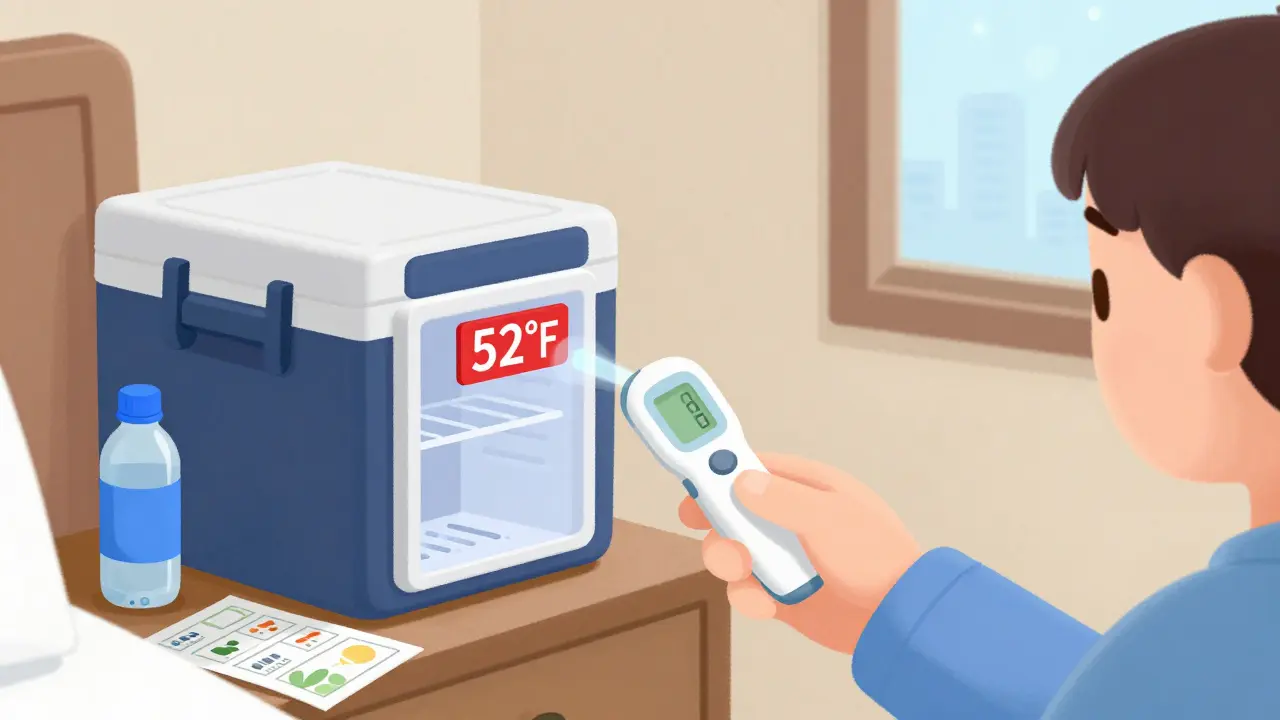
- Hotel mini-fridges: Most run at 48-52°F. That’s too warm for insulin and many biologics. Always test it with a digital thermometer before storing meds. If it’s above 46°F, ask for a different room or use your cooler.
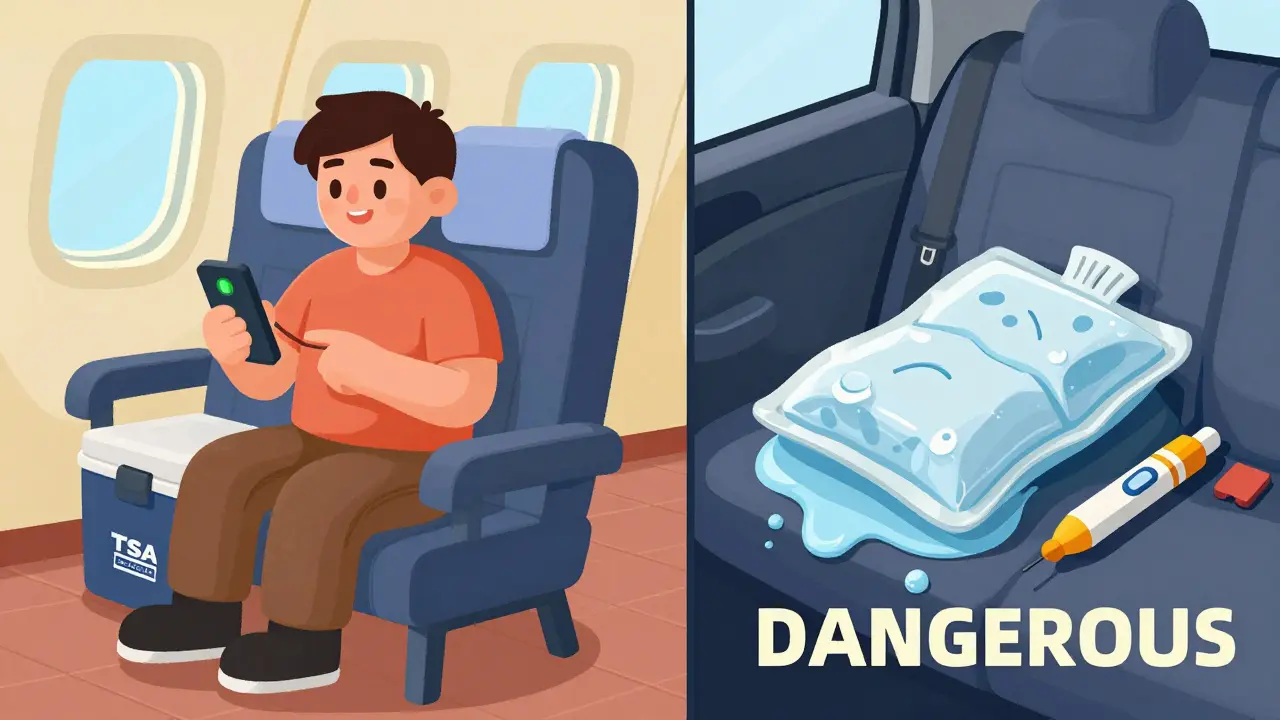
- Styrofoam coolers with regular ice: They leak. Water soaks into your medication vials, damages labels, and promotes mold. Even if the temp stays low, moisture can ruin your dose. Use waterproof bags inside - PWSA USA found this prevents 98% of packaging damage.
- Freezing your meds directly: Never put insulin or biologics directly on ice or gel packs. Freeze them, and they become useless. Always use a barrier - a cloth, a plastic pouch, or a cooler with internal compartments designed to separate meds from cooling elements.
How to Pack Like a Pro
Here’s how the most experienced travelers do it - no guesswork, no stress.- Freeze your cooling packs 24-48 hours ahead. Use a freezer set to 0°F (-18°C). Partially frozen packs won’t last.
- Use a waterproof pouch between your meds and the cooling element. Even if the pack melts, your vials stay dry.
- Carry backup packs. For trips longer than 24 hours, bring at least two sets of cooling elements. You can refill them at hotel ice machines - 87% of travelers who do this report zero temperature excursions.
- Request a mini-fridge when booking. Major chains like Marriott, Hilton, and Hyatt accommodate this request 92% of the time. Say it’s for medical reasons - they’re legally required to help.
- Bring documentation. Carry the manufacturer’s temperature guidelines printed from their website or given by your pharmacist. 83% of pharmacists will provide this on request. It cuts TSA delays by 75%.
TSA Rules You Must Know
You can’t just toss your cooler in your carry-on and hope for the best. TSA requires:- Declaration of refrigerated medications at the checkpoint
- Placement in a separate bin for X-ray screening
- Prescription labels visible on all medication containers
- Medical necessity is protected under the ADA - you don’t need a doctor’s note, but having one helps if questioned
Pro tip: Keep your cooler small enough to fit under the seat. Bigger units may get flagged for checked baggage - and that’s a risk you can’t afford. If your cooler is over 10 inches long, consider splitting your meds: carry one day’s dose with you, leave the rest in checked luggage with a thermal bag and dry ice (only if approved by the airline).
What’s New in 2026
The market is evolving fast. The 4AllFamily Explorer 2.0, released in October 2023, now includes Bluetooth monitoring that alerts your phone if temps creep above 48°F. MedAngel’s upcoming CORE system promises 120 hours of cooling - but early tests show it struggles in tropical climates. And 78% of big pharma companies are now building apps that log your medication’s temperature history - useful for insurance claims or doctor visits.But here’s the real trend: hospitals are handing out travel kits. 41% of major U.S. healthcare systems now provide free, FDA-compliant coolers to patients on insulin or biologics. Ask your pharmacy or clinic. You might not have to buy one.
Final Advice: Don’t Risk It
Medication degradation doesn’t come with a warning label. You won’t feel it. Your blood sugar won’t spike right away. But over time, degraded insulin means more injections, more highs, more complications. That’s not worth the $35 savings on a cheap cooler.If you’re traveling with refrigerated meds, treat them like your life depends on it - because they do. Use a tested medical-grade cooler. Add a temperature monitor. Know your TSA rights. And never, ever rely on luck.
Can I use regular ice packs for insulin while traveling?
Regular ice packs from the grocery store can work for short trips under 24 hours, but they’re unreliable. They thaw quickly in heat, don’t maintain consistent temperatures, and can leak. Medical-grade gel packs, like those from 4AllFamily, are designed to hold 36-46°F for 72+ hours and come with insulated barriers to prevent freezing your medication. For anything longer than a day, skip the regular packs.
How long can insulin last without refrigeration?
Unopened insulin should always be refrigerated. Once opened, most insulin pens can be kept at room temperature (up to 86°F) for 28 days. But if it’s hotter than 86°F, or if it’s exposed to direct sunlight or a hot car, it degrades faster - up to 10% per day at 77°F. For travel, never assume it’s safe. Use a cooler even if the manufacturer says it’s okay at room temp.
Is it safe to carry refrigerated meds in checked luggage?
It’s risky. Checked baggage can sit on hot tarmacs, in unrefrigerated cargo holds, or get delayed for days. The temperature inside a suitcase can hit 120°F. If you must check your meds, use a hard-shell cooler with at least two sets of medical-grade cooling packs, and always carry at least one day’s dose in your carry-on. Never rely on checked bags for anything life-sustaining.
Do I need a doctor’s note to fly with refrigerated medication?
No, TSA doesn’t require a doctor’s note. But you must show prescription labels on all containers. Carrying the manufacturer’s temperature guidelines printed from their website helps avoid delays. Under the ADA, you have the right to carry necessary medical equipment - but being prepared with documentation makes the process smoother.
Can I use a regular camping cooler for my insulin?
Not recommended. Standard camping coolers don’t maintain precise temperatures. They’re designed to keep things cold, not refrigerated. Insulin needs 36-46°F - a regular cooler might drop to 40°F one hour and rise to 55°F the next. That’s enough to damage your medication. Medical-grade coolers are tested to hold that range for days, even in 100°F heat. Don’t gamble with your health.
What should I do if my medication gets too warm during travel?
If your meds were exposed to temperatures above 46°F for more than 24 hours, or if you’re unsure, contact your pharmacist or doctor. Don’t use it if the vial looks cloudy, discolored, or has particles. Some manufacturers offer replacement programs if you can prove temperature exposure during travel. Always keep a backup supply on hand.
Juan Reibelo
Just got back from a 3-day trip with my Mounjaro pen, and I used the 4AllFamily Explorer 2.0. No issues. Zero alerts. The Bluetooth feature is legit-got a push notification when my car hit 98°F in the trunk. I didn’t even check the cooler until the alert popped up. Life saver.
January 25, 2026 AT 09:38
Dolores Rider
They’re lying about the FDA stats. 25%? More like 70% of meds are secretly designed to fail if you don’t buy their fancy coolers. Big Pharma knows people won’t pay $150 for a box-they want you dependent. And don’t get me started on the MedAngel… it’s a spy device. Who’s getting your temp data? 😈
January 25, 2026 AT 21:00
Vatsal Patel
Ah yes, the modern pilgrimage: carrying your godlike insulin through the desert of American airports, guarded by TSA agents who’ve never heard of biologics. We’ve reduced human survival to a compliance checklist. We don’t need coolers-we need a system that doesn’t treat medicine like a luxury accessory. But no, we’ll keep buying $150 boxes while the system laughs. 🤡
January 27, 2026 AT 02:59
Sharon Biggins
I used to just use ice packs and felt so guilty every time my sugar spiked… but after I got the 4AllFamily cooler and MedAngel? I cried. Not because it was expensive-because I finally felt safe. You’re not being dramatic if your life depends on it. You’re being smart. 💪
January 28, 2026 AT 02:07
John McGuirk
Hotel fridges at 48°F? That’s not a coincidence. That’s a setup. They want you to mess up your meds so you go back to the clinic, get more prescriptions, get more fees. It’s a loop. And the ‘free travel kits’ from hospitals? They’re just testing which brands you’ll stick with. Don’t fall for it.
January 28, 2026 AT 09:09
lorraine england
For anyone scared to ask for a mini-fridge: just say ‘I have a medical condition that requires consistent temperature control.’ They don’t ask questions. I’ve done it 5 times now. Hilton even gave me a free upgrade once. You deserve comfort. Don’t be shy.
January 29, 2026 AT 05:37
Himanshu Singh
It’s funny how we treat medicine like a fragile flower while ignoring the fact that the whole system is built to make us dependent on it. But hey-if a $150 cooler gives you peace of mind, go for it. Sometimes the best philosophy is the one that keeps you alive. 🙏
January 29, 2026 AT 15:45
Helen Leite
DO NOT TRUST TSA. They scanned my cooler and said ‘this looks like a bomb.’ I had to show them 3 pages of manufacturer guidelines. Then they laughed. Like I was the weird one. 😡 I carry my meds in a fanny pack now. No questions. No drama.
January 31, 2026 AT 10:16
Marlon Mentolaroc
Let’s be real: 87% of travelers who refill at ice machines report zero excursions? That’s because they’re lying. Ice melts. Water gets in. Labels get ruined. And if you’re using a Styrofoam cooler? Congrats, you’re just delaying the inevitable. The 4AllFamily is the only thing that works. The rest is theater.
January 31, 2026 AT 10:29
Gina Beard
Insulin degrades 1.5% per hour above 46°F? That’s not a fact. That’s a marketing line. No one measures that in real time. And if they did, would you really know? Probably not. But buying the $150 box makes you feel better. That’s all that matters.
January 31, 2026 AT 19:11
siva lingam
Buy the cooler. Use the monitor. Save your life. Done. No need for 15 paragraphs. You’re welcome.
February 1, 2026 AT 15:34
Sawyer Vitela
You missed the most important thing: the 4AllFamily 2.0 has a firmware update that can be hacked to show false temps. Someone on Reddit proved it. So if your device says it’s safe, it might not be. Use a $5 digital thermometer. Real. Reliable. Unhackable.
February 2, 2026 AT 11:01
Tiffany Wagner
I’ve been using the SUNMON bag for a year. It’s fine for short trips. I just check it with a thermometer every 4 hours. It’s not perfect but it works. And I don’t need to spend $150 to feel safe. Just be mindful. That’s all.
February 3, 2026 AT 03:33