
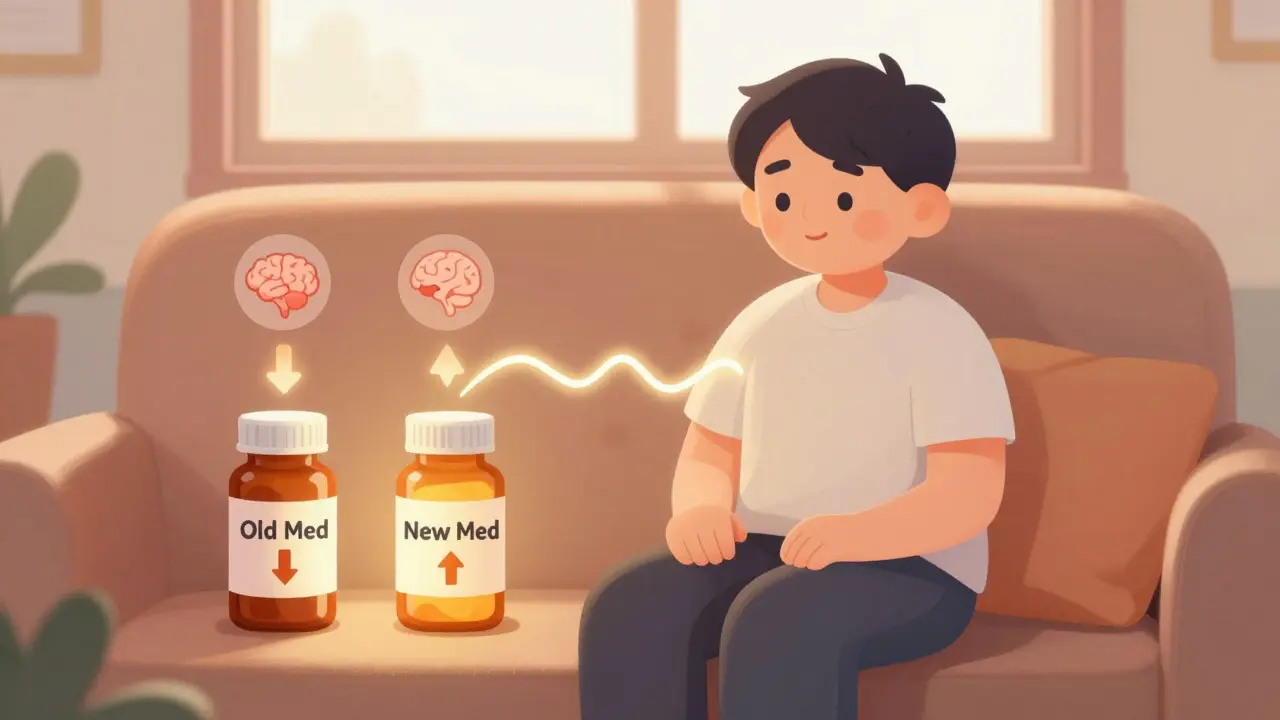
Changing antidepressants isn’t rare-it’s common. About 30% of people on antidepressants will need to switch at some point. Maybe the first one didn’t help enough. Maybe it caused weight gain, sexual problems, or constant dizziness. Whatever the reason, switching can be smooth-if you know how. Doing it wrong? That’s when side effects spike, anxiety returns, or worse, you get hit with brain zaps, nausea, or even serotonin syndrome.
Why Switching Antidepressants Is Necessary
Antidepressants work for many, but not all. Studies show that up to half of people don’t get full relief from their first medication. Side effects are just as big a reason to switch. Sexual dysfunction affects 30-60% of people on SSRIs. Weight gain? Happens to 25-50% depending on the drug. Some people can’t sleep. Others feel like they’re walking through molasses. When these side effects outweigh the benefits, switching isn’t giving up-it’s adjusting your treatment to fit your life.
But here’s the catch: you can’t just stop one and start another. Your brain adapts to the medication. Pull it away too fast, and your nervous system goes haywire. That’s when withdrawal kicks in.
What Withdrawal Really Feels Like
Withdrawal isn’t the same as depression coming back. It shows up fast-usually within 1 to 7 days after reducing or stopping. Common symptoms:
- Dizziness (28% of cases)
- Nausea (24%)
- Headaches (22%)
- Insomnia (19%)
- Fatigue (18%)
- "Brain zaps"-electric shock sensations in the head (33% with paroxetine)
These aren’t "all in your head." They’re physical reactions. The shorter the half-life of the drug, the faster withdrawal hits. Paroxetine and venlafaxine? They can cause symptoms within 24-48 hours. Fluoxetine? Because it lingers in your system for weeks, withdrawal might not show up for a month.
The Four Ways to Switch (And Which One Works Best)
There are four main strategies. Not all are equal. Here’s what works:
- Direct switch: Stop the old one, start the new one the next day. Risky. Only used for low-risk meds or when withdrawal is unlikely.
- Taper and switch: Stop the old one completely, wait a few days, then start the new one. Sometimes needed if the drugs interact.
- Taper and switch with washout: Stop the old one, wait 2-5 weeks, then start the new one. Required when switching from an SSRI to an MAOI (like phenelzine). Fluoxetine needs a 5-week washout-no exceptions.
- Cross-taper: Slowly reduce the old med while slowly increasing the new one. Overlap for 1-2 weeks. This is the gold standard.
Research from the 2021 Zhou et al. meta-analysis shows cross-tapering cuts withdrawal symptoms by 42% compared to direct switches. The best version? Reduce the old drug by 25% every 3-4 days while increasing the new one by the same amount. Most people feel better with this method.

Medications That Need Special Care
Not all antidepressants are the same. Some are like landmines if switched carelessly.
- Fluoxetine (Prozac): Lasts weeks in your body. Never switch directly to an MAOI or tricyclic. Wait at least 5 weeks. It can block the metabolism of other drugs, leading to dangerous buildup.
- Paroxetine (Paxil): Short half-life. Withdrawal hits hard. Taper over 4-8 weeks. Liquid formulations help fine-tune doses.
- Venlafaxine (Effexor): Also short half-life. Rebound anxiety is common. Cross-tapering is essential.
- Vortioxetine and Duloxetine: Multiple serotonin actions. Can trigger serotonin syndrome if combined improperly.
- MAOIs (e.g., phenelzine): Never switch into or out of these without a full washout. Risk of hypertensive crisis is real.
Agomelatine? Only one major interaction-with fluvoxamine. Simpler to switch.
How to Make the Switch Safer
Here’s what actually helps in real life:
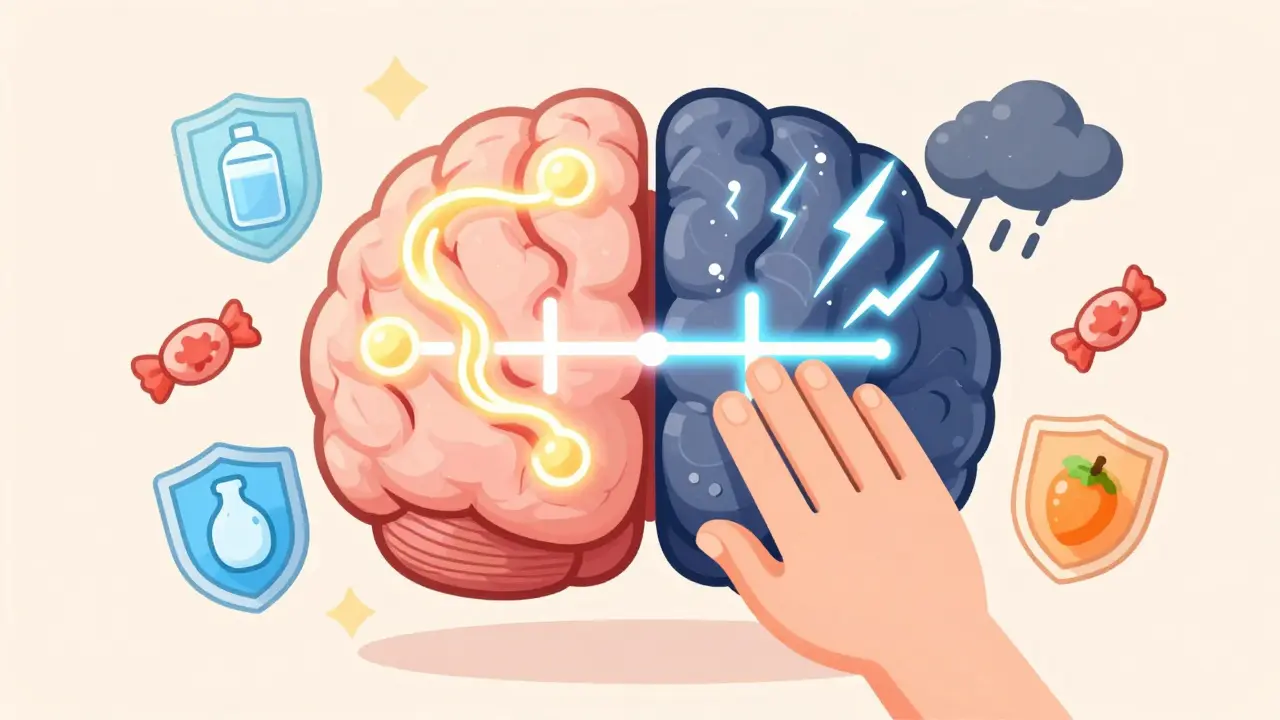
- Use liquid formulations if available. They let you reduce doses in tiny steps-critical for sensitive people.
- Take meds with food. Reduces nausea by about 35%.
- Stay hydrated. Dehydration makes dizziness and fatigue worse.
- Suck on sugar-free hard candy. Helps with nausea and dry mouth.
- Don’t rush. Some people need 3-6 months to taper safely. If you feel worse, slow down.
- Track your symptoms. Keep a daily log: mood, sleep, nausea, brain zaps. This helps your doctor adjust faster.
One patient on Reddit’s r/antidepressants shared they tapered off paroxetine over 6 months using 1mg drops from a liquid. No brain zaps. No panic. Just quiet, steady progress.
When to Call Your Doctor
Not all side effects are normal. Watch for these red flags:
- High fever, muscle stiffness, confusion
- Fast heartbeat, high blood pressure, sweating
- Severe agitation or hallucinations
These could be serotonin syndrome-a rare but life-threatening reaction. It happens when too much serotonin builds up, usually during overlapping use of serotonergic drugs. If you see these signs, go to the ER. Don’t wait.
Also, if symptoms last more than 2-3 weeks, or get worse instead of better, talk to your doctor. It might not be withdrawal-it could be relapse.
What You Can Do Right Now
If you’re thinking about switching:
- Don’t stop or change anything on your own.
- Write down why you want to switch: side effects? lack of improvement?
- Ask your doctor: "What’s the safest way to switch from [current med] to [new med]?"
- Request a cross-taper plan with a 14-day overlap.
- Ask if liquid doses are available.
- Set a follow-up in 1 week after starting the new med.
Studies show that when patients are told what to expect, they stick with the plan 37% better. Knowledge reduces fear. Fear causes people to quit. Don’t let that be you.
What’s New in Switching
There’s exciting science on the horizon. GeneSight testing-blood or saliva tests that predict how your body processes certain antidepressants-showed a 28% increase in remission rates in a 2022 trial. Still expensive ($399 out-of-pocket in the U.S.), but it’s coming.
Another promising area: ultra-low-dose naltrexone. Early trials show it cuts withdrawal symptoms by 33% during SSRI transitions. It’s not standard yet, but it’s being tested.
For now, the best tools are patience, planning, and a doctor who listens.
Can I switch antidepressants on my own?
No. Stopping or switching antidepressants without medical supervision can lead to severe withdrawal symptoms, serotonin syndrome, or relapse. Even if you feel fine, your brain chemistry has adapted to the medication. Only a doctor can create a safe, personalized plan based on your drug, dosage, health history, and symptoms.
How long does it take for a new antidepressant to work?
Most take 4-6 weeks to reach full effect. But during the switch, you might feel worse before you feel better. That’s normal. The goal is to stabilize your system first. Don’t give up before 6 weeks unless symptoms are dangerous. Your doctor should check in with you at 1 week and again at 4 weeks.
Why do some antidepressants cause more withdrawal than others?
It’s all about half-life. Drugs like paroxetine and venlafaxine leave your body quickly-so your brain misses them fast. That triggers withdrawal. Fluoxetine and its metabolites stick around for weeks, so withdrawal is delayed. The longer the half-life, the gentler the stop.
Is it safe to use liquid antidepressants for tapering?
Yes, and it’s often the best option. Liquid forms allow you to reduce doses in tiny amounts-like 1mg or 2.5mg steps. This is especially helpful for sensitive people or those switching from paroxetine, venlafaxine, or other short-half-life drugs. Ask your pharmacist if a liquid version is available for your medication.
Can I switch from an SSRI to an SNRI safely?
Yes, but carefully. Both affect serotonin, so switching between them carries a risk of serotonin syndrome. A cross-taper over 10-14 days is safest. Reduce the SSRI by 25% every 3-4 days while increasing the SNRI by the same amount. Monitor for agitation, sweating, or rapid heartbeat. If symptoms appear, pause the increase and contact your doctor.
What if I feel worse after switching?
It’s common in the first 1-2 weeks. But if you feel severely anxious, depressed, or have suicidal thoughts, tell your doctor immediately. It could be withdrawal, or it could mean the new med isn’t right for you. Don’t assume it’s normal. Your doctor may adjust the dose, slow the taper, or try a different drug.
Milad Jawabra
I switched from Lexapro to Zoloft last year and it was a nightmare until I found the cross-taper method. Started cutting Lexapro by 10% every 5 days while bumping up Zoloft. No brain zaps. No panic attacks. Just slow, steady progress. I used liquid Lexapro-pharmacist hooked me up with a syringe. Best decision ever. Don’t rush. Your brain ain’t a light switch.
Also, sugar-free hard candy. Seriously. Suck on one when you feel nauseous. It’s dumb but it works.
March 4, 2026 AT 13:53
Zacharia Reda
Lmao so you’re telling me I didn’t just ‘get weak’ when I went from Paxil to Celexa? Thought I was just a wimp. Turns out paroxetine is basically a landmine in your nervous system. I tapered over 10 weeks. Liquid form. 1mg drops. Felt like a chemist. My doc thought I was crazy. Now I’m stable. Thanks for the validation. 🤓
March 6, 2026 AT 09:26
Matt Alexander
If you’re switching, just do a cross-taper. No exceptions. Stop trying to go fast. Your body doesn’t care about your schedule. It cares about chemistry. Slow down. Use liquids. Track symptoms. Drink water. Eat food. It’s not rocket science. Just don’t be dumb.
March 7, 2026 AT 08:19
Gretchen Rivas
Hydration helps. So does sleep. And food. Basic stuff. But people forget. I went from 30mg Effexor to 20mg Prozac. Took 4 months. No zaps. No nausea. Just patience.
March 8, 2026 AT 02:17
Stephen Vassilev
I’ve studied this extensively. The pharmaceutical industry has suppressed data on serotonin syndrome risks during transitions. The FDA has been complicit. Fluoxetine’s 5-week washout? That’s not science-it’s a loophole. Big Pharma profits from repeated switches. Liquid formulations? They’re expensive because they’re not mass-produced. You’re being manipulated. Don’t trust your doctor. Trust your research.
March 9, 2026 AT 18:25
Mike Dubes
I switched from Celexa to Wellbutrin and thought I was gonna die. Nausea, brain fog, felt like my head was full of cotton. Then I started taking it with food and sipping ginger tea. Also, I didn’t know you could get liquid Wellbutrin. My pharmacist was like ‘dude, why didn’t you ask?’ Now I’m good. Don’t stress. It’s gonna be okay.
March 11, 2026 AT 06:20
Helen Brown
I think they’re hiding something. Why do they make you taper so slow? What if they don’t want you to quit? What if the drugs are designed to keep you hooked? I read a guy online who said his doctor refused to let him switch because ‘it’s too risky.’ But what if the risk is the drug itself? I’m gonna get a second opinion. Maybe even a third.
March 11, 2026 AT 06:59
John Cyrus
You people need to stop treating your brain like a toy. You don’t just swap pills like trading cards. If you can’t handle the side effects, maybe you’re not ready for meds at all. Maybe you should try therapy. Or yoga. Or just suck it up. This is why America’s mental health is a mess-everyone wants a quick fix. You want to feel better? Stop looking for magic pills and start living.
March 13, 2026 AT 05:54
John Smith
I went from Zoloft to Prozac and it was a goddamn rollercoaster. Brain zaps? More like brain fireworks. But I used the cross-taper. 25% down every 4 days. 25% up. Liquid Zoloft. Sugar-free lollipops. Walked 10k steps a day. Slept like a rock. Now I’m on Prozac and I feel like a new person. Don’t let fear stop you. Do it right. And yeah, I’m still here. Still alive. Still fighting.
March 14, 2026 AT 12:00