
Drug Stability: What It Means, Why It Matters, and How It Affects Your Meds
When you pick up a prescription, you’re not just getting a pill—you’re getting a carefully engineered chemical system designed to stay effective until the date on the bottle. This is drug stability, the ability of a medication to maintain its chemical structure, potency, and safety over time under specified conditions. Also known as pharmaceutical stability, it’s the quiet science behind every pill, capsule, and liquid you take. If a drug loses stability, it doesn’t just become less effective—it can turn dangerous. That’s why pharmacies store some meds in the fridge, why you’re told to keep others away from sunlight, and why expired insulin or antibiotics aren’t worth the risk.
Drug degradation, the chemical breakdown of a medication over time happens in predictable ways: heat, moisture, light, and air all speed it up. Take antibiotics like amoxicillin: if you leave the liquid form in a hot car, the active ingredients break down fast—leaving you with sugar water instead of treatment. Same with nitroglycerin tablets: they lose strength within months if not kept in their original glass bottle with the cap tightly sealed. Even something as simple as leaving your thyroid pill in the bathroom cabinet can reduce its effectiveness because of steam and humidity. Pharmaceutical storage, the controlled conditions required to preserve drug integrity isn’t just a recommendation—it’s a requirement built into every FDA-approved label.
Manufacturers test drug stability under extreme conditions—high heat, high humidity, strong light—to predict how long a product will stay safe and effective. That’s why expiration dates aren’t arbitrary. They’re based on real data showing when the active ingredient drops below 90% potency. And while some drugs might still be chemically intact past that date, there’s no guarantee they’ll work the way they should. For chronic conditions like hypertension or epilepsy, even a small drop in potency can mean a seizure, a stroke, or a dangerous spike in blood pressure.
It’s not just about pills. Injectable drugs, eye drops, and even topical creams all need stable formulations. Think of insulin pens left in a gym bag in July—heat can make them clump or lose potency. Or eye drops that turn cloudy after sitting in a hot car. These aren’t myths—they’re documented cases of treatment failure. And when you’re managing something like HIV or cancer, where every dose matters, stability isn’t a detail—it’s a lifeline.
What you’ll find below is a collection of real-world stories and science-backed guides that connect directly to how drug stability affects your health. From how generic drugs are tested for stability to why certain meds can’t be split or crushed, these posts show you the hidden rules that keep your treatments working. You’ll learn how to spot signs of degradation, how to store your meds properly, and why some drugs need special handling while others don’t. This isn’t theory—it’s what happens in your medicine cabinet, your pharmacy shelf, and your body.
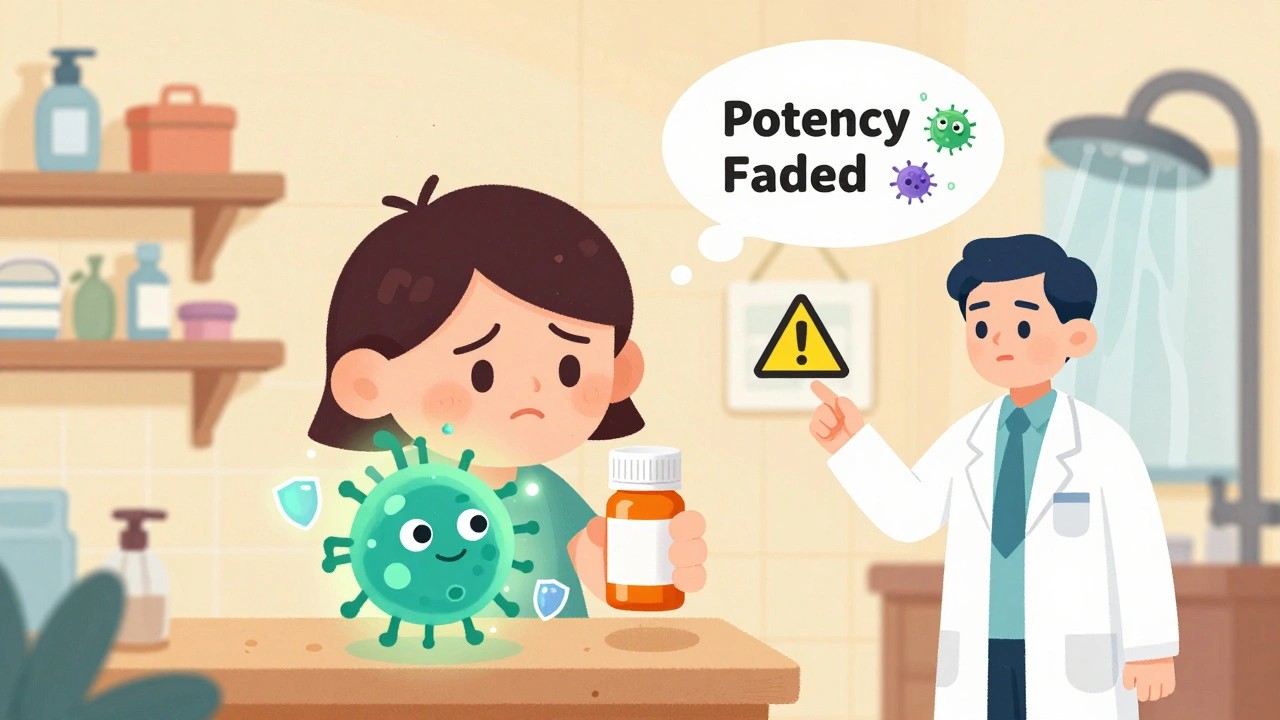
Antibiotic Effectiveness After Expiration Dates: What to Know
Expiration dates on antibiotics aren't just suggestions-they're critical safety markers. While some pills may still be potent after expiration, using them risks treatment failure and antibiotic resistance. Know when to avoid expired meds and how to store them properly.