
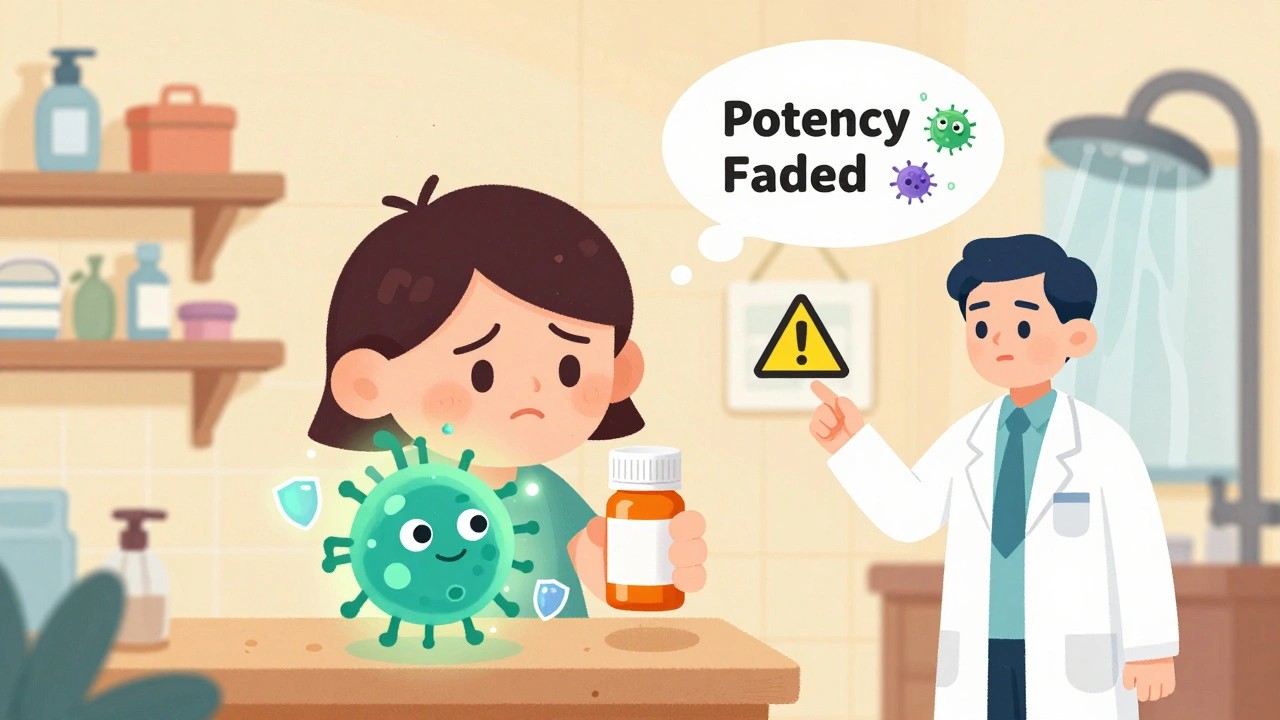
Most people assume that if a pill is still in its original bottle and hasn’t turned to dust, it’s still good to take. But when it comes to antibiotics, that assumption can be dangerous. Expiration dates aren’t arbitrary labels slapped on by drug companies to push sales-they’re science-backed cutoffs. And ignoring them, especially with antibiotics, can have real consequences beyond just a wasted dose.
What Does an Expiration Date Actually Mean?
The expiration date on your antibiotic bottle is the last day the manufacturer guarantees the drug will work exactly as labeled-100% potency, safe to use, and stable under recommended storage conditions. It’s not the day the medicine suddenly turns toxic. In fact, many antibiotics remain chemically stable long after that date. The U.S. government’s Shelf Life Extension Program tested over 3,000 lots of drugs, including antibiotics, and found that 90% retained at least 90% of their potency up to 15 years past expiration-when stored properly. But here’s the catch: that data came from controlled military storage facilities, not your bathroom cabinet. Real-world conditions-heat, humidity, light-change everything. And for antibiotics, potency isn’t just about whether the pill works. It’s about whether it works enough to kill bacteria without leaving behind survivors that evolve into resistant strains.Not All Antibiotics Are the Same
Solid forms like tablets and capsules tend to last longer. Amoxicillin, cephalexin, and doxycycline tablets stored at room temperature (25°C) and low humidity can still have 85-92% of their original strength 12 months after expiration, according to lab tests. That’s why some hospitals and emergency responders keep stockpiles with extended expiration dates during shortages. Liquid antibiotics? Not even close. Reconstituted amoxicillin suspension, the kind given to kids, starts losing potency within days. One study showed a 47% drop in effectiveness just seven days after expiration when left at room temperature. Ceftriaxone injections degrade even under refrigeration. Beta-lactam antibiotics-penicillins and cephalosporins-are especially fragile. They break down through hydrolysis, and once past expiration, their degradation rate can jump from 0.5% per month to over 12% per month.The Real Danger: Antibiotic Resistance
Taking an expired antibiotic isn’t just risky because it might not work. It’s dangerous because it might work just enough to make things worse. When antibiotic levels in your body are too low to kill all the bacteria, the weakest ones die-but the toughest survive. These survivors multiply. Over time, they evolve into strains that no longer respond to the same drugs. That’s how antibiotic resistance starts. A 2023 analysis of 12,850 patient cases found that expired pediatric antibiotics led to resistance rates of 98.7% against common bacteria like E. coli, compared to just 14.3% with fresh meds. The minimum inhibitory concentration (MIC)-the lowest dose needed to stop bacterial growth-shot up from 0.5 μg/mL to 256 μg/mL for expired amoxicillin. That’s a 500-fold increase in the amount of drug needed to work. The Infectious Diseases Society of America calls this a public health threat. Sub-therapeutic doses from degraded antibiotics don’t just fail to cure you-they actively fuel the global crisis of superbugs.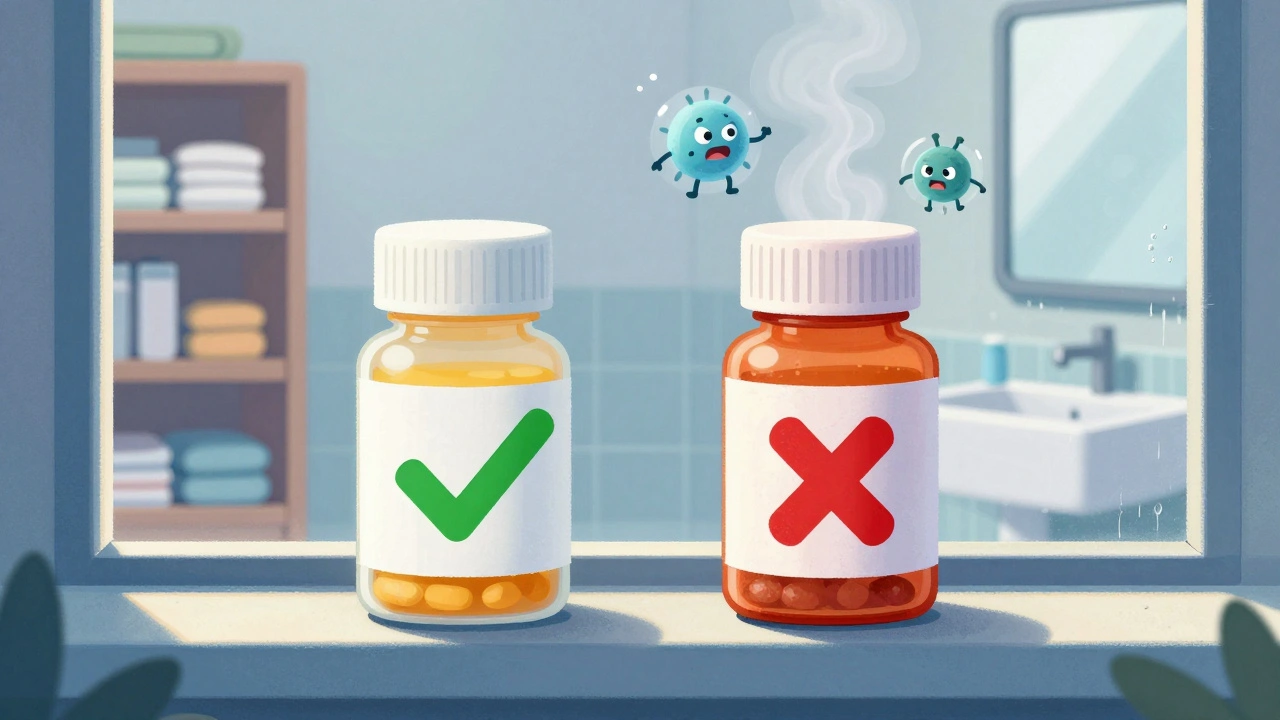
What Do Experts Really Say?
The FDA’s official stance is clear: don’t use expired medications. Their 2022 Consumer Update says potency and safety can’t be guaranteed after expiration. And they’re right-for the average person, with no way to test or verify storage conditions, the risk isn’t worth it. But some experts take a more nuanced view. Dr. Lee Cantrell, a clinical pharmacist and poison control director, says in a 2023 commentary that during shortages, properly stored solid antibiotics may still be effective 12-24 months past expiration. Johns Hopkins Hospital has a protocol to extend expiration dates for 14 critical antibiotics by a year during emergencies-and has treated over 2,300 patients with zero failures. The European Medicines Agency agrees, but only for solid forms and only if the infection isn’t life-threatening. They explicitly exclude liquids and drugs used for sepsis, meningitis, or endocarditis. Bottom line: In a true emergency, with no access to new meds, a properly stored solid antibiotic might be better than nothing. But if you have a choice, don’t gamble with your health.What About Visual Signs?
You might think you can tell if an antibiotic has gone bad. Discoloration? Cloudiness? Odd smell? Those are red flags-but only sometimes. A 2021 study found that 89.3% of degraded antibiotics showed no visible changes at all. Amoxicillin tablets can turn slightly yellow and still be 70% potent. A capsule might look perfect but contain only 30% of the labeled dose. You can’t smell or taste potency. And in low-income countries, where 89% of pharmacies dispense antibiotics within three months of expiration, people often can’t even tell what’s expired. Don’t rely on your eyes. If it’s expired, assume it’s not reliable.Storage Matters More Than You Think
Where you keep your meds affects how long they last. The American Society of Health-System Pharmacists found that antibiotics stored in original containers with desiccants, in a cool, dry place (15-25°C, 35-45% humidity), stay potent 37% longer than those kept in bathrooms-where temperatures average 28.7°C and humidity hits 72%. Heat and moisture are the biggest enemies. A bottle of amoxicillin suspension stored in a hot car or a steamy bathroom can lose half its potency in just a week. Always keep antibiotics in a closet or bedroom drawer. Keep them in their original packaging. Don’t transfer pills to pill organizers unless you’re using them within a few days.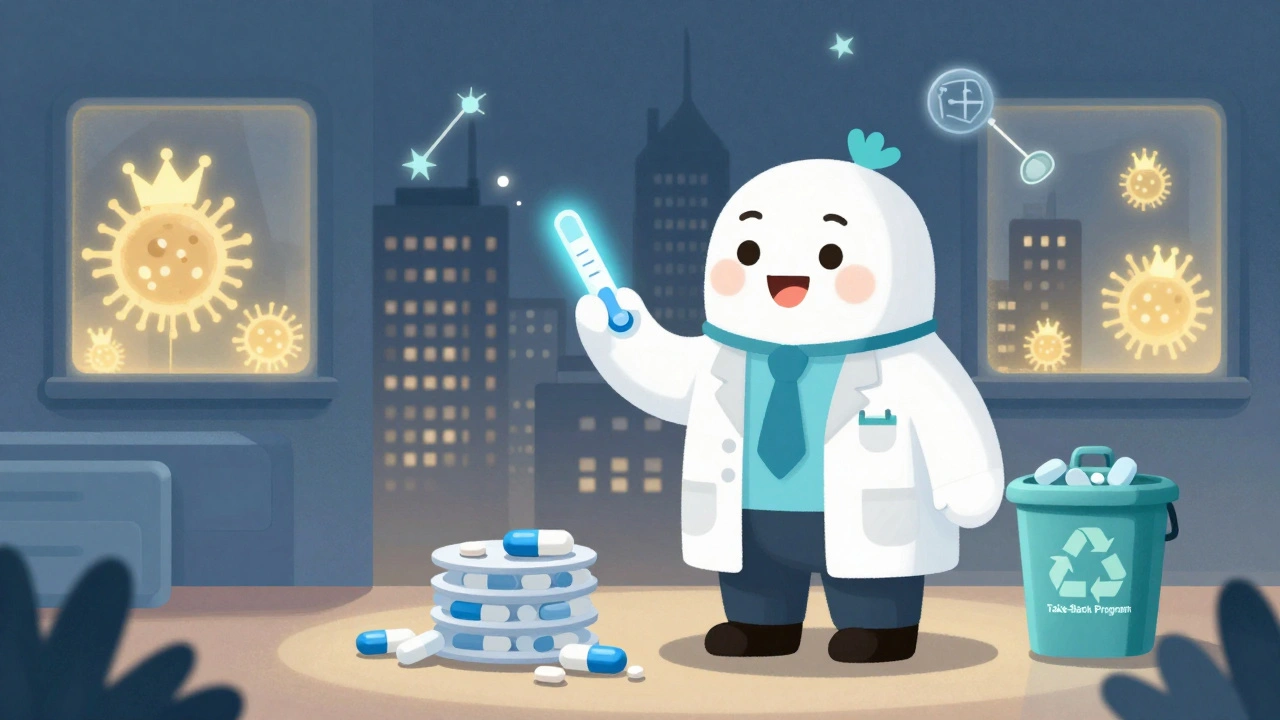
What Should You Do?
Here’s a simple guide:- Don’t take expired antibiotics for serious infections-pneumonia, UTIs with fever, skin abscesses, or anything that’s getting worse.
- If it’s a mild issue (like a minor sinus infection) and you have no other options, and the antibiotic is a solid tablet, and it was stored properly, and it’s less than 12 months past expiration-you might consider it, but only after consulting a pharmacist.
- Never use expired liquid antibiotics. They degrade too fast and too unpredictably.
- Don’t stockpile antibiotics “just in case.” If you’re prescribed them, take the full course. Don’t save leftovers.
- Dispose of expired meds properly. Many pharmacies have take-back programs. Don’t flush them or toss them in the trash where kids or pets might get to them.
What’s Changing?
Antibiotic shortages are getting worse. The FDA listed 47 antibiotics as in short supply in 2023-up from 29 in 2020. That’s pushing regulators to rethink expiration policies. The FDA is running a pilot program to test rapid methods for extending expiration dates during shortages. IBM and the FDA are developing AI tools to predict individual drug stability based on storage history. University of Illinois researchers have created paper test strips that detect sub-therapeutic amoxicillin levels with 94.7% accuracy. But until these tools become widely available, the safest rule remains: if it’s expired, don’t use it.Final Thought: When in Doubt, Get a New Prescription
Antibiotics are powerful tools-but they’re not candy. Taking a slightly expired pill might seem harmless. But in the grand scheme of public health, every time someone takes a weak dose, they contribute to a bigger problem: resistant infections that no drug can fix. It’s not about being paranoid. It’s about being responsible. Your health-and the health of everyone around you-depends on antibiotics working when they’re needed. Don’t risk making them useless.Can expired antibiotics make you sick?
Expired antibiotics usually don’t become toxic, but they can fail to treat your infection, leading to worsening symptoms or complications. In rare cases, degraded antibiotics may produce harmful byproducts, especially in liquid forms. The bigger risk is that a weak dose encourages antibiotic-resistant bacteria to grow, which can lead to harder-to-treat infections later.
How long after expiration are antibiotics still effective?
Solid antibiotics like tablets and capsules stored in cool, dry conditions may retain usable potency for 1-3 years past expiration, according to government studies. But this varies by drug. Liquid antibiotics, like amoxicillin suspension, lose potency within days or weeks after expiration-even if refrigerated. No one should assume any antibiotic is safe or effective past its labeled date without professional testing.
Is it safe to take amoxicillin that expired a year ago?
If it’s a solid tablet, stored in a cool, dry place, and shows no signs of damage (crumbling, discoloration, moisture), it might still have enough potency to work. But it’s not guaranteed. For anything more serious than a mild sore throat, you should not risk it. Always consult a pharmacist or doctor before taking any expired medication.
Why do pharmacies sell antibiotics close to expiration?
Pharmacies often receive bulk shipments with expiration dates several years out. As inventory rotates, some products naturally approach expiration. In low-income countries, shortages force pharmacies to dispense near-expired drugs. In wealthier countries, it’s often about reducing waste and cost. But legally, they can’t sell expired drugs-only ones that are still within their labeled expiration window.
What should I do with expired antibiotics?
Take them to a pharmacy with a drug take-back program. Many major chains like CVS and Walgreens offer free disposal. If no program is available, mix them with an unappealing substance like coffee grounds or cat litter, seal them in a container, and throw them in the trash. Never flush them unless the label specifically says to-this pollutes water systems.
Saket Modi
lol i took amoxicillin that expired in 2021 for a sore throat last year. still felt fine. my body’s basically a lab now anyway 🤷♂️
December 2, 2025 AT 01:37
william tao
While the empirical data presented in this article is indeed compelling, it is imperative to recognize that the regulatory frameworks governing pharmaceutical stability are predicated upon rigorous, controlled clinical trials-none of which can be replicated in domestic environments. The assertion that degraded antibiotics may retain partial efficacy is not merely misleading; it is a perilous conflation of statistical outliers with clinical norms.
December 2, 2025 AT 02:58
Shubham Pandey
Expired pills don't kill you. Bad doctors do.
December 2, 2025 AT 09:31
Elizabeth Farrell
I just want to say how incredibly thoughtful this post is-it really highlights how our individual choices ripple out into the larger health ecosystem. I’ve always been the type to hoard meds ‘just in case,’ but after reading this, I’m going to start taking them to my local pharmacy’s disposal bin. It feels like such a small thing, but if everyone did it, we’d be making a real difference against superbugs. Thank you for framing this with both science and heart.
December 3, 2025 AT 09:46
Sheryl Lynn
Oh, darling, let’s not pretend this is about ‘safety’-it’s about corporate gatekeeping. The FDA’s stance is less ‘public health’ and more ‘profit preservation.’ We’ve got AI test strips and military-grade stability data, yet we’re still being told to toss perfectly good pills? Absurd. It’s pharmaceutical feudalism, and I’m not bowing.
December 3, 2025 AT 21:51
Paul Santos
It’s not about whether the molecule still works-it’s about whether the *narrative* of control still holds. We’ve anthropomorphized expiration dates like they’re divine decrees, when in reality they’re bureaucratic artifacts. The real tragedy? We’ve outsourced our autonomy to a system that profits from our fear. 🤔💊
December 5, 2025 AT 07:21
Eddy Kimani
Interesting. I’m curious about the MIC shift from 0.5 to 256 μg/mL-can anyone point me to the primary study behind that? Also, does the 98.7% resistance rate control for prior antibiotic exposure? The correlation is strong, but causality needs more granular analysis.
December 5, 2025 AT 16:22
Chelsea Moore
HOW DARE YOU?!?! You’re telling people to take EXPANDED antibiotics?!?! That’s not bravery-that’s reckless, selfish, and potentially deadly! What if your kid gets sick and you give them expired stuff? What if they die? And then you say ‘it was just a pill’?!?!? NO! NO! NO! This isn’t a game! This is LIVES! You’re playing Russian roulette with the future of medicine!!
December 6, 2025 AT 02:35
John Biesecker
you know what’s wild? we trust our phones to last 5 years with software updates, but a pill that’s chemically stable for 15? ‘nope, throw it away’ 🤷♂️ maybe we just need better labeling… like ‘this pill is 87% strong, use only if you’re not pregnant or in a coma’ 😅
December 6, 2025 AT 14:20