
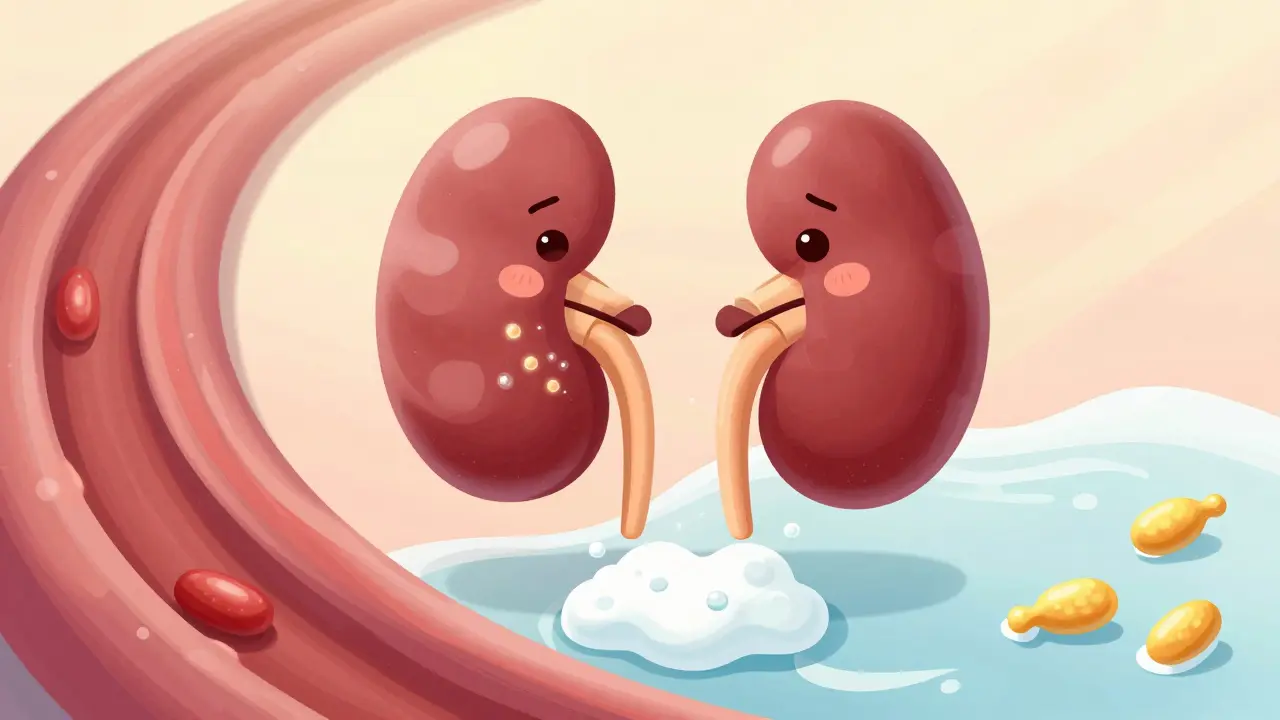
When your urine looks foamy or bubbly after you flush, it’s not always just a weird coincidence. That foam could be your body’s way of saying something’s wrong with your kidneys. The condition is called proteinuria - when too much protein leaks into your urine. It’s not a disease itself, but a warning sign. Left unchecked, it can lead to permanent kidney damage, dialysis, or even kidney failure. The good news? Catching it early gives you a real shot at stopping it in its tracks.
What Exactly Is Proteinuria?
Your kidneys are like high-tech filters. They keep the good stuff - proteins, electrolytes, blood cells - in your bloodstream and flush out the waste. Normally, only tiny traces of protein, mostly albumin, slip through. That’s fine. But when those filters get damaged, proteins start pouring into your urine. That’s proteinuria. The medical term for this is albuminuria, since albumin is the most common protein that escapes. Healthy kidneys let through less than 150 mg of protein per day. Once you’re pushing past 30 mg of albumin per mmol of creatinine in a spot urine test (known as UACR), you’re in the danger zone. The threshold for concern? Over 30 mg/g of albumin-to-creatinine ratio. If you’re hitting 300 mg/g or more, that’s severe proteinuria - and it’s time to act.Why Does Proteinuria Happen?
Not all proteinuria is the same. There are three main types:- Transient proteinuria: Comes and goes. Happens after intense exercise, fever, dehydration, or extreme stress. Up to 25% of healthy adults experience this at some point. It’s harmless if it’s temporary.
- Orthostatic proteinuria: Only shows up when you’re standing. Common in teens and young adults. Morning urine samples are normal. Usually no treatment needed.
- Persistent proteinuria: This is the red flag. It doesn’t go away. It’s tied to underlying disease.
- Diabetes: Accounts for 40% of cases. High blood sugar slowly destroys the kidney’s filtering units.
- High blood pressure: Makes up 25%. Constant pressure on the tiny blood vessels in the kidneys wears them out.
- Glomerulonephritis: Inflammation of the kidney filters. Causes 15% of cases.
- Lupus: An autoimmune disease that attacks the kidneys. Responsible for 7%.
- Preeclampsia: A pregnancy complication that can spike protein levels in urine.
How Do You Know You Have It?
Here’s the problem: most people don’t feel anything at first. Up to 70% of people with mild proteinuria (under 500 mg/day) have zero symptoms. That’s why routine testing matters - especially if you’re in a high-risk group. When symptoms do show up, they’re hard to miss:- Foamy, bubbly urine - the most common sign (seen in 85% of symptomatic cases)
- Swelling in feet, ankles, hands, or face - caused by low protein levels pulling fluid out of blood vessels
- Feeling tired all the time
- Increased urination, especially at night
- Muscle cramps, nausea, or loss of appetite

How Is It Tested?
Testing is simple, but accuracy matters. Most clinics start with a dipstick test. You pee in a cup, they dip a strip in, and it changes color. It’s fast and cheap - but it’s not always reliable. It can miss low levels of protein or give false positives. Sensitivity? Only 50-90% depending on how much protein is there. The real gold standard? The urine albumin-to-creatinine ratio (UACR) or urine protein-to-creatinine ratio (UPCR). These are spot tests - one random pee sample. No 24-hour collection needed. The lab measures how much albumin or total protein is in your urine compared to creatinine, a waste product your body makes at a steady rate. This gives a precise number.- Normal: Under 30 mg/g
- Moderate: 30-300 mg/g
- Severe: Over 300 mg/g
What Happens If You Ignore It?
Proteinuria isn’t just a symptom - it’s an active driver of kidney damage. The more protein you lose, the faster your kidneys decline. Studies show that people excreting more than 1 gram of protein per day have a 50% chance of reaching end-stage kidney disease within 10 years - if nothing changes. That’s not a guess. That’s from decades of data. And here’s the kicker: protein in the urine doesn’t just reflect damage - it causes more. The proteins that leak out irritate kidney tissues, triggering inflammation and scarring. It’s a vicious cycle. Reduce the protein, and you slow the damage. That’s why lowering proteinuria isn’t just a goal - it’s the treatment.How to Reduce Proteinuria and Protect Your Kidneys
You can’t fix this with supplements or herbal teas. But you can stop it with proven medical and lifestyle strategies.1. Medications That Work
- ACE inhibitors (like lisinopril) and ARBs (like losartan): These blood pressure drugs are the first line of defense. They don’t just lower pressure - they directly reduce protein leakage by 30-50%. They’re the only blood pressure meds proven to protect kidneys in diabetics.
- SGLT2 inhibitors (like canagliflozin, dapagliflozin): Originally for diabetes, these drugs also reduce proteinuria by 30-40% and slow kidney decline by 30%. Even non-diabetics benefit.
- Finerenone: A newer drug approved for diabetic kidney disease. Reduces proteinuria by 32% and cuts kidney failure risk.
- Immunosuppressants: For lupus or other autoimmune causes, drugs like corticosteroids or rituximab can bring proteinuria into remission in 60-70% of cases.
2. Diet Changes That Matter
Eating less protein doesn’t mean going vegan. It means eating the right amount.- Target: 0.6-0.8 grams of protein per kilogram of body weight per day. For a 70kg person, that’s about 42-56 grams daily.
- Focus on high-quality sources: eggs, lean chicken, fish, tofu. Avoid processed meats and excessive red meat.
- Watch sodium. Too much salt makes swelling worse and raises blood pressure.
- Get enough fiber. Whole grains, vegetables, and legumes help control blood sugar and cholesterol - both tied to kidney health.
3. Control Your Blood Pressure and Blood Sugar
If you have diabetes or high blood pressure, your kidney protection plan starts here.- Keep BP under 130/80 mmHg. Every 10-point drop in systolic pressure can cut proteinuria by 10-20%.
- For diabetics, aim for HbA1c under 7%. Even small improvements reduce kidney damage.
4. Monitor and Stay Consistent
This isn’t a one-time fix. You need to track progress.- Get UACR tested every 3-6 months if stable. Monthly if starting new meds.
- Watch for swelling. If your ankles are puffy or your rings feel tight, call your doctor.
- Don’t skip meds. About 40% of people stop taking ACE inhibitors because of a dry cough. But there are alternatives - talk to your doctor before quitting.

What’s New in Proteinuria Treatment?
Science is moving fast. Here’s what’s on the horizon:- Smartphone apps that analyze urine foam with a camera - 85% accurate in early trials.
- New biomarkers like urinary TNF receptor-1 that predict rapid kidney decline before symptoms show.
- Gene-targeted therapies for rare conditions like Alport syndrome. One drug, bardoxolone methyl, cut proteinuria by 35% in trials.
Who Should Get Tested?
You don’t need to wait for symptoms. If you have any of these, get a UACR test at least once a year:- Diabetes (type 1 or 2)
- High blood pressure
- Obesity
- Family history of kidney disease
- Over 60 years old
- Being treated for heart disease or autoimmune disorders
Final Thought: Proteinuria Is a Signal - Not a Sentence
Finding protein in your urine isn’t a death sentence. It’s a wake-up call. And if you respond - with the right meds, diet, and monitoring - you can keep your kidneys working for decades. The data is clear: every 50% drop in proteinuria means a 30% lower risk of kidney failure. That’s not magic. That’s medicine. Don’t wait for swelling. Don’t wait for fatigue. If you’re at risk, ask for a simple urine test. It takes five minutes. It could save your kidneys.Is foamy urine always a sign of kidney problems?
No. Foamy urine can happen after vigorous urination or dehydration. But if it’s frequent, persistent, and accompanied by swelling or fatigue, it’s a red flag. A UACR test is the only way to know for sure.
Can proteinuria be reversed?
Yes - especially if caught early. With medications like ACE inhibitors or SGLT2 inhibitors, along with blood pressure and blood sugar control, many people reduce proteinuria by 30-50%. In some cases, especially with diabetic kidney disease, protein levels can return to near-normal.
Do I need a 24-hour urine collection to diagnose proteinuria?
Not anymore. Spot urine tests for UACR or UPCR are now the standard. They’re just as accurate as 24-hour collections and much easier to do. Only use 24-hour collections if your doctor specifically requests it - like for rare conditions or research.
Can I treat proteinuria with natural remedies or supplements?
No. There’s no proven supplement, herb, or detox that reduces proteinuria. In fact, some herbal products can harm your kidneys. The only proven methods are prescribed medications, blood pressure control, and dietary protein management under medical supervision.
How often should I get tested if I have diabetes?
Annual testing is recommended by the American Kidney Fund and KDIGO guidelines. If your UACR is already elevated, testing every 3-6 months is standard to track treatment response. Don’t wait for symptoms - test early, test often.
Can proteinuria affect pregnancy?
Yes. Proteinuria in pregnancy can signal preeclampsia, a serious condition that raises risks for both mother and baby. If you’re pregnant and notice swelling, headaches, or foamy urine, contact your provider immediately. Early detection saves lives.
matthew martin
Man, I never thought foamy urine could be a big deal until my buddy got diagnosed with early-stage diabetic nephropathy. He was ignoring it for months, thought it was just his morning coffee kicking in. Turned out his UACR was over 400. Scary stuff. Now he’s on an SGLT2 inhibitor and his levels dropped 40% in three months. Don’t sleep on this - your kidneys don’t yell, they just quietly give up.
And yeah, no, turmeric tea ain’t fixing it. Just get tested.
January 27, 2026 AT 13:22
Jeffrey Carroll
It is imperative to underscore the clinical significance of persistent albuminuria as a biomarker of glomerular dysfunction. The data supporting the renoprotective effects of ACE inhibitors and ARBs in patients with diabetic kidney disease is both robust and reproducible across multiple longitudinal cohorts. Furthermore, the recent incorporation of SGLT2 inhibitors into therapeutic guidelines represents a paradigm shift in nephrology practice. Early intervention remains the cornerstone of disease modification.
January 28, 2026 AT 22:58
doug b
Look, if you’re diabetic or have high blood pressure, just get the UACR test. It’s cheap, it’s easy, and your doctor should be offering it every year. No excuses. I’ve seen too many people wait until their feet swell up and then it’s too late. You don’t need a PhD to get this right - just do the thing. Take your meds, watch your salt, and stop scrolling and start testing.
January 29, 2026 AT 16:27
Rose Palmer
As a clinical nephrologist with over 18 years of experience, I cannot overstate the importance of early detection through urine albumin-to-creatinine ratio testing. The majority of patients with proteinuria remain asymptomatic until significant renal parenchymal damage has occurred. The integration of SGLT2 inhibitors and finerenone into standard care protocols has demonstrably improved long-term outcomes, particularly in patients with type 2 diabetes and chronic kidney disease. Adherence to evidence-based guidelines remains the single most effective strategy for preserving renal function.
January 29, 2026 AT 19:46
Timothy Davis
Let’s be real - 90% of people who panic about foamy urine are just dehydrated or had a long shower. You think this is some kind of medical emergency? You need a 24-hour collection to even start talking about proteinuria. Dipstick tests are garbage. UACR? Fine, but don’t treat one elevated result like it’s a death sentence. And no, SGLT2 inhibitors aren’t magic pills for everyone. You’re giving people false hope and overmedicating the population. This article is fear-mongering dressed up as science.
January 31, 2026 AT 00:13
John Rose
Really glad this was posted. I had no idea proteinuria could be reversed - I thought once your kidneys were damaged, it was permanent. My dad’s been on lisinopril for 5 years since his UACR hit 210. His last test? Down to 42. He’s 68 and still hiking. If you’re at risk, don’t wait. Talk to your doctor. No one’s gonna save your kidneys but you.
January 31, 2026 AT 04:22
Amber Daugs
People really think they can just ‘eat better’ and fix kidney damage? You’re not a yogi, you’re not a detox guru. If you’re leaking protein, you need prescription meds - not kale smoothies. And if you’re too lazy to get tested because ‘it’s just foam,’ then you’re not just irresponsible - you’re endangering your family. Get your act together. Your kidneys don’t care how ‘natural’ your lifestyle is.
January 31, 2026 AT 16:36
Ambrose Curtis
bro i had foamy pee for like 3 months and thought it was my protein shake. turns out i had bp at 150/95 and uacr at 280. doc put me on losartan and i cut back on salt. 6 months later, down to 54. no magic, just boring stuff: meds, checkups, not eating junk. also, stop googling ‘kidney cleanse tea’ - it’s a scam. your kidneys don’t need cleansing, they need control.
also, if you’re over 50 and on meds, ask for the uacr test. it’s not hard. just ask. seriously.
February 1, 2026 AT 09:26
Robert Cardoso
Proteinuria as a ‘wake-up call’? That’s a sentimental oversimplification. The kidneys are not moral agents. Protein leakage is a biochemical event, not a metaphysical signal. The notion that ‘early action saves kidneys’ ignores the fact that 30% of persistent proteinuria cases are idiopathic, and no intervention alters progression. The pharmaceutical industry promotes UACR testing because it’s profitable - not because it’s universally life-saving. We are pathologizing normal human variation under the guise of preventive medicine.
February 2, 2026 AT 16:33