
What Happens During a Medication-Induced Anaphylactic Reaction?
Anaphylaxis from medication isn’t just a bad allergic reaction-it’s a medical emergency that can kill in minutes. When your body overreacts to a drug, it floods your system with chemicals that cause your airways to swell, your blood pressure to crash, and your heart to struggle. Symptoms can hit fast: trouble breathing, a tight throat, swelling of the tongue, dizziness, or sudden collapse. And here’s the scary part-up to 20% of cases show no skin rash at all. You might think it’s just a stomach bug or a panic attack, but if breathing or circulation is affected, it’s anaphylaxis.
Medications most likely to trigger this include antibiotics like penicillin, NSAIDs like ibuprofen, chemotherapy drugs, contrast dyes used in CT scans, and muscle relaxants given during surgery. In hospitals, about 1 in every 2,000 medication doses causes a reaction. Outside the hospital, it’s less common but just as dangerous. The key is recognizing it early-and acting without waiting for a doctor.
Step 1: Lay the Person Flat Immediately
One of the biggest mistakes people make is letting someone with anaphylaxis sit up or stand. That’s not just wrong-it’s deadly. When blood pressure drops during anaphylaxis, gravity makes it worse. Standing or even sitting upright can cause sudden cardiac arrest in 15-20% of cases. The Resuscitation Council UK’s 2021 guidelines say: lay them flat on their back. If they’re having trouble breathing, let them sit up with legs stretched out. If they’re pregnant, roll them onto their left side to take pressure off major blood vessels. For children, keep them flat, not held upright. Don’t move them unless they’re in immediate danger.
Step 2: Administer Epinephrine Without Delay
Epinephrine is the only thing that saves lives in anaphylaxis. It works in under a minute to open airways, raise blood pressure, and stop the reaction. The clock starts ticking the moment symptoms appear. The goal? Get it into the muscle within five minutes. Delayed epinephrine is the number one reason people die.
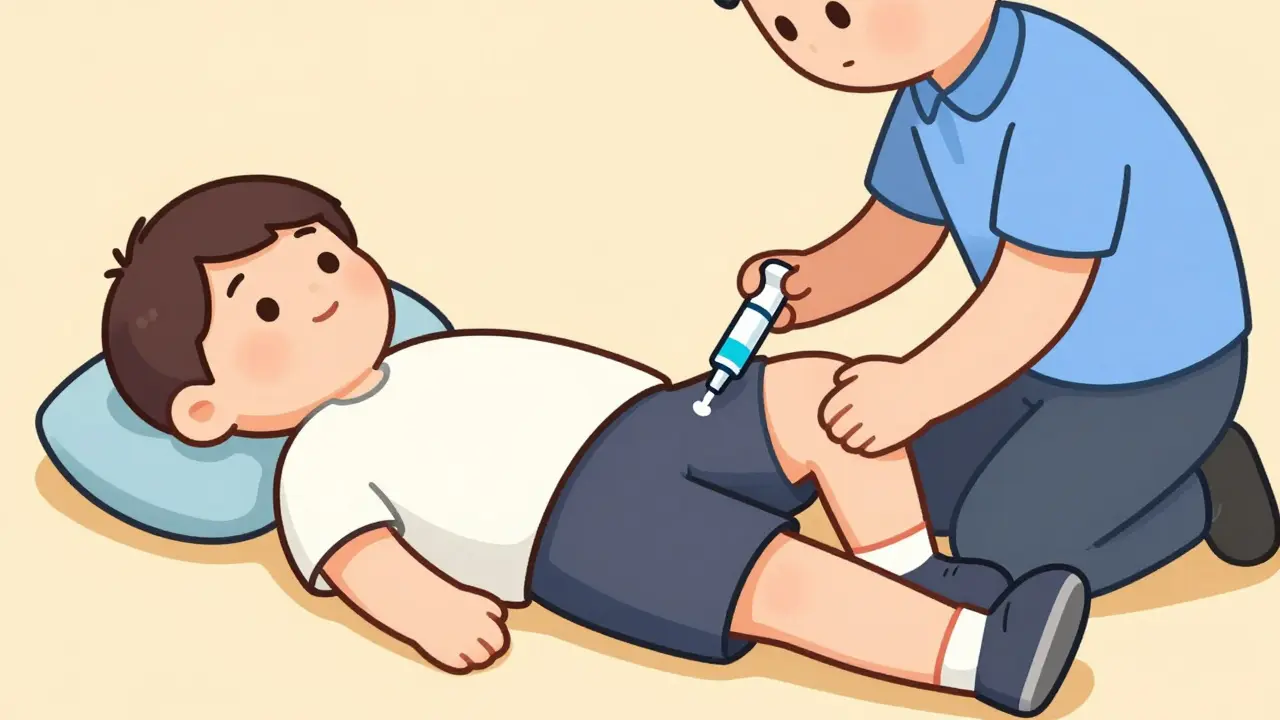
Use an auto-injector-EpiPen, Auvi-Q, or Adrenaclick-on the outer thigh. You don’t need to remove clothing. Just jab it in and hold for 10 seconds. Adults and kids over 30 kg get 0.3 mg. Kids between 15-30 kg get 0.15 mg. If you’re unsure, give it anyway. The saying in emergency medicine is simple: if in doubt, give adrenaline. A 2023 Australian study found that hesitation caused 35% of preventable deaths in the past decade.
Don’t wait for a doctor. Don’t wait for a second opinion. Don’t give antihistamines first. Benadryl won’t stop someone from suffocating or going into shock. It might help a rash-but that’s not what kills you.
Step 3: Call Emergency Services Right Away
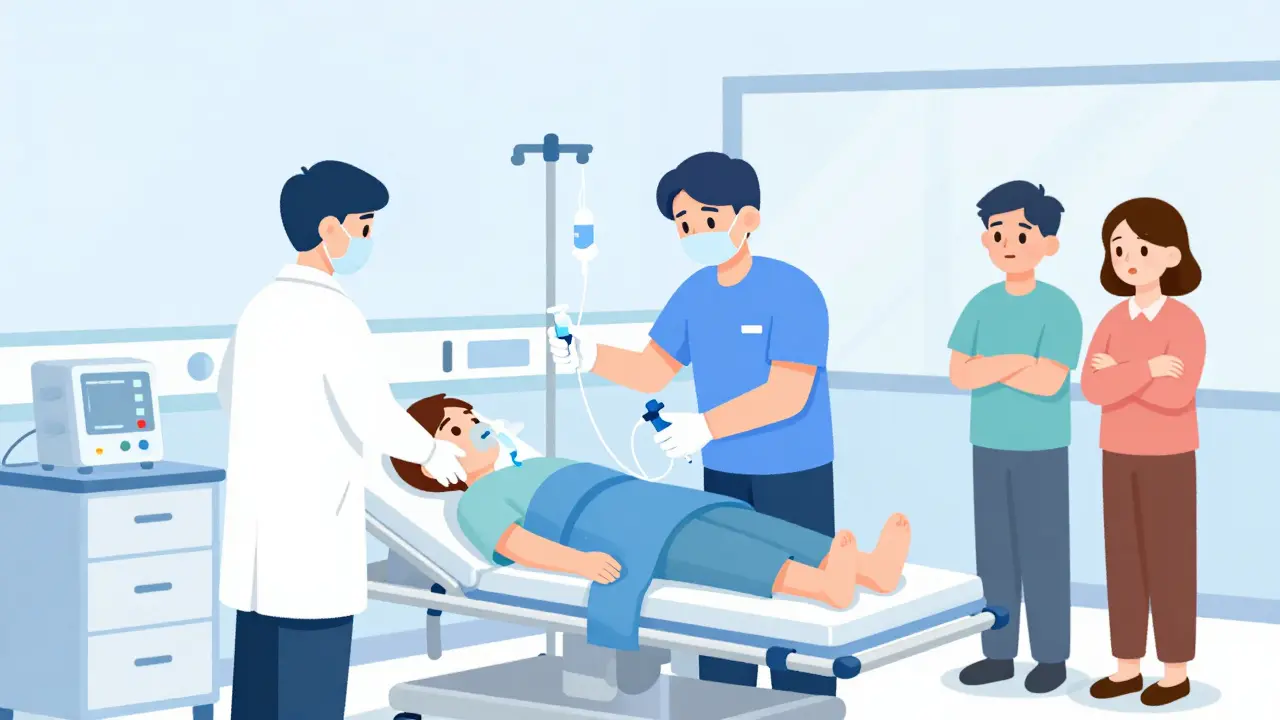
Epinephrine wears off in 10 to 20 minutes. The reaction can come back harder-this is called a biphasic reaction, and it happens in 20% of cases. That’s why calling 911 (or your local emergency number) is non-negotiable. Even if the person seems better after the shot, they need to go to the hospital. Emergency responders can give IV fluids, oxygen, and more epinephrine if needed. They can also monitor for hours to catch a second wave of symptoms.
Hospital observation is mandatory. At least four hours. For medication-induced cases, experts now recommend 6-8 hours because the risk of a delayed reaction is higher than with food allergies. Don’t let someone talk you out of going. Don’t assume they’re fine because they’re talking. Their body is still fighting.
Step 4: Give a Second Dose If Symptoms Return
One shot isn’t always enough. If breathing or circulation problems don’t improve-or get worse-after five minutes, give a second dose of epinephrine. Same place. Same technique. Same dose. Some protocols say you can repeat every 10 minutes if needed. Don’t be afraid. Epinephrine’s side effects-racing heart, shaking, anxiety-are uncomfortable, not dangerous. In over 35,000 cases tracked by the Resuscitation Council UK, only 0.03% had serious heart problems from the drug. The risk of not giving it is far greater.
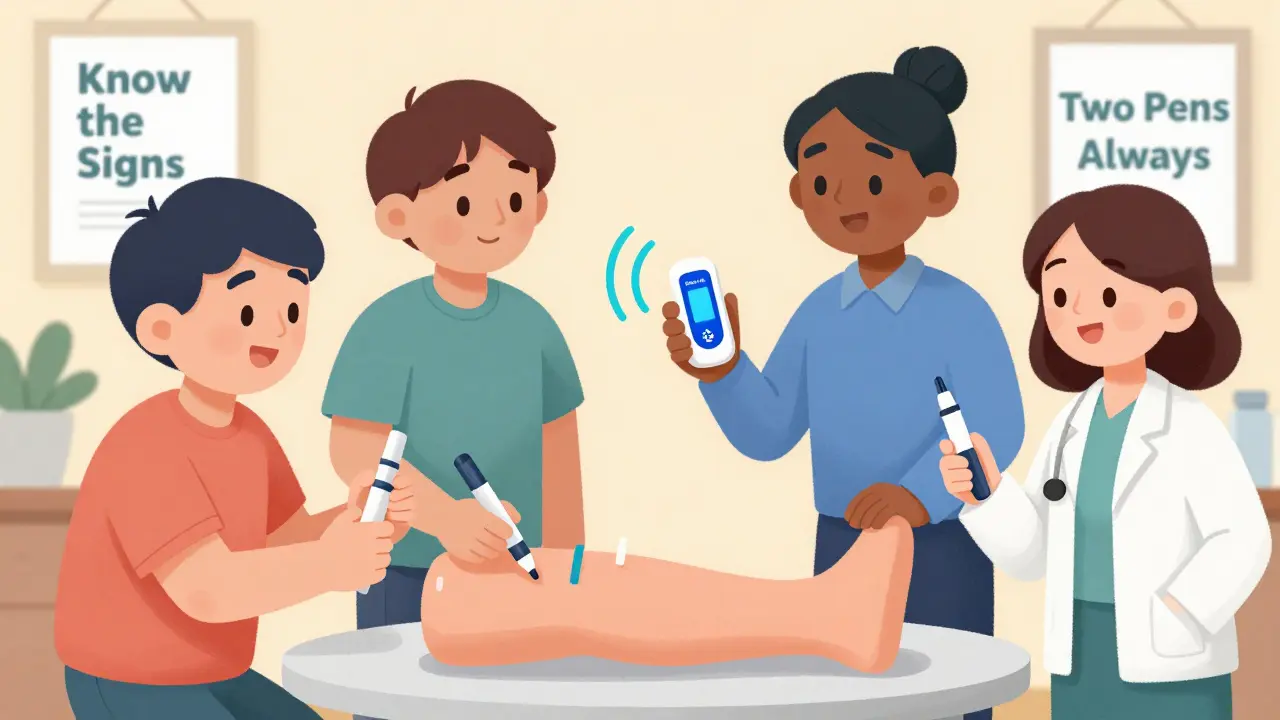
And don’t wait for someone else to do it. If you’re with someone who has a known allergy, make sure you know where their auto-injector is. Practice with a trainer pen. Know how to use it. This isn’t optional. It’s life or death.
What NOT to Do
There’s a lot of misinformation out there. Here’s what doesn’t work-and what can hurt:
- Don’t give antihistamines alone. They treat hives, not breathing problems. Using them instead of epinephrine delays life-saving treatment.
- Don’t use corticosteroids as first-line treatment. Steroids like prednisone or hydrocortisone were once routine. Now, major guidelines say they’re not needed unless the reaction is extremely severe and not responding to epinephrine. They don’t stop the immediate danger.
- Don’t try to drive them to the hospital yourself. You might get stuck in traffic. Their condition can crash at any moment. Emergency crews are trained, equipped, and can start treatment on the way.
- Don’t inject into the arm, belly, or buttocks. Only the outer thigh works fast enough. The muscle there absorbs epinephrine quickly. Other sites are too slow.
Why People Delay-And How to Avoid It
In hospitals, the average time from symptom recognition to epinephrine is over eight minutes. That’s too long. Nurses and doctors sometimes hesitate because they’re worried about side effects or fear making a mistake. A 2021 survey found 42% of nurses delayed epinephrine because they were afraid of legal trouble. That’s tragic. Epinephrine is safe. The legal system protects those who act in good faith during emergencies.
In homes and public places, people don’t use their auto-injectors because they’re scared of needles or unsure how to use them. A 2023 survey showed only 41% of patients who carried epinephrine felt confident using it. And 23% injected wrong-into fat instead of muscle. Practice with a training device. Watch a video. Do it with a friend. Make it routine.
Special Considerations for High-Risk Groups
Some people are more vulnerable. If someone takes beta-blockers for high blood pressure or heart issues, epinephrine might not work as well. They may need higher doses. In those cases, emergency teams often give 2-3 times the usual amount. This is why it’s critical to tell responders about all medications the person is taking.
Obese patients also respond differently. New research from the NIH suggests dosing based on BMI instead of weight alone gives more consistent results. If someone has a BMI over 30, they may need the adult dose even if they weigh less than 30 kg.
And don’t forget the new Auvi-Q 4.0. It’s the first auto-injector with voice guidance. It tells you when to inject and how long to hold. Clinical trials showed it boosted correct use from 63% to 89% in untrained users. If you’re buying one, this version is worth it.
After the Emergency: What Comes Next?
Surviving an anaphylactic episode doesn’t mean you’re done. You need to see an allergist. They’ll help you figure out what caused it-maybe a drug you’ve taken before without issue. They’ll confirm the trigger with skin or blood tests. They’ll give you a new auto-injector and an emergency action plan.
You’ll need to carry two epinephrine pens at all times. One might not be enough. Store them at room temperature. Don’t leave them in the car. Check expiration dates. Replace them before they expire. And make sure your family, coworkers, and friends know how to use them.
Consider wearing a medical alert bracelet. It could save your life if you’re unconscious.
Final Thought: Be Ready
Anaphylaxis doesn’t announce itself. It strikes fast, silent, and without warning. But you can be ready. Know the signs. Know where the epinephrine is. Know how to use it. Practice. Talk to your doctor. Train the people around you. The difference between life and death isn’t luck-it’s preparation.
Can anaphylaxis happen hours after taking a medication?
Yes. While symptoms usually appear within minutes, a second wave called a biphasic reaction can occur 1 to 72 hours later. This happens in about 20% of cases, and it’s more common with medication-induced anaphylaxis than food-related reactions. That’s why hospital observation for at least 4-6 hours is required-even if you feel fine after the first dose of epinephrine.
Is epinephrine safe if I’m not sure it’s anaphylaxis?
Yes. Epinephrine is extremely safe when given in the correct dose for anaphylaxis. Side effects like a racing heart or shaking are temporary and far less dangerous than letting the reaction progress. Experts say 70% of fatal cases involved delayed or missed epinephrine. If breathing, swallowing, or circulation is affected, give it immediately. Waiting to be 100% sure can be deadly.
Can I use an expired epinephrine auto-injector?
If it’s your only option during an emergency, yes-use it. While potency may decrease after expiration, studies show many expired pens still deliver enough epinephrine to be life-saving. Don’t delay treatment to find a new one. Replace expired devices as soon as possible, but never let expiration stop you from acting in a crisis.
Why is the thigh the only recommended injection site?
The outer thigh has large muscles and good blood flow, allowing epinephrine to enter the bloodstream quickly-within seconds. Injecting into the arm, belly, or buttocks slows absorption, which can delay life-saving effects. The thigh is also easy to reach, even through clothing, making it the only reliable site for fast action during an emergency.
Do I need to carry two epinephrine pens?
Yes. One dose may not be enough. Up to 20% of reactions require a second dose. Also, if you’re far from help, or if the first pen fails (e.g., due to improper use or malfunction), you need a backup. Most allergists and guidelines strongly recommend carrying two at all times. Store them separately so you don’t lose both at once.
Can children use adult epinephrine auto-injectors?
Only if they weigh over 30 kg (about 66 pounds). Children under that weight need the lower-dose 0.15 mg injector. Using an adult dose (0.3 mg) in a small child can cause dangerous side effects like severe high blood pressure. Always use the correct dose based on weight. If you’re unsure, ask your allergist to confirm the right device for your child.
What if I’m alone and have an anaphylactic reaction?
Call 911 immediately, then use your epinephrine auto-injector. If you’re unable to inject yourself, try to shout for help or use a voice-activated device like a smartphone to call emergency services. Keep your auto-injector easily accessible-don’t store it in a bag or pocket you can’t reach. Some people wear their epinephrine on a lanyard or belt clip. Practice using it so you can act even if you’re panicked.
Are there any new treatments being developed for anaphylaxis?
Yes. Researchers are testing new delivery methods like nasal sprays and faster-acting epinephrine formulations. The NIH is also studying personalized dosing based on BMI and body composition, especially for obese patients. In 2023, the FDA approved the Auvi-Q 4.0 with voice guidance to reduce user error. Future guidelines may include AI-powered alerts for at-risk patients and wearable monitors that detect early signs of a reaction.
Beth Cooper
So let me get this straight-epinephrine is safe but antibiotics are secretly government mind-control agents? I’ve been taking penicillin since 2012 and my left toe still hums the national anthem. Also, why does the FDA allow these devices to expire? They’re clearly part of a pharma plot to sell you new ones every year. I’ve been hoarding expired EpiPens since 2018. They still work. I tested one on my cat. He’s fine. Probably faking it.
January 31, 2026 AT 10:04
Donna Fleetwood
This is exactly the kind of life-saving info we need more of! I used to panic every time someone mentioned allergies, but now I feel empowered. I even showed my kids how to use the trainer pen last weekend-we made it a game! They’re 6 and 8 and they can now tell you the difference between a rash and a throat closing. Knowledge is power, and this post? Pure gold. Keep sharing, keep saving lives.
February 1, 2026 AT 22:54
Melissa Cogswell
I’m an ER nurse and I’ve seen too many delays. The biggest issue isn’t lack of knowledge-it’s fear. Nurses worry about giving too much, families worry about needles, and everyone waits for ‘confirmation.’ But the data doesn’t lie: epinephrine within 5 minutes cuts mortality by 70%. I always tell my trainees: if you’re hesitating, you’re already too late. And yes, the thigh is non-negotiable. I once saw someone inject into the butt. Took 12 minutes for the drug to kick in. He didn’t make it. Don’t be that person.
February 1, 2026 AT 23:18
Diana Dougan
Lmao so we’re supposed to jab a needle into some stranger’s thigh like we’re in a zombie movie? And who even carries TWO pens? I have one and it’s in my purse which is in my car which is parked 3 miles away. Also, ‘biphasic reaction’ sounds like a new Marvel villain. ‘Behold! The return of the Anaphylaxis!’ Meanwhile, my cousin took Benadryl for hives and lived. So… maybe the real danger is overmedicalization? Just saying.
February 3, 2026 AT 00:50
Bobbi Van Riet
I just want to say thank you for writing this. My sister had an anaphylactic reaction to a CT contrast dye last year and we didn’t know what was happening until she collapsed. We gave her Benadryl first because we thought it was a panic attack. She ended up in the ICU for three days. Since then, I’ve been researching everything I can. I bought two EpiPens, put them in my purse and my work bag, and made my whole family watch a YouTube video on how to use them. I even printed out a one-page guide and taped it to the fridge. I wish I’d known this stuff sooner. Please keep spreading this message. It’s not just info-it’s a lifeline.
February 3, 2026 AT 06:04
Holly Robin
This is all a lie. Epinephrine is a corporate poison disguised as salvation. The real cause of anaphylaxis? 5G towers. They trigger your immune system to panic because your body knows the tech is trying to rewrite your DNA. And why do they want you to inject it into your thigh? Because that’s where the RFID chip is implanted during your last vaccine. The ‘voice-guided’ injector? It’s recording your voice to sell to Big Pharma. I’ve been living off herbal tea and lemon water since 2019. No reactions. No hospitals. No lies. Wake up.
February 3, 2026 AT 11:52
Shubham Dixit
In India, we don’t have EpiPens. We have faith, and we have people who carry epinephrine vials and syringes. We don’t need fancy voice-guided gadgets. We have mothers who know where the vein is, and they give the shot before the ambulance arrives. You Americans are so obsessed with gadgets and lawsuits. In our villages, if someone collapses, ten people jump in. No hesitation. No fear. No waiting for a manual. You overthink everything. Life doesn’t come with instructions. It comes with courage.
February 4, 2026 AT 02:22
KATHRYN JOHNSON
Incorrect. The Resuscitation Council UK guidelines do not recommend laying flat for pregnant patients. They recommend left lateral recumbent position. Also, the 2023 Australian study cited is from a non-peer-reviewed conference abstract. The NIH BMI dosing study was observational and underpowered. This post is dangerously misleading. Epinephrine is not a cure-all. Steroids are still recommended in moderate-severe cases. You are spreading misinformation under the guise of authority.
February 4, 2026 AT 09:18
Sazzy De
I keep my EpiPen in my coat pocket. Always. My dog knows when it’s time to bark if I start coughing. We’ve practiced. He barks. I grab it. I jab. He licks my face. We’re good. You don’t need a manual. You just need to be ready.
February 5, 2026 AT 17:20
Blair Kelly
I’ve been waiting for someone to say this. This entire post is a corporate propaganda piece disguised as medical advice. Epinephrine auto-injectors cost $700. The same dose in a vial costs $5. Why are we being sold a $700 plastic toy? Because Big Pharma wants you dependent. And the ‘voice-guided’ injector? That’s not innovation-that’s surveillance. They’re tracking who uses it, when, and where. You think you’re safe? You’re being monitored. And they’re laughing at you for buying it.
February 6, 2026 AT 07:47