
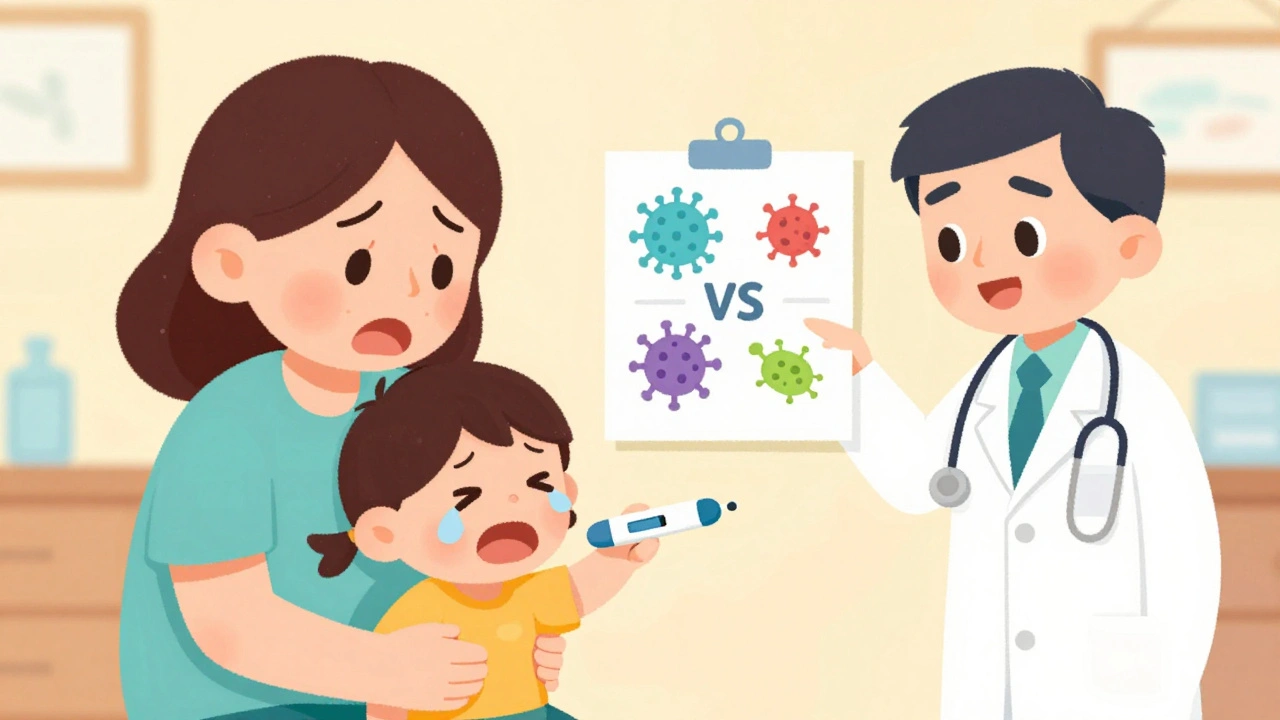
Every parent has been there: your child has a fever, a runny nose, or is crying from an earache. You want to fix it-fast. And when the doctor mentions antibiotics, it feels like a solution. But here’s the truth: antibiotics aren’t magic pills. They don’t work on viruses, and using them when they’re not needed can do more harm than good.
What Antibiotics Actually Do (and Don’t Do)
Antibiotics are designed to kill bacteria or stop them from multiplying. They don’t touch viruses. That means if your child has a cold, the flu, most coughs, or stomach bugs with vomiting and diarrhea, antibiotics won’t help. In fact, giving them in these cases just increases the risk of side effects without any benefit. About 99% of diarrhea and vomiting cases in kids are viral. So are 90% of pneumonia cases and nearly all cases of bronchiolitis. Yet, many parents think green or yellow mucus means a bacterial infection. It doesn’t. That’s just how your child’s immune system works-it’s normal for mucus to change color during a cold. Studies show 72% of parents believe this means antibiotics are needed. They’re wrong. Only about 20% of sore throats in children are bacterial (strep throat). Only 10% of pneumonia cases are bacterial. Ear infections? Sometimes. But not always. The American Academy of Pediatrics and the CDC agree: antibiotics should only be used when there’s clear evidence of bacteria.When Are Antibiotics Actually Necessary?
Doctors don’t guess. They test. For strep throat, a rapid antigen test or throat culture is required. A sore throat alone isn’t enough. For ear infections (acute otitis media), antibiotics are only recommended if there’s moderate to severe ear pain, fever, or fluid draining from the ear, along with a bulging, inflamed eardrum. For kids under 2 with a single ear infection and mild symptoms, doctors may suggest watching and waiting for 48-72 hours. If the child doesn’t get better, then antibiotics are started. This approach cuts down on unnecessary use by nearly half. New tools are helping. In 2023, the FDA approved a rapid test that can tell if an infection is bacterial within 6 hours-not days. Some clinics now use CRP blood tests, which can distinguish between viral and bacterial infections with 85% accuracy. These tools are cutting antibiotic prescriptions by up to 35%.Common Side Effects in Kids
About 1 in 10 children on antibiotics will have a side effect. Most are mild, but they’re annoying-and sometimes scary.- Diarrhea: Affects 5-25% of kids, depending on the antibiotic. It’s the most common.
- Nausea and vomiting: Happens in 3-18% of cases.
- Rash: Seen in 2-10%. Most are harmless, not allergies.
- Yeast infections: Especially in girls, can cause diaper rash or oral thrush.
True Allergies vs. Side Effects
A true antibiotic allergy is serious. It means your child’s immune system reacts dangerously. Signs include:- Hives (raised, red, itchy welts)
- Swelling of the lips, tongue, or face
- Wheezing or trouble breathing
- Anaphylaxis (a life-threatening reaction)
Common Antibiotics Used in Kids
Not all antibiotics are the same. Doctors pick based on the infection, the child’s weight, and past reactions.- Amoxicillin: First choice for ear infections, sinus infections, and some pneumonia. Usually given twice a day for 10 days. Dose: 80-90 mg per kg of body weight per day.
- Azithromycin: Used for whooping cough, some pneumonia, or if a child is allergic to penicillin. Often a 3-5 day course. Less frequent dosing helps with compliance.
- Cefdinir or Ceftibuten: For ear infections that don’t clear with amoxicillin, or recurrent infections.
Why Completing the Course Matters
You’ve probably heard: “Finish the whole bottle.” That’s not just doctor talk. It’s science. When you stop antibiotics early-because your child feels better-you kill off the weak bacteria, but the toughest ones survive. Those are the ones that multiply. That’s how antibiotic resistance starts. In the U.S., 30% of antibiotic prescriptions for kids are unnecessary. And when kids take antibiotics they don’t need, they’re more likely to get resistant infections later. Some strains of strep pneumoniae are now resistant to penicillin in nearly half of cases. MRSA infections in children have jumped 150% since 2010. A 2022 study in The Lancet showed that using a blood test called procalcitonin to guide antibiotic use cut unnecessary prescriptions by 62%-without increasing complications. That’s the future.How to Get Your Child to Take It
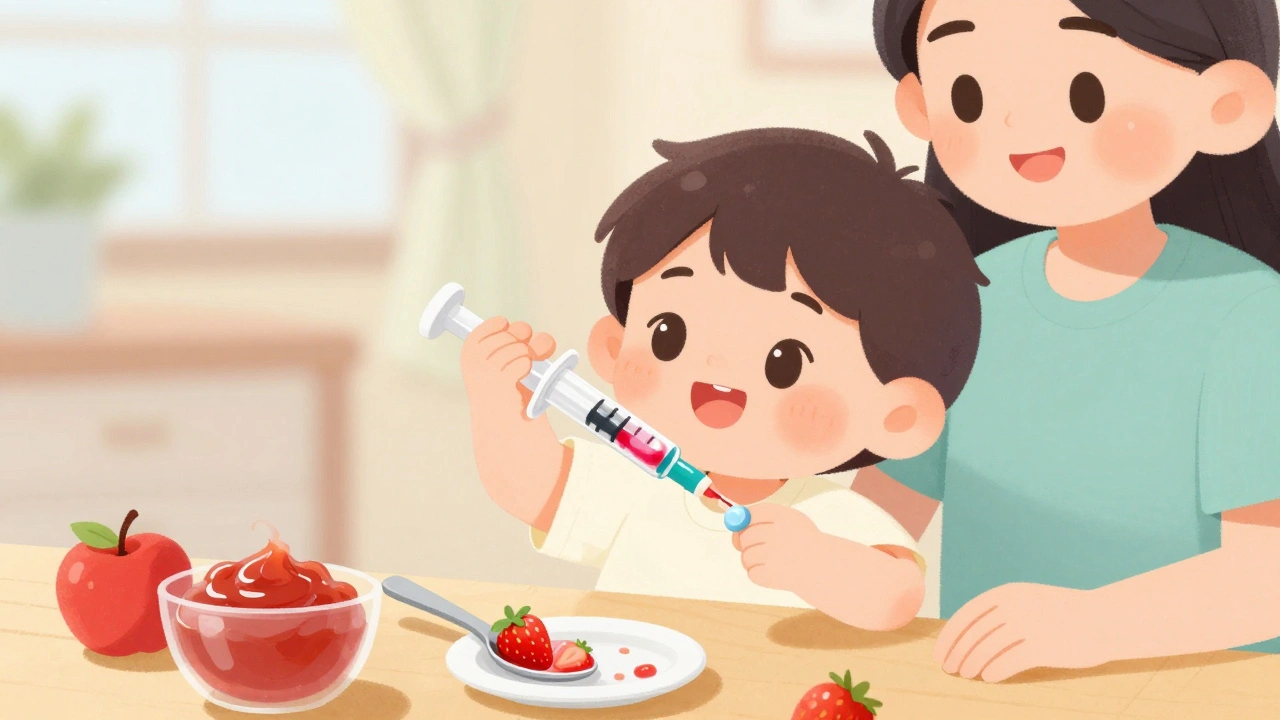
Let’s be real: most liquid antibiotics taste awful. A survey found 43% of kids refuse to take them. Here’s what works:- Use a dosing syringe, not a spoon. It’s more accurate and easier to control.
- Mix a small amount with chocolate syrup, applesauce, or yogurt. Don’t mix with a full meal-it can interfere with absorption.
- Ask your pharmacist about flavoring options. Many compounding pharmacies can make amoxicillin taste like strawberry or bubblegum.
- Give it right before a snack or meal to mask the taste.
What to Watch For After Starting
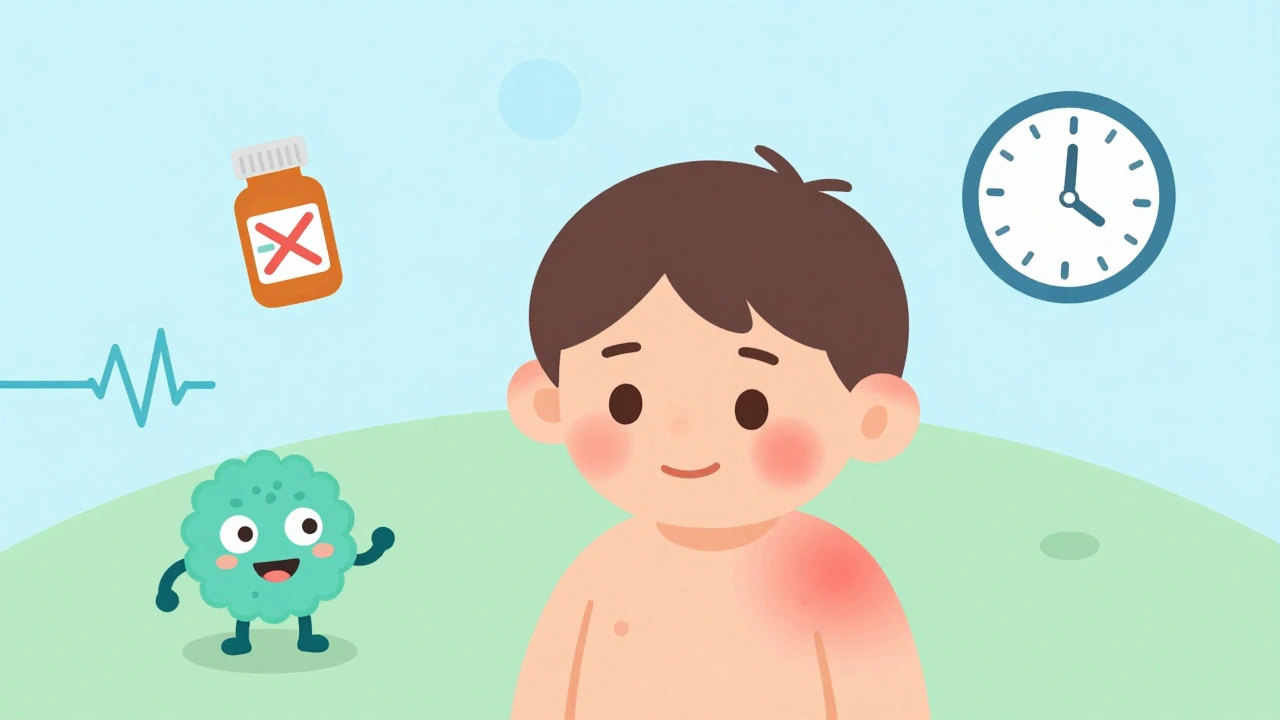
Antibiotics don’t work instantly. For most infections, you should see improvement within 48-72 hours. If your child’s fever is still high, they’re still in pain, or they’re getting worse after two days, call the doctor. Don’t just keep giving the medicine. Also watch for signs of a serious reaction: difficulty breathing, swelling, or a rash that spreads quickly. Go to the ER if these happen. And remember: antibiotics won’t shorten a viral illness. A cold lasts 7-10 days. A cough can linger for weeks. That’s normal. Giving antibiotics won’t speed it up.What Parents Can Do
You’re not powerless. Here’s how you help:- Ask: “Is this definitely bacterial?” Don’t accept a guess.
- Ask: “Do we need antibiotics now, or can we wait?”
- Don’t pressure your doctor. Most pediatricians know antibiotics are overused. They’re under pressure from parents-but they’re trained to do the right thing.
- Never use leftover antibiotics from a previous illness. Different infections need different drugs.
- Teach your child that antibiotics aren’t candy. They’re powerful tools-only for specific times.
Why This Matters Beyond Your Child
Every time an antibiotic is used unnecessarily, it weakens our collective defense. Resistant bacteria don’t care if your child took the pill or your neighbor’s did. They spread. They mutate. They become untreatable. In the U.S., antibiotic resistance causes 35,000 deaths a year. That’s more than car accidents. The economic cost? Over $4.6 billion annually in extra hospital visits and treatments. We’re not just protecting your child. We’re protecting everyone’s future. If we keep overusing antibiotics, we might run out of options for serious infections like pneumonia, meningitis, or sepsis.Final Thought
Antibiotics saved millions of lives. But they’re not harmless. They’re not a quick fix for every fever. When used correctly, they’re lifesavers. When used wrongly, they’re a slow-burning threat. Trust your doctor. Ask questions. Don’t rush to antibiotics. And remember: sometimes, the best thing you can do is wait-and give your child a hug, some chicken soup, and time.Can antibiotics treat a cold or the flu?
No. Colds and the flu are caused by viruses, and antibiotics only work against bacteria. Giving antibiotics for a viral illness won’t help your child feel better faster and only increases the risk of side effects and antibiotic resistance.
My child got a rash after taking amoxicillin-does that mean they’re allergic?
Not necessarily. About 80-90% of rashes from amoxicillin are harmless side effects, not true allergies. A true allergy includes hives, swelling, or trouble breathing. If your child only has a flat, red rash without other symptoms, it’s likely not an allergy. Talk to your doctor before assuming they’re allergic for life.
Should I stop antibiotics if my child feels better?
No. Always finish the full course as prescribed, even if symptoms disappear. Stopping early lets the strongest bacteria survive and multiply, leading to antibiotic-resistant infections. This puts your child-and others-at risk later.
Is it safe to give my child leftover antibiotics from a previous illness?
No. Different infections need different antibiotics. Using the wrong one can be ineffective or even dangerous. Leftover antibiotics may be expired or improperly stored. Always get a new prescription for each illness.
Can antibiotics cause long-term gut problems in kids?
Yes. Antibiotics kill both harmful and helpful bacteria in the gut. This can lead to diarrhea, yeast infections, or in rare cases, a serious infection called Clostridium difficile (C. diff), which causes severe diarrhea and requires hospital treatment. Up to 25% of antibiotic-related diarrhea in children is linked to C. diff.
Are there alternatives to antibiotics for common childhood infections?
For viral infections like colds, coughs, and most ear infections, the best alternatives are rest, fluids, fever reducers like acetaminophen or ibuprofen, and time. For bacterial infections, doctors now use faster tests (like CRP or procalcitonin) to confirm if antibiotics are truly needed-reducing unnecessary use without risking outcomes.
Doris Lee
Love this breakdown. So many parents panic when their kid has a fever and rush to the doctor for antibiotics. Time, fluids, and rest are powerful medicine-and way underappreciated.
December 11, 2025 AT 08:24
Michaux Hyatt
Exactly. I’m a pediatric nurse and I see it every week-parents handing over old amoxicillin bottles like they’re candy. Please don’t. It’s dangerous and contributes to resistance. Always talk to your provider first.
December 12, 2025 AT 08:26
Neelam Kumari
Of course the pharmaceutical companies love this. They make billions off unnecessary prescriptions. The real agenda? Keep kids on meds so their ‘immune systems’ never learn to fight anything on their own. Wake up.
December 13, 2025 AT 08:28
Queenie Chan
That 80-90% stat about amoxicillin rashes not being allergies? Mind blown. I thought my daughter was allergic for years because of a silly pink rash at age two. Turns out she’s fine. I wish I’d known this sooner-she’s had five courses since and never had another issue.
Also, the flavoring trick? Genius. My kid used to spit out antibiotics like a tiny, angry dragon. Now we mix it with a spoonful of peanut butter and she asks for it like it’s dessert. Weird, but it works.
December 13, 2025 AT 22:35
Stephanie Maillet
It’s fascinating, isn’t it... how we’ve come to equate medical intervention with care... when sometimes, the most compassionate act is simply to wait... to hold them... to trust their bodies... as they’ve done for millennia before antibiotics even existed...
Modern medicine is miraculous... but it’s not always necessary... and sometimes, the greatest hubris is believing we must fix everything...
December 15, 2025 AT 12:57
David Palmer
Bro, I gave my kid amoxicillin for a cold once. He got a rash. I panicked. Now I’m terrified to ever give him anything. What if it’s an allergy? What if he dies? This whole thing is a minefield.
December 15, 2025 AT 14:41
Frank Nouwens
Well-researched and thoughtfully presented. The data on procalcitonin-guided prescribing is particularly compelling. Clinical decision support tools like these represent the future of antimicrobial stewardship in pediatrics.
December 16, 2025 AT 00:56
Kaitlynn nail
Antibiotics aren’t magic. They’re just chemicals. And your kid’s body? It’s been fighting stuff for millions of years. Let it do its job.
December 17, 2025 AT 01:06
Aileen Ferris
wait u mean the doc cant just give antibiotics when u ask for em? like... what even is medicine anymore??
December 18, 2025 AT 07:57
Rebecca Dong
THIS IS A GOVERNMENT COVER-UP. The CDC and WHO are hiding the truth: antibiotics cause autism. They’ve been quietly replacing all childhood vaccines with antibiotics since 2018. Why? Because Big Pharma owns them. My cousin’s neighbor’s dog got a rash after amoxicillin and now it barks in binary. I’m not kidding.
December 19, 2025 AT 10:15
Michelle Edwards
This is exactly what I needed to see. I used to stress every time my daughter got sick. Now I just sit with her, give her soup, and wait. It’s hard to do nothing... but it’s the right thing. Thank you for normalizing patience.
December 21, 2025 AT 00:19
Sarah Clifford
So what you’re saying is... we’re supposed to just watch our kids suffer? That’s not parenting. That’s neglect. I’m not waiting 72 hours for my kid to get worse before I do something.
December 21, 2025 AT 13:18
Ben Greening
The misinformation around mucus color is astounding. I’ve seen parents bring in charts with color-coded snot samples like they’re forensic analysts. Green doesn’t mean bacteria. It means the immune system is working. It’s not a crime scene-it’s biology.
It’s also worth noting that in the 1970s, ear infections were routinely watched for 72 hours before antibiotics were even considered. We’ve lost that patience. And now we’re paying for it.
Parents aren’t stupid. They’re overwhelmed. And when you’re up at 3 a.m. with a screaming child, it’s easy to grab the easiest solution. But we need to reframe the conversation-not as ‘do you want antibiotics?’ but ‘what’s the safest path forward?’
That’s where education, trust, and time come in. And yes, sometimes that means crying in the pediatrician’s office because you’re scared. But that’s part of being a parent too.
Let’s stop blaming parents. Let’s empower them with clarity.
December 22, 2025 AT 02:38
Nikki Smellie
Have you considered that antibiotics are being used as a population control mechanism? The CDC’s own documents from 2017 reference ‘microbial modulation’ as a tool for long-term demographic stability. The rash? It’s not a side effect-it’s a signature. A biometric marker. The real question: who’s monitoring the monitors?
December 23, 2025 AT 18:35
Raj Rsvpraj
How can you even compare Western medicine to our ancient Ayurvedic practices? In India, we’ve treated fevers with neem, turmeric, and fasting for centuries. Why are we blindly following American protocols that poison our children with chemicals? This is cultural imperialism disguised as science.
December 24, 2025 AT 00:48
Jack Appleby
Actually, the 2022 Lancet study on procalcitonin didn’t ‘cut prescriptions by 62%’-it reduced them by 58.7% (95% CI: 54.1–63.3), and the non-inferiority margin was set at 10%, which is statistically aggressive. Also, CRP accuracy is closer to 78% in community settings, not 85%. You’re citing the idealized trial data, not real-world performance. Please be more precise.
December 25, 2025 AT 13:52