
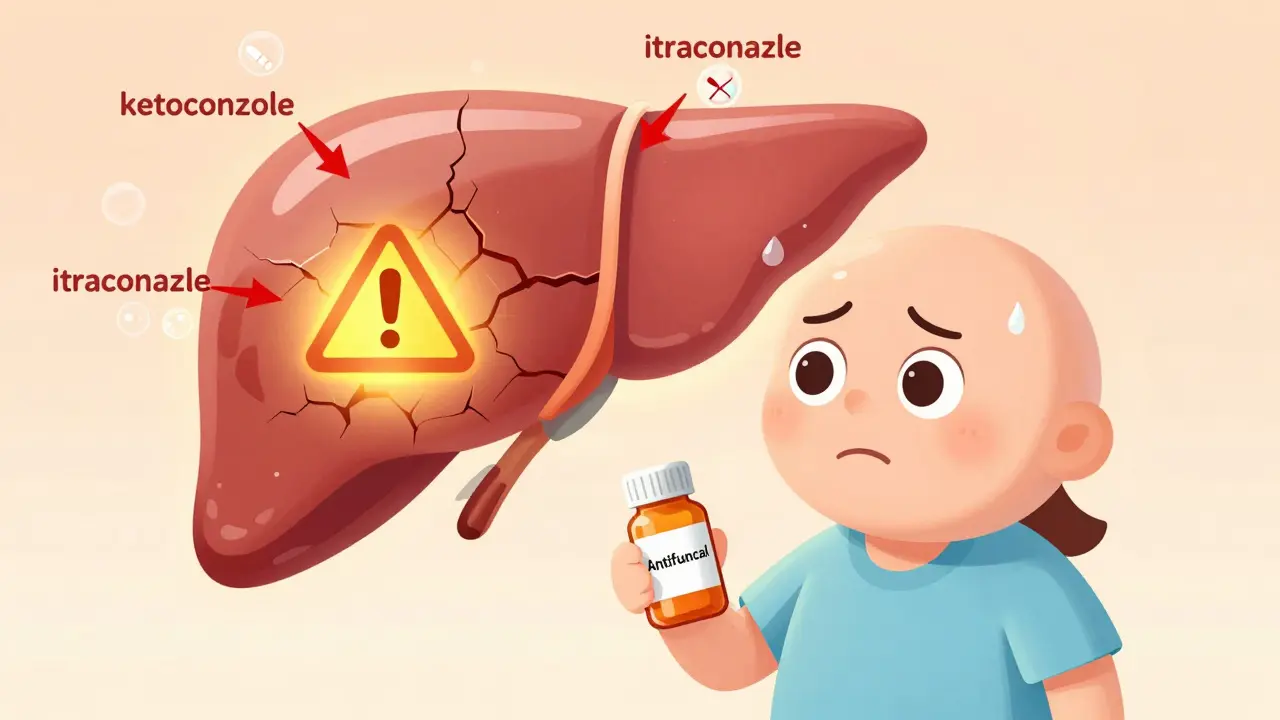
When you’re fighting a stubborn fungal infection-whether it’s a nail fungus, a yeast infection, or something more serious like invasive aspergillosis-the last thing you want is for the medicine to harm your liver. Yet, many commonly prescribed antifungals carry real, documented risks of liver injury. Some can cause severe, even life-threatening damage. Others may interact dangerously with medications you’re already taking. This isn’t theoretical. It’s happening in real patients, and it’s preventable-if you know what to watch for.
Which Antifungals Are Riskiest for Your Liver?
Not all antifungals are created equal when it comes to liver safety. The biggest offenders come from the azole class: ketoconazole, itraconazole, and voriconazole. Ketoconazole, once a go-to for fungal skin infections, now carries a black box warning from the FDA. Studies show about 1 in 500 people taking it develop serious liver injury. In some cases, it led to liver failure and transplants. That’s why it was pulled from the European market in 2013 and is now restricted in the U.S. to only the most severe cases when nothing else works.Voriconazole and itraconazole aren’t far behind. Data from the FDA’s adverse event database (2004-2021) shows they trigger more reports of liver damage than fluconazole, which is generally safer. Voriconazole, in particular, causes liver enzyme spikes in up to 20% of patients on long-term therapy. The damage often shows up between 2 and 8 weeks after starting treatment-long enough that many doctors and patients miss the connection.
Terbinafine, used mostly for nail fungus, is a different story. It’s much less likely to hurt the liver, with injury rates around 0.1%. But even then, there’s a black box warning. One patient reported jaundice and fatigue at week five, and their liver enzymes jumped to 5 times the normal level. It took weeks to recover after stopping the drug.
Echinocandins-caspofungin, micafungin, and anidulafungin-are often seen as safer, especially in hospitals. But here’s the twist: a 2022 real-world study found they’re linked to more liver injury than previously thought. Why? Because they’re usually given to patients who are already very sick, with pre-existing liver problems. That doesn’t mean they’re safe for everyone. Anidulafungin, in particular, had the highest death rate among antifungal-related liver injuries in one analysis. Micafungin, though, appears to be the gentlest of the group.
How Liver Damage Happens
Antifungals don’t just randomly damage the liver. They interfere with how liver cells process toxins, overload metabolic pathways, or trigger immune reactions. Azoles, for example, are broken down by liver enzymes called CYP450. If you’re taking another drug that uses the same enzymes-like statins, blood thinners, or certain antidepressants-it creates a traffic jam. That causes drug levels to build up, increasing toxicity.Some people are genetically predisposed. A 2022 study found that patients with a specific CYP2C19 gene variant are nearly four times more likely to develop liver injury from voriconazole. This isn’t rare-it affects about 15% of Caucasians and 30% of Asians. Yet, pre-treatment genetic testing isn’t standard practice.
The pattern of liver injury also varies. Azoles typically cause hepatocellular damage-meaning liver cells themselves die. You’ll see high ALT and AST levels. Echinocandins more often cause cholestatic injury-where bile flow gets blocked. That shows up as high bilirubin and alkaline phosphatase. Recognizing the pattern helps doctors figure out what’s causing it.
Drug Interactions You Can’t Ignore
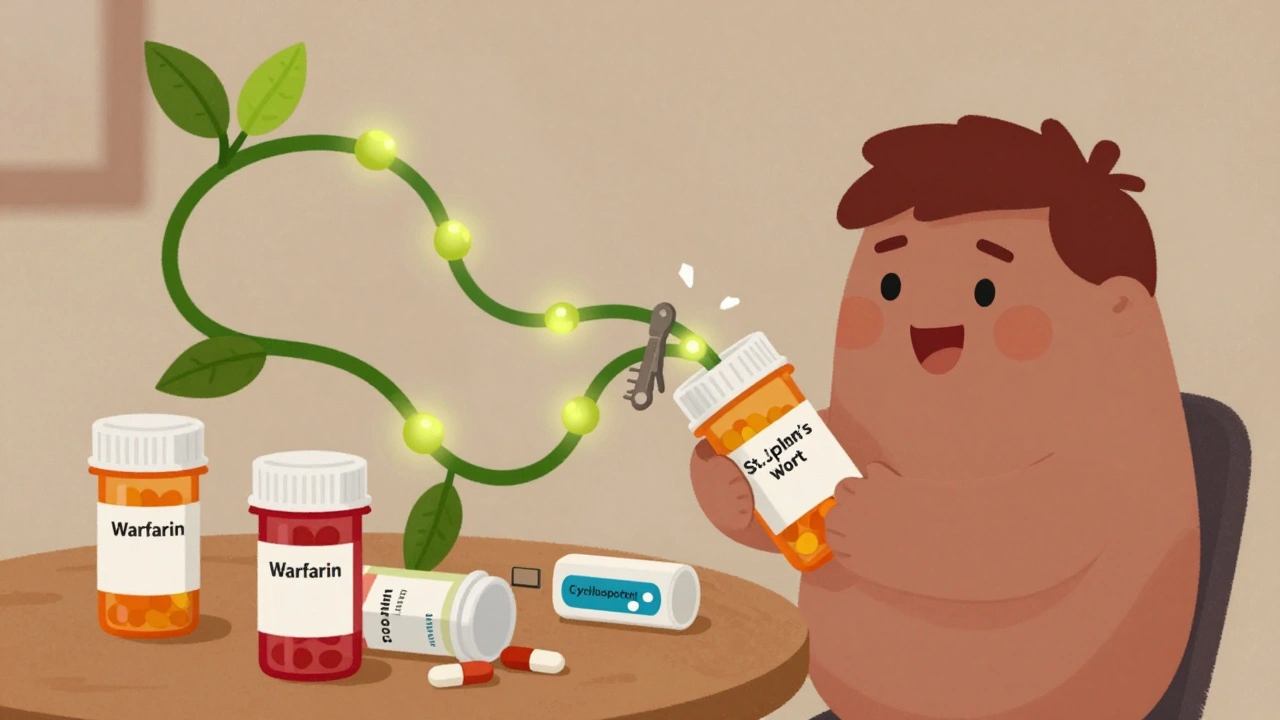
Antifungals are notorious for interacting with other meds. Ketoconazole is a strong inhibitor of CYP3A4, which means it can skyrocket levels of drugs like simvastatin, fentanyl, or cyclosporine. One patient on cyclosporine after a transplant ended up in the ER with kidney failure because ketoconazole made the transplant drug’s concentration spike 7-fold.Voriconazole is just as tricky. It can make warfarin too strong, increasing bleeding risk. It also interacts with omeprazole, rifampin, and even some HIV meds. Fluconazole is a bit gentler, but still risky with sulfonylureas (diabetes pills) and benzodiazepines. Even terbinafine, which seems safe, can raise levels of certain antidepressants like amitriptyline.
Alcohol doesn’t help. Mixing any antifungal with alcohol increases liver stress. And if you’re on multiple medications, the risk multiplies. A 2020 study found that patients taking three or more hepatotoxic drugs had a 6 times higher chance of liver injury than those on one.

Who’s Most at Risk?
It’s not just about the drug. Your body matters too. Older adults (65+) are 7 times more likely to develop antifungal-related liver injury. Their livers process drugs slower, and they’re more likely to be on multiple meds. People with existing liver disease-whether from hepatitis, fatty liver, or alcohol use-are also at higher risk. The same goes for those with kidney problems, since some antifungals are cleared through the kidneys.Women appear to have a slightly higher risk than men, though the reason isn’t fully understood. And patients with weakened immune systems-like those on chemotherapy, transplants, or long-term steroids-are often prescribed stronger antifungals for longer periods, which stacks the risk.
Monitoring Is Non-Negotiable
If you’re on a systemic antifungal, you need liver tests. Not optional. Not "if you feel weird." Baseline LFTs before starting are essential. For high-risk drugs like voriconazole or itraconazole, weekly checks for the first month are standard. After that, every two weeks. For terbinafine, check at 4-6 weeks, then again if treatment goes beyond 8 weeks.What do the numbers mean? If ALT or AST is over 3 times the upper limit of normal AND you have symptoms (fatigue, nausea, dark urine, abdominal pain), stop the drug. If it’s over 5 times normal-even without symptoms-discontinue. Don’t wait. Delayed action can mean permanent damage.
But here’s the problem: a 2020 study found only 37% of primary care doctors ordered these tests for patients on terbinafine. Many assume it’s just for acne or athlete’s foot and skip monitoring. That’s dangerous. Fungal nail infections aren’t emergencies, but liver failure is.

What to Do If You’re Already on an Antifungal
If you’re currently taking one of these drugs, don’t panic. But do this:- Check your last liver test results. If you’ve never had one, ask for a baseline.
- Review all your medications with your doctor or pharmacist. Include OTC drugs, supplements, and alcohol.
- Know the warning signs: fatigue, yellow eyes or skin, dark urine, nausea, right-side pain.
- If you’re on voriconazole or itraconazole, ask if you’ve been tested for CYP2C19 gene variants.
- Don’t stop the drug suddenly without talking to your doctor-especially if you’re treating a life-threatening infection.
For mild nail fungus, consider topical treatments instead of pills. For yeast infections, vaginal creams often work better than oral fluconazole. The goal isn’t to avoid antifungals-it’s to use them wisely.
The Future: Safer Antifungals on the Horizon
The tide is turning. New antifungals like olorofim and ibrexafungerp are being designed with liver safety as a top priority. Early trials show 78% fewer liver enzyme spikes compared to older azoles. The FDA is also testing AI tools to catch liver injury signals in real time using its adverse event database. In 2024, pilot programs will start using machine learning to flag high-risk patients before damage occurs.Genetic screening might become routine. Imagine a simple blood test before your first dose that tells you if you’re at high risk for voriconazole toxicity. That’s not science fiction-it’s coming.
Can antifungals cause permanent liver damage?
Yes, in rare cases. Severe drug-induced liver injury from antifungals like ketoconazole or voriconazole can lead to acute liver failure, requiring a transplant. While most cases resolve after stopping the drug, some patients develop chronic liver damage or fibrosis, especially if the injury went unnoticed for weeks. Early detection is critical to avoid permanent harm.
Is fluconazole safe for the liver?
Fluconazole is generally the safest azole for the liver. It’s linked to far fewer cases of liver injury than itraconazole or voriconazole. However, it’s not risk-free. Prolonged use (over 2 weeks), high doses, or combining it with other liver-toxic drugs can still cause damage. Baseline liver tests are still recommended for long-term therapy or in high-risk patients.
Why is ketoconazole no longer widely used?
Ketoconazole was pulled from most markets because of its high risk of severe liver injury, adrenal gland suppression, and dangerous drug interactions. The FDA issued a black box warning in 2013, and its use is now restricted to life-threatening fungal infections when no other antifungals work. Even then, it’s only used with strict liver monitoring.
Do I need liver tests if I’m taking terbinafine for nail fungus?
Yes. Although the risk is low (about 0.1%), terbinafine carries a black box warning for liver failure. Guidelines recommend a liver function test before starting and again at 4-6 weeks into treatment. If you’re on it for more than 8 weeks, additional checks are advised. Many patients skip this, but the consequences can be serious.
Can I take antifungals if I have fatty liver disease?
It depends. Fatty liver disease doesn’t automatically rule out antifungals, but it increases your risk of liver injury. Doctors will likely choose the safest option-like micafungin or fluconazole-and monitor you more closely. Avoid ketoconazole and high-dose voriconazole if you have any liver condition. Always tell your doctor about your liver history before starting any antifungal.

Robert Petersen
Really glad someone laid this out so clearly. I’ve been on itraconazole for a fungal lung issue and had no idea how much my liver was at risk. My doc just handed me the script and said "take it." No talk of tests, no warnings. This should be standard info before any prescription.
February 10, 2026 AT 15:06
Alyssa Williams
Same. I took terbinafine for toenail fungus and never got a single blood test. Now I’m paranoid every time I feel tired. Maybe I should’ve just used the cream.
February 12, 2026 AT 00:45
Carla McKinney
Of course the FDA only acts after people die. They knew ketoconazole was dangerous for years before they pulled it. The system is broken. Pharmaceutical companies pay for influence. This isn’t about safety-it’s about profit.
February 12, 2026 AT 17:20
Reggie McIntyre
The CYP2C19 gene variant thing is wild. Imagine if we could just screen everyone before giving azoles. It’s like we’re flying blind in 2024. We have the tech. We just don’t use it. This feels like a missed opportunity to make medicine actually personalized.
February 12, 2026 AT 22:53
Jason Pascoe
As someone who’s had liver issues from past meds, this is gold. I’ll never skip a liver panel again. Even if it’s "just" for athlete’s foot. Better safe than sorry. Thanks for the detailed breakdown.
February 13, 2026 AT 04:36
Neha Motiwala
They say fluconazole is safe but did you know it’s linked to birth defects in animal studies? And they still give it to pregnant women? What else are they hiding? The truth is buried under layers of corporate PR.
February 14, 2026 AT 14:35
Craig Staszak
Love how you broke this down. I work in pharma logistics and I’ve seen how often monitoring gets skipped because it’s "not cost-effective." It’s not about money-it’s about people. We need better protocols. Period.
February 15, 2026 AT 19:25
Ojus Save
terbinafine gave me a rash and i thought it was just allergies. turns out my liver was already stressed. i wish i read this before. now im scared to take anything
February 17, 2026 AT 17:45
Gloria Ricky
My mom’s on voriconazole after a transplant. She’s 72. We just had her LFTs done last week-AST was 98. Doc said "keep going, it’s normal for her." I’m not convinced. This post gave me the courage to push back. Thank you.
February 17, 2026 AT 22:11
Ernie Simsek
bro the liver damage stats are wild. like imagine taking a drug that spikes your enzymes 20% and your doc just says "eh, we’ll watch." we’re basically lab rats. also why is micafungin the MVP? someone explain. 🤯
February 19, 2026 AT 17:17
Jack Havard
Why are we still using azoles at all? Why not just ban them? The evidence is overwhelming. This isn’t risk management-it’s negligence dressed up as medicine.
February 21, 2026 AT 16:25
alex clo
While the risks are real, it’s important to contextualize them. The incidence of severe liver injury remains low relative to the number of patients who benefit. Avoiding treatment entirely due to fear may be more dangerous than the medication itself. Clinical judgment is key.
February 21, 2026 AT 19:22
Stacie Willhite
I’m a nurse who’s seen three patients with antifungal-induced liver failure. One needed a transplant. No one asked about their meds. No one checked their liver enzymes. This isn’t just info-it’s a lifeline. Thank you for writing this.
February 22, 2026 AT 09:51
Joanne Tan
so i took terbinafine for 6 weeks and felt fine. no tests. no issues. but now im scared to take anything ever again. maybe i should’ve just lived with the fungus?
February 24, 2026 AT 09:43
athmaja biju
This is why India needs better drug regulation. We import these drugs without proper safety checks. People here take ketoconazole like candy. It’s a public health disaster waiting to happen. Someone needs to wake up.
February 24, 2026 AT 11:25