
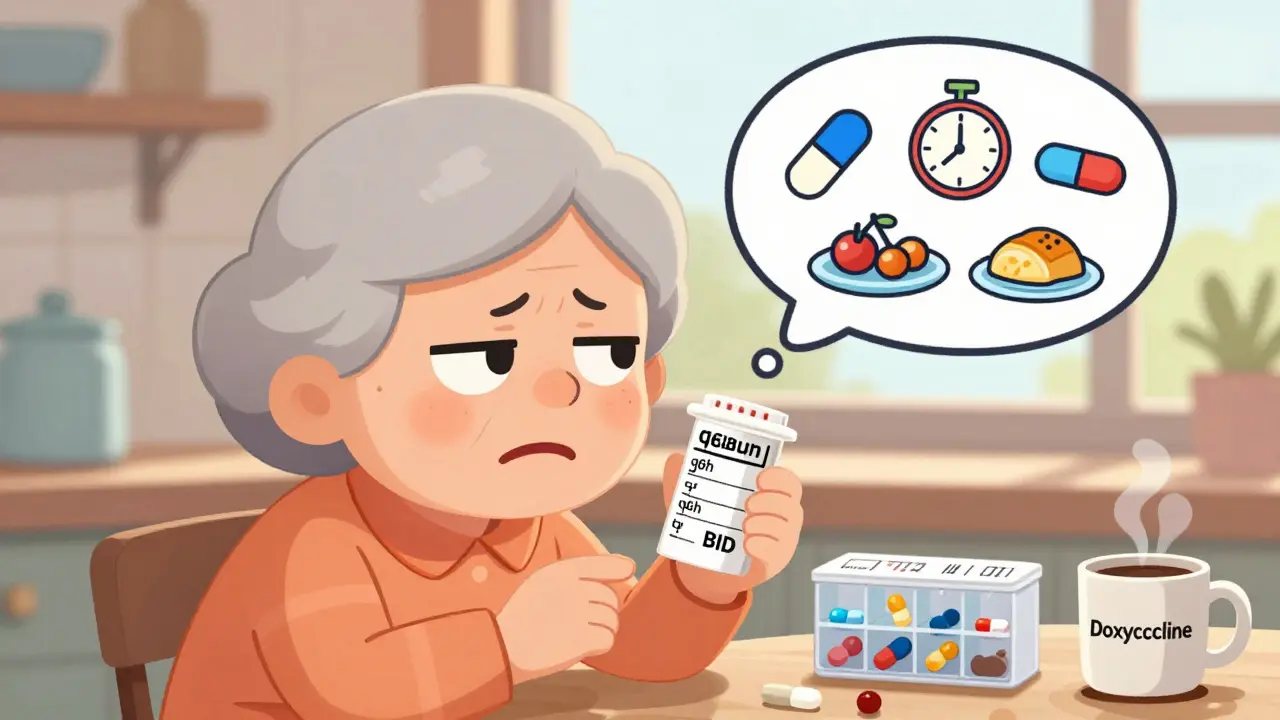
Every year, millions of people in the U.S. take their medication wrong-not because they’re careless, but because the label doesn’t make sense. You’ve seen it: tiny print, confusing abbreviations, vague instructions like "take as needed" or "q6h." These aren’t just inconveniences. They’re dangerous. Misreading a prescription label leads to 1.3 million emergency room visits and over 350,000 hospital stays each year. And the worst part? Most of these errors are completely preventable.
What’s Actually on the Label That Confuses People?
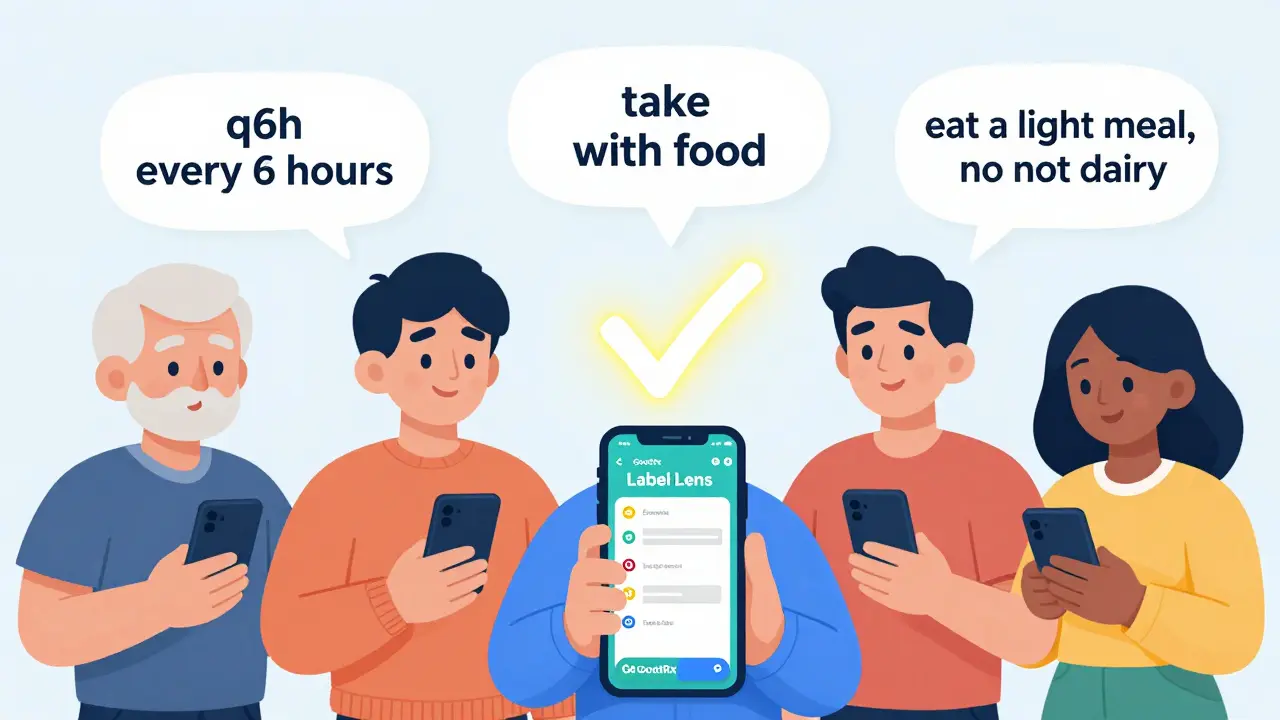
Prescription labels were never designed with real people in mind. They were built for pharmacists, not patients. That’s why you’ll see phrases like "ii tab PO qHS"-which means "two tablets by mouth at bedtime." But if you don’t know Latin abbreviations, that’s just gibberish. A 2006 study found that 46% of patients misunderstood at least one instruction on their label. And it’s not just low-literacy patients. Even college graduates get tripped up. The biggest troublemakers are:- Abbreviations like "BID" (twice daily), "QID" (four times daily), or "q6h" (every six hours)
- Time-based instructions like "take every 4-6 hours" instead of "take at 8 a.m. and 8 p.m."
- Ambiguous warnings like "take with food"-which some people interpret as "take instead of food"
- Missing details: How many pills? At what time? Should you swallow or dissolve?
One Reddit user shared how they took their antibiotic four times a day because they thought "q6h" meant "four times" (24 divided by 6 equals 4). They ended up in the ER with stomach bleeding. That’s not a rare mistake. It’s a common one.
Why "Take With Food" Doesn’t Mean What You Think
"Take with food" is one of the most misunderstood phrases on any label. Many people assume it means they should eat right before popping the pill. Others think it means they can take it any time, as long as they’ve eaten recently. But the truth? It depends on the drug. Some medications need food to reduce stomach upset. Others need food to be absorbed properly. Take antibiotics like doxycycline: if you take them on an empty stomach, they can cause nausea. But if you take them with dairy, the calcium blocks absorption. So "take with food" here means "take with a light meal, but not milk or yogurt." The same goes for statins like simvastatin. Taking them with grapefruit juice can cause dangerous drug buildup in your body. But most labels don’t say that. They just say "take with food." That’s not enough.Studies show that 68% of patients misinterpret the "take with food" symbol-a plate with a pill next to it. That’s because there’s no standard icon. One pharmacy uses a fork and knife. Another uses a sandwich. None of them are consistent. The FDA has tested over 50 different symbols. Only three had clear understanding rates above 70%. And even those aren’t required on labels.
How Pharmacy Systems Make It Worse
It’s not just the wording. It’s the design. Labels printed by different pharmacy systems look completely different. CVS, Walgreens, and independent pharmacies use different templates. Some use 10-point font. Others use 14-point. Some put the drug name in bold. Others bury it in the middle of the page. Color contrast matters too. A label with light gray text on a white background might look fine to you-but if you’re over 65 and have macular degeneration, you can’t read it. The FDA says labels should have a contrast ratio of at least 4.5:1. But many labels fall below 2:1. And then there’s the problem of language. Over 41 million people in the U.S. speak Spanish at home. But only 12% of pharmacies offer translated labels. And when they do, the translations are often poorly done. One study found that Spanish-language labels had 3.2 times more confusion than English ones-not because the language was hard, but because terms like "una vez al día" were mistranslated as "one time per day," making people think they should take it only once, not every day.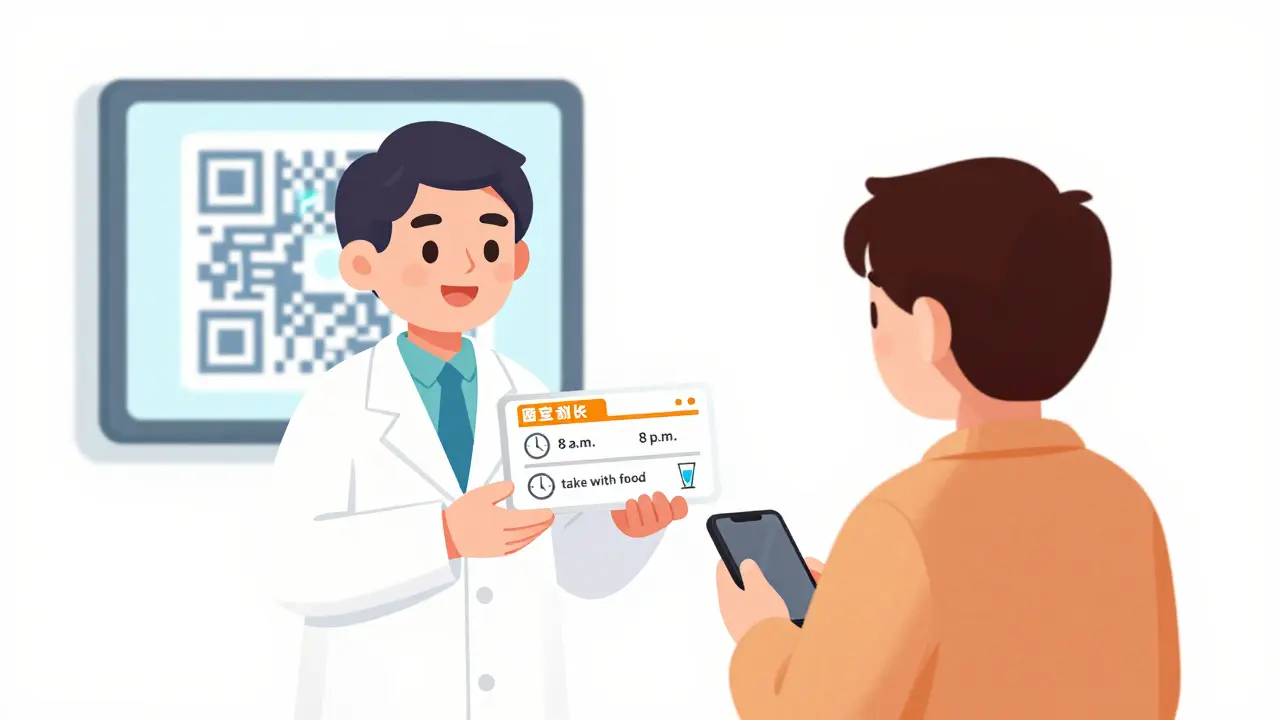
What Works: The Labels That Actually Help
Some pharmacies are fixing this. CVS started using their "ClearView" label system in 2020. Walgreens followed. These labels use:- Large, bold drug names (minimum 12-point font)
- Simple, active voice: "Take 1 tablet by mouth two times each day" instead of "One tablet should be taken orally twice daily."
- Fixed times: "Take at 8 a.m. and 8 p.m." instead of "every 12 hours."
- Standardized icons: A clock for timing, a plate for food, a water glass for drink with water
- Reading level at or below 6th grade
These changes cut misunderstanding rates from 46% down to 12% for dosage instructions and from 56% to 18% for warnings. That’s not a small improvement. That’s life-saving.
Now, some labels even include QR codes. Scan it with your phone, and you get a short video showing exactly how to take the pill-when, how, and what to avoid. Mayo Clinic tested this in 2024. Patients who used the QR code had 62% fewer errors. And it’s free.
What You Can Do Right Now
You don’t have to wait for the system to fix itself. Here’s what you can do the next time you pick up a prescription:- Ask for a plain-language label. Say: "Can you print this with simple words? I don’t understand abbreviations like BID or q6h."
- Ask for a visual aid. Request a label with clock icons showing when to take the pill. Most major chains (CVS, Walgreens, Walmart) offer this for free.
- Use the "Teach-Back" method. After the pharmacist explains, say: "Just to make sure I got it right-you’re saying I take one pill at 8 a.m. and one at 8 p.m., with food, and I shouldn’t drink grapefruit juice?" If they nod, you got it right.
- Ask for large print. If you’re over 65 or have trouble reading small text, ask for a large-print version. It’s required by law at most pharmacies.
- Use a pill organizer. 78% of people who use one say it helps them remember. Buy one with labeled compartments for morning, afternoon, evening.
- Take a photo of the label. Snap a picture on your phone. Then, use the GoodRx "Label Lens" app. It reads the label and translates it into plain English. It’s free and works offline.
Why This Matters More Than You Think
Medication errors cost the U.S. healthcare system over $500 billion a year. That’s more than cancer care. And nearly a third of those costs come from simple label misunderstandings. If every pharmacy used clear labels, we could prevent 127,000 hospitalizations by 2030.But change isn’t coming fast enough. Only 78% of chain pharmacies follow the USP Chapter <17> standards. Just 32% of independent pharmacies do. And federal rules? Still voluntary. The FDA says they’re working on mandatory standards-but they won’t be required until 2025 at the earliest.
That means right now, the system is still broken. But you’re not powerless. You have the right to understand your medication. You have the right to ask questions. And you have the right to ask for a label you can read.
What Pharmacists Should Be Doing (But Often Don’t)
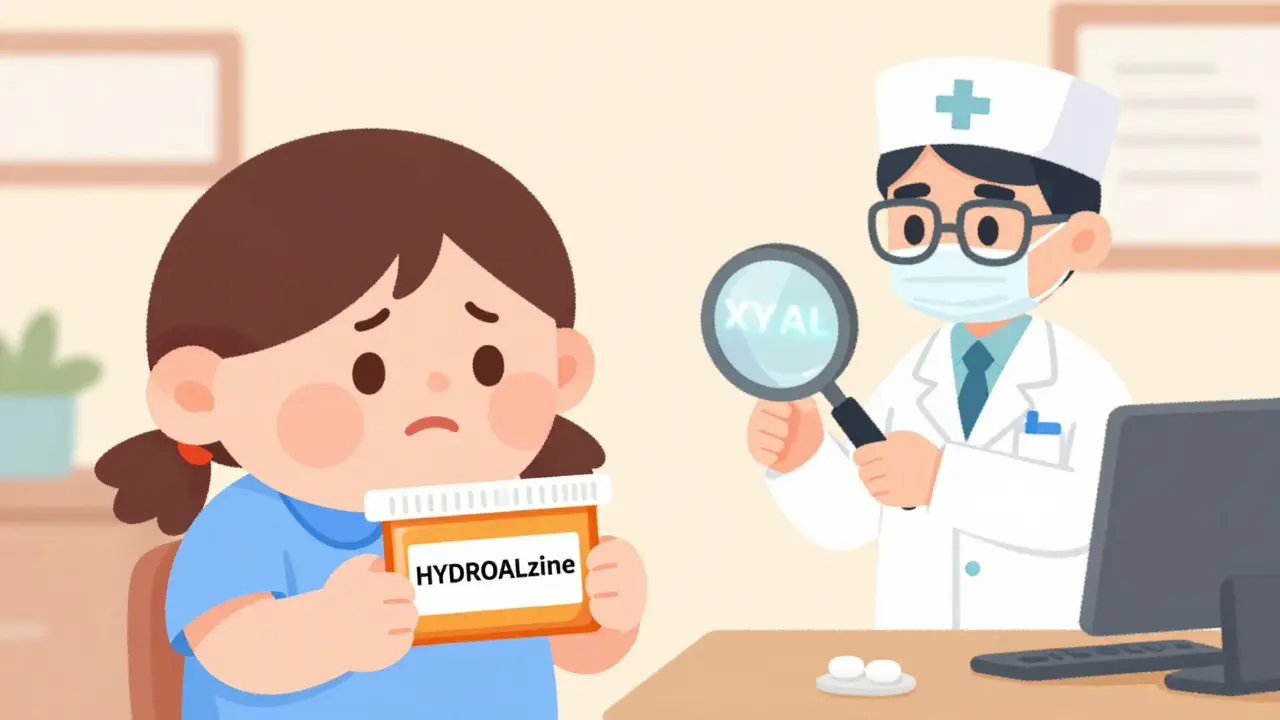
Pharmacists aren’t the problem-they’re the solution. But most don’t get enough time to explain. A typical prescription fill takes under three minutes. There’s no room for teaching.California started requiring pharmacy technicians to complete health literacy training in 2019. Since then, medication errors in the state dropped by 33%. Other states should follow. Pharmacists need to:
- Stop using abbreviations unless the patient asks for them
- Always say the time of day: "Take at 7 a.m. and 7 p.m."
- Use the same icons across all locations
- Offer free translation services for Spanish, Mandarin, Vietnamese, and other common languages
- Provide free pill organizers to patients who need them
The tools already exist. The data is clear. The cost of doing nothing is too high.
What does "take as needed" mean on a prescription label?
"Take as needed" means you can take the medication only when you feel symptoms, but not more than the maximum number of doses allowed in a day. For example, if the label says "take 1 tablet as needed for pain, up to 4 times daily," you can take it when you have pain, but never more than four pills in 24 hours. Always check the maximum daily dose-it’s often written in small print at the bottom.
Why do some labels say "take on an empty stomach"?
Some medications are absorbed better or work more effectively without food in your stomach. Antibiotics like amoxicillin or thyroid meds like levothyroxine can be blocked by food, especially dairy or high-fiber meals. "Empty stomach" usually means taking the pill at least one hour before eating or two hours after a meal. If you’re unsure, ask your pharmacist for exact timing.
Can I trust the label if it’s printed in a different language?
Not always. Many translated labels are machine-generated or poorly reviewed. One study found that Spanish translations of "take twice daily" were sometimes mistranslated as "take two times," making people think they should take two pills at once. Always ask your pharmacist to confirm the translation. If possible, request a label printed by the pharmacy’s official translation system-not a generic app or printout.
What should I do if I accidentally take the wrong dose?
Don’t panic. Call your pharmacist immediately. They can tell you if the mistake is dangerous and what to do next. If you took too much of a high-risk medication (like blood thinners, insulin, or heart pills), call 911 or go to the ER. Keep the pill bottle with you so medical staff can see the label. Never try to "make up" for a missed dose by doubling the next one unless your doctor says so.
Are there apps that can help me understand my prescription labels?
Yes. The GoodRx "Label Lens" app uses your phone’s camera to scan your prescription label and translate it into plain English. It also alerts you to food or drug interactions. Another option is the Medisafe app, which reminds you when to take pills and explains what each one does. Both are free and work offline. Just make sure you still double-check with your pharmacist-apps aren’t perfect.
Why do different pharmacies give me different labels for the same medicine?
Because each pharmacy uses different software systems. CVS, Walgreens, and Walmart use standardized labels. Independent pharmacies often use older systems that don’t follow best practices. The drug is the same, but the instructions might look different. Always compare labels if you switch pharmacies. If something looks confusing or changed, call your doctor or pharmacist to confirm.
Final Thoughts: Your Safety Is Your Right
You shouldn’t have to be a detective to figure out how to take your medicine. Labels should be clear, consistent, and easy to understand-even if you’re tired, stressed, or reading them in a dimly lit kitchen at 11 p.m.The system is slowly improving. But until every pharmacy uses plain language, large print, and visual cues, you need to be your own advocate. Ask questions. Ask again. Ask for help. Your health depends on it.
Lisa Davies
I literally cried reading this. My grandma took her blood thinner wrong because the label said 'q12h' and she thought it meant 'twice a day'-but she took it at 8 a.m. and 8 p.m. instead of 12 hours apart. She ended up in the hospital. 😭 We need this everywhere. Thank you for writing this.
December 15, 2025 AT 16:56
Benjamin Glover
Pathetic. Americans can’t even read a label. In the UK, we use plain English. No Latin. No symbols. Just clear instructions. If you can’t understand 'twice daily', maybe you shouldn’t be managing your own meds.
December 16, 2025 AT 14:21
Melissa Taylor
This is exactly why I started asking for plain-language labels at my pharmacy. They laughed at first. Then they gave me a free printed guide with icons. Now my mom takes her meds without help. It’s not magic-it’s just respect. Everyone deserves to understand their own health.
December 16, 2025 AT 22:16
John Samuel
The structural inequities embedded in pharmaceutical labeling are not merely logistical-they are epistemological. The conflation of semiotic efficiency with patient comprehension reflects a deeply entrenched hegemony of clinical jargon that marginalizes non-specialist epistemic communities. The introduction of standardized pictograms, syntactically simplified directives, and multilingual parity is not merely a pedagogical improvement-it is a civil rights imperative. QR-code-enabled contextual instruction, when paired with pharmacogenomic literacy modules, represents a paradigmatic shift toward patient-centered pharmacovigilance. The FDA’s voluntary guidelines are an abdication of duty. Mandate. Now.
December 18, 2025 AT 16:36
Sai Nguyen
India has better labeling than this. We use Hindi, Tamil, English. No emojis. No QR codes. Just clear words. You people need to stop blaming the system and learn to read.
December 20, 2025 AT 13:50
Cassie Henriques
Wait-so the FDA tested 50+ icons and only 3 had >70% comprehension? That’s wild. Why aren’t we standardizing the clock + plate + glass triad? And why is 'q6h' still allowed? That’s a Class I safety violation waiting to happen. Also, anyone know if the GoodRx app works with Medicare Part D labels?
December 22, 2025 AT 09:34
Jake Sinatra
Thank you for this. As someone who works in geriatric care, I see this daily. The worst part isn’t the confusion-it’s the shame. Patients won’t admit they don’t understand. We need mandatory health literacy checks at dispensing. Not optional. Mandatory. And pharmacists need 10 minutes per script, not 3.
December 23, 2025 AT 00:41
Raj Kumar
bro i just asked my local pharmacy for a big font label and they gave me one for free. no drama. just ask. also got a pillbox. life changed. ps: dont trust google translate for meds. my aunt took 2 pills because it said 'do twice' instead of 'twice a day'. she was fine but still...
December 24, 2025 AT 22:25
John Brown
My cousin’s kid has autism and can’t read at all. We started using the QR code videos from GoodRx and now he takes his meds with zero stress. Just plays the video on his tablet. It’s like magic. Pharmacies should make this standard. It’s not just for old people-it’s for everyone who needs clarity.
December 25, 2025 AT 11:16
Christina Bischof
Just took my pill. Checked the label. Still confused. Called my pharmacist. She laughed and said 'oh yeah that one’s messy' and walked me through it. Sometimes the system sucks but people don’t. Just ask.
December 26, 2025 AT 19:45
Jocelyn Lachapelle
My mom’s label says 'take with food' and she takes it with a donut. I told her it’s not the same. She said 'it’s food'. I didn’t argue. We’re getting a new label tomorrow. Simple wins.
December 26, 2025 AT 20:53