
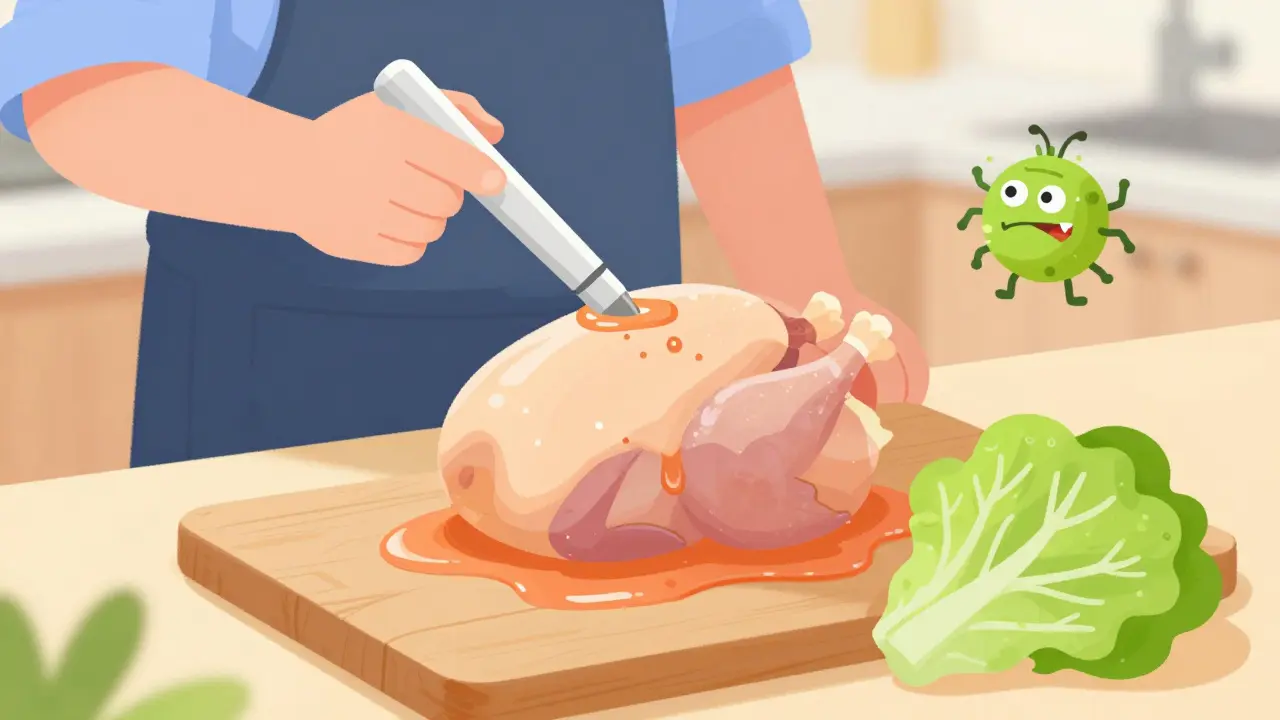
Every year, millions of people get sick from food that seems perfectly fine - no weird smell, no off taste, no visible spoilage. That’s the scary thing about foodborne illnesses. You can’t see, smell, or taste the danger. The real culprits are tiny organisms like bacteria, viruses, and parasites hiding in your chicken, eggs, lettuce, or even leftover pizza. In the U.S. alone, foodborne illness affects 48 million people annually, sends 128,000 to the hospital, and kills 3,000. These aren’t distant statistics. They’re your neighbor, your coworker, maybe even you next week if you’re not careful.
What’s Making You Sick? The Top Pathogens
Not all foodborne germs are created equal. Some make you miserable for a couple of days. Others can kill. The CDC breaks them down by how often they cause illness, hospitalizations, and deaths - and the numbers tell a surprising story.
Norovirus is the most common offender. It causes 19 to 21 million cases every year in the U.S. That’s more than half of all foodborne illnesses. You usually catch it from someone who didn’t wash their hands after using the bathroom and then touched your salad or sandwich. It hits fast - nausea, vomiting, stomach cramps - and you feel awful for 1 to 3 days. But here’s the twist: even though it makes the most people sick, it rarely kills. Most people recover at home.
Salmonella is a different story. It causes about 1.35 million illnesses each year. You’ll often find it in undercooked eggs, raw poultry, or contaminated produce. Symptoms include diarrhea, fever, and abdominal cramps. What makes Salmonella dangerous isn’t just how common it is - it’s how often it lands people in the hospital. It’s responsible for 35% of all foodborne hospitalizations. And in some cases, it leads to reactive arthritis that lasts for months.
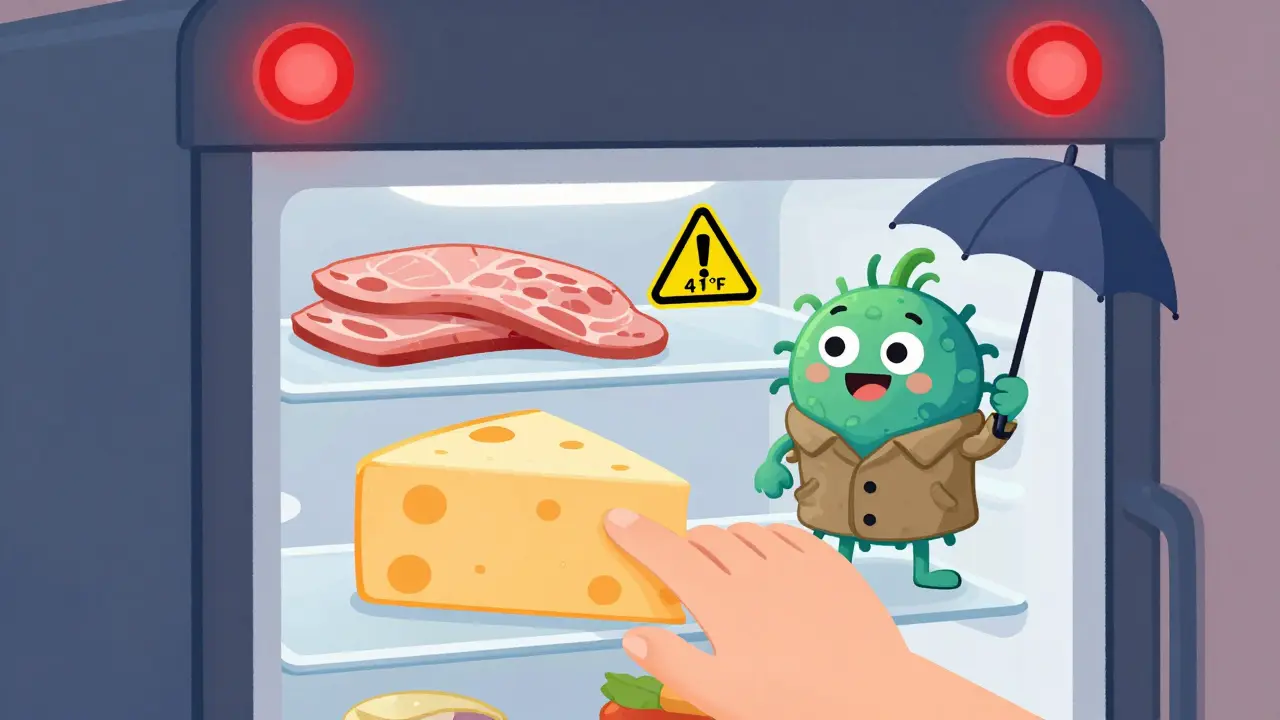
Listeria monocytogenes is the quiet killer. It only causes about 1,600 illnesses a year - less than 1% of total cases. But it sends 91% of those people to the hospital, and 260 die. Why? Because it grows in the fridge. Unlike most bacteria, Listeria doesn’t mind cold temperatures. That means your leftover deli meat, soft cheeses like brie or feta, and even pre-packaged salads can harbor it. Pregnant women are especially at risk. One in five Listeria infections in pregnancy leads to miscarriage or stillbirth. It’s not about how much you eat - it’s about what you eat.
Escherichia coli O157:H7 is the one that terrifies parents. It’s linked to undercooked ground beef, raw milk, and contaminated spinach. Most people get diarrhea, but 5 to 10% develop hemolytic uremic syndrome (HUS), a life-threatening condition that destroys red blood cells and can cause kidney failure. Kids under five and the elderly are most vulnerable. A single contaminated burger can change a family’s life forever.
Campylobacter is another big player. It’s tied to raw or undercooked chicken in 66% of cases. It causes bloody diarrhea, fever, and severe cramps. And it’s getting worse. Antibiotic resistance has doubled since 1997. When the infection doesn’t respond to treatment, recovery takes longer - and the risk of long-term nerve damage increases.
Where Does the Danger Come From?
Most outbreaks don’t happen because of some exotic imported ingredient. They happen because of simple mistakes in kitchens - yours or someone else’s.
- Raw poultry: Chicken isn’t just a protein - it’s a carrier. Nearly two-thirds of Campylobacter cases come from undercooked chicken. Even a drop of raw juice on a countertop can spread the bacteria.
- Eggs: Salmonella Enteritidis is most often found in eggs. That’s why the FDA now requires refrigeration from the farm to your fridge. But many people still leave eggs out for hours to soften them for baking. That’s a risk.
- Leafy greens: Lettuce, spinach, kale - they’re not just healthy. They’re high-risk. A 2022 study found that 22% of E. coli outbreaks came from leafy greens. And only 40% of farms that grow them are inspected annually. Contamination often comes from nearby animal farms or irrigation water.
- Deli meats and soft cheeses: Listeria thrives in these. Ready-to-eat foods don’t get cooked again before eating. So if they’re contaminated, you’re eating the bug straight up.
- Improper cooling: Leftovers left out too long? Gravy sitting on the counter? That’s how Clostridium perfringens grows. It multiplies fast in the ‘danger zone’ - between 41°F and 135°F.
And then there’s the human factor. CDC data shows 68% of home food poisoning cases trace back to improper handling. People thaw meat on the counter. They use the same knife for chicken and veggies. They don’t wash their hands after using the bathroom. These aren’t careless mistakes - they’re habits.
How to Protect Yourself
Food safety isn’t about perfection. It’s about reducing risk. Here’s what actually works:
- Use a food thermometer. Guessing by color doesn’t work. Chicken needs to hit 165°F (74°C). Ground beef? 160°F (71°C). Steaks? 145°F (63°C) with a 3-minute rest. Thermometer use cuts undercooking by 58%.
- Separate raw and ready-to-eat foods. Use different cutting boards - one for meat, one for veggies. Color-coded ones (red for meat, green for produce) reduce cross-contamination by 63%.
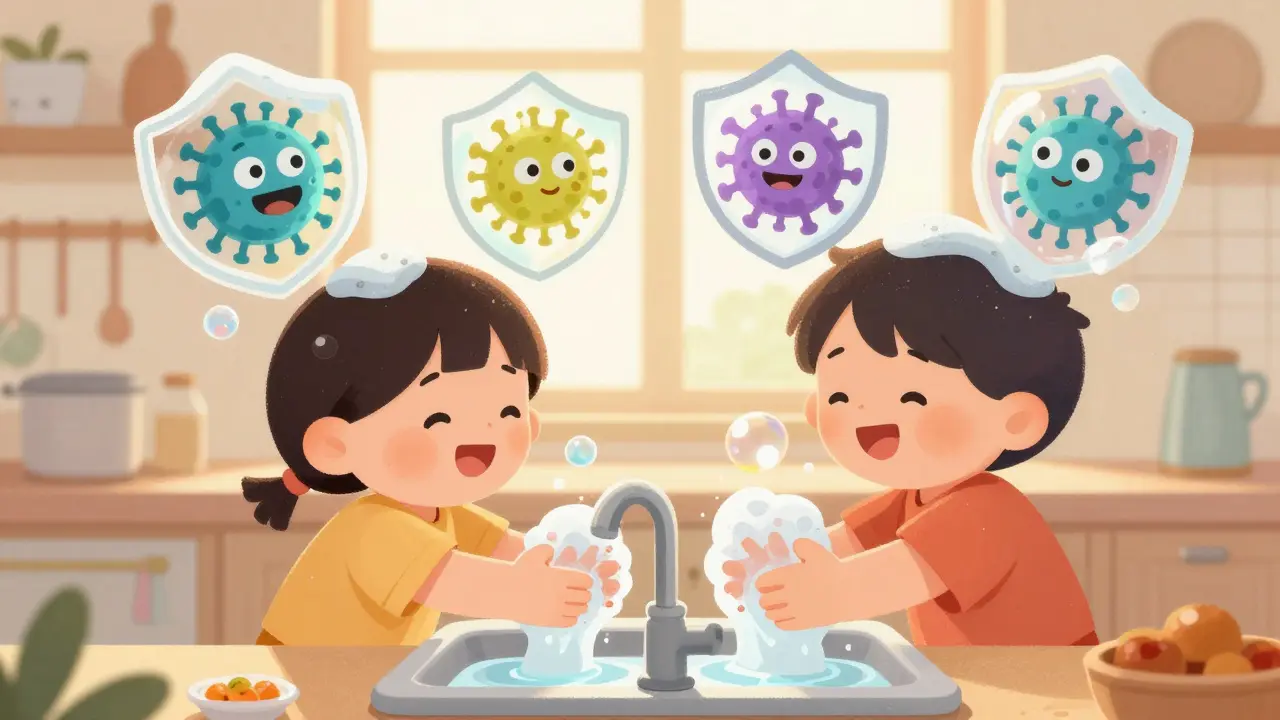
- Wash your hands - properly. 20 seconds with soap and warm water. Sing ‘Happy Birthday’ twice. That’s not a suggestion - it’s science. Handwashing cuts transmission by 70%.
- Keep your fridge cold. Set it to 40°F or below. Listeria can grow at 41°F. Clean the drip pan monthly - it’s a hidden breeding ground.
- Don’t thaw meat on the counter. Do it in the fridge, in cold water, or in the microwave. Room temperature thawing lets bacteria multiply like crazy.
- When in doubt, throw it out. Leftovers? Eat them within 3 to 4 days. If you’re unsure, toss it. No one ever died from throwing away food. But people have died from eating something ‘just a little old’.
Why This Matters Beyond Your Kitchen
Food safety isn’t just about your health. It’s about the economy. The average Listeria outbreak costs $15.4 million - mostly from hospital bills and lost productivity. Norovirus outbreaks cost $1.8 million. The global food safety testing market is projected to hit $29.7 billion by 2027. Why? Because companies can’t afford to get sued. Restaurants can’t afford to shut down.
And it’s not just the U.S. The World Health Organization says unsafe food costs low- and middle-income countries $110 billion a year in lost productivity and medical care. Climate change is making it worse. Warmer oceans mean more Vibrio bacteria in seafood. Heavier rains wash animal waste into fields where lettuce grows. By 2050, foodborne illness risk from produce could rise 20-30%.
Technology is helping. Whole genome sequencing now identifies outbreak sources in days instead of weeks. The FDA’s ‘New Era of Smarter Food Safety’ uses sensors and blockchain to track food from farm to table. But none of that matters if you don’t wash your hands or cook your chicken properly.
What’s Changing Soon
The FDA plans to require mandatory pathogen reduction plans for leafy greens by 2025. That means farms will have to test water, monitor wildlife, and document every step - something they’ve largely avoided until now.
Rapid testing tech is coming too. Right now, labs take 24 to 72 hours to confirm a pathogen. New tools can do it in under 2 hours. That means faster recalls, fewer sick people.
But the biggest change? Awareness. People are starting to realize that food safety isn’t just a government job. It’s a shared responsibility. The WHO says it best: ‘Food safety is a shared responsibility between governments, industry, academia, and consumers.’
You can’t control every step in the supply chain. But you can control what happens in your kitchen. And that’s where the real power lies.
Alfred Noble
I used to think food poisoning was just a bad taco. Then I got hit with norovirus after shaking hands with my coworker who didn't wash up. Took me 3 days to stop puking. Now I wash my hands like my life depends on it. 🤢
February 25, 2026 AT 23:19
Matthew Brooker
Listeria in the fridge is wild. I used to leave brie out for hours thinking it 'needed to breathe'. Now I keep everything locked down at 38°F. You think you're being smart but you're just feeding bacteria. Stay cold or stay sick.
February 27, 2026 AT 14:27
Cory L
Salmonella in eggs? Bro. I used to crack them into a bowl and leave them out while I prepped veggies. Now I do everything cold. Raw egg + cutting board = bacterial rave. I don't even let my kids touch the shell. It's not paranoia. It's physics.
February 28, 2026 AT 06:13
Bhaskar Anand
In India we eat raw mangoes with salt and chili and never get sick. Why? Because our bodies are built for this. You Americans over-sanitize everything. Your immune systems are weak. Stop being scared of food and start being strong.
February 28, 2026 AT 12:26
William James
It's funny how we treat food like it's a puzzle to solve instead of a gift to respect. We chase trends, ignore basics, then act shocked when we get sick. Maybe the real problem isn't the bacteria-it's our disconnect from the source. We don't know where our food comes from anymore. And that makes us vulnerable.
March 1, 2026 AT 06:10
Stephen Archbold
I just bought a new food thermometer last week. Best $12 I ever spent. Used to guess by color. Now I poke it in like a scientist. Chicken’s not done till it hits 165. No exceptions. My wife thinks I’m overboard. I think she’s one undercooked chicken away from ER.
March 1, 2026 AT 23:42
Nerina Devi
In my village we never had food poisoning because we cooked everything fresh. No leftovers. No refrigeration. Just fire and time. Modern life made us lazy. We think we can outsmart nature. We can't.
March 3, 2026 AT 21:31
Dinesh Dawn
I read this and immediately checked my fridge. It was at 42°F. I turned it down to 38. Also threw out that leftover deli meat from last week. Better safe than sorry. My mom always said: 'If it looks weird, smells weird, or you forgot when you bought it-toss it.' She was right.
March 5, 2026 AT 20:47
Natanya Green
I JUST ATE A SANDWICH FROM THE DELI AND NOW I’M SCARED. I THOUGHT IT WAS FRESH. NOW I’M THINKING ABOUT LISTERIA IN MY BLOOD. I’M GOING TO THE ER. I’M SENDING THIS TO EVERYONE I KNOW. I’M DYING. I’M DYING.
March 7, 2026 AT 06:55
Steven Pam
The real win here isn't the thermometer or the handwashing. It's awareness. I used to think food safety was just for moms and chefs. Now I see it's for everyone. I cook for my roommate. I wash my hands before I touch the avocado. I separate my meat. It’s not hard. It’s just… new. And new is scary. But necessary.
March 8, 2026 AT 05:12
Timothy Haroutunian
Look. This whole thing is overblown. People have been eating food for thousands of years without refrigerators or thermometers. You think you’re protecting yourself by being obsessive? You’re just creating anxiety. The real danger is living in fear. I eat raw chicken. I leave eggs out. I don’t wash my hands after using the bathroom. I’ve never been sick. Maybe the system is broken, not the food. Maybe you’re the problem.
March 9, 2026 AT 12:46