
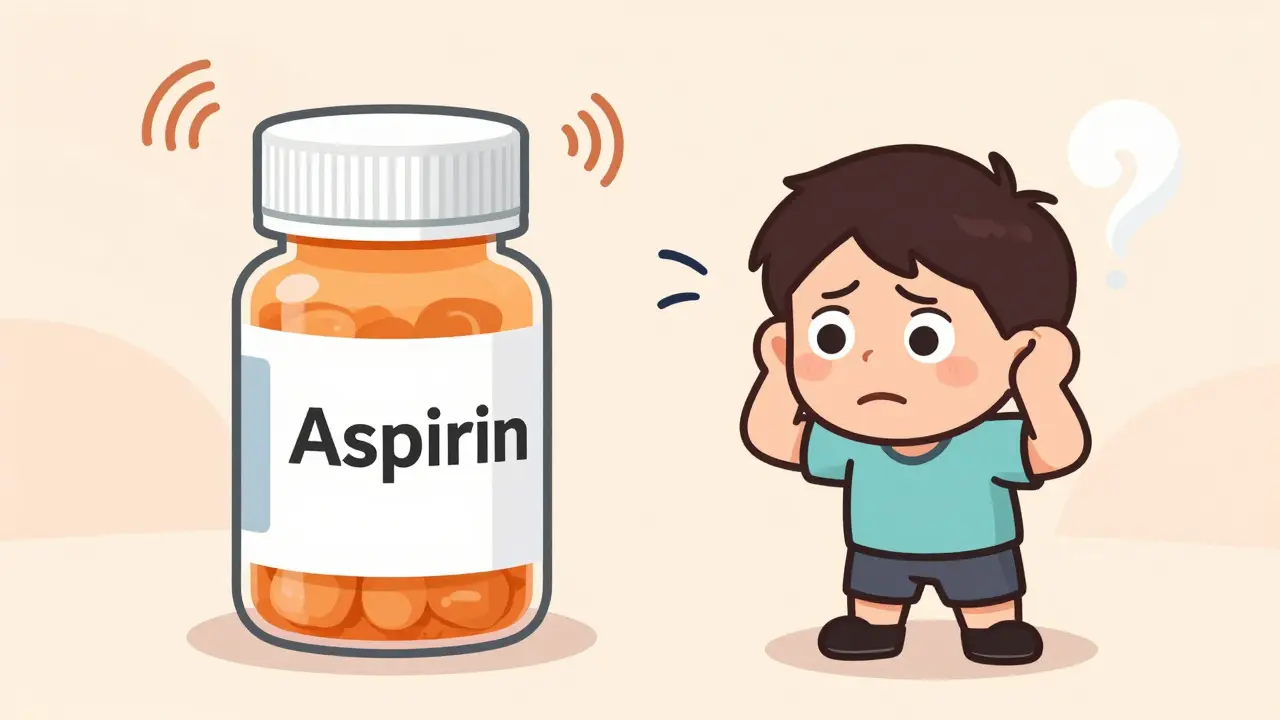
Have you started a new medication and suddenly noticed a ringing, buzzing, or hissing in your ears? You’re not alone. Many people experience tinnitus - that persistent noise in the head or ears with no external source - after beginning a new drug. It’s not always serious, but it can be alarming. The good news? In many cases, it’s temporary. The key is knowing which drugs might cause it, how to spot the signs early, and what to do next.
What Exactly Is Medication-Induced Tinnitus?
Tinnitus isn’t a disease. It’s a symptom. And when it shows up after starting a new pill, patch, or injection, it’s often linked to something called ototoxicity. Ototoxicity is damage to the inner ear or hearing nerve caused by certain medications. This damage can lead to ringing, hearing loss, dizziness, or trouble balancing.
Over 600 prescription and over-the-counter drugs are known to trigger or worsen tinnitus, according to Sound Relief’s 2025 clinical review. That includes common meds you might not expect - like painkillers, antibiotics, and even antidepressants. The inner ear is sensitive. It’s packed with tiny hair cells that turn sound into electrical signals. Some drugs interfere with how those cells work, or disrupt blood flow to the cochlea. The result? Your brain hears noise that isn’t there.
Which Medications Are Most Likely to Cause Ringing in the Ears?
Not all drugs carry the same risk. Some are high-risk, others are rare. Here’s what the evidence shows:
- Aminoglycoside antibiotics - Drugs like gentamicin and tobramycin (used for serious infections) are among the worst offenders. Up to 25% of people on long-term IV treatment develop permanent hearing damage. Topical versions (eye drops, creams) are much safer.
- Cisplatin - This chemotherapy drug affects 30% to 70% of patients. Hearing loss usually starts with high-pitched sounds first, then spreads to speech frequencies. Many cancer patients get baseline hearing tests before starting treatment.
- High-dose aspirin - You need to take more than 4,000 mg daily - roughly 12 regular pills - for tinnitus to show up. Most people take 325-650 mg for headaches. At those doses, risk is very low. But a small number of people are unusually sensitive, even to low doses.
- NSAIDs - Ibuprofen and naproxen can cause tinnitus, especially at high doses (like 800 mg three times a day). One Reddit user reported ringing after taking that much for dental pain - and it cleared up within a week of stopping.
- Loop diuretics - Furosemide (Lasix) and bumetanide, used for fluid retention, carry moderate risk. The risk goes up if you’re dehydrated or have kidney problems.
- Antidepressants - SSRIs like sertraline (Zoloft) and fluoxetine (Prozac) are rarely linked to tinnitus. Less than 1% of users report it. But some report ringing when they stop taking them - a withdrawal effect.
- Isotretinoin - The acne drug Accutane has a low but real risk. Around 5% of users report hearing changes, though the manufacturer says it’s under 1%.
Is the Ringing Permanent?
This is the biggest fear: Will this last forever? The answer depends on the drug.
For most people - about 60% - tinnitus goes away after stopping the medication. It often fades within days or weeks. NSAIDs, aspirin, and diuretics usually don’t cause lasting damage. But with aminoglycosides or cisplatin, the damage can be permanent. Once the hair cells in the inner ear die, they don’t come back.
Timing matters too. Most cases start within the first two weeks of taking the drug. But some, especially with antibiotics or chemo, can take up to 90 days. If you notice ringing, dizziness, or muffled hearing - even weeks into treatment - don’t ignore it.
What Should You Do If You Notice Ringing After Starting a New Medication?
Here’s the most important rule: Do not stop your medication on your own.
Some drugs - like antibiotics for a life-threatening infection or chemo for cancer - are essential. Stopping them could be dangerous. Instead:
- Track the details. When did the ringing start? How loud is it? Does it come and go? Did you change your dose?
- Call your doctor. Mention the exact drug, dose, and symptoms. Bring a list of all medications you’re taking - including supplements.
- Ask about alternatives. Your doctor might switch you to a different antibiotic, lower your dose, or change the timing of your pills.
- Request a hearing test. Audiologists can check your hearing baseline and monitor for changes. This is standard for high-risk drugs like cisplatin or gentamicin.
Many clinics now use therapeutic drug monitoring - checking blood levels and kidney function - to reduce ototoxic risk. Hospitals have improved these protocols, with 68% now using them in 2023, up from 45% in 2018.
Can You Prevent It?
Prevention starts with awareness. If you’re being prescribed a high-risk drug:
- Ask: “Is this medication known to affect hearing?”
- Request a baseline hearing test before starting.
- Stay hydrated - dehydration increases risk with diuretics and NSAIDs.
- Avoid loud noise. Your ears are more vulnerable when damaged by drugs.
- Report symptoms early. The sooner you speak up, the better your chances of avoiding permanent damage.
Research is moving forward. The National Institutes of Health is funding $12.5 million in studies on otoprotective agents - drugs that shield the ear without reducing the main drug’s effectiveness. Genetic testing is also being explored to find people who are naturally more sensitive to ototoxic drugs.
What If the Ringing Doesn’t Go Away?
If tinnitus sticks around even after stopping the drug, you’re not out of options. While the cause may be permanent, the distress doesn’t have to be.
Sound therapy - using background noise like fans, white noise machines, or nature sounds - helps your brain tune out the ringing. Cognitive behavioral therapy (CBT) for tinnitus has helped 60-70% of patients reduce their anxiety and improve sleep, according to Sound Relief’s 2025 data. Hearing aids can also help if there’s underlying hearing loss.
The goal isn’t to make the sound vanish - it’s to make it less bothersome. Many people learn to live with it. But it takes time and support.
Why This Matters More Than You Think
Over 50 million Americans have tinnitus. About 5-10% of those cases may be linked to medications. That’s millions of people dealing with a symptom that can ruin sleep, focus, and mental health. Yet, only 35% of primary care doctors routinely check for ototoxic risk before prescribing.
The financial cost is real - over $2.7 billion a year in the U.S. just for tinnitus-related care. But beyond money, it’s about quality of life. You shouldn’t have to choose between treating a serious illness and losing your hearing.
That’s why awareness matters. Doctors need to ask. Patients need to speak up. And together, we can reduce preventable hearing damage.
Timothy Haroutunian
I started taking ibuprofen for a bad back and within three days my ears sounded like a broken microwave was having a seizure. I thought I was going crazy. Went to the doc, mentioned it, and they acted like I was complaining about the weather. Turned out I was taking 800mg every 4 hours for a week straight. Once I cut back to 400mg twice a day, the ringing faded in about 10 days. But here’s the thing-no one warned me. Not the pharmacist, not the website, not even the damn pamphlet. We’re just supposed to guess that our ears are collateral damage? This isn’t a rare side effect. It’s a silent epidemic. And the medical industry treats it like an afterthought. Someone needs to sue someone. Someone always does. I just hope it’s not me when I lose my hearing entirely. I’ve got two kids and I can’t afford to be deaf in a world that talks too much anyway.
February 23, 2026 AT 04:28
Christopher Brown
This is why America needs to stop letting big pharma write prescriptions. Every drug on this list is either imported or patented by a foreign corporation. We’ve got domestic alternatives that don’t fry your cochlea. Why are we still using gentamicin when we have better options? It’s not science-it’s corporate laziness. And don’t get me started on how the VA handles this. My uncle lost 70% of his hearing from a single course of antibiotics. They called it 'unrelated.' Unrelated? Bullshit.
February 25, 2026 AT 00:50
Brooke Exley
I just want to say-this is one of the most thoughtful, clear, and deeply necessary posts I’ve read in months. Thank you for laying this out so plainly. I’ve been living with tinnitus for 4 years now after an antibiotic cocktail for a sinus infection. It didn’t go away. But here’s what saved me: sound therapy and a therapist who specialized in tinnitus CBT. It’s not a cure, but it’s a lifeline. You’re not alone. And you don’t have to suffer in silence. Reach out. Talk to an audiologist. Even if it feels silly. I did. And now I sleep through the night. You’re stronger than you think. Keep going.
February 25, 2026 AT 04:32
Southern Indiana Paleontology Institute
i took 2000mg of asprin once for a headache and my ears rang for 3 days. i thought i was gonna go deaf. turned out i was just dumb. dont be like me. read the label. or dont. whatever. but if you start hearing whales in your head stop takin the pills. its not rocket science. also fyi the word is aspirin not asprin. just sayin.
February 26, 2026 AT 18:21
Anil bhardwaj
I got this after taking furosemide for high blood pressure. Took me three weeks to notice. My wife said I was humming all the time. I thought I was just stressed. Turns out my ears were screaming. Stopped the med, waited. It faded. Not gone, but bearable. My point? Don’t panic. But don’t ignore it either. Just tell your doc. They’ll listen if you’re calm. I didn’t make a scene. Just said, 'Hey, something’s off.' And they changed my script. Simple.
February 28, 2026 AT 05:20
lela izzani
I’m an audiologist and I see this all the time. The biggest mistake people make? Waiting. They think, 'Maybe it’ll go away.' It might-but if it doesn’t, you’ve lost precious time. Baseline hearing tests before starting ototoxic meds? Not optional. They’re essential. And yes, even if you’re healthy. Even if you’re young. Even if your doctor says 'it’s rare.' Rare doesn’t mean 'never happens to me.' I’ve had 23-year-olds lose hearing from a single course of NSAIDs. Don’t gamble with your ears. Advocate for yourself. Bring this list to your next appointment. And if they brush you off? Find a new doctor. Your hearing is irreplaceable.
March 2, 2026 AT 00:43
John Smith
Wow. So we’re supposed to be afraid of aspirin now? Next you’ll tell me coffee causes tinnitus. I’ve been taking 800mg of ibuprofen daily for 15 years. Still hear perfectly. And you? You’re probably the type who thinks a Wi-Fi router is a death ray. Congrats. You’ve just invented a new phobia. Next stop: fluoride toothpaste. Oh wait-you’re already there.
March 2, 2026 AT 04:08
Shalini Gautam
My mom had tinnitus after chemo. She cried every night because she couldn’t hear the birds. We got her a white noise machine and a hearing aid. Now she says the silence is worse than the ringing. Funny how that works. But she’s happy. And that’s what matters. If you’re going through this-don’t give up. There’s help. I promise.
March 3, 2026 AT 06:10