
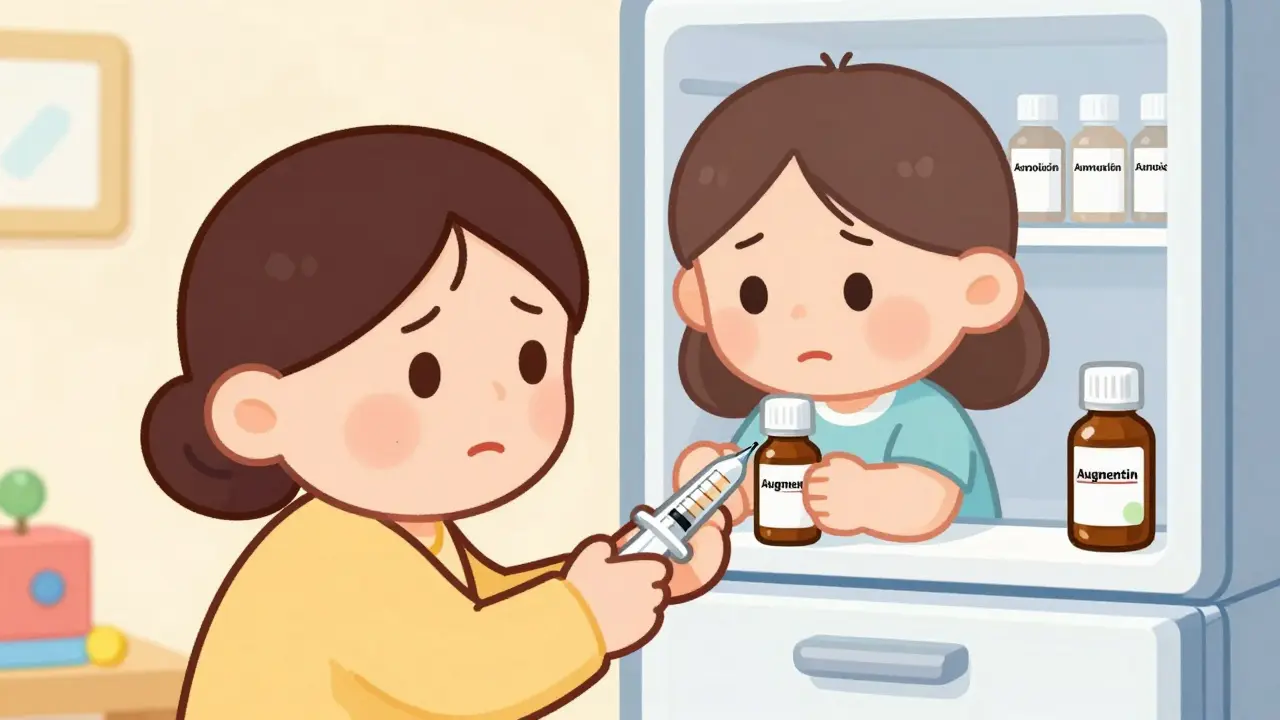
Storing liquid antibiotics the right way isn’t just a suggestion-it can mean the difference between an infection clearing up and turning into something worse. If you’ve ever had to mix a powder with water to make a child’s antibiotic syrup, you know how important it is to get this right. But here’s the thing: not all liquid antibiotics need to go in the fridge. Some actually break down faster if they’re too cold. And if you leave them on the counter too long, they might not work at all.
Why Storage Matters More Than You Think
Antibiotics aren’t like milk or bread. When they lose potency, you don’t just get a bad taste-you get a treatment that doesn’t work. The FDA says expiration dates are based on stability testing under specific storage conditions. If you store your antibiotic wrong, it could lose strength before the printed date. That means the bacteria might not die off completely, and the infection could come back stronger-or spread to others. Studies show that around 30% of households store medications improperly. For liquid antibiotics, this often means leaving them in a hot bathroom, on a sunny windowsill, or in the car. Heat, light, and humidity all speed up chemical breakdown. And freezing? That’s just as bad. Some antibiotics contain proteins or complex molecules that get ruined when frozen.Refrigeration: Do You Need It?
The biggest myth is that all liquid antibiotics must be refrigerated. That’s not true. It depends on the drug. Amoxicillin (a common penicillin-based antibiotic) is one of the most prescribed for kids. The Cleveland Clinic says it’s fine stored at room temperature (20-25°C or 68-77°F) for up to 14 days after mixing. But if you have a fridge, keeping it cold (2-8°C) helps it last longer and taste better. Cold also slows bacterial growth in the suspension, which matters since these aren’t sterile. Amoxicillin-clavulanate (Augmentin) is trickier. The clavulanate part breaks down faster than amoxicillin. While some sources say it’s okay at room temperature for 5-10 days, others recommend refrigeration and discarding after 10 days. The JAPSONLINE study found that even at room temperature, this combo stays stable for five days-but after that, the clavulanate loses effectiveness faster than the amoxicillin. So if you’re using Augmentin, play it safe: refrigerate and toss it after 10 days. Other antibiotics like cephalexin or azithromycin usually don’t need refrigeration. Always check the label. If it says “store at room temperature,” don’t put it in the fridge. Cold can cause some suspensions to thicken, separate, or even crystallize, making dosing inaccurate.How Long Do They Last After Mixing?
There’s no one-size-fits-all answer. It depends on the drug, the manufacturer, and how it was mixed.- Amoxicillin: 14 days at room temperature or refrigerated
- Amoxicillin-clavulanate: 5-10 days (refrigerated preferred)
- Cephalexin: 14 days at room temperature
- Azithromycin: 10 days at room temperature
- Cefdinir: 10 days at room temperature
How to Store Them Properly
Follow these simple rules to keep your antibiotic working:- Keep it in the original bottle. The packaging is designed to block light and moisture. Pouring it into a different container can ruin stability.
- Shake well before each dose. The powder settles at the bottom. If you don’t shake, you might give half the dose-or none at all.
- Use the right measuring tool. A dosing syringe or oral dispenser that came with the medicine is best. Never use a kitchen spoon. A tablespoon can be 10-20% off from the real dose.
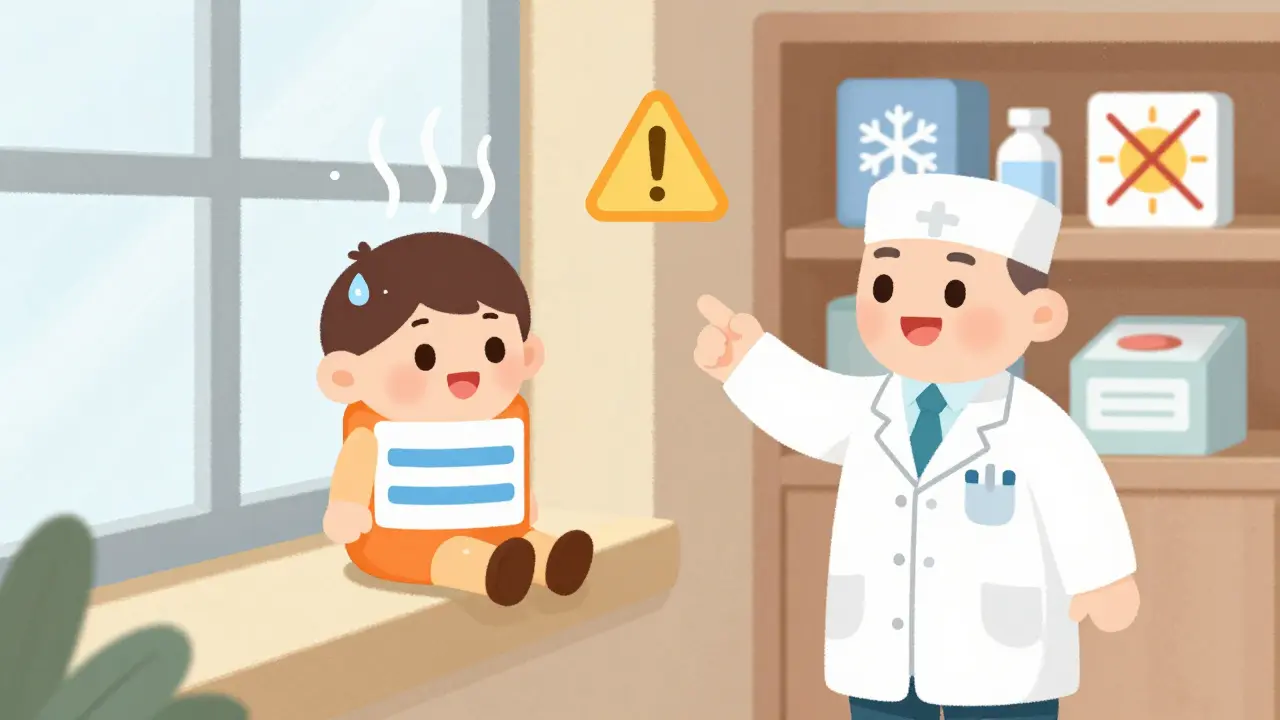
- Avoid heat and sunlight. Don’t store it near the stove, in a bathroom cabinet, or on a windowsill. Even indirect sunlight can degrade some antibiotics.
- Don’t freeze. Freezing changes the chemical structure. If you accidentally leave it in a cold car or freezer, throw it out.
- Travel smart. If you’re going on a trip and your antibiotic needs refrigeration, pack it in a small cooler with a cold pack. Don’t leave it in the glove compartment.
What Happens If You Use an Old or Improperly Stored Antibiotic?
You might not feel sick right away. But here’s the risk: if the antibiotic has lost potency, it won’t kill all the bacteria. The ones that survive become resistant. That’s how antibiotic resistance starts. You’re not just failing to treat your child’s ear infection-you’re helping create superbugs that future patients might not be able to treat. Baystate Health reports that improperly stored antibiotics are linked to longer-lasting infections, repeat doctor visits, and even hospitalizations. In rural areas with unreliable power, this problem is worse. But even in Perth, where summers hit 40°C, leaving medicine on the counter for a week is a bad idea.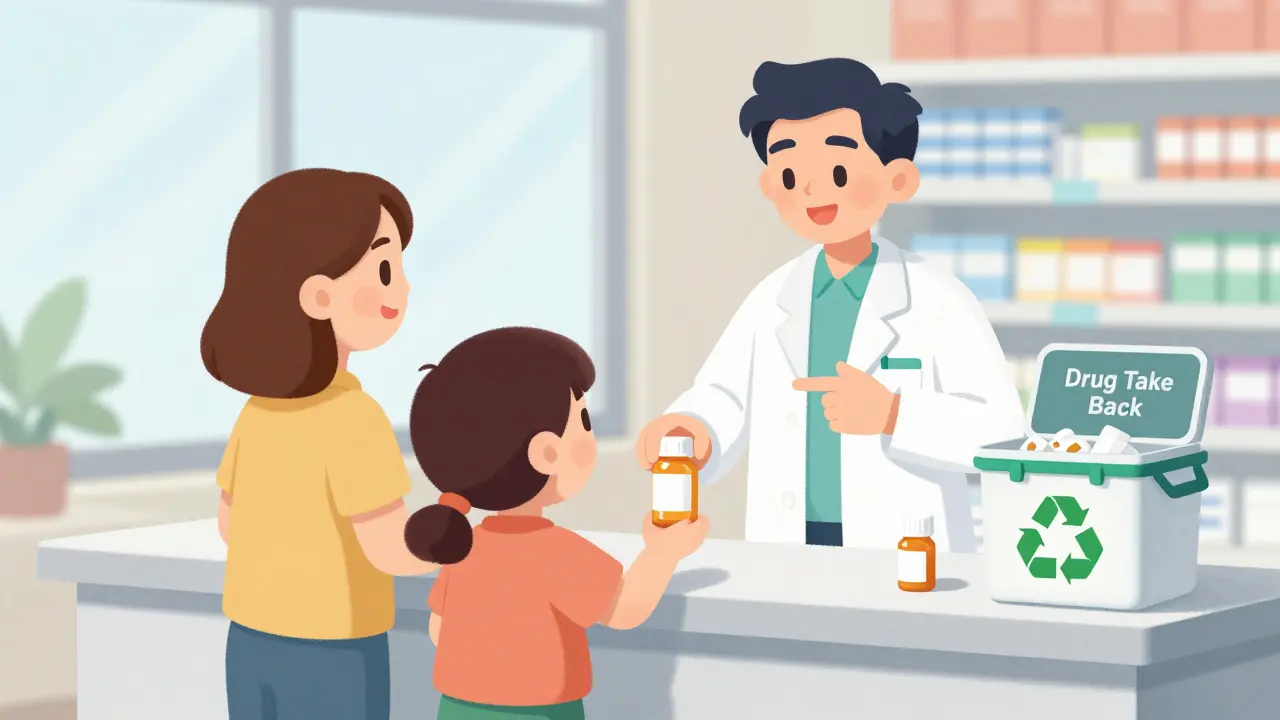
What to Do With Leftover Antibiotics
Never flush them down the toilet or toss them in the trash. That’s bad for the environment and dangerous if kids or pets get into them. Take unused antibiotics to a pharmacy that offers a take-back program. In Australia, many pharmacies participate in the National Drug Take Back Initiative. If that’s not available, mix the liquid with something unappetizing-cat litter, coffee grounds, or dirt-pour it into a sealed container, and throw it in the trash. Remove the label first to protect your privacy.What to Ask Your Pharmacist
When you pick up a liquid antibiotic, ask these three questions:- Do I need to refrigerate this?
- When does it expire after mixing?
- Can I still use it if it looks cloudy, smells off, or has particles in it?
Bottom Line
Every antibiotic is different. Don’t assume what works for one works for another. Always read the label. If you’re unsure, call your pharmacist. Storing liquid antibiotics properly protects your child’s health, prevents resistance, and saves money by avoiding repeat prescriptions. It’s not complicated-just pay attention. Your medicine is only as good as the way you store it.Do all liquid antibiotics need to be refrigerated?
No. Some, like amoxicillin, can be stored at room temperature (20-25°C) for up to 14 days. Others, like amoxicillin-clavulanate, work better and last longer when refrigerated. Always check the label or ask your pharmacist-refrigerating the wrong antibiotic can make it less effective.
How long can I keep reconstituted amoxicillin?
Amoxicillin suspension can be kept for up to 14 days after mixing, whether refrigerated or at room temperature. But if you notice any change in color, smell, or texture, throw it out-even if it’s before 14 days. Stability doesn’t mean safety.
What happens if I leave my child’s antibiotic in the car?
If it got hot (above 30°C), the antibiotic may have broken down and lost potency. If it froze, the structure could be permanently damaged. In either case, don’t use it. Exposure to extreme temperatures compromises safety and effectiveness. Always replace it.
Can I use leftover antibiotics for a future illness?
Never. Antibiotics are prescribed for specific infections, at specific doses, and for specific durations. Using old or leftover antibiotics can lead to underdosing, which promotes antibiotic resistance. Always get a new prescription for a new illness.
Why does the label say to shake the bottle before each use?
The powdered antibiotic settles at the bottom of the bottle. If you don’t shake it, you might give your child a dose with too little medicine-or none at all. Shaking ensures each dose has the correct concentration. Use a clean measuring tool every time.
Is it safe to mix antibiotics with juice or food?
Some can be, but check with your pharmacist first. Amoxicillin can be mixed with cold apple juice or applesauce to make it taste better. But others, like tetracycline, can bind to calcium in milk and become ineffective. Never mix without asking.
Stacey Smith
Stop leaving meds in the bathroom. Heat and moisture ruin everything. I’ve seen moms store antibiotics next to the shower-no wonder kids keep getting sick.
December 21, 2025 AT 13:22
John Hay
This is exactly why we need better labeling. Pharmacists should hand out a one-page cheat sheet with each liquid antibiotic. Not everyone can read the tiny print or remember what the pharmacist said.
December 22, 2025 AT 03:41
Cameron Hoover
I used to think refrigerating everything was the safe move-until my kid’s amoxicillin turned into a weird gel after I put it in the fridge. Turns out, some meds just don’t like cold. Learned the hard way. Now I always check the label. Thanks for the clarity.
December 23, 2025 AT 08:00
Ben Warren
It is an egregious failure of public health literacy that individuals are expected to self-regulate the storage of pharmaceutical-grade compounds without formalized education or standardized visual cues on packaging. The FDA’s stability guidelines are not merely recommendations-they are evidence-based protocols grounded in rigorous thermodynamic and kinetic analyses. The casual disregard for these protocols, particularly in households with children, constitutes a latent public health crisis that may precipitate widespread antimicrobial resistance. Furthermore, the normalization of anecdotal storage practices-such as leaving medications in automobiles or on windowsills-demonstrates a systemic collapse in medical literacy that cannot be remedied by social media posts alone.
December 25, 2025 AT 06:03
Sandy Crux
Actually… you’re all wrong. The JAPSONLINE study you cited? It was funded by a pharmaceutical conglomerate with ties to Augmentin’s manufacturer. And ‘room temperature’ is defined differently across jurisdictions-what’s 25°C in the U.S. is 28°C in Florida, where humidity is 90%. Also, freezing doesn’t ruin proteins-it denatures them, which is different. And why are we assuming all suspensions are created equal? The excipients matter. No one ever talks about the excipients.
December 26, 2025 AT 23:03
Hannah Taylor
my friend swears she left her kid’s antibiotic in the car for 3 days and it still worked… and now she says the doc is just trying to sell more meds. idk man… but i think the gov is lying abt resistance. like… bacteria are just tough. they been around longer than us.
December 27, 2025 AT 15:14
Jackie Be
My son had a rash from amoxicillin so we switched to cephalexin and I kept it on the counter for two weeks because the bottle said room temp-no problems. But I always shake it like my life depends on it. And no, I don’t use a spoon. I use the syringe that came with it. Don’t be lazy. Your kid’s life isn’t a guessing game.
December 28, 2025 AT 21:59
Teya Derksen Friesen
Thank you for this. As a parent of two with chronic ear infections, I’ve been terrified of giving ineffective doses. I now keep a small notebook next to the medicine cabinet with the storage rules for each antibiotic we’ve used. It’s saved us from two repeat visits already. Small habits matter.
December 29, 2025 AT 13:17