
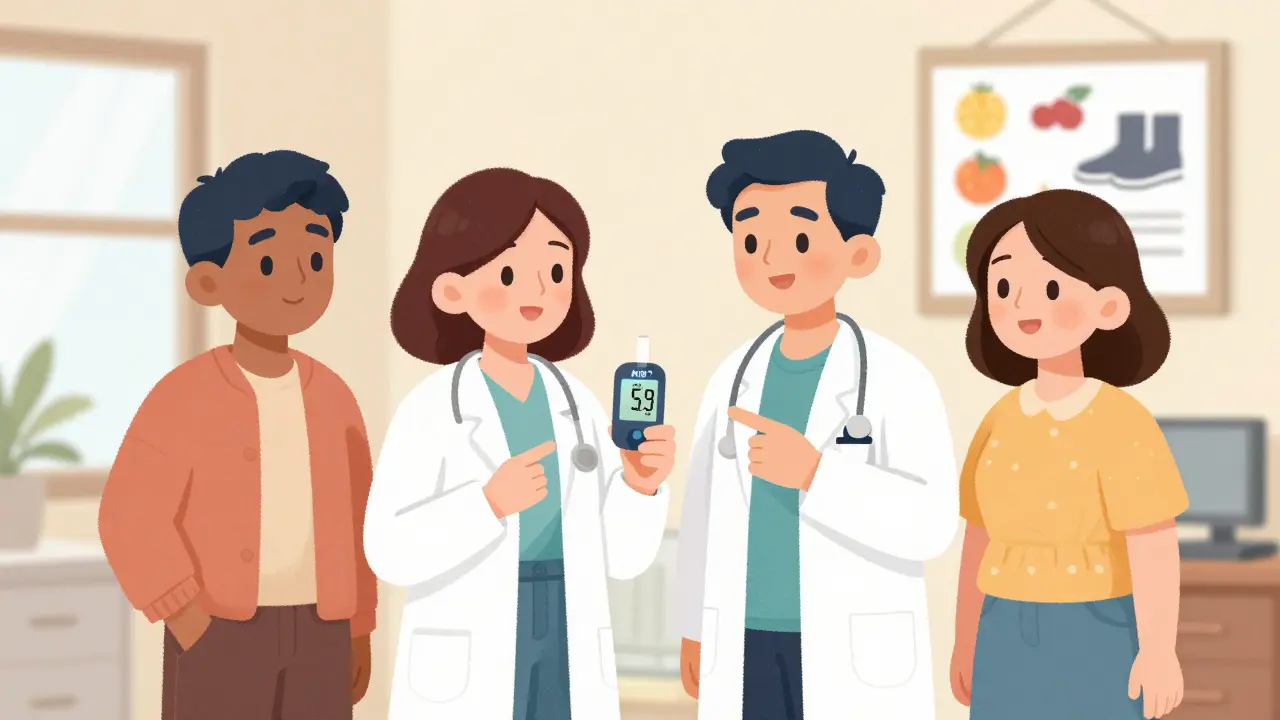
Most people with prediabetes don’t know they have it. That’s not because they’re ignoring their health-it’s because prediabetes rarely causes obvious symptoms. But that doesn’t mean it’s harmless. In fact, it’s your body’s clearest signal that something’s off with how it handles sugar. Without action, 15 to 30% of people with prediabetes will develop type 2 diabetes within five years. The good news? You can stop it. And often, you can reverse it completely-no pills needed.
What Exactly Is Prediabetes?
Prediabetes means your blood sugar is higher than normal but not high enough yet to be called type 2 diabetes. It’s not a disease. It’s a warning. Your body is struggling to use insulin properly. Insulin is the hormone that lets sugar from your food move into your cells for energy. When it doesn’t work well, sugar builds up in your blood. That’s what doctors measure to diagnose prediabetes.
The American Diabetes Association sets three clear thresholds:
- Fasting blood sugar between 100 and 125 mg/dL
- Hemoglobin A1C between 5.7% and 6.3%
- 2-hour glucose level between 140 and 199 mg/dL after a sugar drink test
These aren’t guesses. They’re based on decades of research. The CDC estimates 96 million U.S. adults-nearly 4 in 10-have prediabetes. And more than 80% of them have no idea.
The Hidden Signs You Might Be Missing
Yes, most people don’t feel anything. But some do. And when they do, these are the most common clues:
- Constant thirst: Drinking more than 3 liters of water a day without exercising? That’s your kidneys trying to flush out excess sugar. Every time your blood sugar climbs above 180 mg/dL, your kidneys pull fluid from your tissues to dilute it. That leaves you dehydrated-and thirsty.
- Frequent urination: Going more than 8 times a day? It’s not just caffeine. Sugar in your urine pulls extra water with it, making your bladder fill faster.
- Blurry vision: If your vision gets fuzzy after meals or when you’re tired, it could be your eye lens swelling from too much sugar. This isn’t permanent-but it’s a red flag.
- Unexplained fatigue: You eat, but you still feel drained. That’s because your cells aren’t getting the fuel they need. Sugar is in your blood, but it can’t get inside your muscles or brain without good insulin function.
- Dark patches on skin: Look at your neck, armpits, or groin. If you see velvety, darkened skin-called acanthosis nigricans-it’s a classic sign of insulin resistance. It’s not dirt. It’s biology.
- Increased hunger: Even after eating, you’re still hungry. Your body thinks it’s starving because glucose isn’t reaching your cells.
- Slow healing: Cuts, scrapes, or sores that take more than two weeks to heal? High sugar slows blood flow and weakens your immune response.
- Tingling or numbness: Especially in hands or feet. This is early nerve damage from sugar. It’s reversible if caught early.
- More infections: Women with prediabetes often get yeast infections three or more times a year. Men and women both get more urinary tract infections. Sugar feeds bacteria and fungi.
- Mood swings: Studies show that for every 0.5% increase in A1C, depression scores rise by 1.5 points. High sugar affects brain chemistry.
None of these alone means you have prediabetes. But if you have two or more-and you’re over 40, overweight, or have a family history-get tested.
Who Should Get Screened?
You don’t need to wait for symptoms. The U.S. Preventive Services Task Force recommends testing for:
- Anyone 35 or older with a BMI of 25 or higher
- Asian Americans with BMI 23 or higher
- Anyone with a history of gestational diabetes
- Anyone who already had prediabetes (test every year)
It’s a simple blood test. No fasting required for A1C. Just a finger prick. The CDC says screening every three years is enough for most people. But if you’re at risk, do it annually.
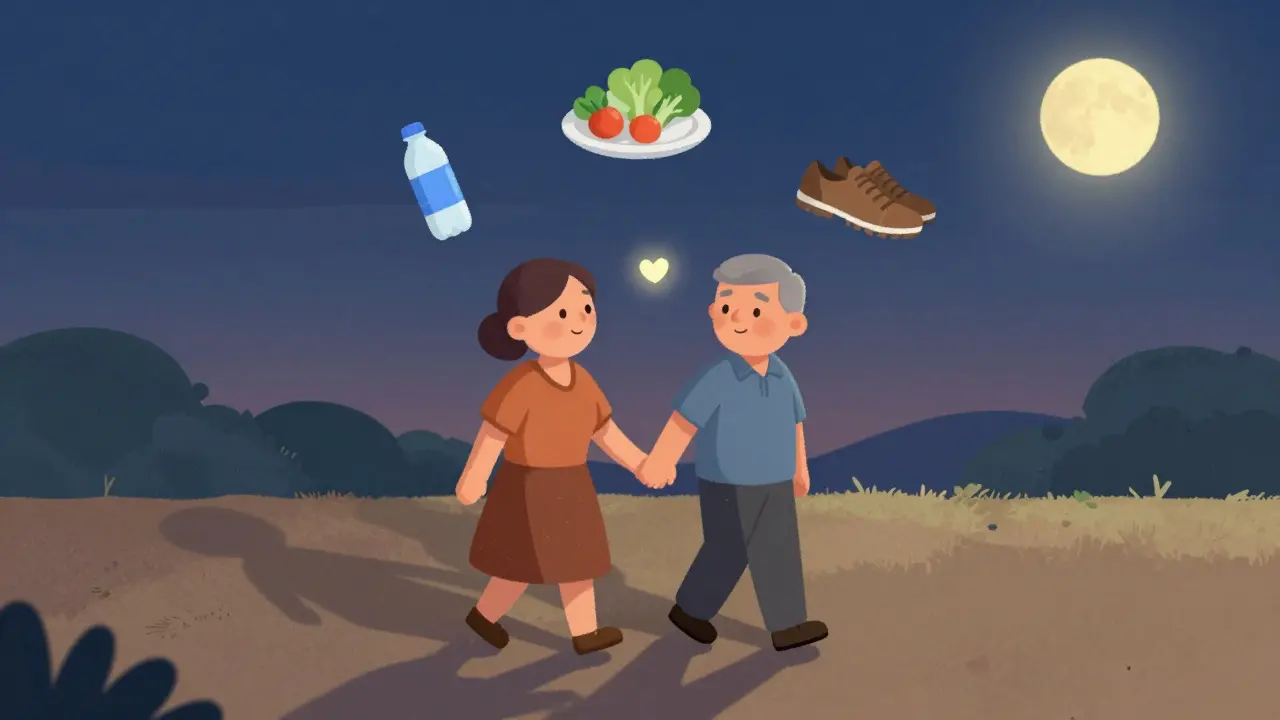
How to Reverse Prediabetes (The Proven Way)
The Diabetes Prevention Program (DPP), a 20-year study by the NIH, proved one thing beyond doubt: lifestyle changes cut your risk of diabetes by 58%. That’s more effective than metformin. Here’s what works:
1. Lose 5-7% of Your Body Weight
You don’t need to be thin. Just lighter. If you weigh 200 pounds, losing 10-14 pounds makes a huge difference. Weight loss reduces fat around your liver and muscles, which improves insulin sensitivity.
How? Cut 500-750 calories a day. That’s not starvation. It’s swapping soda for water, skipping seconds, and choosing vegetables over white rice. A 2023 study in Diabetes Care found that people who followed a Mediterranean-style diet (lots of olive oil, fish, nuts, veggies) lost more weight and reversed prediabetes at higher rates than those on low-fat diets.
2. Move 150 Minutes a Week
That’s 30 minutes, five days a week. It doesn’t have to be a gym. Brisk walking counts. Gardening counts. Dancing around your kitchen counts. The key is movement that gets your heart rate up.
Research from the Look AHEAD trial showed that people who did 175 minutes of exercise per week (including strength training) cut their fasting blood sugar by 15% in one year. Muscle uses sugar. The more muscle you have, the better your body handles sugar.
3. Eat Smart-Not Starve
Forget fad diets. Focus on:
- Whole grains instead of white bread, pasta, or rice
- Vegetables at every meal (aim for 3 cups daily)
- Lean protein: chicken, fish, beans, tofu
- Healthy fats: avocado, nuts, olive oil
- No added sugar: sodas, candy, pastries, sweetened yogurt
One study found that people who cut out sugary drinks lowered their A1C by 0.6% in just three months. That’s like going from 6.2% to 5.6%-back into the normal range.
4. Sleep and Stress Matter Too
Sleep less than 6 hours? You’re 20% more likely to develop diabetes. Poor sleep raises cortisol, which raises blood sugar. Stress does the same. Try 7-8 hours of sleep. Practice deep breathing. Take a walk after dinner. These aren’t luxuries-they’re part of your treatment plan.
What Doesn’t Work
Many people try quick fixes. They don’t work.
- Detox teas: They don’t lower blood sugar. They just make you pee more.
- Supplements like cinnamon or berberine: Some studies show minor effects, but nothing as strong as diet and movement. Don’t rely on them.
- Extreme diets: Keto, fasting, or juice cleanses may drop weight fast-but they’re hard to keep up. And if you go back to old habits, so does your sugar.
The goal isn’t perfection. It’s consistency. Small changes, repeated daily, add up.
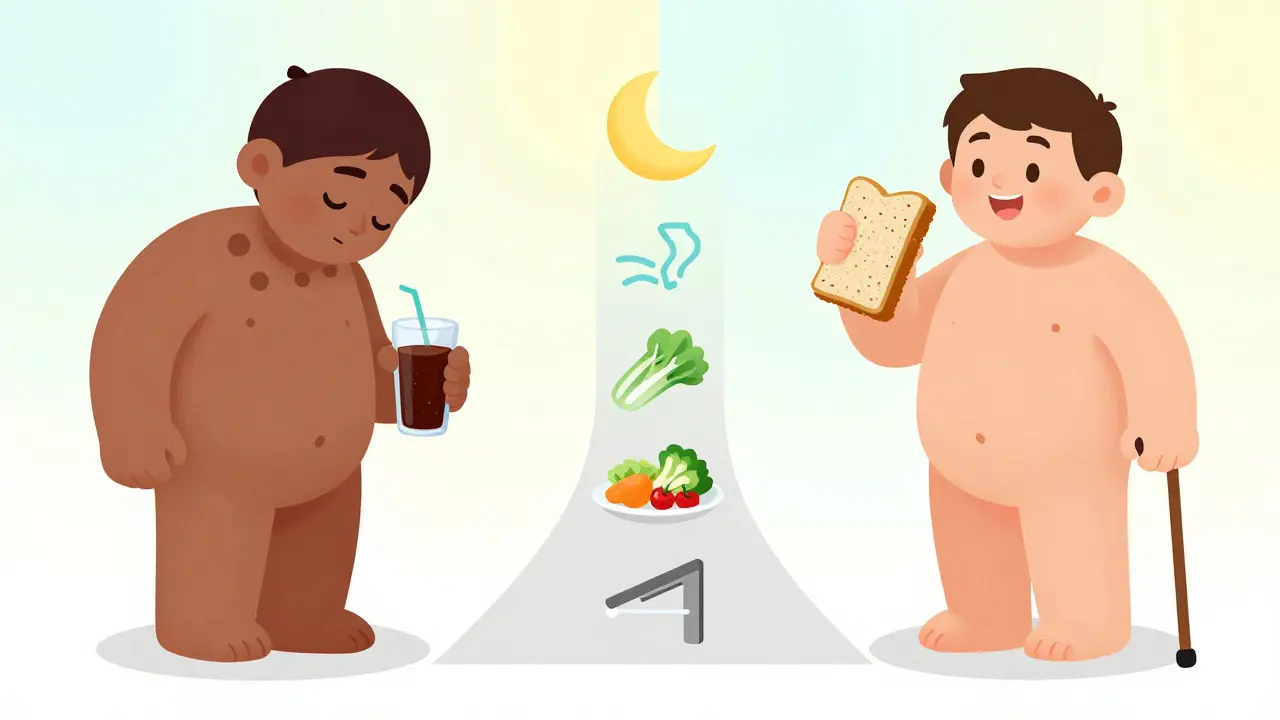
What Happens If You Do Nothing?
Without action, about 1 in 3 people with prediabetes develop type 2 diabetes within five years. That means:
- Medication (often daily pills or insulin injections)
- Higher risk of heart disease, stroke, kidney failure, nerve damage, and vision loss
- More doctor visits, hospital stays, and medical bills
The CDC says prediabetes costs the U.S. $44 billion a year in healthcare and lost productivity. But here’s the flip side: every dollar spent on prevention saves $5.80 in future diabetes care.
Real People, Real Results
A 52-year-old woman in Ohio had an A1C of 6.1%. She started walking 30 minutes a day, swapped soda for sparkling water, and cut out late-night snacks. In six months, her A1C dropped to 5.4%. She didn’t need medication. She didn’t feel like she was on a diet. She just changed her routine.
A man in Texas lost 18 pounds by cooking at home three times a week and taking his dog for longer walks. His fasting sugar went from 122 to 98. He says, “I didn’t even notice the weight loss until my pants got looser.”
Where to Start Today
You don’t need a plan. You need one step.
- Get tested. Ask your doctor for an A1C test. It’s covered by insurance for most people.
- Walk for 10 minutes after dinner. Every day. No excuses.
- Replace one sugary drink with water. Today.
- Look at your skin. If you see dark patches, don’t ignore them.
Prediabetes isn’t a life sentence. It’s a wake-up call. And you’re the only one who can answer it.
Can prediabetes be reversed without medication?
Yes. The Diabetes Prevention Program showed that 58% of people who lost 5-7% of their body weight and exercised 150 minutes a week reversed prediabetes without any drugs. Lifestyle changes are more effective than medication for most people.
How long does it take to reverse prediabetes?
Some people see improvements in blood sugar in as little as 3 months. But full reversal-where A1C drops below 5.7% and stays there-usually takes 6 to 12 months of consistent effort. The key is not speed, but sustainability.
Is prediabetes the same as insulin resistance?
Prediabetes is the result of insulin resistance. Insulin resistance means your body’s cells don’t respond well to insulin. This causes blood sugar to rise. Prediabetes is the diagnostic label doctors use when that rise reaches a certain level. Not everyone with insulin resistance has prediabetes yet-but most people with prediabetes have insulin resistance.
Can I still eat carbs if I have prediabetes?
Yes-but choose the right kinds. Whole grains, legumes, fruits, and vegetables are fine. Avoid refined carbs like white bread, pasta, rice, and sugary snacks. Portion size matters too. One slice of whole grain bread is okay. Three slices with jam? Not so much.
Do I need to check my blood sugar at home?
Not usually. Most people don’t need a home glucose meter unless their doctor recommends it. A1C tests every 3-6 months are enough to track progress. Home testing can cause unnecessary stress if you’re not trained to interpret the numbers.
Is prediabetes genetic?
Family history increases your risk, but it doesn’t decide your fate. Studies show that even people with a strong genetic risk can prevent or reverse prediabetes through diet, exercise, and weight loss. Genes load the gun-but lifestyle pulls the trigger.
Kancharla Pavan
Let me get this straight-you’re telling me we can reverse prediabetes just by walking and swapping soda for water? That’s like saying you can fix a leaking nuclear reactor by tightening a screw. This article reads like a wellness blog written by someone who’s never seen a real diabetic patient. The CDC’s own data shows that 70% of prediabetics progress to full diabetes within a decade, even with ‘lifestyle changes.’ You’re selling hope like it’s a supplement. Real medicine doesn’t work this way. If this were true, why does the pharmaceutical industry make $120 billion a year off diabetes? Because they’re not lying-they’re profiting from the fact that most people can’t sustain ‘lifestyle changes’ when they’re working two jobs, eating processed food because it’s cheap, and sleeping four hours a night. This isn’t about willpower. It’s about systemic failure.
February 16, 2026 AT 17:45
Digital Raju Yadav
USA telling the world how to fix prediabetes while their own healthcare system is a joke. In India, we’ve been eating dal, roti, and vegetables for centuries. No ‘Mediterranean diet’ needed. We don’t need your 150 minutes of walking-we’ve been walking to the market since birth. Your ‘science’ is just corporate propaganda dressed up as health advice. They want you to buy organic kale and expensive gym memberships so they can profit while the poor get diabetes and die. Look at your own stats-30% of Americans are obese. You’re not fixing prediabetes-you’re monetizing fear. And you call this ‘prevention’? It’s exploitation.
February 17, 2026 AT 22:00
Carrie Schluckbier
Did you know the American Diabetes Association gets funding from Coca-Cola and Nestlé? Yeah. They’re the ones who set those ‘normal’ blood sugar ranges. They lowered the threshold in 2003 to turn millions of healthy people into ‘prediabetics’ so they could sell more drugs. The ‘dark patches’? That’s not insulin resistance-that’s a reaction to glyphosate in your food. The government and Big Pharma are poisoning us with corn syrup and Roundup, then telling us to eat kale. The CDC’s 96 million prediabetics? That’s not an epidemic-it’s a marketing campaign. Wake up. Your blood sugar isn’t the problem. The system is.
February 18, 2026 AT 11:19
guy greenfeld
Here’s the metaphysical truth no one wants to admit: prediabetes isn’t a biochemical condition-it’s a spiritual one. Your body is screaming because your soul is out of alignment. You eat sugar because you’re trying to fill an emotional void. You’re tired because you’ve lost connection with your purpose. The ‘150 minutes of exercise’? That’s just a distraction. True healing happens when you stop chasing external fixes and start listening to the silence within. The insulin resistance? It’s not in your pancreas. It’s in your relationship with time, with work, with your own worth. When you stop treating your body like a machine to be optimized and start treating it like a temple… the sugar levels drop on their own. No diet. No walking. Just presence. 🌿
February 18, 2026 AT 14:53
Adam Short
Blimey, this is the most patronizing rubbish I’ve read since the NHS told us to ‘eat less sugar’ while our local shop sold £1 candy bars next to the checkout. You talk about ‘lifestyle changes’ like we’re all middle-class Americans with time to cook kale and take ‘brisk walks.’ Have you seen the UK’s food deserts? I work two shifts, live in a flat with no kitchen, and survive on microwave meals. My A1C is 6.0. What am I supposed to do-buy organic avocados with my £10 weekly food budget? This article is a luxury fantasy. The real solution? Universal healthcare, subsidized healthy food, and a living wage. Not ‘walk more.’ That’s not prevention. That’s classism with a wellness brand.
February 18, 2026 AT 23:25
Agnes Miller
Just wanted to say I had prediabetes last year (A1C 6.1) and did exactly what the article says: walked after dinner, swapped soda for sparkling water, and started eating veggies. In 5 months, I’m at 5.3. No meds. No fancy diet. Just consistency. I’m not a doctor, but if you’re reading this and feel overwhelmed-start with one thing. One small thing. It works. 💪
February 19, 2026 AT 20:31
Geoff Forbes
Look, this whole ‘reverse prediabetes’ narrative is a scam. You can’t reverse a metabolic condition with ‘walking’ and ‘veggies.’ You’re ignoring the role of endocrine disruptors, chronic inflammation from gut dysbiosis, and the fact that insulin resistance is a downstream effect of mitochondrial dysfunction. This article reads like a TikTok influencer’s outline. Real science? You need targeted interventions-metformin, GLP-1 agonists, intermittent fasting under supervision. The DPP? Flawed methodology. Self-reported data. No control for sleep or stress. Don’t be fooled by feel-good anecdotes. This is pseudoscience wrapped in a CDC seal.
February 20, 2026 AT 05:11
Jonathan Ruth
Agnes Miller here. I just want to say I read this and tried the 10 minute walk after dinner. I also swapped one soda a day for sparkling water. My A1C went from 6.2 to 5.6 in 4 months. I didn’t even notice. I just did it. No drama. No supplements. No keto. Just two tiny changes. If you’re over 40 and feel tired all the time? Try it. It’s not magic. It’s math. You’re not broken. You’re just out of rhythm. Fix the rhythm. The rest follows.
February 22, 2026 AT 01:19
Philip Blankenship
Man, I’ve been in and out of prediabetes for years. I thought I was doomed. Then I started doing what this article says-no hype, no supplements, just small stuff. I stopped eating cereal for breakfast. Swapped it for eggs. Walked 15 minutes after work. Cut out late-night snacks. Didn’t even count calories. Six months later, my doctor said I was ‘normal.’ I didn’t feel like a hero. I just felt… better. Less foggy. More energy. The truth? You don’t need to overhaul your life. You just need to stop sabotaging it. One habit at a time. No guilt. No perfection. Just… show up. It’s not about willpower. It’s about rhythm. And rhythm is easier than you think.
February 22, 2026 AT 03:32
PRITAM BIJAPUR
Life is a dance between effort and surrender. Prediabetes? It’s not a disease-it’s a teacher. Your body is whispering: ‘Slow down. Eat real food. Move with joy. Rest deeply.’ We’ve turned health into a project. A checklist. A race. But healing isn’t linear. It’s cyclical. Like seasons. You don’t force a tree to bloom. You create the conditions-sun, soil, water-and trust the process. So yes, walk. Eat veggies. Sleep. But don’t chase the number. Chase the peace. The A1C will follow. 🙏✨
February 24, 2026 AT 01:48