
Elderly Medication Safety: Protect Seniors from Dangerous Drug Interactions
When it comes to elderly medication safety, the practice of ensuring older adults use drugs correctly without harmful side effects or dangerous interactions. Also known as geriatric pharmacy, it’s not just about giving the right pill—it’s about understanding how aging changes the body’s response to drugs. People over 65 make up just 14% of the U.S. population but take nearly 30% of all prescription drugs. Many are on five or more medications at once—a situation called polypharmacy, the use of multiple medications by a patient, often leading to increased risk of adverse effects. This isn’t laziness or poor care—it’s often the result of seeing multiple doctors, each prescribing for a different condition without knowing what the others have ordered.
One of the biggest dangers is drug interactions in seniors, when two or more medications react in ways that reduce effectiveness or cause serious side effects. For example, mixing blood thinners with common painkillers like naproxen can lead to dangerous bleeding. Or taking antacids with antibiotics like doxycycline can make the antibiotic useless. Even something as simple as grapefruit juice can wreck the metabolism of statins or blood pressure meds. The body changes with age: kidneys and liver don’t clear drugs as fast, stomach acid drops, and muscle mass shrinks—all of which alter how drugs behave. A dose that was fine at 50 can become toxic at 75.
Then there’s medication adherence in elderly, how consistently older adults take their drugs as prescribed. It’s not just forgetting pills. It’s confusion over complex schedules, fear of side effects, or not being able to open bottles. Some stop taking meds because they feel fine—until they don’t. Others take extra doses because they think more will help faster. And let’s not forget the cost. Many skip doses because they can’t afford refills. These aren’t small mistakes. They lead to hospital visits, falls, kidney failure, and worse.
What you’ll find below isn’t theory. It’s real, practical advice pulled from posts written by pharmacists, nurses, and caregivers who deal with this every day. You’ll see how to check if a feeding tube can handle a crushed pill, how to use the FDA’s drug database to verify safety, how to time antacids so they don’t ruin antibiotics, and why iron supplements can block thyroid meds. You’ll learn which OTC drugs are risky for seniors, how to spot signs of harmful interactions, and what questions to ask before adding another pill to the mix. This isn’t about overwhelming people with science—it’s about giving families and caregivers the tools to keep their loved ones safe, one pill at a time.
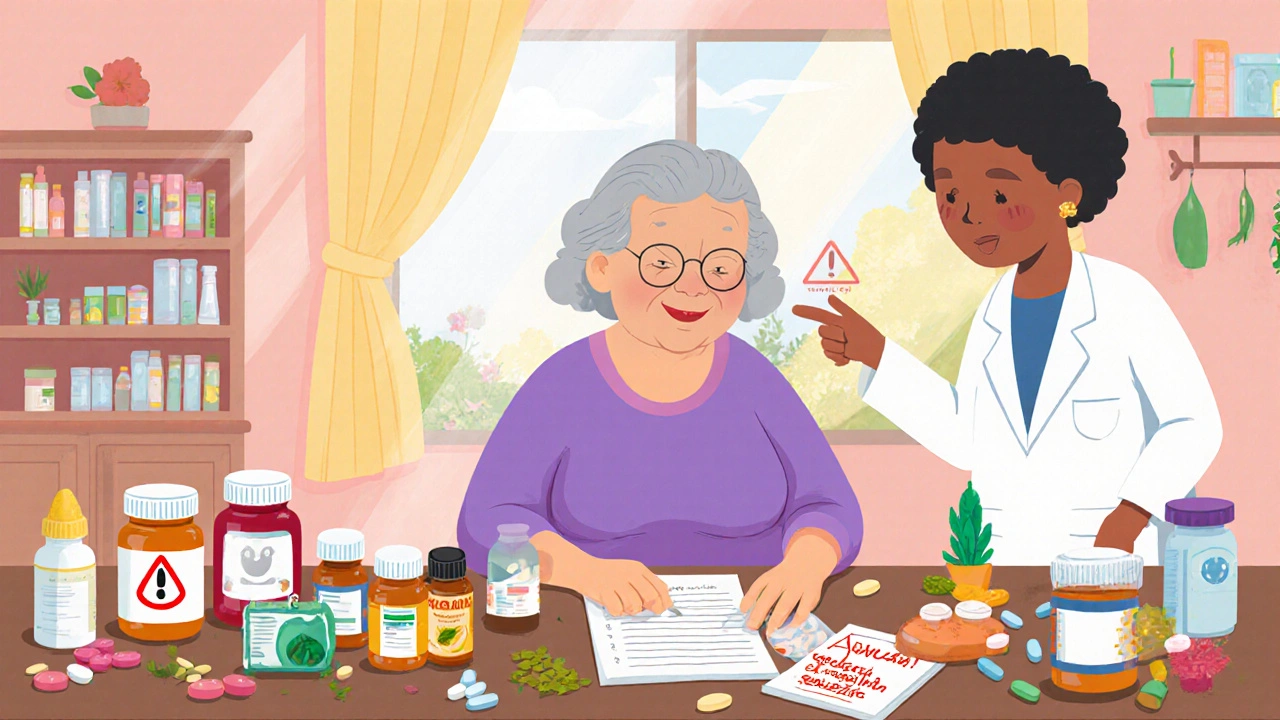
How to Prevent Drug-Drug Interactions in Elderly Patients
Drug-drug interactions are a leading cause of hospitalizations in seniors. Learn how to prevent them using proven tools like the Beers Criteria, STOPP, and NO TEARS framework - and what you can do today to keep elderly loved ones safe.