
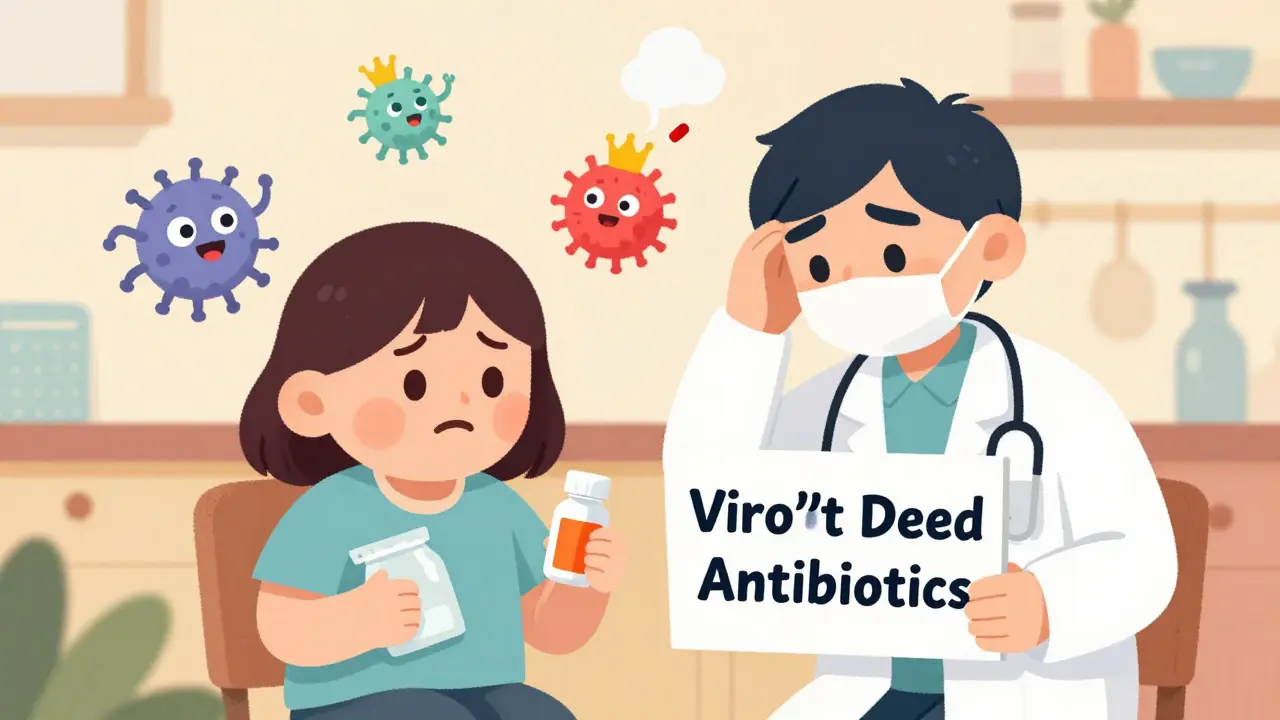
Every time you take an antibiotic when you don’t need it, you’re not just helping yourself-you’re helping bacteria become stronger. That’s the harsh truth behind the rise of antibiotic resistance and the growing threat of C. difficile infections. This isn’t science fiction. It’s happening right now, in hospitals, nursing homes, and even in your own kitchen if you’ve ever pressured a doctor for antibiotics for a cold.
What Happens When Antibiotics Don’t Work
Antibiotics are powerful tools-but only when used correctly. They kill bacteria, not viruses. That means they do nothing for the common cold, flu, or most sore throats. Yet, globally, nearly half of all antibiotic prescriptions are unnecessary. In some countries, it’s even higher. When antibiotics are used too often or incorrectly, bacteria adapt. They mutate. They learn to survive. This is antimicrobial resistance (AMR), and it’s accelerating. According to the World Health Organization’s 2025 global report, one in six bacterial infections today can’t be treated with standard antibiotics. That’s not a small number-it’s a system in crisis. Think about it: if you get a urinary tract infection, and the first antibiotic doesn’t work, your doctor has to try another. Then another. Eventually, they might run out of options. That’s not hypothetical. In 2023, 42% of Escherichia coli infections in 76 countries showed resistance to third-generation cephalosporins-antibiotics once considered reliable. For Staphylococcus aureus, one in three cases are now methicillin-resistant (MRSA). These aren’t rare outliers. They’re the new normal in many places.C. difficile: The Hidden Consequence
One of the most dangerous side effects of antibiotic overuse isn’t resistance-it’s what happens inside your gut. Antibiotics don’t just kill bad bacteria. They wipe out the good ones too. Your digestive system relies on a balanced microbiome to keep harmful microbes in check. When that balance is shattered, Clostridioides difficile (C. difficile) takes over. C. difficile isn’t new, but it’s becoming more common and more deadly. It causes severe diarrhea, colitis, and in worst cases, sepsis or death. The CDC estimates that in the U.S. alone, it caused nearly half a million infections in 2017. While exact global numbers are still being tracked, the pattern is clear: every time antibiotics are misused, C. difficile has a better chance to spread. What makes C. difficile so dangerous is that it thrives in hospitals and long-term care facilities. Patients who’ve been on multiple rounds of antibiotics-especially broad-spectrum ones like clindamycin or fluoroquinolones-are at highest risk. And once someone gets infected, it’s hard to get rid of. Recurrence rates hit 20-30% after the first episode. After the second, they jump to over 60%. That’s not just a medical problem. It’s a cycle of suffering, hospital readmissions, and rising costs.The Global Picture: Who’s Most Affected?
This isn’t just a problem in wealthy countries. The WHO reports that regions with weaker health systems are hit hardest. In South-East Asia and the Eastern Mediterranean, one in three infections are resistant to antibiotics. In Africa, it’s one in five. Why? Because in places without access to quick diagnostic tests, doctors have no choice but to guess. If a patient has a fever, they get antibiotics-even if it’s a virus. This is called empirical prescribing. It’s understandable under pressure, but it fuels resistance. Even in countries with better infrastructure, the problem is growing. During the COVID-19 pandemic, hospital antibiotic use spiked. Infections like C. difficile and resistant urinary tract infections rose by 20% between 2020 and 2022. The progress made from 2012 to 2019-when resistant infections dropped by nearly 30% in U.S. hospitals-was wiped out in just two years.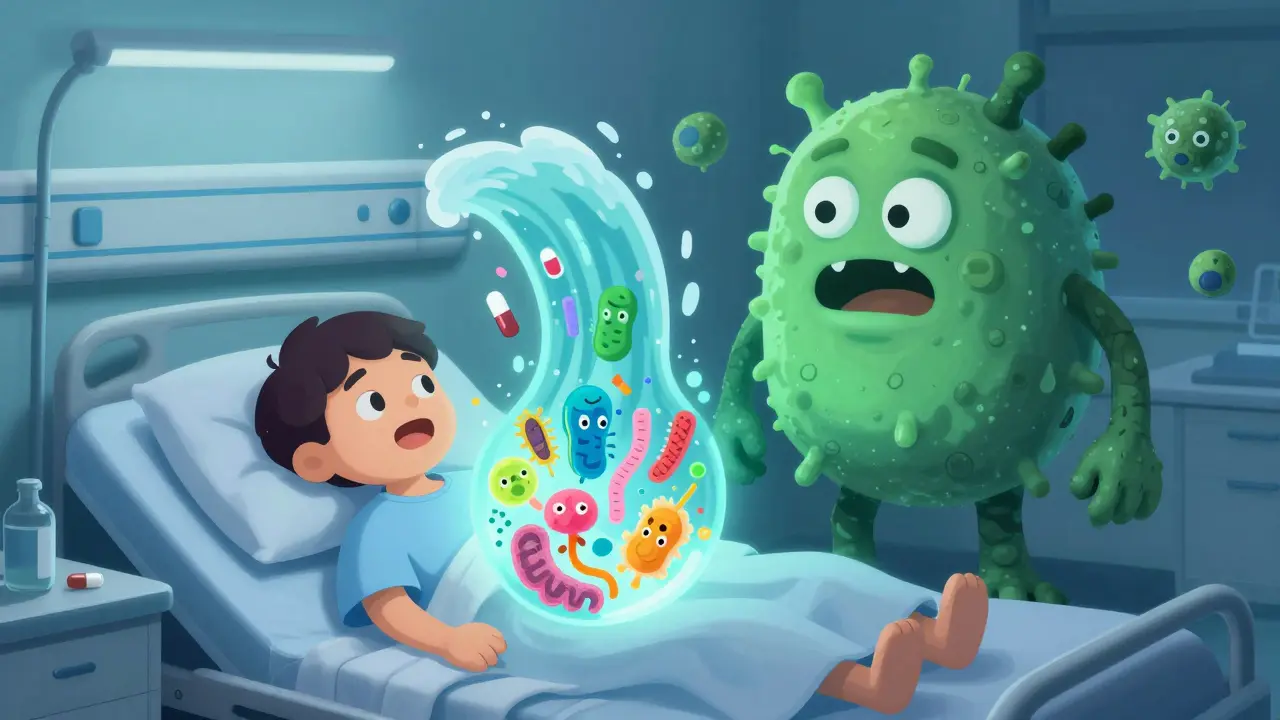
Why Are We Still Prescribing So Much?
You might think doctors are careless. But most aren’t. They’re caught in a system that rewards speed over accuracy. Patients ask for antibiotics. They expect them. They’ve been told for decades that antibiotics cure everything. And when a doctor spends 8 minutes with a patient, it’s easier to hand out a prescription than to explain why it won’t help. There’s also pressure from pharmacies, agricultural use, and even patient reviews. If a doctor doesn’t prescribe antibiotics, patients sometimes leave negative ratings. That’s real. And it changes behavior. In farming, antibiotics are still used to promote growth and prevent disease in livestock. In some countries, up to 70% of all antibiotics are given to animals. These drugs enter the food chain and the environment, spreading resistance genes into the soil and water. It’s a hidden pipeline of danger.What’s Being Done-and Why It’s Not Enough
There are efforts to fix this. The WHO launched its Global Action Plan in 2015. Countries pledged to improve surveillance, reduce misuse, and invest in new drugs. Some hospitals now have antibiotic stewardship programs-teams of pharmacists and infectious disease specialists who review every antibiotic order. These programs cut unnecessary prescriptions by 30-50%. But the pipeline for new antibiotics is dry. Pharmaceutical companies aren’t investing. Why? Because antibiotics aren’t profitable. A new drug might be used for just a few days. Contrast that with a pill for high blood pressure, taken daily for life. The return on investment is tiny. Even with $480 million invested by public-private partnerships like CARB-X, only a handful of new antibiotics have reached the market in the last decade. Worse, many of the new drugs are just tweaks of old ones. They work for a while-then resistance catches up. We’re running on a treadmill with no finish line.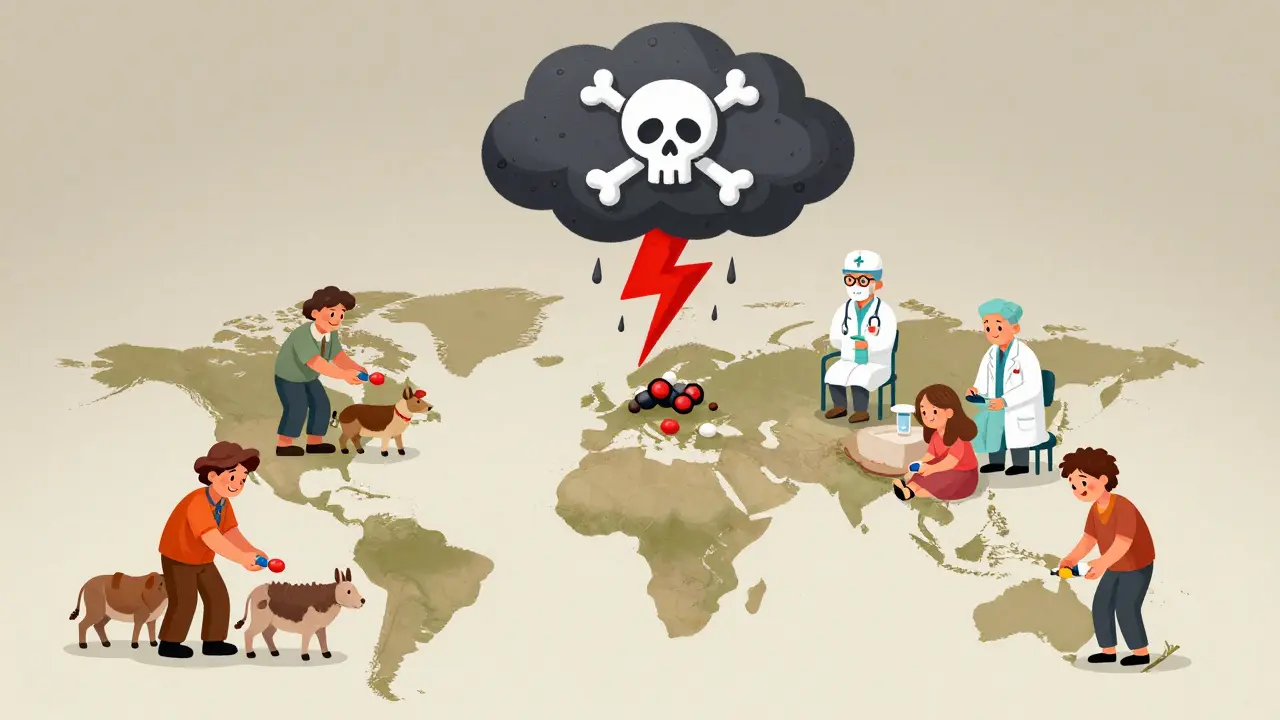
What You Can Do
You don’t need a PhD to help stop this crisis. Here’s what actually works:- Don’t demand antibiotics. If your doctor says you have a virus, believe them. Ask what you can do to feel better without drugs.
- Take antibiotics exactly as prescribed. Never skip doses. Never save leftovers for next time. Never share them.
- Wash your hands. Simple, but it stops the spread of resistant bacteria in homes and hospitals.
- Choose meat raised without antibiotics. Look for labels like “no antibiotics ever” or “organic.” Your food choices matter.
- Get vaccinated. Flu shots, pneumococcal vaccines, and others reduce the chance of secondary bacterial infections-and the need for antibiotics.
Stephen Tulloch
Bro, I just had my kid on antibiotics for a ear infection last month and the pharmacist handed me a free sample of probiotics like it was no big deal. Meanwhile, my cousin’s grandma got C. diff after a simple tooth extraction and spent 3 weeks in the ICU. We’re not just talking about ‘bad choices’ here-we’re talking about a system that treats antibiotics like candy and then acts shocked when the house burns down.
January 16, 2026 AT 03:07
evelyn wellding
Handwashing is free and works better than half the meds people take 😊
January 17, 2026 AT 21:03
john Mccoskey
Let’s be real-this isn’t about individual responsibility. It’s about the collapse of primary care under profit-driven models. Doctors are squeezed into 8-minute windows, patients are conditioned to expect a pill for every ache, and the pharmaceutical industry spends billions marketing antibiotics like they’re energy drinks. The real villain isn’t the mom asking for amoxicillin for her toddler’s sniffle-it’s the system that turns human suffering into a transactional exchange where the only metric that matters is speed, not science. We’ve outsourced medical judgment to convenience culture, and now we’re paying with our immune systems.
And don’t get me started on agriculture. You think your chicken breast is safe because it’s labeled ‘antibiotic-free’? Good luck verifying that without a lab. The regulatory gaps are vast, and enforcement is laughable. Meanwhile, resistance genes are floating in the water supply, in the soil, in the dust on your groceries. This isn’t a health crisis-it’s an ecological one, and we’re all just collateral damage in a market that profits from sickness.
Public health campaigns? Cute. But they don’t fix a broken infrastructure. You can’t educate your way out of a system designed to ignore root causes. Until we treat antibiotics like the finite, life-saving resource they are-not a commodity to be overproduced and overprescribed-we’re just rearranging deck chairs on the Titanic while the bacteria laugh all the way to the next superbug.
January 19, 2026 AT 13:41
Chelsea Harton
antibiotics arent magic pills stop actin like they are
January 20, 2026 AT 01:49
Corey Sawchuk
I used to think I needed antibiotics every time I got a sinus thing. Then I read up on it and just waited it out. Turned out I felt better in a week anyway. No drugs, no side effects. Funny how the body works when you don’t interfere.
January 21, 2026 AT 23:54
Rob Deneke
You got this. Small changes add up. Every time you say no to an unnecessary script, you’re helping the whole system. Keep it up
January 22, 2026 AT 06:55
Corey Chrisinger
It’s ironic isn’t it? We created antibiotics to extend life, and now we’re using them so recklessly that we’re shortening it. We’re like children with a fire extinguisher, spraying it everywhere just because it looks cool, then wondering why the whole building’s gone up in smoke. Maybe the real question isn’t how to stop resistance-it’s how to unlearn our addiction to control over nature.
January 23, 2026 AT 20:07
Bianca Leonhardt
People who demand antibiotics for colds should be banned from hospitals. You’re not just selfish-you’re dangerous.
January 24, 2026 AT 00:07
Travis Craw
my dad used to say if you dont need em dont take em but no one listens anymore
January 24, 2026 AT 21:41