
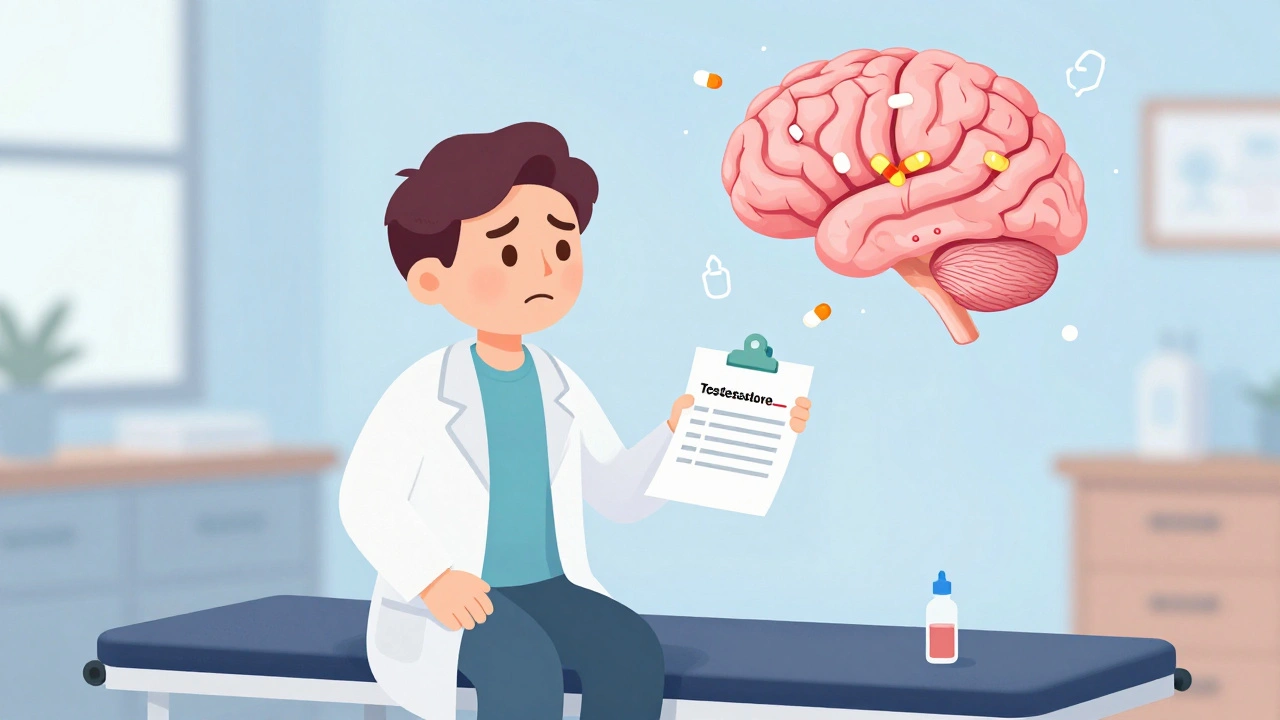
Opioid-Induced Testosterone Checker
Testosterone Level Assessment
Opioid-Induced Androgen Deficiency (OPIAD) affects up to 90% of long-term opioid users. Check if your testosterone levels are within the normal range or if you should talk to your doctor.
What this means:
- Normal testosterone levels help maintain energy, mood, and muscle mass
- Low levels may indicate Opioid-Induced Androgen Deficiency (OPIAD)
- Many patients don't realize their symptoms are hormone-related
Next steps:
Consider discussing the ADAM questionnaire with your doctor if you're experiencing symptoms.
When you’re on long-term opioids for chronic pain, you might assume the biggest risks are addiction or respiratory issues. But there’s another hidden problem that affects up to 90% of people using these drugs for more than a few months: low testosterone. It’s called Opioid-Induced Androgen Deficiency (OPIAD), and it doesn’t show up on most standard blood tests unless your doctor specifically checks for it. Many patients feel tired, lose interest in sex, gain weight, or get depressed - and they blame stress, aging, or the pain itself. But it could be your hormones.
How Opioids Kill Your Testosterone
Opioids don’t just block pain signals. They also mess with your brain’s hormone system. When you take opioids regularly, they bind to receptors in your hypothalamus - the part of your brain that tells your body to make testosterone. This shuts down the signal chain: less GnRH → less LH → less testosterone. It’s like flipping a switch off in your body’s natural hormone factory. This isn’t a rare side effect. Studies show men on long-term opioids have about half the testosterone levels of people not using them. The longer you’re on opioids, the worse it gets. After 90 days, testosterone drops 35-50%. After a year, it can plummet 50-75%. Methadone is especially bad - users average just 245 ng/dL, while those on buprenorphine are closer to 387 ng/dL. Normal levels? 300-1000 ng/dL.What Low Testosterone Feels Like (Beyond the Stereotypes)
Most people think low testosterone just means trouble getting an erection. But the symptoms are deeper, quieter, and more widespread:- Low libido: 68-85% of men on opioids report little to no interest in sex.
- Erectile dysfunction: Happens in 60-75% of cases - not because of nerves or vascular issues, but because your body isn’t making enough testosterone to support it.
- Chronic fatigue: You’re not just tired. You’re drained. Studies show fatigue scores are 2.5 times higher than normal.
- Depression and irritability: Testosterone helps regulate mood. When it drops, so does your emotional resilience. Depression symptoms increase by 40%.
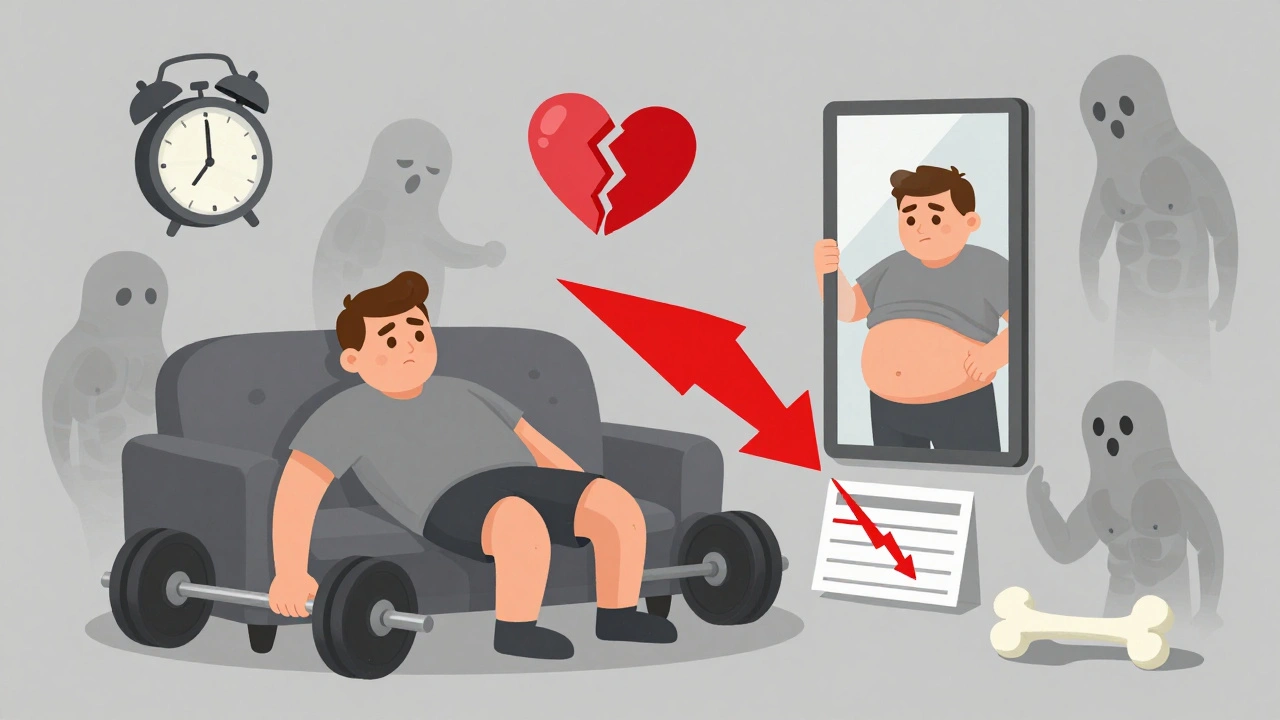
- Muscle loss and fat gain: You might lose 3-4 kg of lean muscle and gain 2 kg of fat - mostly around your belly - even if you’re eating the same.
- Bone weakness: Bone density drops 15-20% in the spine. That means higher fracture risk, especially as you age.
- Anemia: Hemoglobin levels average 12.3 g/dL - below the normal 14-18 g/dL. That makes you feel weak and winded with minimal effort.
These symptoms creep in slowly. Most people don’t connect them to their pain meds until they’ve been on opioids for months or years. By then, the damage is already done.
Testing for OPIAD: What Your Doctor Should Check
If you’ve been on opioids for more than three months, ask for a simple blood test. But don’t just ask for “testosterone.” You need two measurements:- Total testosterone - the overall amount in your blood.
- Free testosterone - the active, usable portion.
Timing matters. Testosterone peaks in the morning, so the test must be done between 7-10 a.m. One low reading isn’t enough. The Endocrine Society says you need two low results on separate days to confirm hypogonadism.
Doctors should also use the ADAM questionnaire (Androgen Deficiency in Aging Males). If you answer yes to three or more of these:
- Do you have a decreased libido?
- Do you lack energy?
- Do you have decreased strength and endurance?
- Have you lost height?
- Have you noticed decreased enjoyment of life?
- Do you feel sad or irritable?
- Are your erections less strong?
- Have you noticed a recent deterioration in your ability to play sports?
- Do you fall asleep after dinner?
- Has there been a recent deterioration in your work performance?
Then you need lab testing. It’s not optional. It’s standard care.
Treatment: Testosterone Replacement Therapy (TRT)
The most effective fix is testosterone replacement. Multiple studies show it works:- Sexual function: IIEF scores (a standard sexual health measure) jump from 12.5 to 19.8 in six months.
- Pain sensitivity: People on TRT report 30% less pain sensitivity - yes, testosterone helps with pain too.
- Body composition: Lean mass increases by 3.2 kg. Fat mass drops by 2.1 kg.
- Survival: A 2019 JAMA study found men on TRT had a 49% lower risk of dying from any cause.
- Heart and bone health: Risk of heart attacks, strokes, and hip fractures drops significantly.
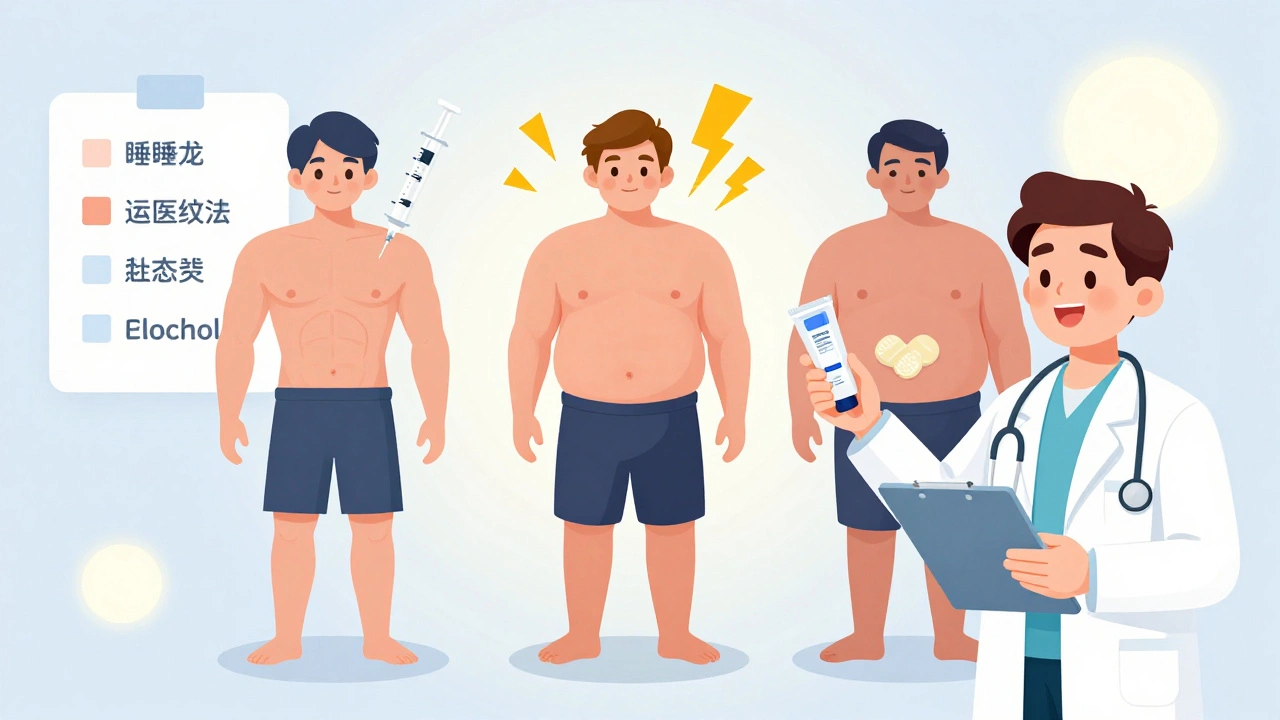
TRT comes in several forms:
- Injections: Testosterone cypionate or enanthate, 100-200 mg every 1-2 weeks. Fast, cheap, effective.
- Gels: 50-100 mg daily applied to skin. Easy to use, but you must avoid skin contact with others.
- Patches: 5-7.5 mg daily. Can cause skin irritation.
- Buccal tablets: 30 mg twice daily, stuck to the gum. No skin contact, but can cause mouth irritation.
Target levels? 350-750 ng/dL. Too low? Symptoms return. Too high? Side effects kick in.
The Risks of TRT: What They Don’t Tell You
TRT isn’t risk-free. The FDA added black box warnings in 2015 and 2019. You need to know the downsides:- Polycythemia: Red blood cell count spikes in 15-20% of users. Can lead to clots or stroke.
- Lower HDL (“good”) cholesterol: Drops 10-15 mg/dL. May affect heart health.
- Acne: Happens in 25% of gel users.
- Prostate risk: TRT is banned if you have or had prostate cancer. PSA levels must be checked every 6 months for men over 50 or with risk factors.
- Breast cancer: Also a strict no-go if you have a history.
- Thrombosis: Risk of blood clots increases 1.4-2.0 times.
That’s why TRT must be monitored by a doctor - not a wellness clinic or online vendor. Blood work every 3-6 months, then annually. Prostate exams. Liver checks. Heart monitoring.
Can You Fix Low Testosterone Without Drugs?
Yes - but only as a supplement to treatment, not a replacement. These steps help your body function better while you’re on opioids:- Maintain a healthy weight: BMI under 25 boosts testosterone by 20-30%.
- Do resistance training: Three strength sessions a week can raise testosterone by 15-25%.
- Sleep 7-9 hours: Poor sleep cuts testosterone by 20%.
- Avoid alcohol: More than 14 drinks a week drops levels by 25%.
- Quit smoking: Smokers have 15-20% lower testosterone.
- Control blood sugar: Diabetics have 25-35% lower testosterone. Avoid sugar and refined carbs.
These won’t reverse OPIAD on their own - but they’ll make TRT safer and more effective. They also reduce your risk of heart disease, diabetes, and obesity - all of which are worsened by opioids.
Why Many Doctors Still Ignore This
The VA Whole Health Library warns that testosterone therapy is being pushed by pharmaceutical companies. And yes, there’s profit in it. But dismissing OPIAD because of industry influence is like refusing insulin because Big Pharma makes it. The real issue? Most doctors don’t know about OPIAD. Pain clinics focus on pain control. Endocrinologists aren’t consulted. Patients don’t mention fatigue or low sex drive because they think it’s normal. The result? Millions go untreated. The 2012 Pain Physician review says it clearly: “Screening for hypogonadism should be considered whenever long-term opioid prescribing is undertaken.” That’s not optional advice. It’s standard of care.What You Should Do Now
If you’re on opioids long-term:- Ask your doctor for total and free testosterone tests - done in the morning.
- Fill out the ADAM questionnaire. If you answer yes to 3+ items, push for testing.
- If your levels are low, discuss TRT options. Don’t accept “it’s just aging.”
- If TRT is recommended, get monitored. Don’t self-prescribe.
- Start lifestyle changes now - exercise, sleep, weight control. They help.
Low testosterone from opioids isn’t a myth. It’s a measurable, treatable condition. Ignoring it doesn’t make you stronger. It just makes you sicker.
Can opioids cause low testosterone even if I’m not addicted?
Yes. Opioid-Induced Androgen Deficiency (OPIAD) happens regardless of addiction. It’s a direct hormonal effect of the drugs, not a behavioral issue. People taking opioids for chronic pain - even as prescribed - are at high risk. Addiction status doesn’t protect you.
How long does it take for testosterone to drop after starting opioids?
Testosterone levels start falling within days, but noticeable symptoms usually appear after 3-6 months of continuous use. The suppression gets worse over time, especially with long-acting opioids like methadone. By one year, levels can be 50-75% below normal.
Is testosterone replacement safe for older men on opioids?
For men over 50, TRT can be safe if monitored closely. The key is regular PSA testing every 6 months and checking for prostate issues before starting. Studies show older men on TRT have lower fracture risk, better heart health, and reduced mortality - but only if they’re screened properly and not given excessive doses.
Can women on opioids also get low testosterone?
Yes. While women produce far less testosterone than men, it’s still critical for energy, mood, and libido. Opioids suppress testosterone in women too. Some studies suggest DHEA supplementation may help, but evidence is limited. Women should have hormone levels checked if they experience fatigue, low sex drive, or mood changes while on long-term opioids.
Will stopping opioids bring testosterone back to normal?
Sometimes. In some men, testosterone rebounds within weeks or months after stopping opioids. But not everyone. The longer you were on them, the less likely your body will recover on its own. Many men need TRT even after quitting. Waiting to see if it fixes itself can mean months of unnecessary fatigue, depression, and muscle loss.
What’s the best way to monitor testosterone levels during treatment?
Check total and free testosterone 3-6 months after starting TRT, then annually. Also monitor hematocrit (for polycythemia), PSA (for prostate health), liver enzymes, and lipid levels. Symptom tracking using the ADAM questionnaire helps too. Don’t rely on how you feel alone - numbers matter.

Deborah Andrich
I wish more doctors knew about this. My dad was on oxycodone for 3 years and no one ever checked his testosterone. He just thought he was getting old. By the time we figured it out, he was already losing muscle and had zero energy. TRT changed his life. He’s hiking again at 72.
Stop normalizing fatigue.
December 13, 2025 AT 03:47
John Fred
This is wild. I’m on buprenorphine for chronic back pain and I’ve been feeling like a zombie for 18 months. Low libido? Check. Gained 15 lbs? Check. Mood swings? Double check. I thought it was just depression. Turns out my body’s basically in hibernation. Going to ask my doc for the test tomorrow. 🙏
December 13, 2025 AT 22:39
Bruno Janssen
I’m not even on opioids anymore but I still feel like a ghost. Quit 2 years ago. Testosterone never came back. Now I’m on TRT and I finally feel human again. They don’t tell you this part. You think quitting the drugs fixes everything. Nope. Your body forgets how to make testosterone. Scary shit.
December 15, 2025 AT 09:33
Tommy Watson
so like... opioids = testosterone killer? wow. no one told me that. i thought it was just being lazy or eating too much pizza. turns out my body was just... off. also why is everyone so chill about this? like if this was a new cancer drug they’d be screaming on tv. but nah. just another quiet side effect. sad.
December 17, 2025 AT 04:05
Harriet Wollaston
As a nurse who’s seen this over and over - patients come in saying 'I just don’t care about anything anymore' and we chalk it up to chronic pain. But it’s often low T. I hand out the ADAM questionnaire like candy now. If you’re on opioids longer than 90 days, you owe it to yourself to get tested. It’s not weak to ask. It’s smart.
December 17, 2025 AT 07:13
Ronan Lansbury
Of course they don’t test for it. Big Pharma doesn’t want you to know you can fix this without their $$$ TRT. They’d rather keep you on opioids forever. And now they’ve got you hooked on hormone therapy too. It’s a beautiful money machine. The VA says it’s standard care? Yeah, right. The same VA that pushed opioids like candy in the first place. Don’t trust the system.
December 18, 2025 AT 17:04
Sheldon Bird
You’re not alone. I was on methadone for 5 years. Felt like I was walking through mud. Got my levels checked - 210 ng/dL. Started TRT. 6 months later, I lifted my first weight in 4 years. My wife cried. I didn’t even know I was crying too. This isn’t just about sex. It’s about being alive. 🤝
December 19, 2025 AT 04:11
Karen Mccullouch
America lets Big Pharma get away with this. We’re the only country where you need a prescription for insulin and testosterone but can buy opioids like candy. And now they want us to pay for the damage they caused? No. We need to sue the manufacturers. Not just the doctors. The companies who knew and didn’t warn us.
December 19, 2025 AT 19:42
nithin Kuntumadugu
yo i read this and thought... wait is this why i feel like i got hit by a truck every morning? i’m on oxycodone for a herniated disc and i’ve been sleeping 12 hrs and still tired. no sex drive. gained belly fat. thought i was just lazy. turns out my body’s been on vacation without me. going to the doc tomorrow. thx for the info bro 🙏
December 20, 2025 AT 12:01
sharon soila
This is not a medical opinion. This is a human rights issue. When a treatment for pain robs a person of their vitality, their dignity, their ability to connect with loved ones - we have a moral obligation to intervene. Testosterone is not a luxury. It is a biological necessity. To ignore it is to neglect the whole person. We must do better.
December 22, 2025 AT 08:10
Alvin Montanez
I’ve been reading this whole thing and I have to say, this is exactly why I stopped trusting the medical establishment. First they give you opioids like they’re candy, then they tell you to take testosterone replacement like it’s a vitamin, and then they tell you to get blood work every three months and do strength training and avoid alcohol and sleep eight hours and check your PSA and monitor your lipids and oh by the way don’t use gels around your kids because you might transfer it and now you’re living in a full-time medical surveillance state. Who even are we anymore? We’re not patients. We’re data points with penises. And don’t even get me started on women - they’re just supposed to take DHEA and pray? This whole system is broken.
December 24, 2025 AT 05:01
Lara Tobin
I’m a woman on long-term opioids for fibromyalgia. No one ever mentioned testosterone. I thought my low energy and lack of interest in sex was just part of being a woman with chronic pain. Turns out my levels were half of normal. DHEA helped a little. Not much. But just knowing it wasn’t 'in my head'... that changed everything. Thank you for writing this. I’m not alone.
December 24, 2025 AT 15:40