
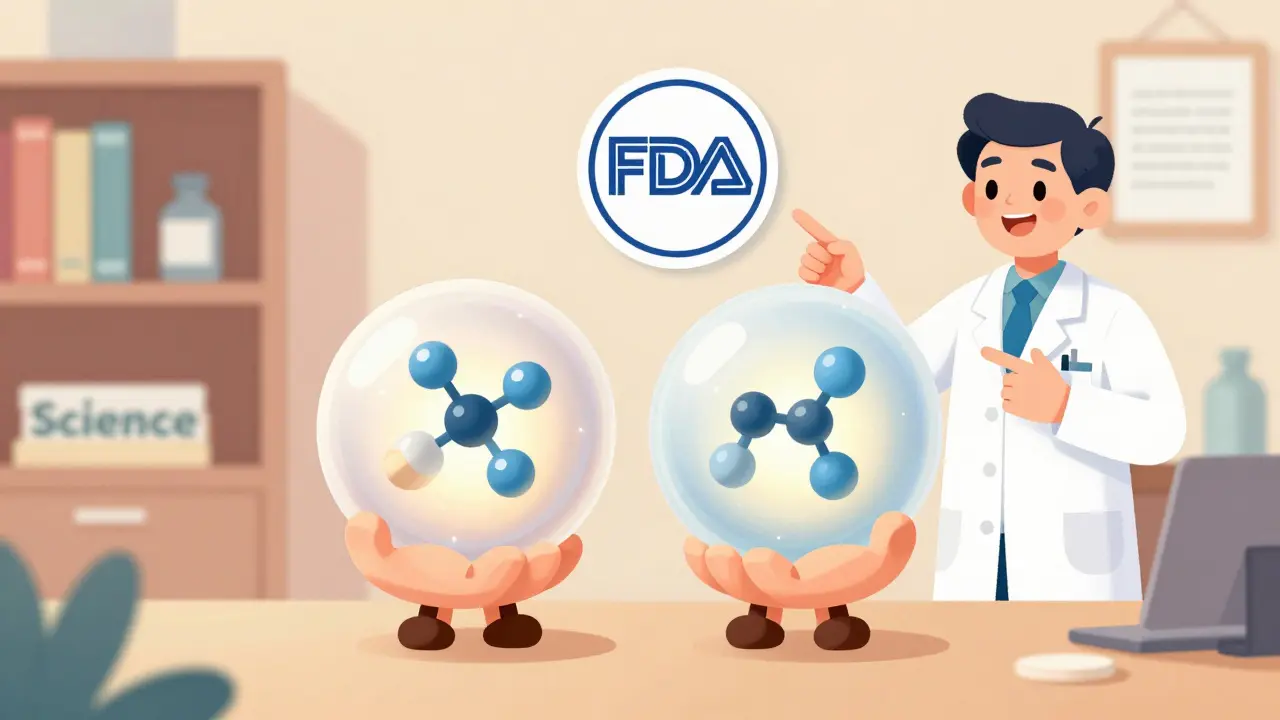
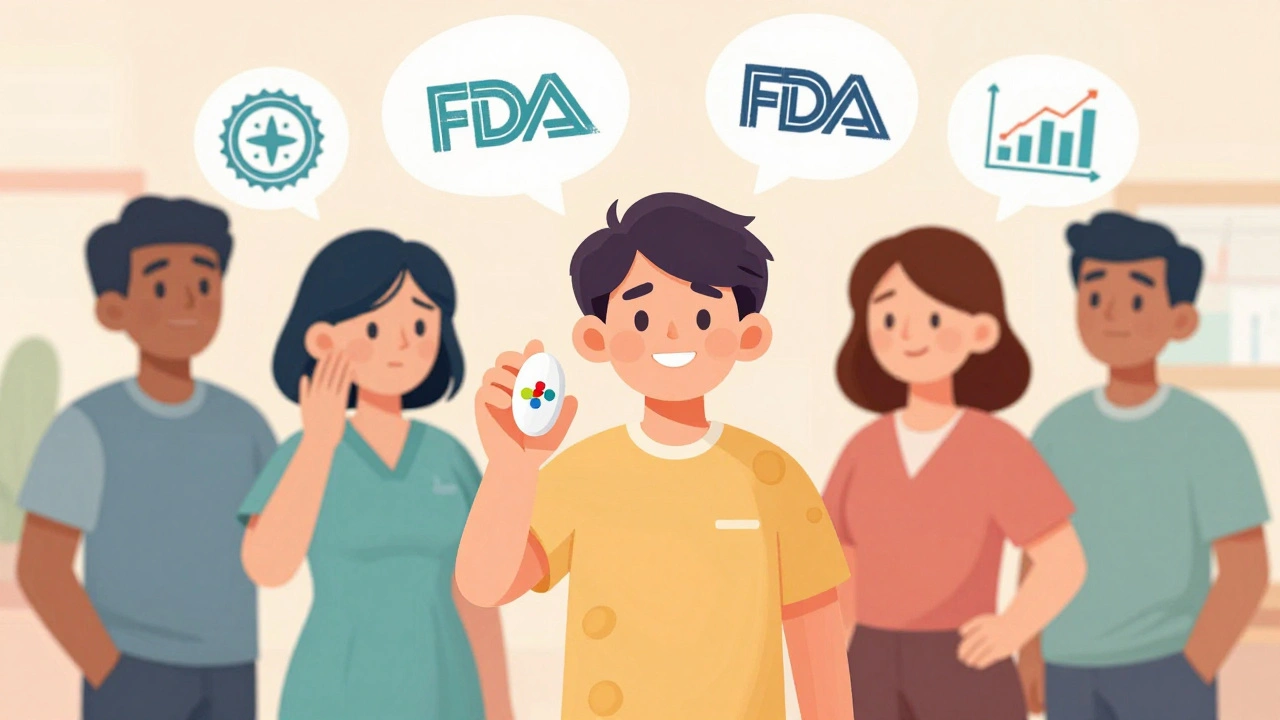
Every year, Americans fill over 8 billion prescriptions. More than 90% of them are for generic drugs. Yet, many people still wonder: are these cheaper pills really the same as the brand-name ones they see advertised on TV? The short answer is yes - but there’s more to it than that.
What Exactly Makes a Drug "Generic"?
A generic drug isn’t a copycat. It’s not a knockoff. It’s the exact same medicine, legally required to contain the same active ingredient, strength, dosage form, and route of administration as the brand-name version. That means if you’re taking lisinopril for high blood pressure, the generic version has the same molecule - the same chemical structure - as Zestril or Prinivil. The FDA doesn’t allow anything less. The difference? The inactive ingredients. These are the fillers, dyes, and coatings that give pills their shape, color, or taste. A brand-name drug might use red dye and sucrose, while the generic uses yellow dye and lactose. That’s why your generic pill looks different. But the part that actually treats your condition? Identical. The FDA requires every generic to prove it works the same way in your body. That’s called bioequivalence. For most drugs, the amount of medicine absorbed into your bloodstream must be within 80% to 125% of the brand-name version. That’s not a wide gap - it’s a tight window. For drugs like warfarin or levothyroxine, where even small changes can matter, the FDA tightens that range to 90% to 111%.How Do We Know They Work the Same?
It’s not just theory. It’s data. A 2019 study in JAMA Internal Medicine looked at 3.5 million patients taking generics for conditions like diabetes, high blood pressure, depression, and osteoporosis. The results? No difference in effectiveness. No increase in hospital visits. No drop in survival rates. The generics worked just as well. Even more surprising? A 2020 study in Nature Scientific Reports found patients taking generic blood pressure meds had lower death rates than those on brand names. At first glance, that sounds like generics are better. But researchers quickly pointed out: this wasn’t because the pills were stronger. It was because people who took generics tended to be more cost-conscious, more likely to stick with their treatment, and more likely to get regular check-ups. The drug itself? Still the same. The FDA has been approving generics since the 1980s. Over 40 years. More than 12,800 approved generic products. And not a single case where a generic drug was pulled for being less effective - unless it was a manufacturing error, which happens equally to brand and generic makers.Why Are Generics So Much Cheaper?
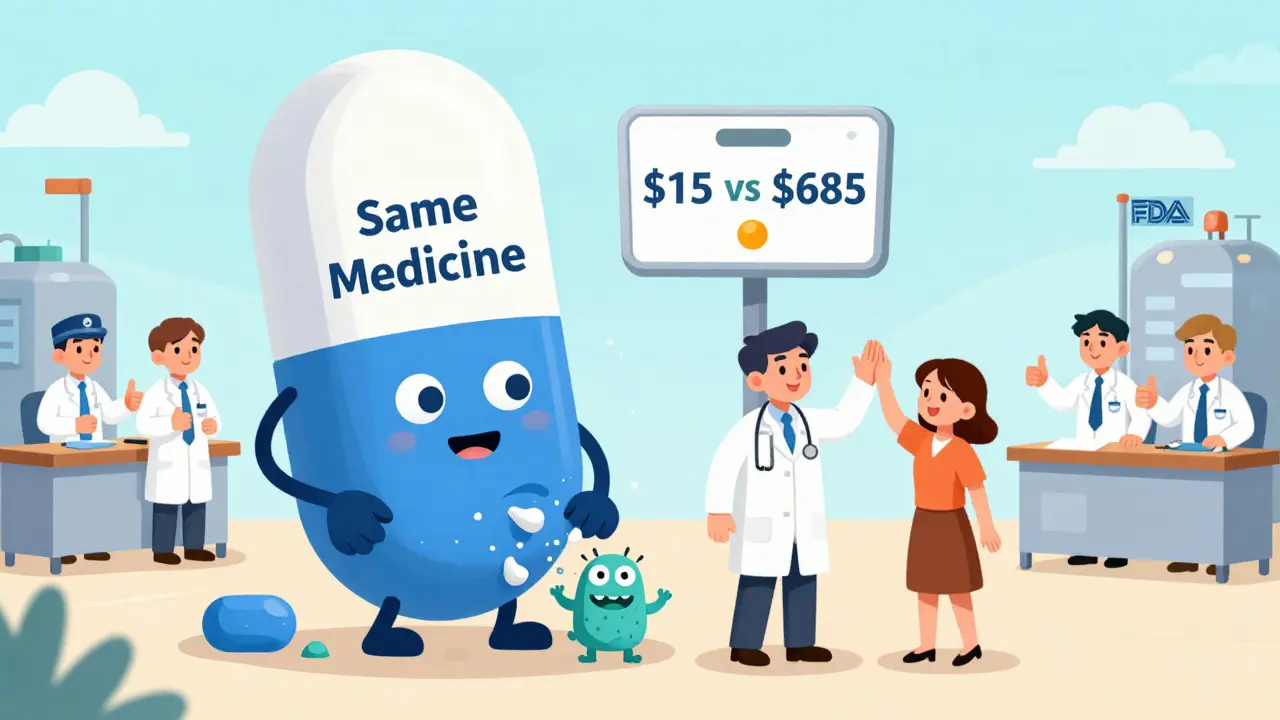
Because they don’t have to pay for the research. Brand-name drug companies spend years and billions developing a new medicine. They run clinical trials, file patents, market the product. Once that patent expires - usually after 20 years - other companies can make the same drug. They don’t need to repeat expensive trials. They just need to prove their version behaves the same in the body. That cuts costs dramatically. The result? Generics cost 80% to 85% less. A brand-name statin might run $685 a month. The generic? $15. That’s not a marketing trick. That’s how the system was designed to work. The U.S. healthcare system saves about $373 billion a year because of generics. That’s money that stays in patients’ pockets, lowers insurance premiums, and keeps hospitals stocked with affordable meds.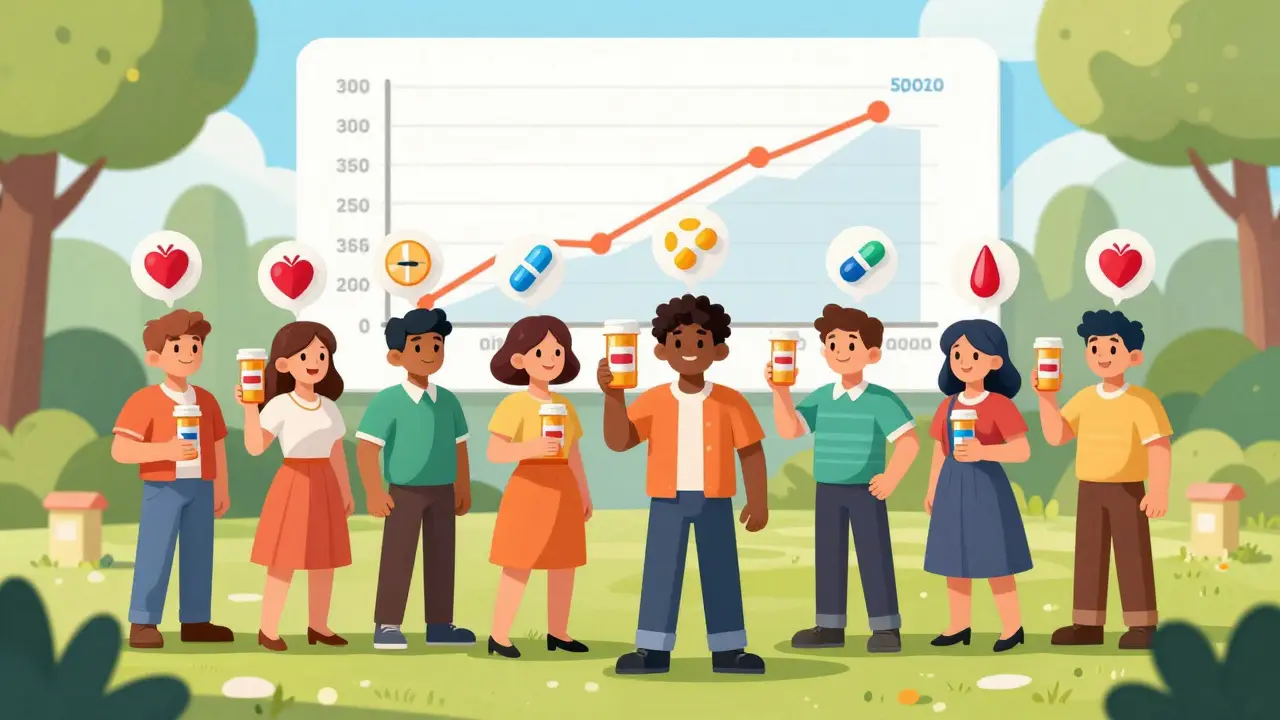
When Might Generics Not Work as Well?
There are exceptions. They’re rare - but real. Some drugs have a narrow therapeutic index (NTI). That means the difference between a dose that works and one that’s dangerous is very small. For these, even tiny variations in absorption can matter. Levothyroxine (for thyroid issues) and warfarin (a blood thinner) fall into this category. Some patients report feeling different after switching. A TSH level jumps. A seizure returns. A mood shifts. In these cases, it’s not always the drug. It’s consistency. If you switch brands every time you refill - from one generic to another to another - your body might react to the slight differences in fillers or how the pill breaks down. That’s why doctors often recommend sticking with the same generic manufacturer. The Epilepsy Foundation found 18% of patients reported breakthrough seizures after switching to a generic antiseizure drug. But clinical trials haven’t proven a consistent link. What they have shown is that patients who are anxious about generics are more likely to stop taking them. And that’s the real risk.What About the Stories Online?
You’ve probably seen them. Reddit threads. Facebook groups. “I switched to generic Synthroid and my TSH went from 2 to 7.” “My blood pressure spiked after the pharmacy changed my pill.” These stories feel real. And they are - to the person telling them. But correlation isn’t causation. A 2022 Consumer Reports survey found 42% of people believe generics are less effective. Nearly 30% said they’d personally noticed a drop in effectiveness. But when researchers checked medical records, they couldn’t confirm any real difference. The same pills. The same doses. The same labs. What’s likely happening? Placebo effect - or nocebo effect. If you believe a generic won’t work, your brain can make you feel worse. It’s real. It’s measurable. And it’s why the FDA runs campaigns like “It’s the Same Medicine.” On the flip side, 89% of generic users in GoodRx’s 2023 survey said they’d recommend generics to others. Why? Because they saved money. And didn’t notice a difference.What Should You Do?
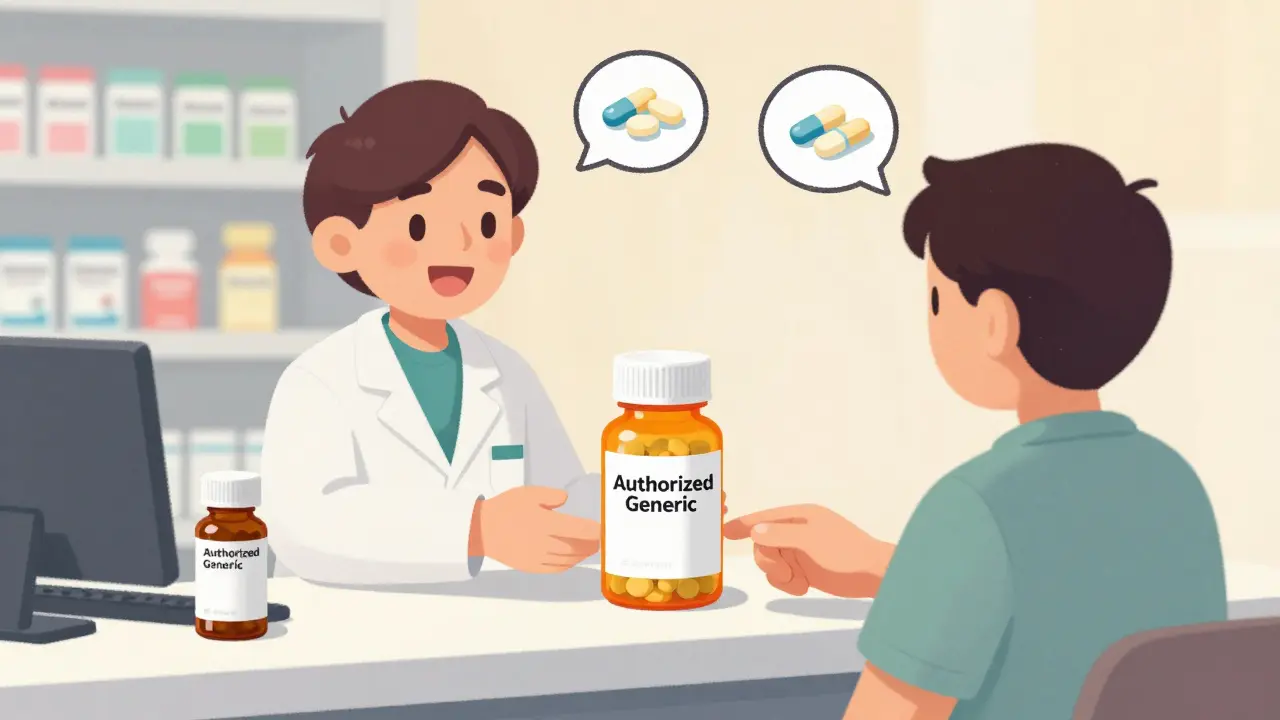
Here’s the practical advice:- Ask your pharmacist: “Is this a generic? Can I switch?” Most of the time, you can.
- If you’re on a narrow therapeutic index drug (like levothyroxine, warfarin, or phenytoin), stick with the same brand or generic manufacturer. Don’t switch back and forth.
- Use a pill identifier app like Medisafe. If your pill looks different, check it. It’s probably the same drug - just a different maker.
- Don’t assume a more expensive pill is better. The FDA doesn’t allow it.
- If you feel different after switching, talk to your doctor. Don’t stop the drug. Get your levels checked. It might be a dosing issue, not a generic issue.
Who Makes These Drugs?
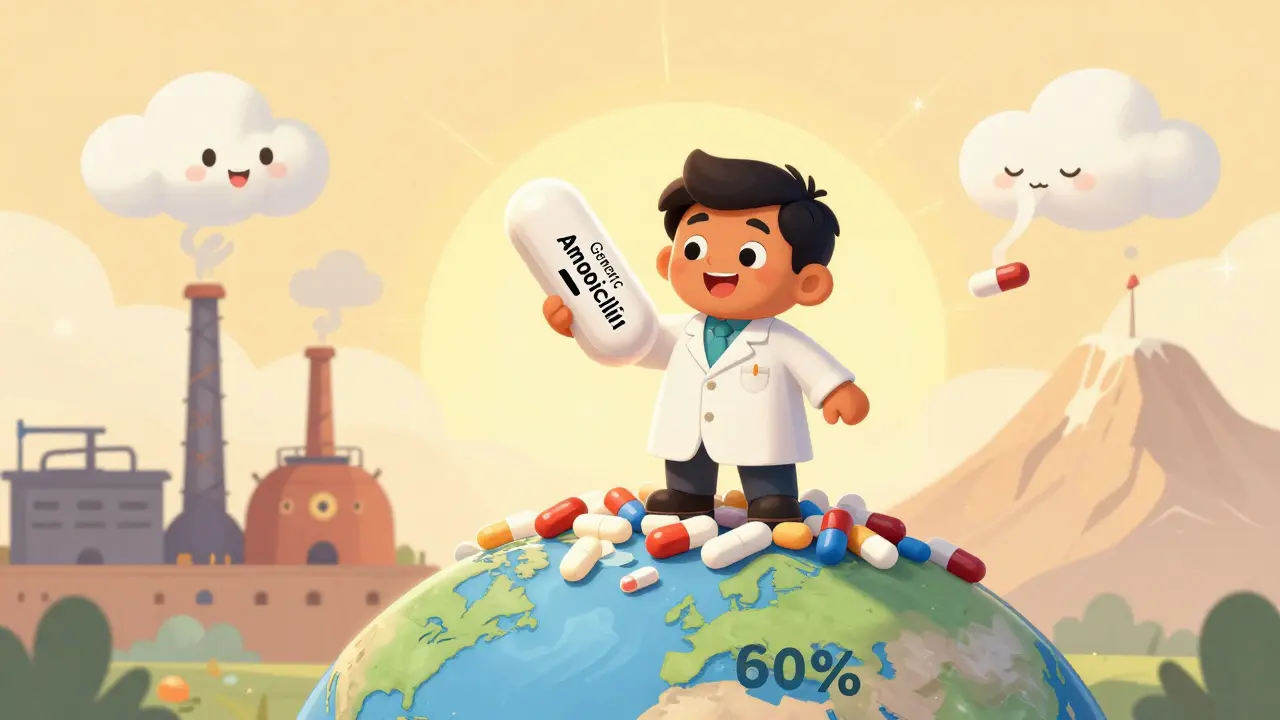
Most people assume generics are made in shady labs. They’re not. The FDA inspects every facility that makes generic drugs - whether it’s in the U.S., India, China, or Germany. Over 78% of the active ingredients come from India and China. But that doesn’t mean they’re low quality. The same factories that make brand-name drugs often make generics too. Teva, Sandoz, and Mylan are among the largest makers. They’re regulated the same way. The FDA approved over 1,000 generic drugs in 2022 alone. That’s more than three a day. And the approval rate for generics is higher than for brand-name drugs - because the bar is clear, and the data is solid.What’s Changing?
The FDA is working on tougher rules for complex generics - things like inhalers, nasal sprays, and topical creams. These are harder to copy exactly. But even here, the goal is the same: same effect, lower cost. The 2022 CREATES Act is cracking down on “product hopping” - when brand companies make tiny changes to their pills just to delay generics. That’s a scam. And now, the FDA can stop it. In 2024, the FDA is launching a new program to track how generics perform in real life - across different ages, races, and health conditions. This isn’t about proving they work. It’s about proving they work for everyone.The Bottom Line
Generic drugs are not second-rate. They’re not cheap substitutes. They’re the same medicine, tested just as hard, made under the same rules, and used by millions every day. The only real difference? The price. And the fear. If your doctor prescribes a brand-name drug, ask if there’s a generic. If your pharmacy switches your pill, don’t panic. Check the name on the bottle. Call your pharmacist. Get clarity. You’re not getting less. You’re getting the same - for a fraction of the cost.Are generic drugs as safe as brand-name drugs?
Yes. Generic drugs must meet the same strict safety standards as brand-name drugs. The FDA requires identical active ingredients, strength, and dosage form. Every generic manufacturer must pass the same inspections and follow the same quality controls. The FDA has been approving generics for over 40 years, and there’s no evidence that generics are less safe.
Why do generic pills look different?
By law, generic drugs can’t look exactly like the brand-name version - that would violate trademark rules. So manufacturers change the color, shape, size, or coating. But the active ingredient is identical. The differences are only in the inactive ingredients, like dyes or fillers, which don’t affect how the drug works.
Can I switch between different generic brands?
For most drugs, yes. But for drugs with a narrow therapeutic index - like levothyroxine, warfarin, or phenytoin - it’s better to stick with one manufacturer. Small differences in fillers or how the pill dissolves can affect absorption. If you notice changes in how you feel after switching, talk to your doctor and ask to stay on one brand.
Do insurance companies force me to use generics?
Many do - and for good reason. Generics cost 80-85% less. Most insurance plans require you to try the generic first before covering the brand-name version. If you have a medical reason to need the brand, your doctor can file an exception. But for most people, the generic is the best choice.
What if I think the generic isn’t working?
Don’t stop taking it. Talk to your doctor. Ask for a blood test to check your levels. Sometimes, the issue isn’t the drug - it’s timing, diet, or another medication you’re taking. If your levels are normal and you still feel worse, your doctor can consider switching you back - but only after ruling out other causes.
Are generic drugs made in the U.S.?
Some are, but most active ingredients come from India and China. That doesn’t mean they’re unsafe. The FDA inspects all facilities - domestic and foreign - the same way. Over 78% of active ingredients come from those countries, but the final pills are often packaged in the U.S. under FDA oversight.
Tatiana Bandurina
Let’s be real - if generics were truly identical, why do pharmacies rotate them every other refill? It’s not about cost savings; it’s about corporate arbitrage. The FDA’s 80-125% bioequivalence window is a legal loophole disguised as science. I’ve seen patients on warfarin whose INR levels swung wildly after a switch - not because they missed doses, but because the filler changed the dissolution rate. This isn’t placebo. It’s pharmacokinetic roulette.
January 22, 2026 AT 06:24
Lauren Wall
Generics are fine. But don’t act like the system’s moral.
January 23, 2026 AT 14:18
Philip House
Y’all act like the FDA’s some saintly watchdog. Meanwhile, the same factories making your ‘safe’ generics also churn out fake Viagra for Russian bots. The FDA inspects? Sure. But they inspect one plant every 10 years. And half those plants are in India where inspectors get paid in chai and goodwill. You think your $15 lisinopril is the same as Zestril? Nah. It’s the same molecule - but the binder holding it together? Could be powdered chalk from a factory that also makes cat litter.
Don’t get me wrong - I take generics. But I also know the game. The brand-name companies aren’t evil - they’re just the ones who paid the billion to get the patent. The generics? They’re the free riders who show up after the party’s over and clean up the leftovers. And yeah, they save billions. But they also turn healthcare into a commodity where your life is priced by the milligram.
And don’t even get me started on the ‘same active ingredient’ lie. That’s like saying two BMWs are the same because they both have engines. One’s got carbon fiber, the other’s got plastic from a landfill. The engine? Same. The ride? Not even close.
January 25, 2026 AT 14:12
Sarvesh CK
It is important to recognize that the regulatory framework governing generic medications is among the most rigorously standardized in the global pharmaceutical landscape. The bioequivalence criteria established by the FDA, while seemingly broad in statistical terms, are grounded in decades of pharmacokinetic research and clinical validation. The notion that a 20% variance in absorption constitutes a meaningful therapeutic divergence is misleading; in fact, inter-individual variability in drug metabolism often exceeds this range due to genetic, dietary, and physiological factors.
Moreover, the global supply chain for active pharmaceutical ingredients is not a weakness but a necessity - modern medicine depends on economies of scale and specialized manufacturing capabilities that are concentrated in certain regions. The FDA’s inspection protocols for foreign facilities are stringent, and compliance rates for generic manufacturers consistently exceed those of brand-name producers. The perception of inferior quality is largely a product of misinformation and distrust in institutional oversight.
It is also worth noting that the cost differential between branded and generic drugs enables access for millions who would otherwise forgo treatment entirely. The ethical imperative is not to question the equivalence of the molecule, but to ensure equitable access to the medicine itself. The real issue is not the generic pill - it is the system that makes even generics unaffordable for some.
January 27, 2026 AT 01:33
Alec Amiri
Oh wow, so you’re telling me my $15 thyroid med is just as good as the $600 one? Yeah right. My TSH went from 2.1 to 7.8 after switching. I didn’t change my diet, I didn’t skip doses - I just got a different pill. And now I’m tired all day, gaining weight, and crying for no reason. You think that’s placebo? Try living it. This isn’t theory - this is my life. And no, I’m not ‘anxious.’ I’m just not dumb.
January 28, 2026 AT 06:06
Lana Kabulova
Wait - so if generics are identical, why does the label say ‘manufactured by Teva’ and not ‘Zestril’? And why do pharmacies switch them without telling you? And why do some generics have different side effects? And why do doctors still prescribe brand names for NTI drugs? And why do patients report differences? And why does the Epilepsy Foundation say 18% had seizures after switching? And why does the FDA have a separate category for NTI drugs if they’re all the same? And why is this even a debate? And why do I feel like I’m being gaslit?
January 29, 2026 AT 21:13
Kenji Gaerlan
generic drugs r the same but i still dont trust em. my friend took a generic for anxiety and said she felt like a zombie. then she switched back and felt fine. maybe its the dye? maybe its the filler? idk. but i’m sticking with the brand. my mental health is worth $80 a month.
January 30, 2026 AT 22:25
Ryan Riesterer
The bioequivalence threshold of 80–125% AUC and Cmax is statistically sound and clinically validated for the vast majority of therapeutics. However, for drugs with a narrow therapeutic index - particularly those with nonlinear pharmacokinetics or high inter-individual variability - the standard equivalence criteria may not adequately capture pharmacodynamic outcomes. The observed clinical discordance in levothyroxine and warfarin users is not attributable to active ingredient variance, but rather to excipient-mediated alterations in dissolution kinetics, which are not fully accounted for in current regulatory models. The FDA’s proposed real-world evidence program is a necessary step toward dynamic bioequivalence assessment, moving beyond static in vitro metrics.
February 1, 2026 AT 02:13
Akriti Jain
LOL the FDA inspects factories? 😂 You really think the same labs that make your iPhone parts also make your heart meds? 😭 They’re in China. In a building with no windows. And the inspector? He’s the guy who owns the factory. And you’re okay with that? 😏 You think your generic blood thinner isn’t just sugar with a fancy label? 🤫 The real story? Big Pharma and the FDA are in bed together. You’re not getting cheaper medicine - you’re getting guinea pig medicine. 🧪 #GenericConspiracy #FDAliedToMe
February 2, 2026 AT 14:53
Mike P
Look, I don’t care if it’s generic or brand - I care that I’m not getting ripped off. I’ve been on generic metformin for five years. I’ve never had an issue. My A1C’s stable. My wallet’s happy. Meanwhile, my cousin’s still on the brand-name version because his doctor told him ‘it’s better.’ Bro - it’s the same damn pill. Stop letting Big Pharma scare you into paying extra. The only thing different is the color. And the price. And your bank account. 🇺🇸
February 3, 2026 AT 22:32
Jasmine Bryant
I’m a pharmacist and I can tell you - most patients don’t realize that when their pharmacy switches generics, it’s not random. It’s based on contract pricing with their PBMs. The pill you get today might be from Teva, tomorrow from Mylan, next week from Sandoz. All FDA-approved. All the same active ingredient. But if you’re on levothyroxine? Stick with one. Always. I’ve seen people come in panicked because their TSH changed - but they didn’t realize they’d switched manufacturers three times in six months. It’s not the drug. It’s the inconsistency. And yeah - sometimes the fillers cause stomach upset. But that’s not the drug failing. It’s your body adjusting. Talk to your doc. Don’t quit.
February 4, 2026 AT 14:24
Oren Prettyman
It is a fundamental misapprehension to conflate chemical equivalence with therapeutic equivalence. The FDA’s regulatory paradigm, while technically precise in its molecular stipulations, systematically neglects the phenomenological reality of patient experience. The active ingredient, though identical, is embedded within a matrix of excipients whose pharmacodynamic interactions - particularly in patients with compromised metabolic pathways or comorbid gastrointestinal conditions - may significantly alter bioavailability profiles beyond the statistically permissible margin. Furthermore, the assertion that no generic has been withdrawn for ineffectiveness ignores the systemic suppression of adverse event reporting due to institutional disincentives and the stigma attached to patient complaints regarding cost-saving interventions. The true metric of pharmaceutical efficacy cannot be confined to the laboratory; it must encompass the lived experience of chronic disease management, where psychological expectancy, economic stress, and pharmaceutical discontinuity converge to produce measurable clinical divergence. To dismiss patient anecdotes as mere nocebo is not scientific rigor - it is epistemic arrogance.
February 5, 2026 AT 07:32