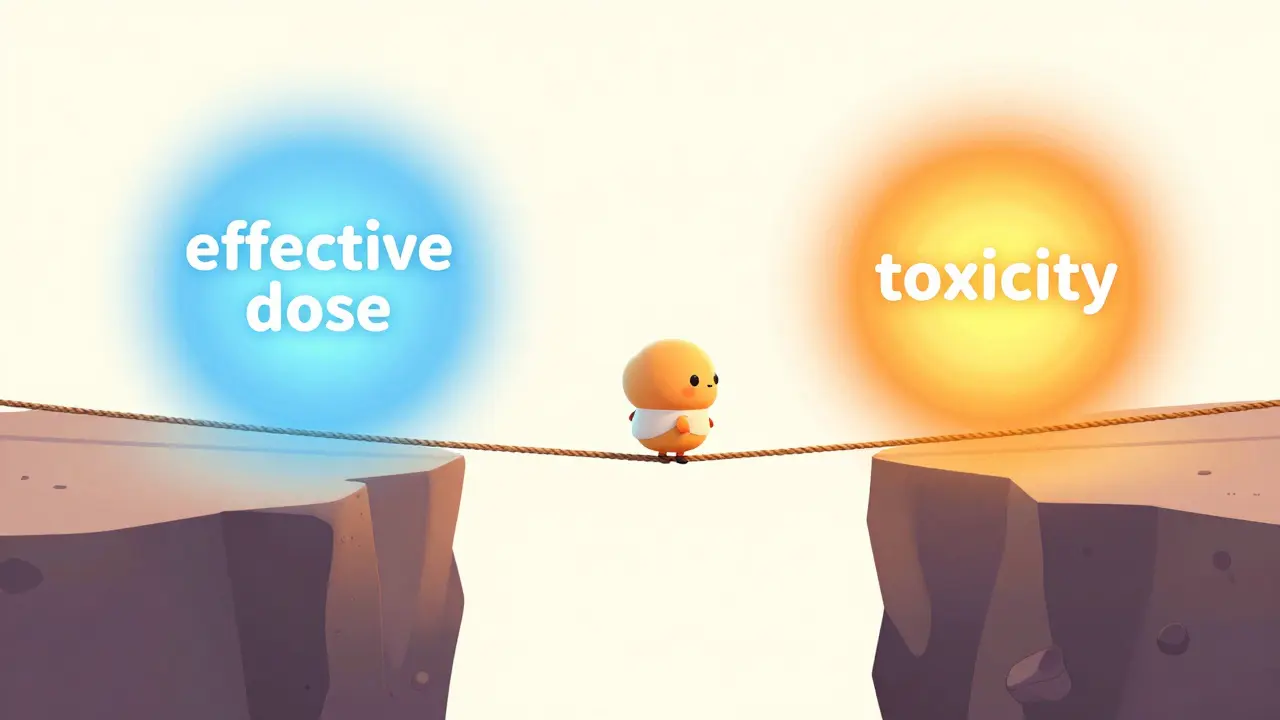
Imagine a tightrope walker. For most people, taking a medication is like walking across a wide bridge; if you drift a few inches to the left or right, you're still safe. But for people taking Narrow Therapeutic Index (NTI) drugs, it's like walking a razor-thin wire. A tiny shift in the amount of drug in your blood-too little or too much-can be the difference between a treatment that works and a medical emergency. This is why an expiration date on a standard bottle of vitamins might be a suggestion, but on an NTI medication, it's a critical safety boundary.
What Exactly is a Narrow Therapeutic Index?
In plain English, a Narrow Therapeutic Index is the small gap between the dose that helps you and the dose that hurts you. The FDA defines these as drugs where small differences in blood concentration can lead to life-threatening reactions or complete treatment failure. If you look at it mathematically, NTI drugs usually have less than a twofold difference between the minimum effective concentration (how much you need to get better) and the minimum toxic concentration (how much starts to poison you).
Because the margin for error is so slim, these drugs require Therapeutic Drug Monitoring (TDM). This means your doctor doesn't just give you a pill and hope for the best; they regularly test your blood to make sure the levels stay within that tiny "sweet spot." If the level drops slightly, the drug stops working. If it spikes slightly, you could end up in the hospital.
The Hidden Danger of Expired NTI Medications
You've probably heard that most medications don't suddenly become "poison" the day after they expire. In many cases, they just lose a bit of strength. For a generic pain reliever, losing 10% of its potency just means the headache might linger longer. But for an NTI drug, a 10% drop is a disaster.
Consider a patient taking Warfarin, a blood thinner. To keep a mechanical heart valve working and prevent clots, the patient needs a very specific blood thinning level called the INR. If an expired tablet has lost just a small amount of potency, the blood may not be thin enough, potentially leading to a life-threatening blood clot or stroke. Conversely, if the chemical breakdown of the drug creates a different compound, it could lead to unexpected toxicity.
While the FDA notes that many drugs retain 90% of their strength for years, that 10% loss is unacceptable for NTI therapies. When the acceptable range for a generic version of these drugs is tightened to 90-111% (compared to the usual 80-125% for standard drugs), it shows how every single milligram counts.
Common NTI Medications You Should Watch
Not every drug is an NTI drug, but many of the most critical ones are. If you see any of these in your medicine cabinet, check the dates carefully and never use them past the expiration point.
| Medication | Primary Use | Risk of Low Potency |
|---|---|---|
| Warfarin | Blood thinner/Anticoagulant | Blood clots, stroke |
| Digoxin | Heart failure/Arrhythmia | Heart rhythm failure |
| Lithium | Bipolar disorder | Relapse of manic episodes |
| Phenytoin | Seizure control | Breakthrough seizures |
| Levothyroxine | Hypothyroidism | Severe metabolic slump |
| Tacrolimus | Organ transplant rejection | Organ rejection |
Why Storage Matters Just as Much as the Date
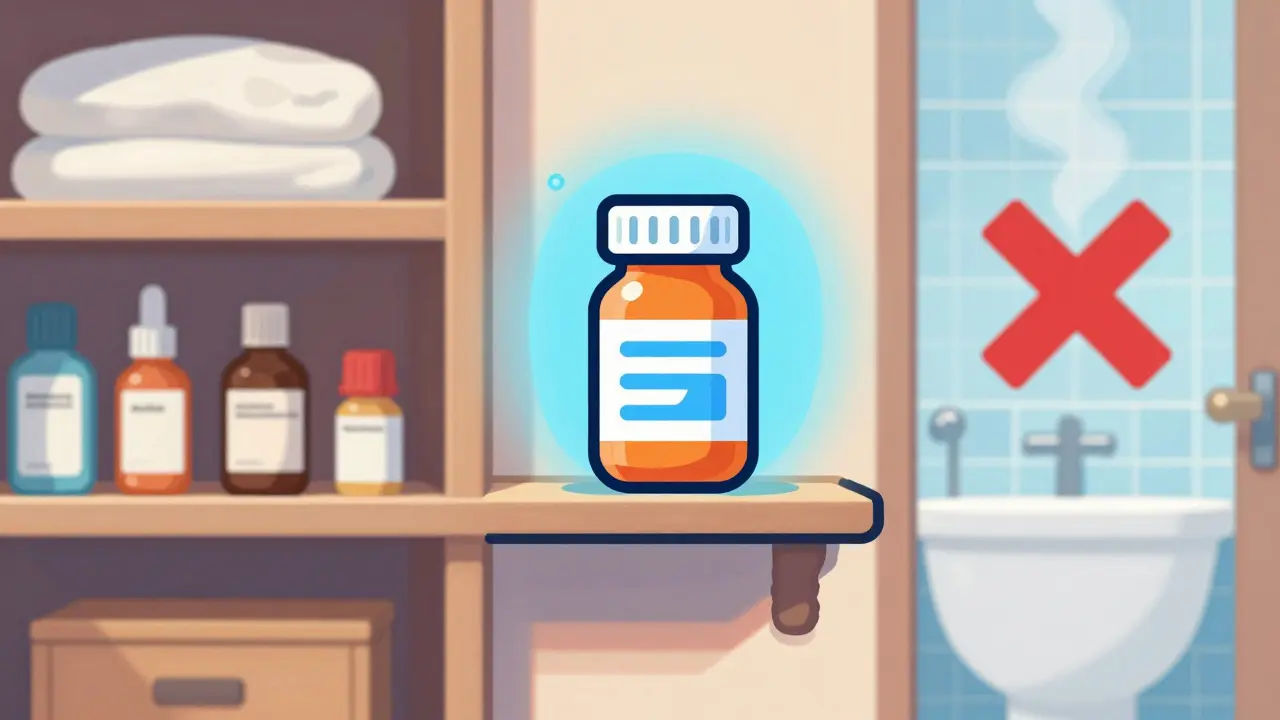
The expiration date isn't a magic number; it's a guarantee based on the drug being stored in specific conditions. For NTI drugs, "mostly correct" storage isn't good enough. If you keep your heart medication in a humid bathroom or on a sunny windowsill, the drug can degrade much faster than the label suggests. This is called bioavailability loss-the amount of the drug that actually reaches your bloodstream decreases.
When a drug degrades due to heat or moisture, it doesn't just disappear. Sometimes it transforms into a different chemical. While rare, some drugs can become toxic. For example, although not always classified as NTI, expired tetracycline was historically known to cause kidney damage. With NTI drugs, the risk is usually a loss of efficacy, which, as we've seen, can be just as deadly as toxicity if the drug is keeping you stable.
Practical Tips for Managing Your High-Alert Meds
If you or a loved one are taking these types of medications, you need a more rigorous system than you would for a standard prescription. Treat NTI drugs as "high-alert" medications. This is a standard used by hospitals to prevent errors, and you can apply it at home.
- The First-In, First-Out Rule: Always use the oldest bottle first so you don't end up with a stash of expired pills at the back of the cabinet.
- Climate Control: Keep NTI drugs in a cool, dry place. A bedroom closet is usually better than a bathroom cabinet where steam from the shower can seep into the bottle.
- Avoid Generic Switching: Because the FDA has such tight rules (90-111% bioequivalence) for NTI generics, switching from one brand to another can actually shift your blood levels. Stick to one manufacturer unless your doctor tells you otherwise.
- Immediate Disposal: The moment an NTI drug hits its expiration date, take it to a pharmacy take-back program. Don't "stretch" the bottle for a few extra days.
The Professional Perspective on NTI Risks
Pharmacists treat these drugs with extreme caution. In surveys, a huge majority of pharmacists indicate that switching brands for something like warfarin requires special alerts because the risk of a dosage shift is so high. This professional caution should extend to the patient's home use of the drug.
The Institute for Safe Medication Practices suggests that these drugs require a level of verification similar to what you'd see in an ICU. While you don't need two nurses to sign off on your morning pill, you should have a system of double-checking your dates and doses. If you feel a change in your symptoms-such as a sudden return of tremors with lithium or unusual bruising with warfarin-don't assume it's just "a bad day." Check the expiration date of your meds and contact your doctor immediately.
Can I use an NTI drug if it's only a few days past the expiration date?
With standard medications, a few days rarely makes a difference. However, with Narrow Therapeutic Index drugs, the risk is not worth it. Because these drugs require such precise blood concentrations, even a tiny dip in potency can lead to treatment failure or a dangerous medical event. You should replace expired NTI medications immediately.
Why are generic NTI drugs held to a different standard than regular generics?
Standard generics usually have a bioequivalence range of 80-125%, meaning they can vary more from the brand name. For NTI drugs, the FDA uses a much tighter range (roughly 90-111%). This is because a 20% difference in a standard drug might not be noticed, but a 20% difference in an NTI drug could be toxic or completely ineffective.
What are the signs that my NTI medication is no longer working?
Signs depend on the drug. For anticonvulsants like phenytoin, you might experience breakthrough seizures. For thyroid meds like levothyroxine, you might feel extreme fatigue or coldness. For anticoagulants like warfarin, you might notice new clots or a change in your INR levels during blood tests. Any return of the symptoms the drug was prescribed to treat is a red flag.
Does the way I store my meds affect the expiration date?
Yes, absolutely. Expiration dates assume the medication has been stored according to the manufacturer's instructions. If you store your meds in a hot car or a damp bathroom, they can degrade much faster than the date on the bottle suggests, making them ineffective long before the official expiration date.
Should I tell my doctor if I accidentally took an expired NTI drug?
Yes. Because NTI drugs require precise titration, your doctor needs to know if you've had a gap or a change in potency. They may want to run a blood test (TDM) to ensure your levels are still in the therapeutic range and haven't dropped to a dangerous level.