
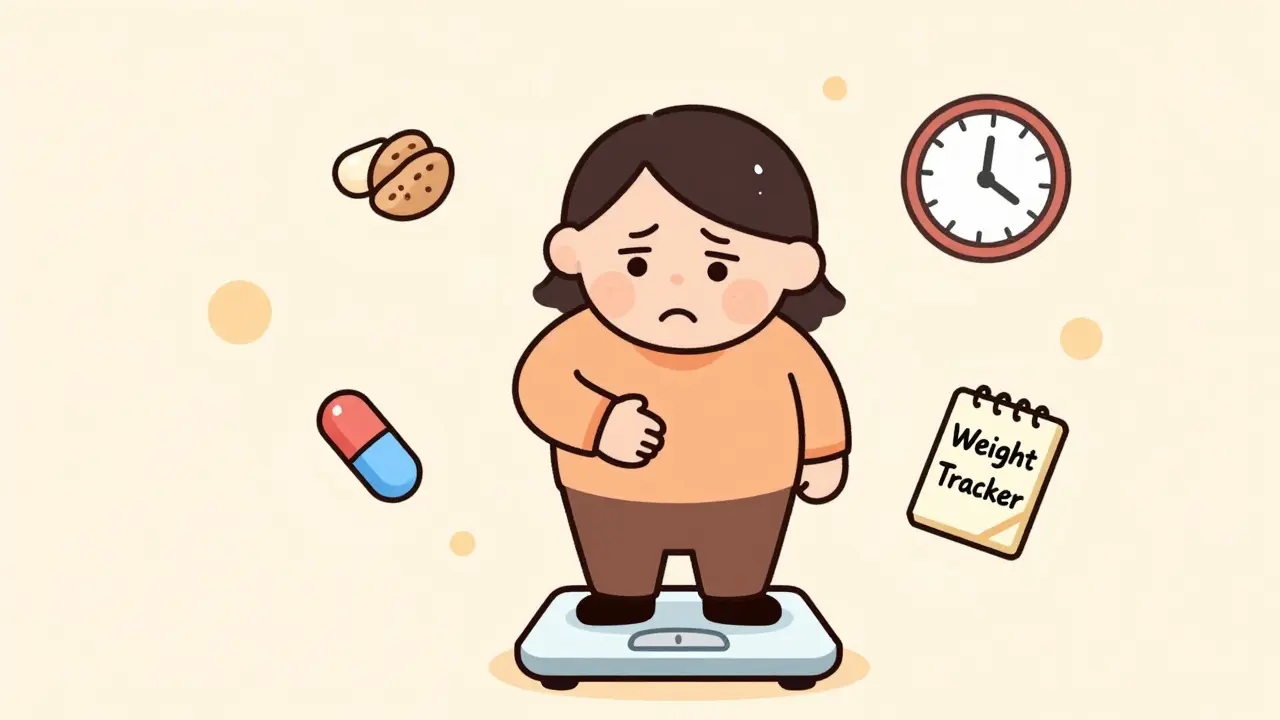
Paroxetine Weight Gain Estimator
Weight Gain Calculator
How This Compares to Other Antidepressants
For comparison, here's how paroxetine weight gain typically compares to other common antidepressants:
Paroxetine
25.5% gain 7%+ body weight (6 months)
Sertraline (Zoloft)
4.2% gain 7%+ body weight (6 months)
Fluoxetine (Prozac)
Neutral or slight weight loss
Bupropion (Wellbutrin)
Usually weight loss or no change
Did you know? Switching to fluoxetine or bupropion often leads to weight loss within months, even without changing diet or exercise. Studies show patients can lose 5-10 pounds after switching.
Many people start taking paroxetine - sold under brands like Paxil or Seroxat - to finally feel better. Depression, anxiety, panic attacks - they’re exhausting. But after a few months, something unexpected happens: the scale keeps climbing. You’re eating the same, maybe even exercising more, yet pounds stick on. If you’re on paroxetine and noticing this, you’re not alone. And you’re not failing. This isn’t about willpower. It’s about how your body reacts to the drug.
Why Paroxetine Causes Weight Gain
Paroxetine is an SSRI, a type of antidepressant that boosts serotonin in the brain. That helps mood. But serotonin doesn’t just live in your brain. It’s also involved in appetite control, metabolism, and how your body stores fat. When paroxetine floods your system with extra serotonin, it can trigger changes that make weight gain more likely. Unlike some other SSRIs, paroxetine has a clear pattern: the longer you take it, the more weight you tend to gain. Studies show minimal change in the first 3 months. But after 6 months, the numbers start climbing. One major study found that 25.5% of people on paroxetine gained at least 7% of their body weight over six months. Compare that to sertraline (Zoloft), where only 4.2% saw that same level of gain. Fluoxetine (Prozac)? Even lower. It’s not just about eating more - though many people do report stronger cravings for carbs and sweets. Paroxetine can also slow your metabolism slightly and reduce energy levels, making you less active without even realizing it. Fatigue is a common side effect, and when you’re tired, movement drops. That’s a double hit: more hunger, less movement.How Much Weight Do People Actually Gain?
Numbers matter here. A 150-pound person on paroxetine might gain around 5 to 6 pounds over 6 months. For someone on sertraline, it’s closer to 1 to 2 pounds. Over two years, some patients gain 10 to 20 pounds. One Reddit user reported gaining 30 pounds over three years - and lost it all after switching to another antidepressant, without changing diet or exercise. A 2014 analysis showed that 14.5% of long-term paroxetine users gained more than 7% of their starting weight. That’s not rare. That’s common enough that doctors should be talking about it before you start. Women report this more often than men. One patient shared: “I gained 35 pounds in two years. I ate clean. I walked daily. Nothing worked.” This isn’t laziness. It’s biology. Hormones, genetics, and how your body processes serotonin all play a role.How Paroxetine Compares to Other Antidepressants
Not all antidepressants treat weight the same way. Here’s a quick look:- Paroxetine (Paxil): High risk. Weight gain increases over time.
- Sertraline (Zoloft): Low to moderate risk. Most people see little to no gain.
- Fluoxetine (Prozac): Neutral or slight weight loss. Often the go-to if weight is a concern.
- Bupropion (Wellbutrin): Usually causes weight loss or no change.
- Mirtazapine: Can cause rapid weight gain, especially early on.
- Venlafaxine: Usually no major weight effect.
What You Can Do: Practical Strategies
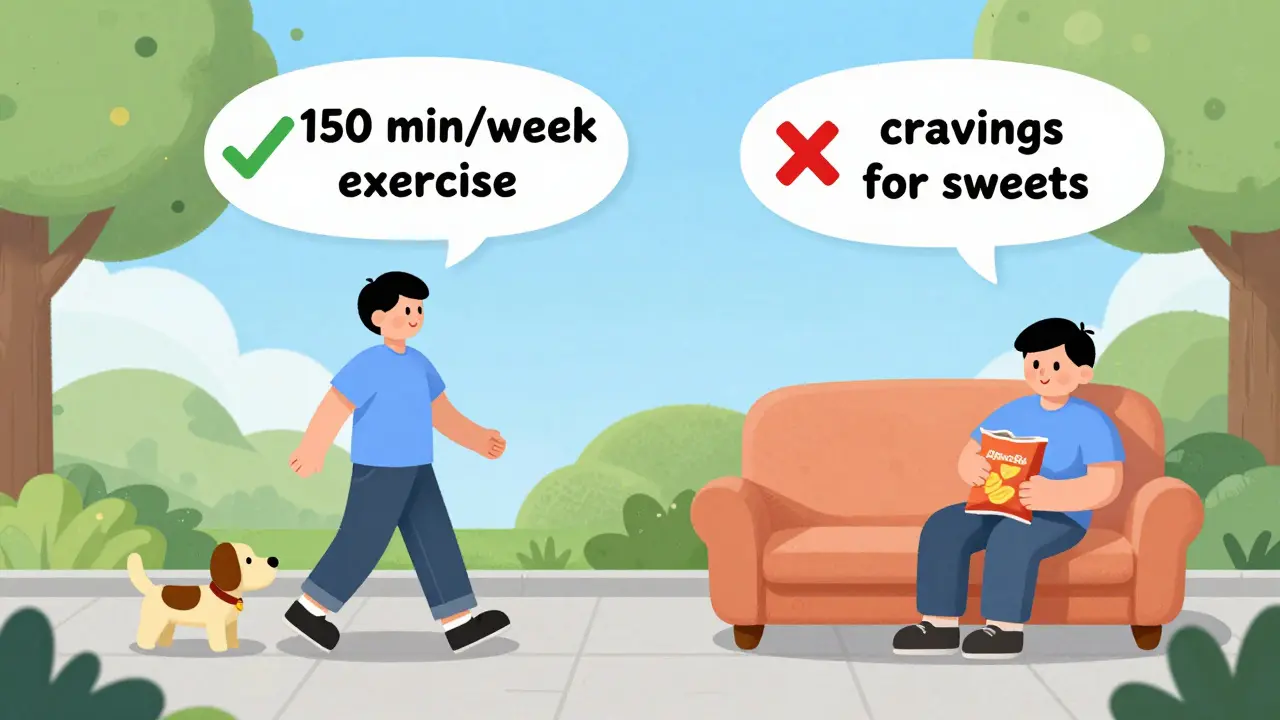
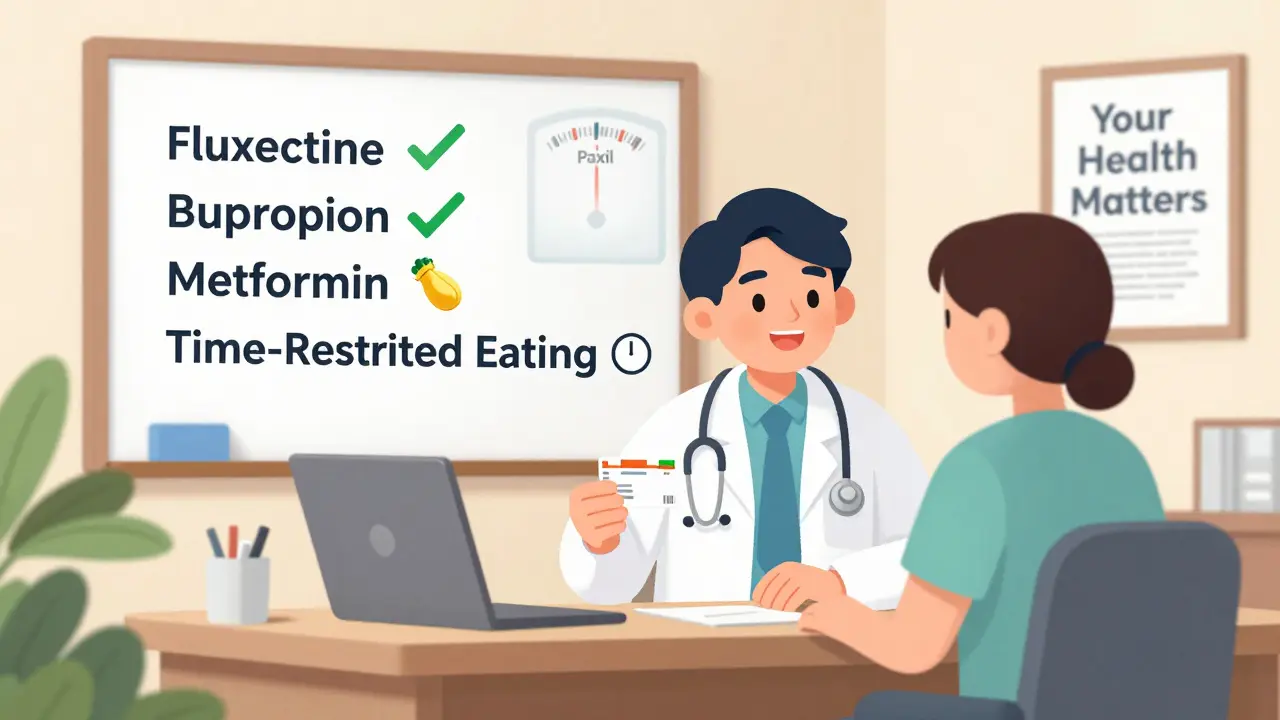
If you’re on paroxetine and gaining weight, here’s what actually helps - backed by research and real patient outcomes. 1. Track your weight monthly. Don’t wait until you’ve gained 15 pounds to say something. Start recording your weight the first week you begin the medication. A small gain early on can signal a trend. 2. Move more - consistently. The CDC recommends 150 minutes of moderate exercise per week. That’s 30 minutes, five days a week. Walking, swimming, cycling - it doesn’t have to be intense. Just regular. Studies show this alone can cut paroxetine-related weight gain by up to 40%. 3. Adjust your diet - not your calories. You don’t need to starve yourself. But cutting back on refined carbs (white bread, pasta, sugary snacks) helps. Paroxetine increases cravings for these foods. Swap them for protein, fiber, and healthy fats. A 2023 study found that people who ate only within an 8-hour window each day (time-restricted eating) reduced weight gain by 62% compared to those who ate normally. 4. Talk to your doctor about switching. If you’ve been on paroxetine for over six months and gained more than 5% of your body weight, it’s time to have a real conversation. Switching to fluoxetine or bupropion often leads to weight loss within months - even without diet changes. One study showed patients lost 5 to 10 pounds after switching from paroxetine to these alternatives. 5. Ask about metformin. This diabetes medication is sometimes used off-label to counteract antidepressant-induced weight gain. In a 2014 trial, patients on paroxetine who took metformin gained 2.3 kg (5 pounds) less over 24 weeks than those who didn’t. It’s not for everyone, but it’s an option if lifestyle changes aren’t enough.When to Consider Stopping Paroxetine
You shouldn’t quit cold turkey. Paroxetine can cause withdrawal symptoms - dizziness, brain zaps, nausea - if stopped suddenly. But if weight gain is affecting your health, self-esteem, or worsening conditions like prediabetes or high blood pressure, it’s worth discussing alternatives. Your doctor might suggest:- Switching to fluoxetine (Prozac) - lower weight gain risk
- Switching to bupropion (Wellbutrin) - often leads to weight loss
- Trying a non-SSRI like vortioxetine - newer, less linked to weight gain
What the Experts Say
Dr. Andrew Nierenberg, a leading psychiatrist at Massachusetts General Hospital, says: “Paroxetine is generally the SSRI most associated with weight gain, particularly when used for longer than six months.” The American Diabetes Association now advises doctors to monitor BMI, waist size, and blood sugar every three months for patients on long-term paroxetine. Why? Because weight gain from antidepressants isn’t just cosmetic - it raises your risk for type 2 diabetes, heart disease, and fatty liver. And it’s not just about the drug. Genetics matter. New research from the STAR*D trial found that people with certain variants of the 5-HT2C receptor gene are far more likely to gain weight on paroxetine. In the future, genetic testing could help pick the right antidepressant from day one.Real Stories, Real Outcomes
On GoodRx, 32% of 1,450 reviewers mentioned weight gain as a side effect. One wrote: “I gained 40 pounds in 18 months. I was eating salads and walking every day. It felt impossible.” Another shared: “I was on Paxil for five years. No weight gain. I’m one of the lucky ones.” That’s the thing - not everyone gains weight. But enough do that it’s not a coincidence. It’s a pattern. And if you’re in that group, you deserve better options.Looking Ahead
The FDA is expected to update labeling for all antidepressants by late 2024, with clearer warnings about paroxetine’s weight gain risk. New guidelines from the American Psychiatric Association already recommend avoiding paroxetine in patients with a BMI over 25 or existing metabolic syndrome. The message is clear: mental health treatment shouldn’t cost you your physical health. You’re not broken. You’re not weak. You’re just on a medication that doesn’t suit your metabolism. And that’s fixable.Does paroxetine always cause weight gain?
No. Not everyone gains weight on paroxetine. But studies show it’s more likely than with other SSRIs. About 1 in 4 people gain 7% or more of their body weight after six months. Some people gain nothing, especially if they’re active and eat a balanced diet. But the risk increases with time and dose.
How long does it take to gain weight on paroxetine?
Most people don’t see noticeable weight gain in the first 1-3 months. Changes typically start after 4-6 months, and the most significant gains happen after 12 months. The longer you’re on it, the higher the chance of weight gain.
Can I lose weight while still taking paroxetine?
Yes, but it’s harder. Diet and exercise help, but paroxetine can make weight loss more difficult due to increased cravings and lower energy. Time-restricted eating and cutting back on refined carbs have shown strong results. Some people also benefit from metformin, but that requires a doctor’s approval.
Is switching antidepressants safe?
Switching can be safe when done slowly under medical supervision. Paroxetine has a short half-life, so stopping abruptly can cause withdrawal. Your doctor will likely taper you off gradually and start the new medication at a low dose. Many people report improved mood and weight loss after switching to fluoxetine or bupropion.
What’s the best alternative to paroxetine if I’m worried about weight gain?
Fluoxetine (Prozac) and bupropion (Wellbutrin) are the top choices. Fluoxetine has the lowest risk of weight gain among SSRIs, and bupropion often leads to modest weight loss. Sertraline (Zoloft) is also a good option - it’s effective for anxiety and depression with minimal weight impact. Talk to your doctor about your goals: mood stability, energy levels, and weight management.
Should I avoid paroxetine if I have prediabetes?
Yes. The American Diabetes Association specifically lists paroxetine as a high-risk medication for people with metabolic issues. If you have prediabetes, obesity, or insulin resistance, your doctor should consider alternatives like fluoxetine, bupropion, or vortioxetine - all with lower metabolic risks.
If you’re struggling with weight gain on paroxetine, don’t suffer in silence. Your mental health matters - but so does your physical health. There are better options out there. You just need to ask for them.

saurabh singh
Man, I get this so hard. In India, we don’t talk about meds and weight like this-but I’ve seen friends on Paxil gain 20+ lbs and think it’s their fault. It’s not. Your body’s just reacting to the serotonin flood. Swap to Wellbutrin if you can-my cousin lost 18 lbs in 4 months after switching. No dieting. Just meds changed. You’re not lazy. You’re pharmacologically stuck.
January 4, 2026 AT 01:07
Enrique González
I was on paroxetine for 14 months. Gained 22 pounds. Walked 6 miles a day. Ate kale and quinoa. Still gained. Switched to fluoxetine. Lost 17 in 5 months. No magic. Just biology. If you’re gaining weight on this drug, it’s not you. It’s the chemistry. Talk to your doc. Don’t wait until your knees hurt.
January 5, 2026 AT 12:29
Cassie Tynan
So we’re now treating depression like a math problem: serotonin + time = pounds? Interesting. Next they’ll prescribe BMI-adjusted SSRIs. Meanwhile, people are still dying by suicide because no one wants to talk about how hard it is to switch meds when you’re already fragile. Let’s not turn this into a weight-loss blog. Mental health is messy. It’s not a spreadsheet.
January 7, 2026 AT 06:08
Aaron Mercado
WHY DO PEOPLE STILL PRESCRIBE THIS?!?!?!!? Paroxetine is the SSRI equivalent of a sugar-coated landmine. 25.5% gain 7%+ weight?! That’s not a side effect-that’s a public health failure. And doctors just shrug? I’ve seen patients cry because they can’t fit into their clothes after being told ‘just eat less.’ NO. YOU’RE NOT BROKEN. THE DRUG IS. STOP NORMALIZING THIS.
January 8, 2026 AT 15:21
Angie Rehe
Ugh. Another ‘paroxetine bad’ post. Look, I gained 10 lbs on sertraline. So what? You’re all acting like this is some conspiracy. Maybe you’re just eating more because you’re less anxious? And who says weight gain is bad? Some of us needed it. Stop pathologizing every bodily change. Not everyone wants to be a 120-lb ‘wellness influencer.’
January 10, 2026 AT 11:23
Mandy Kowitz
So… you’re telling me the solution to gaining weight from an antidepressant is… another antidepressant? Brilliant. Next up: metformin for your existential dread. Can we just admit that all these meds are just chemical bandaids on a broken system? Also, who even has time for 8-hour eating windows when you’re trying not to cry in the shower?
January 11, 2026 AT 05:25
en Max
It is imperative to underscore, with the utmost clinical precision, that paroxetine-mediated serotonergic modulation induces downstream adipogenic signaling via 5-HT2C receptor downregulation, thereby reducing resting metabolic rate and potentiating carbohydrate cravings. Longitudinal data from the STAR*D cohort indicate a statistically significant (p<0.01) association between prolonged exposure (>180 days) and weight accrual exceeding 7% of baseline. Consequently, metabolic monitoring, dietary macronutrient reconfiguration, and pharmacological substitution (e.g., bupropion) are evidence-based interventions. Consult your physician. Do not self-manage.
January 13, 2026 AT 04:13
Justin Lowans
I’ve been on paroxetine for three years. Gained 12 pounds. Didn’t change a thing. Then I switched to vortioxetine. Lost 10 in six months. No crazy diets. No gym obsession. Just a different molecule. It’s not about willpower. It’s about finding the right fit. And yeah-it’s okay to ask for a change. Your mental health deserves a body that doesn’t feel like a stranger.
January 13, 2026 AT 16:38
Catherine HARDY
Did you know the FDA knew about this in 2008? But the pharmaceutical reps told them ‘it’s rare.’ Meanwhile, they were pushing paroxetine because it had the highest patient retention rate-people got addicted to the mood lift and didn’t want to stop. Now they’re ‘updating labeling’ in 2024? That’s not a correction. That’s damage control. They’re still selling it. They always will.
January 14, 2026 AT 21:58
bob bob
My mom was on this for anxiety. Gained 40 lbs. Thought she was failing. Turned out, it was the med. Switched to Zoloft. Lost it all. She cried because she finally felt like herself again-not bloated, tired, and ashamed. If you’re reading this and you’re struggling? You’re not alone. And it’s okay to say: ‘This isn’t working for my body.’
January 15, 2026 AT 14:50
Michael Rudge
Wow. Someone finally said it. Paroxetine is the ‘I’m too lazy to change my life’ antidepressant. It’s the one you take when you don’t want to face therapy, diet, or exercise. And now you’re mad you gained weight? Maybe the real problem isn’t the drug-it’s the expectation that a pill should fix everything without you doing a damn thing. Just saying.
January 16, 2026 AT 00:30