
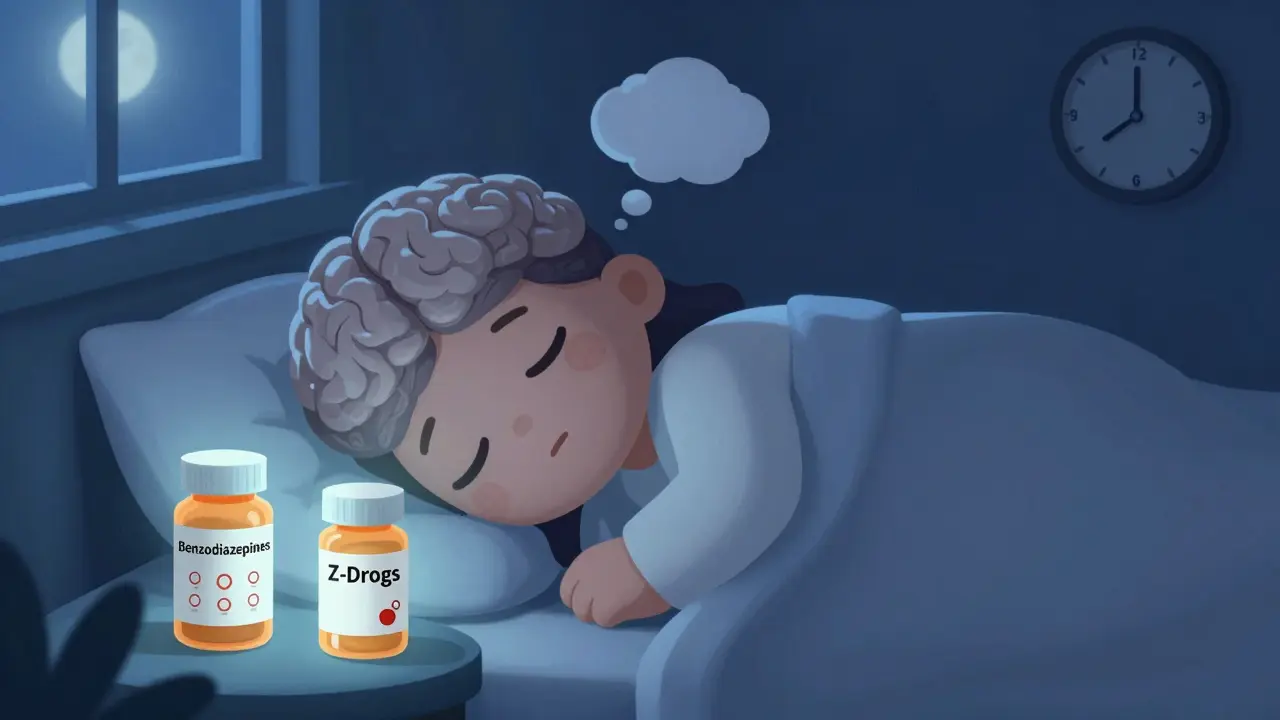
More than 6 million Americans got a prescription for a sleep pill in 2022. Many of them were told these drugs would help them fall asleep faster and stay asleep longer. But what they weren’t told - or maybe didn’t understand - is that these pills might be making their sleep worse over time, not better.
When doctors prescribe sleep aids, they usually pick between two types: benzodiazepines and non-benzodiazepines (also called Z-drugs). At first glance, they seem similar. Both make you drowsy. Both are taken at night. Both promise relief from insomnia. But underneath the surface, they work differently, carry different risks, and affect your body in ways most people never expect.
How They Work - And Why It Matters
Both benzodiazepines and non-benzodiazepines target the same brain chemical: GABA. This is your brain’s natural calming signal. When GABA binds to its receptors, it slows down brain activity. That’s how you feel relaxed, sleepy, or even numb.
The difference? Benzodiazepines - like temazepam, alprazolam, or flurazepam - bind to multiple GABA receptor sites. That’s why they don’t just help with sleep. They’re also used for anxiety, muscle spasms, and seizures. But this broad effect is also why they cause more side effects: dizziness, confusion, memory gaps, and next-day grogginess.
Non-benzodiazepines - like zolpidem (Ambien), eszopiclone (Lunesta), and zaleplon (Sonata) - were designed to be more selective. They mostly target one type of GABA receptor, the omega-1 site, which is thought to be more involved in sleep than in other brain functions. That’s why they were marketed as "safer" and "cleaner." But here’s the truth: they still cause memory problems, next-day drowsiness, and strange behaviors like sleepwalking or even sleep-driving.
It’s not that one is good and the other is bad. It’s that both are blunt tools for a delicate problem. Your brain doesn’t need to be shut down to sleep. It needs to wind down. And these drugs don’t wind down your brain - they knock it out.
Duration and Dosing - The Hidden Trap
One big reason people keep taking these pills is because they think they’re "short-acting." But that’s misleading.
Take zaleplon (Sonata). It’s labeled as a 1-hour drug. Sounds perfect, right? You take it at midnight, you sleep, you wake up fresh. But studies show even this "ultra-short" drug can leave traces in your system 6 hours later - enough to slow your reaction time if you need to drive or operate machinery.
On the other end, flurazepam has a half-life of up to 250 hours. That means if you take it on Monday, you’re still absorbing active drug on Friday. No wonder people feel foggy all week. This isn’t a one-night fix - it’s a slow build-up of chemical fog.
And dosage? Doctors often start low - 5 mg of zolpidem, 7.5 mg of temazepam. But patients quickly learn: "It’s not working anymore." So they double it. Or take it earlier. Or add alcohol. All of which dramatically increase the risk of dangerous side effects.
The FDA actually lowered the recommended dose of zolpidem for women in 2013 because women metabolize it slower - and were waking up impaired. But many people still take 10 mg. Why? Because they don’t know the label changed.
Side Effects - What No One Tells You
Most people think the worst side effect is a headache or dry mouth. That’s the easy part.
The real dangers are quieter - and more damaging.
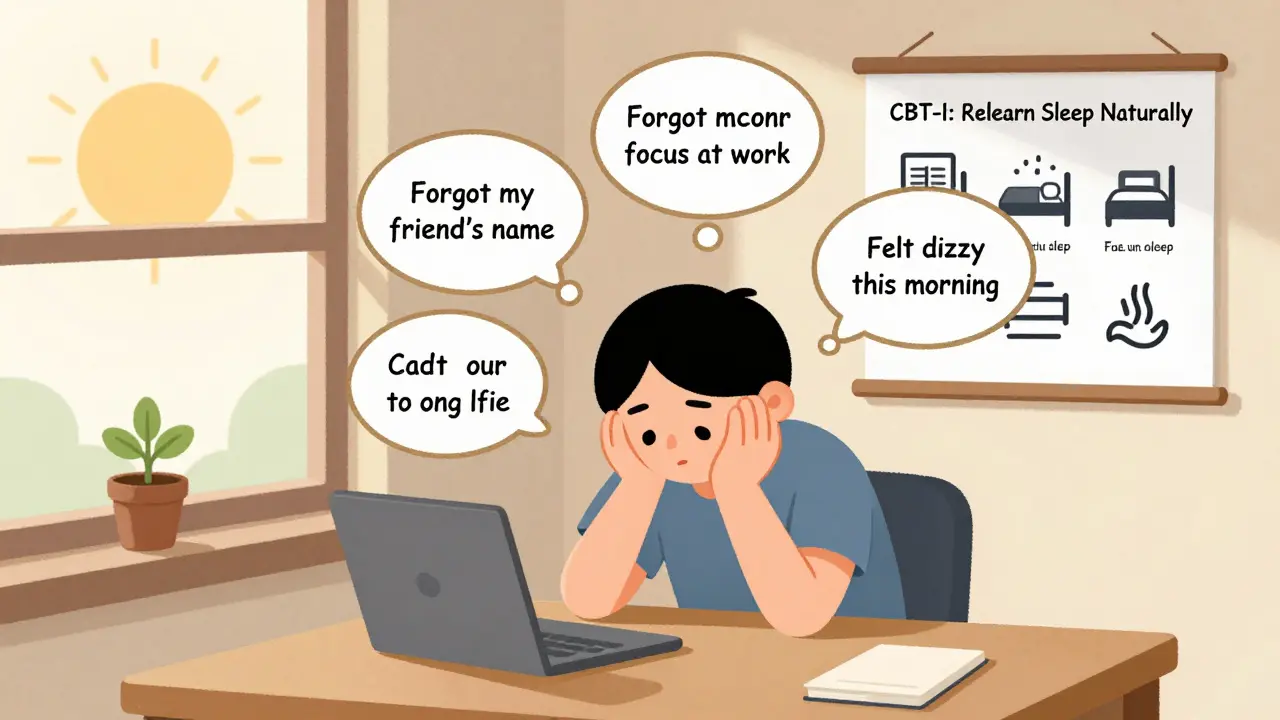
- Memory problems: Studies show hypnotics cause 5 times more memory and concentration issues than in people who don’t take them. You forget names. You lose track of conversations. You can’t focus at work. And you don’t realize it’s the pill.
- Daytime fatigue: Four times more likely. You’re not just tired - you’re foggy, slow, clumsy. This isn’t normal aging. This is drug-induced.
- Falls and fractures: Two times higher risk. For someone over 65, a fall isn’t just an accident - it’s a life-altering event. Hip fractures in older adults have a 20% mortality rate within a year. And sedative-hypnotics make that risk much higher.
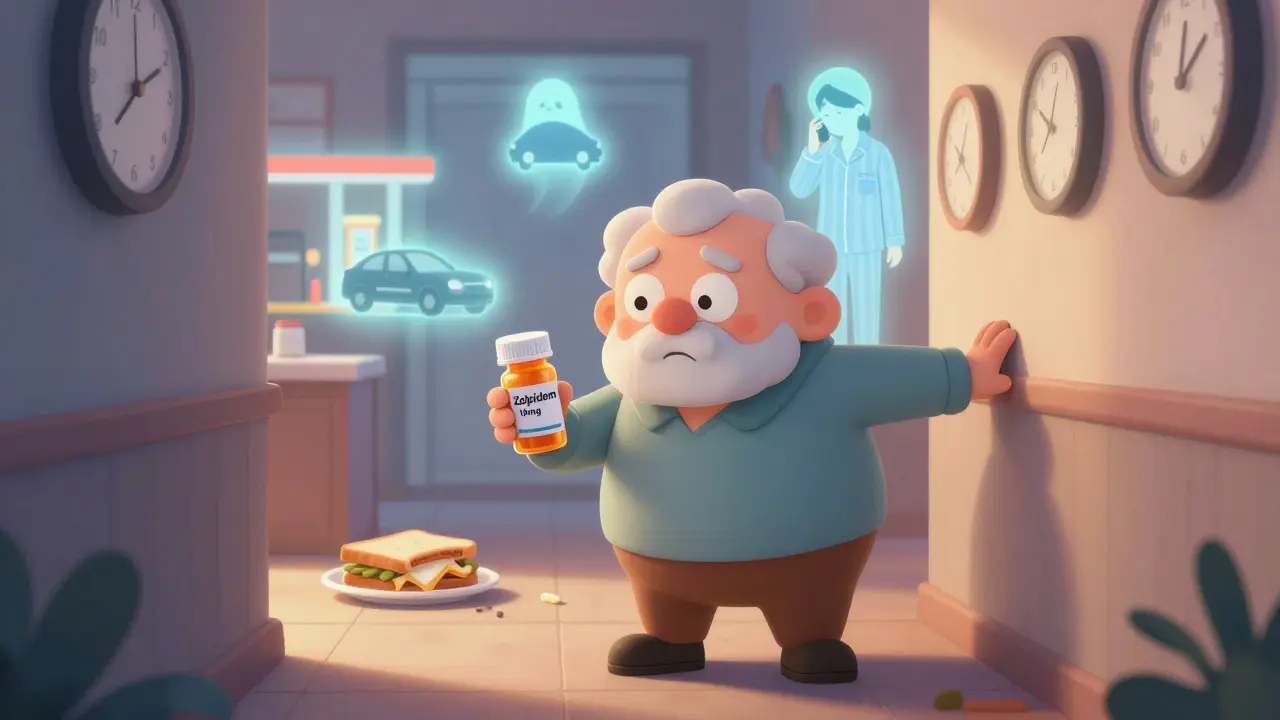
- Complex sleep behaviors: Sleep-driving. Sleep-eating. Making phone calls while asleep. These aren’t myths. The FDA has documented hundreds of cases, mostly linked to zolpidem. One user on Reddit said, "I woke up in my car at a gas station with no memory of driving there."
- Rebound insomnia: The moment you stop, your sleep gets worse than before. It’s not withdrawal like heroin - it’s your brain screaming, "I don’t know how to sleep without this!"
And then there’s the psychological trap: the belief that you need it. People say, "I can’t sleep without it." But studies show that after 6-8 weeks, these drugs stop working. Your brain adapts. The dose doesn’t help anymore. But you’re already hooked.
Withdrawal - The Silent Crisis
Stopping benzodiazepines cold turkey can be dangerous. Symptoms include anxiety so bad it feels like a heart attack, tremors, seizures, and hallucinations. That’s why tapering is required - slowly reducing the dose over weeks or months.
Non-benzodiazepines don’t usually cause life-threatening withdrawal. But that doesn’t mean they’re easy to quit. Many users report intense insomnia, anxiety, and even panic attacks when they stop. One Reddit user wrote: "I quit Lunesta after 6 months. For three weeks, I didn’t sleep more than 2 hours a night. I thought I was going crazy."
Here’s the cruel irony: the very thing you took to fix your sleep is now the reason you can’t sleep. Your brain has forgotten how to do it on its own.
Who’s Most at Risk?
It’s not just older adults - though they’re the most vulnerable.
The American Geriatrics Society says both classes of drugs should be avoided in people over 65. Why? Because aging slows liver and kidney function. That means drugs stick around longer. More side effects. More falls. More confusion.
But it’s not just age. People with sleep apnea are at serious risk. These drugs relax the muscles in your throat - including the ones that keep your airway open. If you have sleep apnea and take a sleep pill, you’re more likely to stop breathing at night. That’s not just dangerous - it can be fatal.
And then there’s alcohol. Mixing even one drink with a sleep pill can double the risk of breathing problems. Many people don’t realize this. They have a glass of wine to relax - then take their pill. They wake up groggy. They think it’s the wine. It’s not. It’s the combo.
The Real Solution - And Why It Works
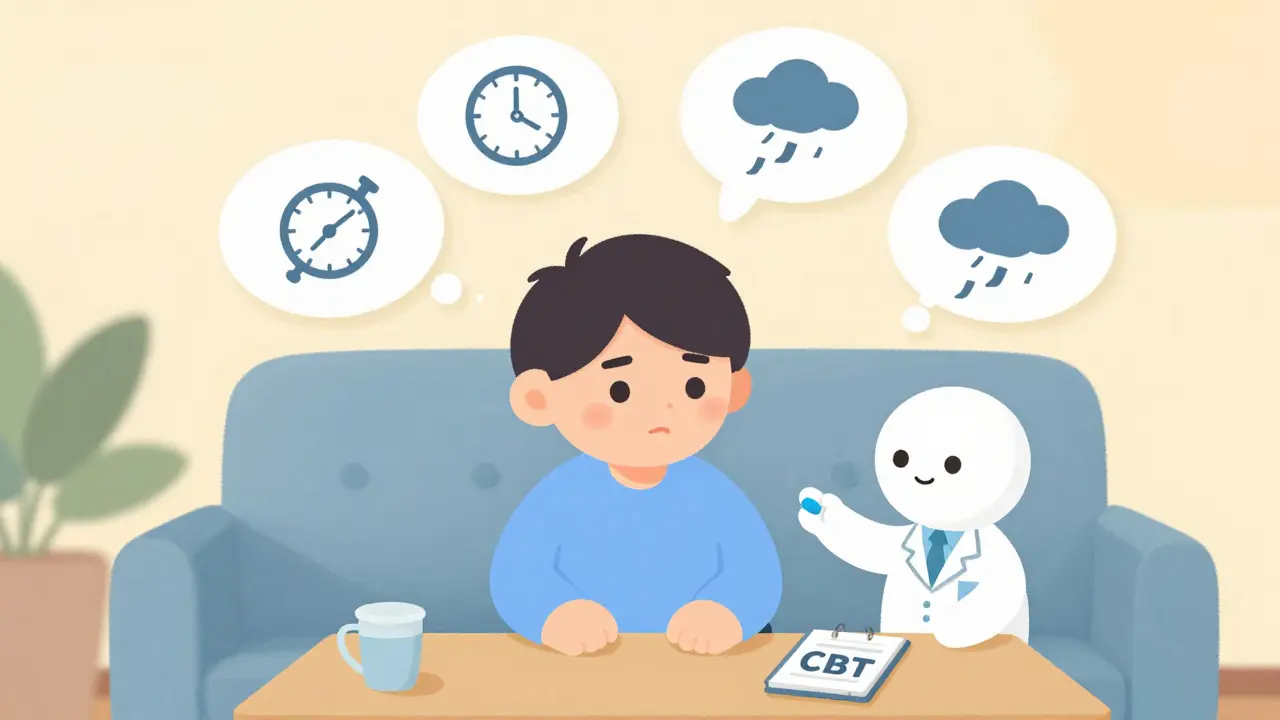
The American Academy of Sleep Medicine says one thing clearly: CBT-I is the first-line treatment for insomnia.
CBT-I stands for Cognitive Behavioral Therapy for Insomnia. It’s not a pill. It’s a structured program that teaches you how to retrain your brain to sleep naturally. It includes:
- Fixing your sleep schedule - even on weekends
- Using your bed only for sleep and sex - no scrolling, no TV
- Learning to let go of the anxiety around not sleeping
- Reducing time spent lying awake in bed
Studies show CBT-I works better than pills - and lasts longer. People who do CBT-I stay asleep for years. People who take pills? They’re back on the bottle within months.
And here’s the kicker: CBT-I doesn’t cost more than a month’s supply of zolpidem. Many insurance plans cover it. Some apps offer it for under $50. And it’s available online.
What’s Next? The Changing Landscape
The VA - one of the largest healthcare systems in the U.S. - now says: "It is no longer recommended to take a sedative-hypnotic drug to treat insomnia or anxiety." That’s not a suggestion. That’s a policy change.
Meanwhile, new drugs are coming. Drugs like suvorexant (Belsomra) and lemborexant (Dayvigo) don’t touch GABA at all. They block orexin - the brain’s wakefulness signal. These drugs don’t sedate. They gently nudge you toward sleep. Early data shows 30-40% less next-day impairment.
But here’s the problem: we’re still treating symptoms, not causes. Insomnia isn’t caused by a chemical imbalance. It’s caused by stress, poor routines, anxiety, or untreated sleep apnea. You can’t drug your way out of a lifestyle problem.
Final Thoughts - What You Should Do
If you’re on a sleep pill right now:
- Don’t quit cold turkey. Talk to your doctor. Tapering matters.
- Ask if you’ve been screened for sleep apnea. It’s common. And it makes sleep pills dangerous.
- Look into CBT-I. It’s not glamorous. But it works.
- Stop drinking alcohol with your pill. Even one drink is risky.
- Track your sleep with a simple journal. Note how you feel in the morning. Is it foggy? Tired? Unsteady? That’s your body telling you something.
Sleep isn’t a problem to be fixed with a pill. It’s a process to be restored. And you’re capable of it - even if you’ve forgotten how.
Are benzodiazepines more addictive than non-benzodiazepines?
Benzodiazepines have a higher risk of physical dependence and more severe withdrawal symptoms, including seizures and rebound anxiety. Non-benzodiazepines like zolpidem or eszopiclone are less likely to cause life-threatening withdrawal, but they still lead to tolerance and psychological dependence. Both can create a cycle where you feel you can’t sleep without them - even if the drug stopped working weeks ago.
Can I take these pills long-term?
No. Clinical guidelines from the American Academy of Sleep Medicine and the VA strongly advise against using any sedative-hypnotic for more than 2-4 weeks. Long-term use increases risks of memory loss, falls, daytime fatigue, and dependency. The benefits fade within weeks, but the risks keep growing. There’s no safe long-term dose.
Why are Z-drugs still prescribed if they’re so risky?
They’re still prescribed because they’re easier to give than CBT-I. A doctor writes a script in 30 seconds. Referring someone to sleep therapy takes time, coordination, and often insurance hurdles. Many patients don’t know CBT-I exists. And pharmaceutical marketing still pushes Z-drugs as "safer" - even though studies show no meaningful safety advantage over benzodiazepines.
What are the signs I’m dependent on my sleep medication?
If you feel anxious or panicked when you miss a dose. If you’ve increased your dose because it’s not working anymore. If you can’t sleep without it - even after a few weeks of use. If you’ve tried to quit and ended up with worse insomnia or panic attacks. These are clear signs of dependence. You’re not weak. Your brain has adapted to the drug.
Is melatonin a safer alternative?
Melatonin is not a sedative. It’s a hormone that helps regulate your sleep-wake cycle. It doesn’t force sleep - it signals your body it’s time to sleep. For people with circadian rhythm issues (like shift workers or jet lag), it can help. But for chronic insomnia, it’s usually ineffective. It’s safer than prescription sleep aids, but it won’t fix underlying sleep problems. CBT-I is still the gold standard.
Manish Singh
Man, I've seen so many people in my family go down this road-start with a pill for a bad week, end up on it for years. I get why doctors prescribe them-it's easy, fast, no paperwork. But it's like giving someone a crutch and calling it a cure. CBT-I isn't sexy, but it's the only thing that actually rebuilds your sleep muscle. No chemicals. Just discipline. And yeah, it sucks at first. But so does withdrawal.
March 19, 2026 AT 00:43
Shameer Ahammad
It is imperative to note, that the pharmacological mechanisms underlying benzodiazepines and non-benzodiazepines, while both modulating GABAergic transmission, exhibit distinct receptor subtype affinities-this is not merely semantic, but clinically consequential. Furthermore, the FDA’s 2013 dose reduction for zolpidem in women was predicated upon pharmacokinetic data demonstrating reduced hepatic metabolism-yet, prescribing inertia persists due to entrenched clinical habits and inadequate continuing medical education. The notion that these agents are ‘safe’ is not only misleading-it is dangerously negligent.
March 20, 2026 AT 13:05
Nilesh Khedekar
they said z-drugs were safer but i think the fda just let big pharma rebrand benzos as 'new' so they could keep selling them. i heard from a guy on youtube who said his doctor told him 'lunesta is just a cousin of xanax' and he nearly had a heart attack. also, did you know the military uses these to control soldiers' sleep? i'm not saying anything... but why do you think the va changed policy? hmmmm
March 21, 2026 AT 23:29
jared baker
Simple truth: if you're taking sleep pills longer than two weeks, you're not fixing sleep-you're hiding from it. CBT-I works. I did it. Took 3 weeks to feel normal. No pills. No magic. Just a schedule, no phone in bed, and learning to chill out. Your brain remembers how to sleep. You just gotta let it.
March 22, 2026 AT 16:04
Michelle Jackson
So let me get this straight. You're telling me the solution to insomnia is... doing nothing? Sitting in bed? Not scrolling? Not watching netflix? I'm sorry, but if I had to sit there and think about my life for 45 minutes every night, I'd be more awake than ever. This isn't a fix. It's a punishment.
March 24, 2026 AT 06:18
becca roberts
Oh, so now we’re supposed to be grateful that Big Pharma didn’t poison us as badly as they could’ve? Z-drugs were never ‘safer’-they were just marketed better. And CBT-I? Sure, it’s great if you have $100, time off work, and a therapist who doesn’t ghost you. For most people? They’re just trying to survive the night. If a pill lets them breathe without panic, who are we to judge? Not everyone gets to meditate their way to sleep.
March 24, 2026 AT 22:06
Andrew Muchmore
Stop taking pills. Talk to your doctor. Try CBT-I. Don't mix with alcohol. That's it. No drama. No conspiracy. Just facts.
March 25, 2026 AT 00:35
David Robinson
Look, I get it. You want people to stop taking sleep meds. But here's the reality: millions of people are working 12-hour shifts, raising kids, caring for aging parents, and dealing with chronic pain. They don't have time to sit in silence for an hour before bed. They don't have access to therapists. Their insurance won't cover CBT-I. So what? You tell them to suffer? That's not helping. That's privilege talking. The real issue isn't the pills-it's that we've turned sleep into a personal failure instead of a systemic one. We need better work hours, better mental health access, better healthcare. Not just 'try this one weird trick.' The system broke them. Don't blame the pill.
March 26, 2026 AT 07:28